5 Best Books for People Who Love Knitting: Top Fiction and Non-Fiction Picks
If you love knitting, books about knitting can offer you new ideas and inspiration. Both fiction and non-fiction books can bring something special, from teaching new skills to exploring stories about people who knit.
For many knitters, reading about knitting can be just as comforting as picking up the needles themselves. When choosing a knitting book, it is important to think about what you want most.
Non-fiction knitting guides often focus on patterns, tips, or how-to information, so you’ll want clear instructions and helpful photos. Fiction books about knitting usually revolve around characters who share a passion for the craft, which adds an extra layer of interest for readers who love relatable stories.
People who buy knitting books should consider the style of the book, the quality of instructions or storytelling, and whether they prefer to learn something new or just enjoy a good read about knitting. To help you find your next great read, we reviewed a variety of knitting books to bring you the best fiction and non-fiction options for knitters.
Best Books for People Who Love Knitting (Fiction & Non-Fiction)
If you enjoy knitting or want to read stories about it, you have plenty of great book choices. Below you will find some of the best books for knitters, including both fiction and non-fiction.
The Knitting Circle

If you want a touching story that explores how knitting can help you cope with grief while building connections, this book is a strong choice.
Pros
- Honest look at healing and loss
- Realistic characters and relationships
- Knitting is woven into the story in a meaningful way
Cons
- The story can feel very heavy at times
- Some readers may find the pacing slow
- Not much closure at the ending
When you open The Knitting Circle, you’ll notice right away how personal it feels. The story is about a mother dealing with loss and finding comfort through joining a knitting group.
Each member of the group brings their own struggles, making the book rich with emotion and realism. I appreciated how knitting was more than a hobby here—it was a way for the characters to connect and support each other.
If you enjoy stories where crafts help people bond and grow, you’ll find a lot to like. The friendships feel real and develop naturally as the book goes on.
On the downside, this book can be emotionally heavy, and it might not give you the sense of closure you’re hoping for.
Faerie Knitting

This book is a great pick if you enjoy fairy tales and want creative knitting patterns with beautiful illustrations.
Pros
- Unique blend of short stories and knitting projects
- Gorgeous design and lovely artwork
- Patterns inspired by magical themes
Cons
- Fewer knitting patterns than some might expect
- Short stories may not appeal to every knitter
- Some patterns are for intermediate skill levels
Faerie Knitting stands out because it mixes fairy tales with knitting instructions. Each story has its own pattern, so you can read and then knit something inspired by what you just read.
The book itself is very well made, with a strong binding and pretty covers that feel nice in your hands. Many of the stories are quick reads, which is great if you don’t have much time.
The patterns that go with each story are both creative and practical. You’ll find things like arm warmers and shawls, all with a magical twist, which makes working on them a more imaginative experience.
If you are looking for a lot of knitting patterns only, this book may not offer as many as other knitting books. Still, it is a unique and thoughtful gift for knitters who love fantasy or fairy tales.
At Knit’s End
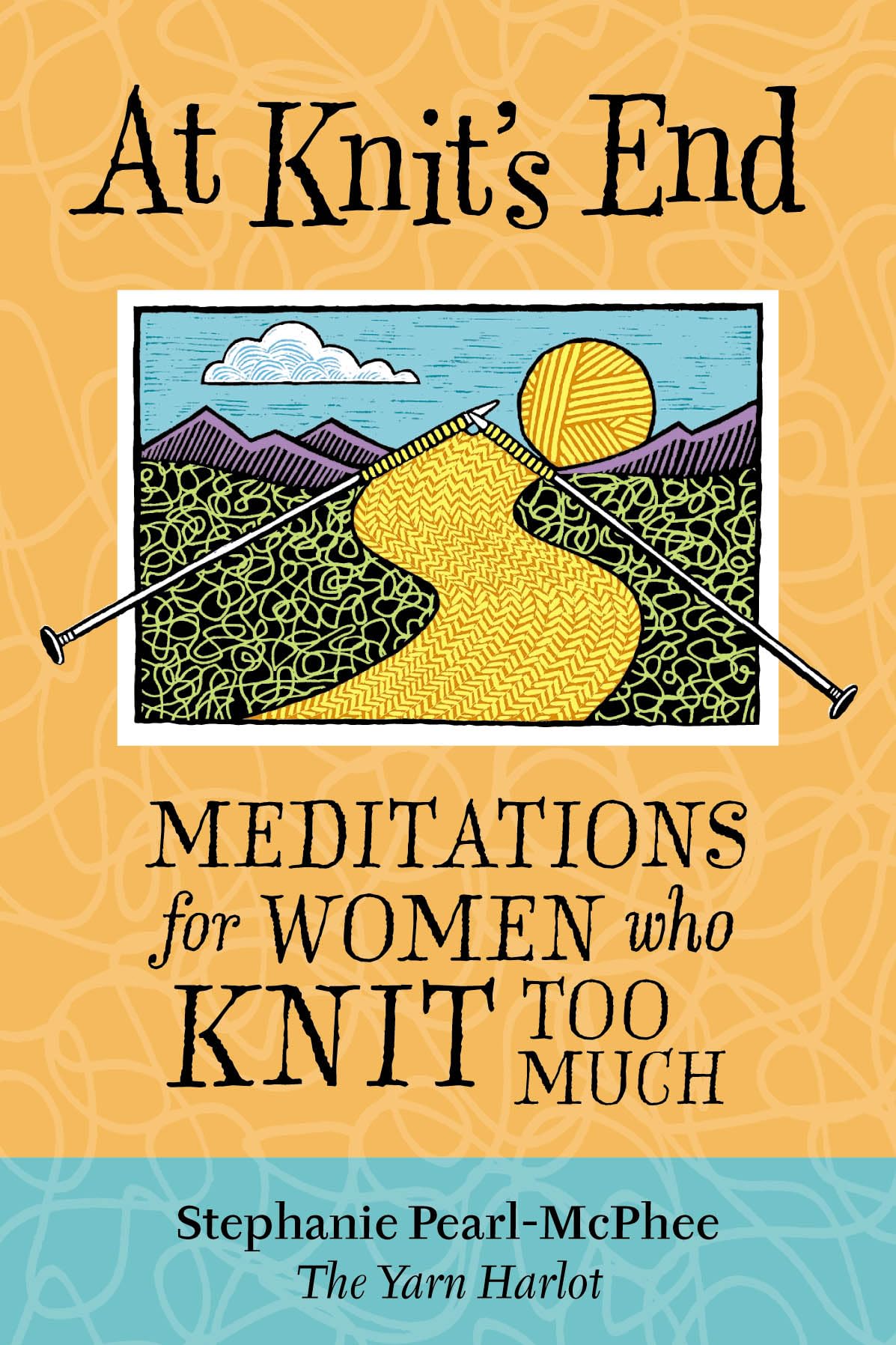
If you love humor mixed with real-life knitting wisdom, this book is a solid choice for daily enjoyment.
Pros
- Packed with clever, funny knitting insights
- Makes a great gift for knitters
- Easy to pick up and read in short bursts
Cons
- Repeats material from author’s other works
- Focuses more on humor than technique
- Some jokes may not land for serious readers
You’ll find “At Knit’s End” both relatable and entertaining. The short entries fit neatly into busy schedules, so you can read a few pages with your morning coffee or during a knitting break.
Stephanie Pearl-McPhee captures the quirks and joys of knitting, making you feel seen and understood. Her take on the daily life of knitters feels true-to-life, mixing sharp observations with a lighthearted tone.
There’s no need to read from start to finish—you can open it anywhere and enjoy a good laugh. If you want in-depth patterns or detailed instructions, this isn’t the book for you.
Patty Lyons’ Knitting Bag of Tricks

If you want a practical guide to help fix common knitting problems and improve your skills, this book is an excellent choice.
Pros
- Packed with clear, helpful knitting solutions
- Great mix of tips for all skill levels
- Fun illustrations make techniques easy to follow
Cons
- Focuses mostly on technique, not projects
- Might repeat things experienced knitters already know
- Some readers may prefer digital over print
Patty Lyons’ book is like having an experienced teacher by your side, showing you shortcuts and explaining tricky parts in a way that just makes sense. The tips cover everything from fixing mistakes to making your finished pieces look more professional.
It’s easy to understand, even if you haven’t been knitting for very long. You’ll find over 70 specific tricks, and each one comes with simple illustrations.
That really makes a difference when you’re trying to learn a new move or remember how to repair something that didn’t go as planned. Most tips work well for both beginners and those who’ve done quite a few projects already.
If you want a creative gift for a knitter or just need a little help moving past frustrating moments, Patty Lyons’ Knitting Bag of Tricks is worth adding to your collection.
Knitting Around
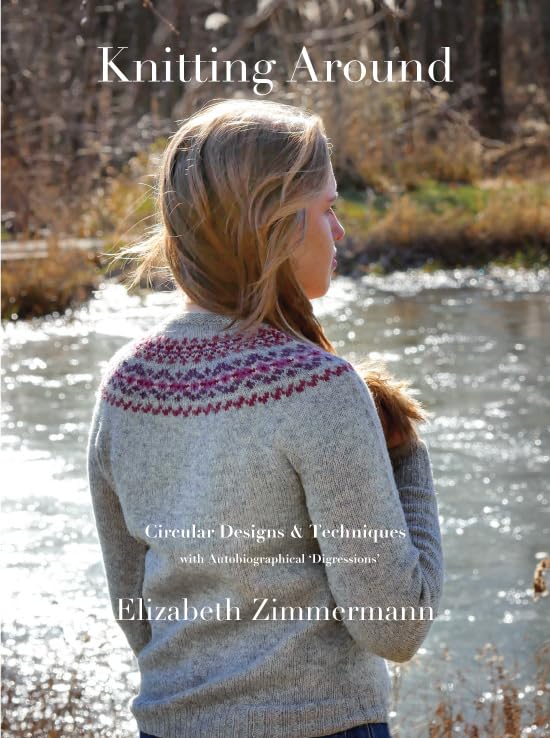
If you want a book that blends inspiring knitting stories with classic patterns, this is a solid choice.
Pros
- Includes personal stories and knitting history
- Offers a mix of patterns
- Written by an influential knitting expert
Cons
- Some patterns use older techniques
- Book size is a bit large for travel
- Occasional unclear directions for beginners
Inside, you’ll find not just patterns but the author’s family history and thoughts on knitting. The unique combination of useful guides and stories makes it easy to stay interested as you read.
You can learn practical skills, pick up new pattern ideas, and enjoy stories at the same time. Patterns in this book range in style and skill level, so it works well if you want to try something new or challenge yourself.
Elizabeth Zimmermann’s writing style is friendly, and you feel like you’re getting advice from someone who knows the craft deeply. Some techniques she uses may seem dated, but the designs still look great today.
If you prefer instructions that are always step-by-step, you may find a few sections confusing.
Buying Guide
When picking a knitting book, think about what you want to learn or the kind of stories you enjoy. Some books focus on patterns, while others share personal stories or fiction about knitters.
Consider these factors before buying:
- Skill level (beginner, intermediate, advanced)
- Type of book (instructional, fiction, memoir)
- Number of patterns or projects included
- Clear photos and diagrams
- Writing style and readability
A good knitting book should match your skill level. If you’re just starting, look for books with easy patterns and basic techniques.
More advanced knitters may enjoy books with complex patterns or new stitches. Think about if you want a book mainly for reading, learning, or both.
Some books mix stories with patterns, while others are only instructional. Check the table of contents or samples if you can, to see what’s included.
Pay attention to book reviews, but look for honest details about what is helpful or lacking. Books with step-by-step guides and clear photos are usually easier to use, especially if you’re new to knitting.
| Feature | Why it Matters |
|---|---|
| Clear instructions | Makes learning easier |
| Quality photos | Helps you see details |
| Project range | Gives you more options |
| Storytelling | Adds enjoyment if it’s fiction |
| Author experience | Can impact book quality |
Frequently Asked Questions
You can find both fiction and non-fiction books centered on knitting. Some books share personal stories, while others focus on skills, history, or famous knitters.
What are some top-rated novels that feature knitting?
Several novels include knitting as a central theme or setting. “The Friday Night Knitting Club” by Kate Jacobs tells the story of women bonding over yarn and life.
“Knitting: A Novel” by Anne Bartlett also explores relationships through knitting.
Can you recommend non-fiction books that delve into knitting techniques and history?
“Knitting in America” by Melanie Falick offers a look at American knitters, featuring stories, photos, and techniques. “The History of Hand Knitting” by Richard Rutt covers the development of knitting over centuries.
What are the latest award-winning books about knitting?
Recent winners often include new techniques or creative designs. “AlterKnit Stitch Dictionary” by Andrea Rangel has received praise for modern colorwork patterns.
“The Art of Circular Yokes” by Kerry Bogert also gathered positive attention for its approach to sweater design.
Which books do knitting enthusiasts highly recommend?
Enthusiasts often suggest “Vogue® Knitting: The Ultimate Knitting Book” for its reliable instruction and resources.
“The Knitter’s Book of Yarn” by Clara Parkes is also frequently recommended for learning about different yarns and their uses.
Are there any biographies or memoirs of renowned knitters?
“Knitting Yarns: Writers on Knitting,” edited by Ann Hood, features essays from different writers, some of whom are well-known in the craft.
“A Life in Stitches” by Rachael Herron is a memoir about life and knitting.
What instructional knitting books are considered essential for beginners and experts alike?
“The Principles of Knitting” by June Hemmons Hiatt is seen as a complete guide, covering both basic and advanced techniques.
“Stitch ‘n Bitch: The Knitter’s Handbook” by Debbie Stoller is especially friendly for beginners wanting step-by-step instructions.