5 Best Books for People Who Love to Sing: Top Fiction and Non-Fiction Picks
Singing brings joy to many people and has been a talent celebrated in stories for generations. Books about singing allow you to dive into the lives of singers, learn new techniques, or just enjoy how music shapes people’s lives.
Whether you want to read about performers, discover tips from vocal coaches, or just enjoy a good story about singers, there are plenty of choices in both fiction and non-fiction.
When choosing a book about singing, you should think about what you want most. If you’re looking to improve your own skills, look for practical guides and exercises.
If you just love music-related stories, fiction with strong singer characters or books about famous musicians can be a fun choice. Pay attention to whether the book fits your reading level and interests—you don’t want something that’s either too technical or too simple for you.
Quality, clarity, and the author’s experience are important, too, especially in instructional books. After looking at dozens of titles and reviewing what singers and readers recommend, we found the best five books for people who love to sing.
Best Books for People Who Love to Sing
If you enjoy singing, you may want to read more about music, singers, and their stories. Here are some top books that can inspire you and help you learn more about the world of singing.
How to Sing a Song

If you want a warm, gentle book to introduce young singers to the joy of music, How to Sing a Song is a wonderful choice.
Pros
- Vibrant artwork adds life to every page
- Simple language makes it accessible for young readers
- Encourages a love of singing from an early age
Cons
- Written mainly for young children
- Shorter than some readers may like
- Limited to basic singing concepts
When you read How to Sing a Song, you feel the energy in both the words and artwork. The combination of Kwame Alexander’s writing and Melissa Sweet’s illustrations creates a lively and inviting book.
It’s easy for children to follow, so even early readers can enjoy the story on their own or with help. You won’t get lost in complex explanations or music jargon.
This book focuses instead on how singing feels and the happiness it can bring. If you are a parent or teacher, you’ll appreciate how it gently nudges kids toward singing with confidence.
The book’s length is just right for young attention spans. If you are looking for in-depth techniques, this title may feel too brief.
For those hoping to spark a love for singing in little ones, you’ll likely return to How to Sing a Song again and again.
Alfred’s Teach Yourself to Sing
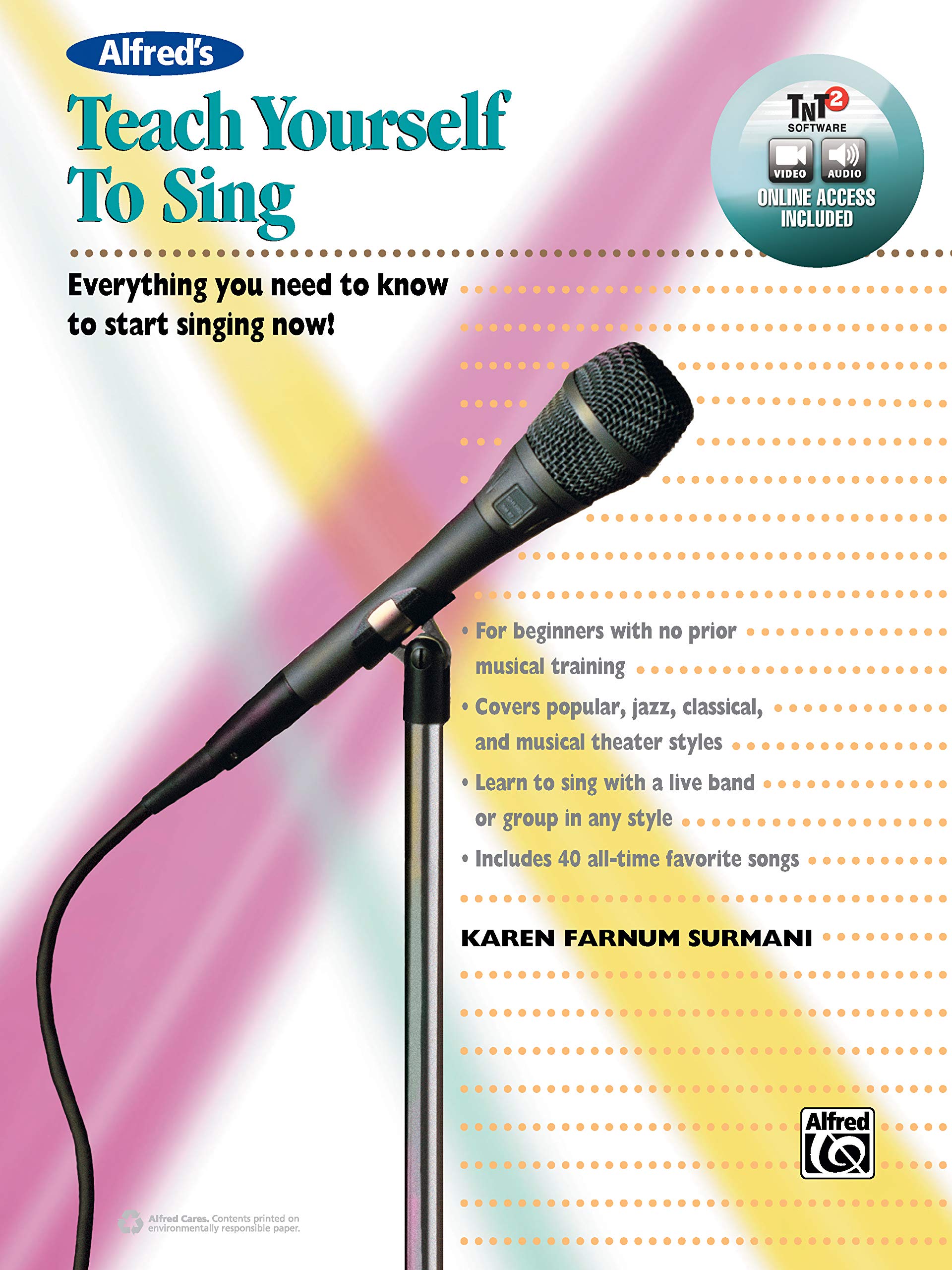
This book is a practical, easy-to-follow choice if you want to start singing or build up your skills with clear lessons and support materials.
Pros
- Offers step-by-step lessons for beginners
- Includes online videos and audio for extra help
- Lays out vocal exercises you can do at home
Cons
- Some buyers expected a CD but only got online material
- Doesn’t go very deep into advanced techniques
- Can feel bulky to handle with its larger size
If you are new to singing and want a program to guide you at home, this is a handy way to get started. The lessons are easy to follow, and the online videos add a lot to each topic.
It is helpful not only for people who have never sung before, but also for those getting back into music after some time away. Having video and audio along with the book makes understanding concepts much simpler.
You don’t have to guess what the exercises sound like, which helps a lot when you’re on your own. The book covers a lot of ground in a short amount of space, with each topic built on the one before, so it never feels overwhelming.
The book’s size is a bit awkward to use on crowded desks, and some may be disappointed if they were expecting a CD. Still, the clear instructions and online help make it a great fit if you want to start singing from scratch.
If you need an easy, trustworthy guide for learning to sing, Alfred’s Teach Yourself to Sing will help you take your first steps with confidence.
Master Your Voice
If you’re looking to improve your singing from any level, this book gives honest and relatable advice you can use right away.
Pros
- Steps are explained in clear, simple language
- Focuses on finding your unique sound
- Covers both technique and performance confidence
Cons
- Some exercises can take time before you notice changes
- You may need to reread parts for deeper understanding
- Visual learners might wish for video examples
“Master Your Voice” stands out because the author breaks down each concept in a way that actually makes sense as you read. Instead of giving you a set of random tips, this book takes you through rhythm, pitch, vocal registers, and how to move between them smoothly.
Trying out these exercises, you’ll notice how each builds on the last, so your voice feels stronger and less strained. Rather than encouraging you to copy others, this guide teaches you how to discover what makes your voice special.
If you’ve felt stuck or unsure how to get comfortable with your own voice, the advice here is motivating without feeling overwhelming. You don’t need to read music or have special knowledge going in.
Each chapter is practical, short, and clear, so you aren’t lost in jargon or technical diagrams. While more visual examples might be helpful, especially for tricky concepts, what’s written is easy to follow.
For anyone serious about singing, Master Your Voice is worth your time.
Beginning Singing

If you want a clear and encouraging guide as you start to sing, this book gives you practical steps to help you improve every day.
Pros
- Simple guidance for beginners
- Useful exercises you can try right away
- Explains singing concepts without confusing language
Cons
- Some tips may feel basic to experienced singers
- Not as detailed for advanced technique
- Lacks video or audio resources in the book itself
This book makes singing feel less intimidating. You get practical advice that anyone can use, whether you’re just starting or returning after some time away.
The explanations are easy to follow, so you don’t have to worry about complicated words or science. The exercises in the book helped me pay attention to how I use my voice and how to make the most of my range.
You get clear steps, and I found that the more I practiced, the more my singing improved. If you like to read and go at your own pace, you’ll appreciate this book.
However, if you learn better with audio or video examples, you may need to pair it with something extra. For anyone looking to build a foundation and gain confidence, Beginning Singing is a good place to start.
Beginner Vocal Lesson Book
If you want a simple way to start learning to sing, this guide is helpful and easy to use.
Pros
- Clear step-by-step lessons for beginners
- Good for ages 8 and up
- Lightweight and not overwhelming
Cons
- Not detailed for more advanced singers
- Only 71 pages
- Not much information about singing styles
This book makes learning to sing much less confusing. You’ll find the instructions clear and easy to follow, so you won’t feel lost.
Each lesson feels like it’s made for someone just stepping into singing practice for the first time. I liked how straightforward the practice exercises are.
If you want to dip your toe into singing without a big commitment, this short book won’t scare you off. You get to build confidence by reading through lessons at your own pace.
While it’s a solid choice for new singers, you might find the content a bit short if you want to go deeper or focus on certain musical styles. Still, you won’t feel lost or discouraged—it gives you the basics in a way that feels friendly and achievable.
Buying Guide
When picking a book about singing, start by checking if it matches your interests. Some books tell stories about singers, while others teach you about singing techniques or the history of music.
Think about what you want to learn or enjoy reading about. Look at the book’s reading level.
Some are written for beginners, and others use more advanced language or concepts. Make sure the book is easy for you to understand.
Consider the book’s format. Books can be paperbacks, hardcovers, or e-books.
If you want to take the book with you when you travel or sing, an e-book may be best. Think about these key features:
| Feature | Why It Matters |
|---|---|
| Author’s Experience | More experience can mean better advice |
| Illustrations | Helpful for understanding techniques |
| Reviews | Can show if other readers liked it |
| Practice Tips | Useful if you want to get better |
Check the table of contents or sample pages if you can. This helps you see if the book covers what you want to know.
If you enjoy learning with others, you might prefer books that include group activities or extra resources, like online videos or audio files. Always read the description and reviews before you buy.
Frequently Asked Questions
You can find books for music lovers in both fiction and non-fiction. Some books focus on the lives of musicians, the music industry, and the experiences of singers.
What are some highly recommended novels centered around rock and roll themes?
High Fidelity by Nick Hornby is popular for its focus on music fans and record store culture.
The Commitments by Roddy Doyle tells the story of a soul band in Dublin.
The Final Revival of Opal & Nev by Dawnie Walton features a fictional rock duo in the 1970s.
Can you suggest fiction books that explore the lives of musicians with a focus on music?
Daisy Jones and The Six by Taylor Jenkins Reid gives a look into a fictional 1970s rock band.
A Visit from the Goon Squad by Jennifer Egan explores different characters in the music scene.
Bel Canto by Ann Patchett follows an opera singer taken hostage at a party.
Which non-fiction books offer the best insights into the music industry?
Hit Men by Fredric Dannen investigates the world of pop music producers and executives.
This Is Your Brain on Music by Daniel J. Levitin explains how music affects people.
Just Kids by Patti Smith talks about her life and career in the New York music world.
What are the top-rated narratives similar in style to ‘Daisy Jones and The Six’?
The Final Revival of Opal & Nev uses a similar interview style.
It focuses on the rise and fall of a fictional band.
Songs in Ursa Major by Emma Brodie tells a story about love, fame, and making music in the 1960s and 70s.
Utopia Avenue by David Mitchell follows a fictional band during the late 1960s.
Who are some of the most acclaimed non-fiction authors that write about music and singing?
Patti Smith is known for her books on music and art.
Greil Marcus has written important works on rock and American music culture.
Lester Bangs was a famous music journalist and critic.
What are the defining non-fiction titles of the 21st century that cater to music enthusiasts?
Just Kids by Patti Smith has earned many awards for its honest storytelling.
This Is Your Brain on Music by Daniel J. Levitin explores science and passion for music.
Life by Keith Richards is a bestselling autobiography about the Rolling Stones guitarist’s life and career.