20 Ancient Hobbies People Still Practice Today: Timeless Activities That Connect Us to Our Ancestors
People have been finding ways to fill their free time for thousands of years, and many of those activities are still around today. Ancient hobbies like blacksmithing, archery, gardening, and board games have survived centuries because they offer hands-on creativity, mental challenges, and ways to connect with others. These activities were not just ways to pass time but served practical purposes in daily life.
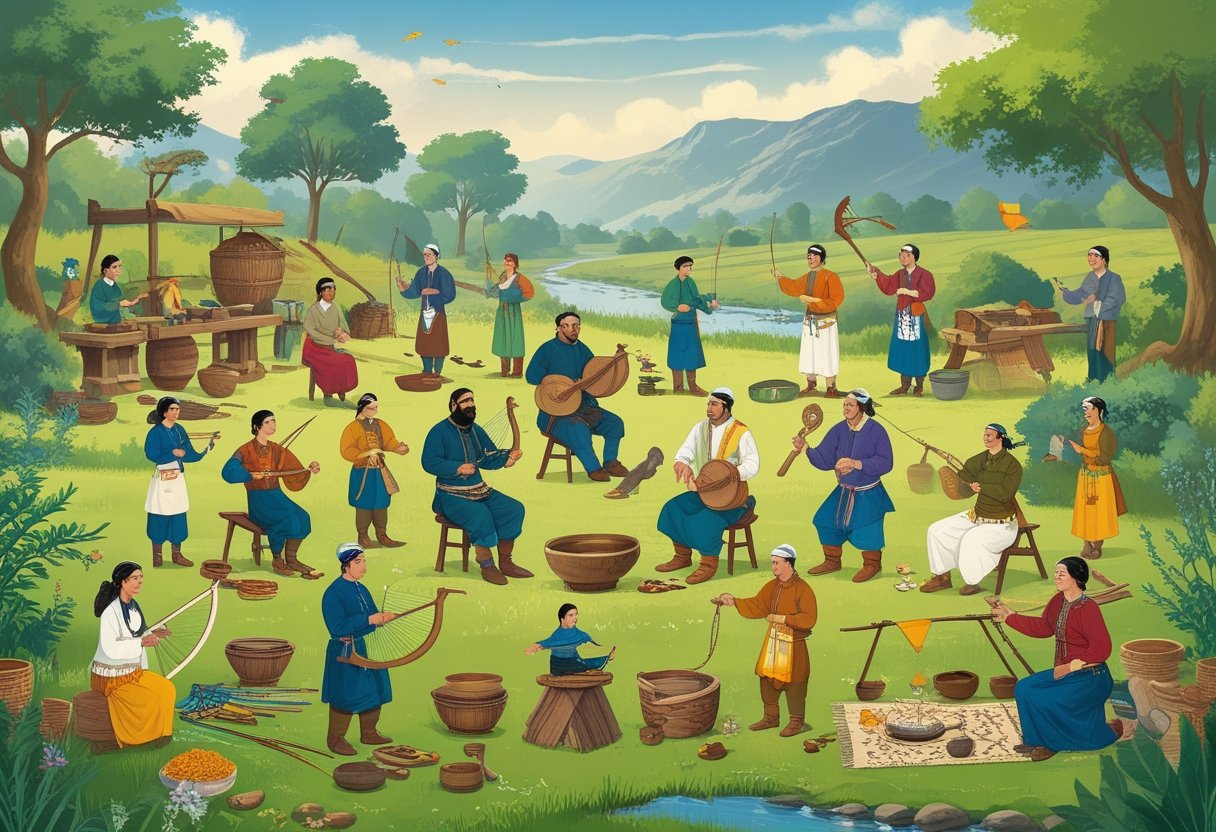
What makes these hobbies special is how they blend tradition with modern life. You can find people today who practice the same crafts, play the same games, and enjoy the same physical activities that people did in ancient civilizations. Some of these hobbies have evolved with new technology, while others remain nearly unchanged.
From artistic pursuits to outdoor activities, these ancient pastimes continue to bring joy and purpose to people’s lives. Many traditional hobbies are making comebacks as more individuals look for meaningful ways to spend their time away from screens. You might be surprised to learn which ancient activities still thrive in your own community.
Defining Ancient Hobbies
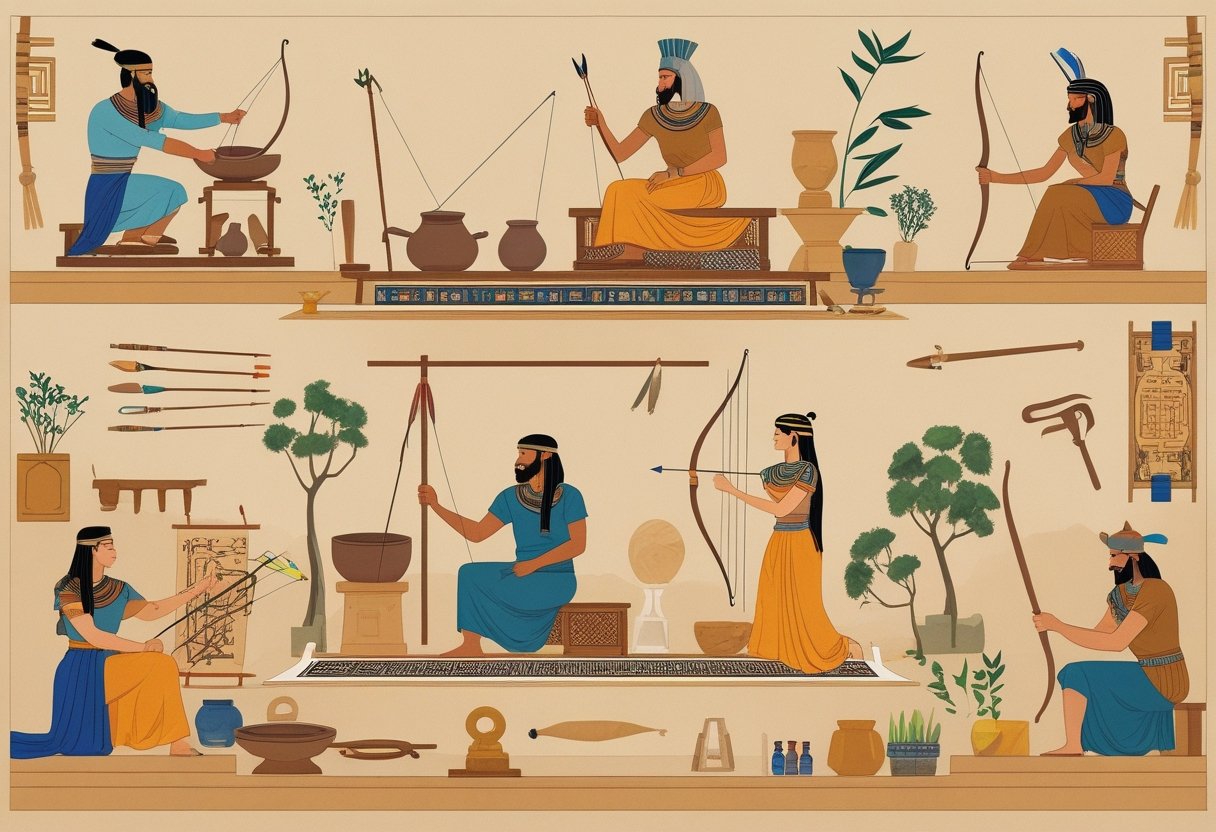
Ancient hobbies are leisure activities that originated hundreds or thousands of years ago and continue to be practiced in recognizable forms today. These pastimes have survived through centuries because they fulfill fundamental human needs for creativity, skill development, and social connection.
Historical Context of Hobbies
The concept of hobbies as we understand them today didn’t exist in ancient civilizations the same way it does now. People in ancient times filled their free time with activities that often blurred the line between work and leisure.
In Ancient Egypt and Ancient Mesopotamia, many activities we now call hobbies served practical purposes first. For example, people practiced archery for hunting and warfare, while pottery making produced essential household items. Over time, these skills evolved into recreational pursuits.
The wealthy classes in ancient societies had more time for pure leisure activities. They engaged in board games, music, storytelling, and physical competitions. Common people also pursued enjoyable activities during religious festivals and seasonal breaks from agricultural work.
Some of the world’s most popular hobbies stretch back to these early civilizations. What started as survival skills or religious practices gradually transformed into activities people chose to do for enjoyment and personal satisfaction.
Criteria for Longevity
Several factors determine whether an ancient hobby survives into modern times. The activity must offer something that technology cannot easily replace or improve upon.
Key survival factors include:
- Tactile engagement – hands-on activities that engage your senses
- Skill progression – the ability to continuously improve
- Social elements – opportunities for community building
- Accessibility – reasonable cost and material availability
- Adaptability – flexibility to evolve with changing times
Hobbies that teach patience and build physical or mental skills tend to endure. These older activities engage the senses, build memory, and develop capabilities in ways that passive digital entertainment cannot match.
The materials and tools required also matter. Hobbies using readily available or renewable resources have better survival rates than those dependent on rare materials or extinct species.
Cultural Significance Over Time
Ancient hobbies carry cultural knowledge and traditions across generations. When you practice these activities, you connect with the same techniques and experiences your ancestors enjoyed.
Hobbies have been influenced by society, culture, and technological advancements throughout history. Each civilization added its own methods and meanings to these practices. What started in one culture often spread along trade routes and through conquest.
Many ancient hobbies preserved important skills that communities valued. Blacksmithing, weaving, and pottery making kept practical knowledge alive even as industrial manufacturing took over production. These crafts became markers of cultural identity and artistic expression.
Traditional hobbies today blend creativity, community, and craftsmanship in ways that resonate with modern practitioners. You gain both the satisfaction of creating something with your hands and a link to human history spanning millennia.
Craftsmanship and Artistic Pursuits
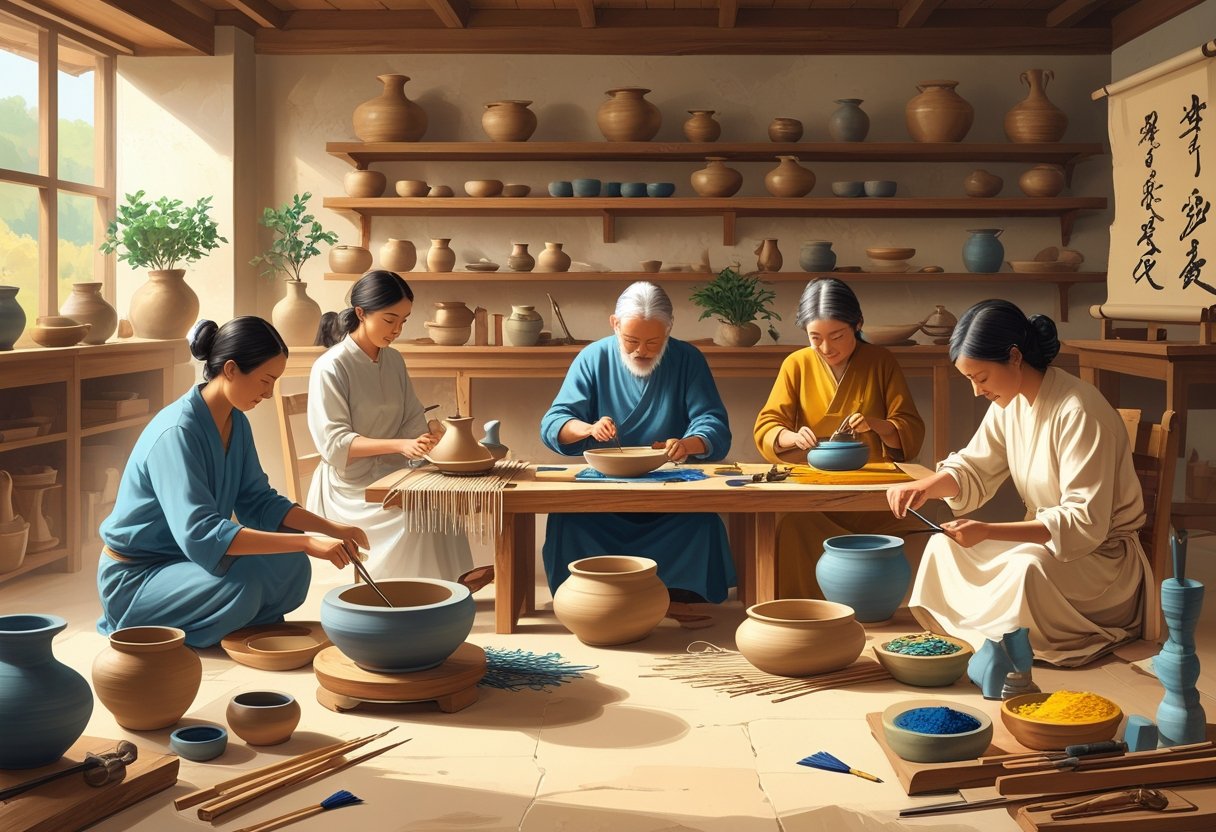
Working with your hands to create functional and beautiful objects connects you to techniques that date back thousands of years. These crafts require patience, skill, and dedication that many people still find rewarding today.
Pottery Making
You can trace pottery back over 20,000 years to ancient civilizations that shaped clay into vessels for storing food and water. The basic techniques remain unchanged: you wedge clay to remove air bubbles, shape it on a wheel or by hand, and fire it in a kiln to harden it.
Modern potters use the same fundamental skills as their ancient counterparts. You center clay on a spinning wheel, pull up walls with steady pressure, and trim excess material once the piece dries to leather-hard consistency. Many historical hobbies are making a modern comeback as people seek hands-on creative outlets.
The tools have improved, but the process stays true to tradition. You still need to understand clay bodies, glazing chemistry, and firing temperatures. Electric kilns offer more control than wood-fired ones, yet many potters choose traditional methods for the unique effects they create.
Handweaving and Textile Arts
Weaving fabric on looms dates back to 5000 BCE in various cultures worldwide. You interlace two sets of threads at right angles: the warp runs lengthwise under tension, while the weft passes over and under the warp threads.
Basic weaving patterns include:
- Plain weave (simplest, alternating over-under pattern)
- Twill weave (diagonal pattern, used in denim)
- Satin weave (smooth surface with floating threads)
You can start with simple frame looms or invest in floor looms for complex patterns. The shuttle carries your weft thread across the warp, and you beat each pass into place with a reed. Traditional hobbies that blend creativity and craftsmanship continue to attract new practitioners.
Hand-spinning wool or cotton into yarn often accompanies weaving. You draft fibers and add twist using a drop spindle or spinning wheel, controlling thickness and texture through practice.
Calligraphy Traditions
Beautiful writing developed as an art form in multiple ancient cultures, from Chinese brush calligraphy dating to 2000 BCE to Islamic calligraphy and European illuminated manuscripts. You use specialized tools to create letters with varying line weights and decorative flourishes.
Different traditions require specific tools and techniques. Western calligraphy uses broad-edge nibs that create thick and thin strokes based on writing angle. Chinese and Japanese calligraphy employs brushes that respond to pressure and speed. Arabic calligraphy features flowing, connected letterforms with strict geometric proportions.
You need to master proper posture, grip, and stroke order. Each script has rules about letter height, spacing, and rhythm. Practice sheets help you develop muscle memory for consistent letterforms.
Wood Carving
Humans have carved wood for at least 400,000 years, creating tools, religious objects, and decorative items. You remove material with sharp tools to reveal shapes hidden in the wood grain.
Common carving styles you can learn:
| Style | Description | Tools Used |
|---|---|---|
| Relief carving | Design stands out from flat background | Gouges, chisels, V-tools |
| Chip carving | Geometric patterns from angled cuts | Chip carving knives |
| Whittling | Small objects with simple knife work | Pocket knife, detail knife |
| Sculpture | Three-dimensional figures | Full chisel set, rasps |
You select wood based on your project needs. Basswood and butternut carve easily for beginners, while hardwoods like oak and walnut hold fine detail but require sharper tools and more effort. Understanding grain direction prevents splits and tear-out.
Sharp tools make carving safer and more enjoyable. You maintain edges with whetstones or strops, testing sharpness on scrap wood before working on your project.
Games and Intellectual Pastimes
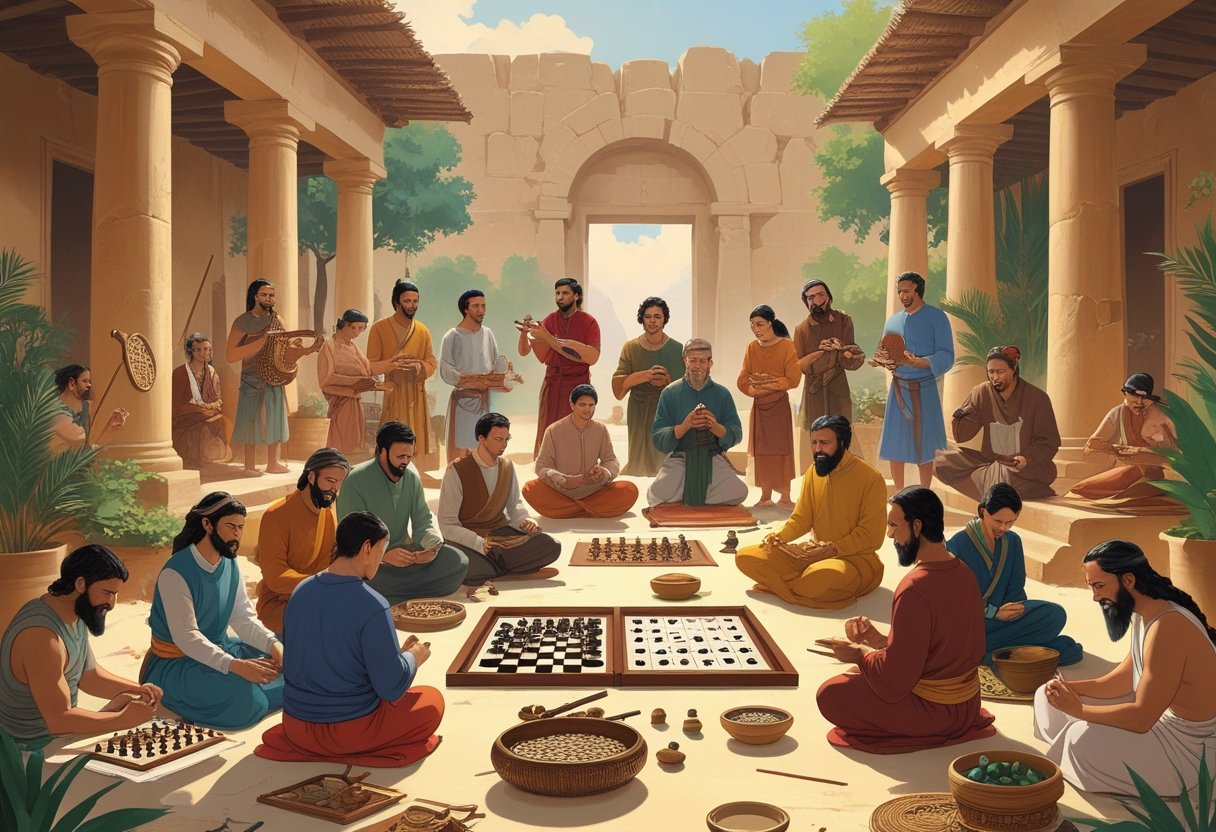
Strategy games like chess trace back over 1,500 years, while board games have entertained families for millennia. These mental challenges continue to attract players who value skill, planning, and competition.
Chess and Strategy Games
Chess evolved from an Indian game called chaturanga around 600 CE. The game spread through Persia and the Arab world before reaching Europe in the 9th century. You can still play the same basic moves and strategies that medieval players used centuries ago.
The game teaches you to think several moves ahead and consider your opponent’s plans. Each piece has unique movements that create endless combinations and tactics. Chess remains one of the most popular ancient games and pastimes practiced worldwide today.
Modern chess communities include online platforms, local clubs, and international tournaments. You can learn from millions of recorded games spanning hundreds of years. The core rules have stayed remarkably consistent despite the game’s global spread.
Board Games with Ancient Origins
Ancient board games include backgammon, which dates back nearly 5,000 years to Mesopotamia. The Royal Game of Ur, discovered in Iraq, used dice and racing pieces similar to modern backgammon. You move pieces based on dice rolls while trying to capture your opponent’s pieces.
Mancala represents another family of games people still play today. This counting game spread across Africa and Asia over 1,300 years ago. You collect stones or seeds in small pits carved into wood or stone boards.
These games required simple materials but complex thinking. Your success depends on counting, probability, and strategic planning.
Dominoes in Different Cultures
Chinese players invented dominoes around 1120 CE during the Song Dynasty. The original tiles represented all possible combinations of two dice throws. You match numbered ends of tiles to create chains and score points.
The game traveled to Europe by the 18th century, where it developed new variations. Block dominoes and draw dominoes remain the most common versions you’ll encounter. Latin American and Caribbean cultures embraced the game with particular enthusiasm, making it a social centerpiece at gatherings.
You can play dominoes competitively or casually with minimal equipment. The satisfying click of tiles and simple matching rules make it accessible to all ages.
Physical Activities Rooted in History
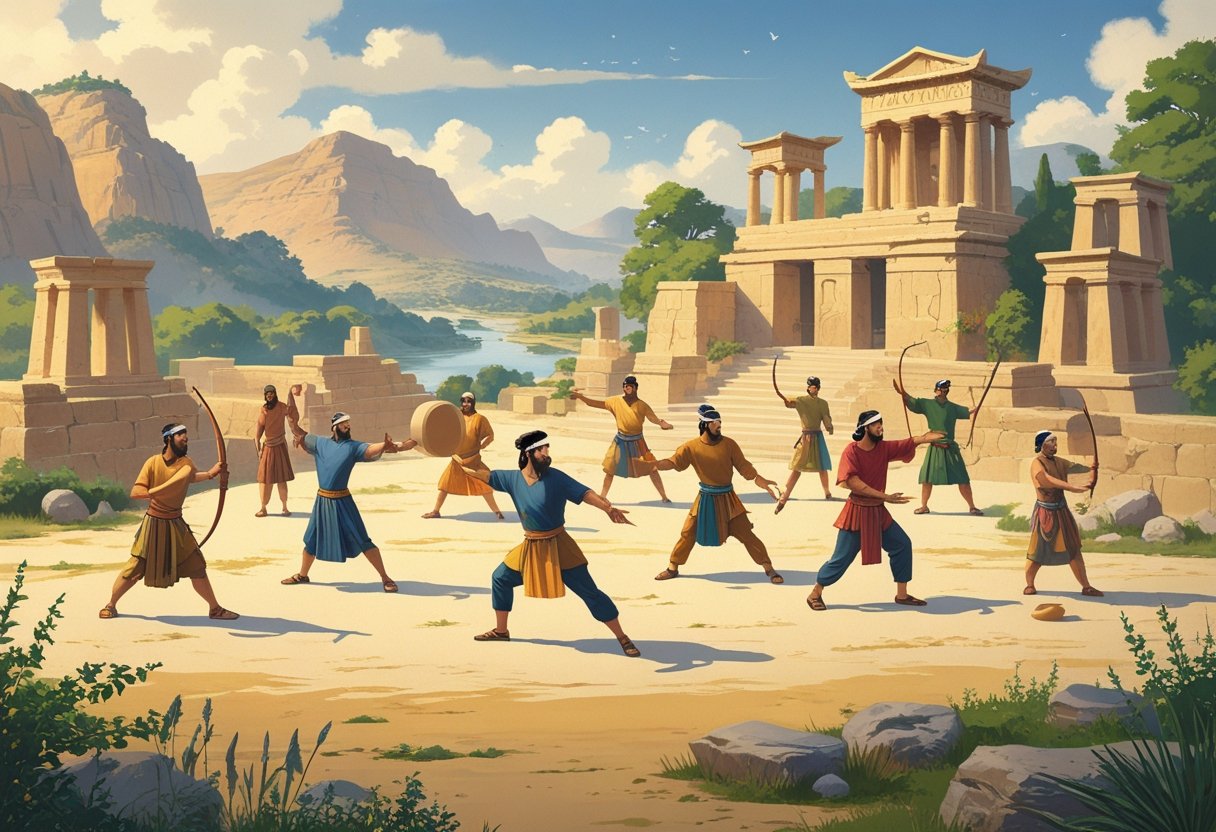
Humans have practiced physical disciplines for thousands of years, developing skills for survival, competition, and spiritual growth. Three activities stand out for their unbroken chains of practice from ancient civilizations to your modern gym or dojo.
Archery as a Competitive Sport
You can trace archery back more than 10,000 years when humans first used bows for hunting and warfare. Ancient Egyptian pharaohs practiced archery as both a military skill and royal sport around 3,000 BCE. The Chinese developed elaborate archery ceremonies during the Zhou Dynasty that emphasized moral character alongside physical skill.
Today, you’ll find archery in two main forms: target archery and field archery. Olympic archery uses recurve bows at distances up to 70 meters, while traditional Japanese kyudo maintains ceremonial elements from its samurai origins. You can also participate in 3D archery, where you shoot at life-sized animal targets in outdoor settings.
Modern competitive archery requires the same focus and breath control that ancient practitioners valued. Many archers still use techniques documented in medieval European and Asian texts.
Martial Arts Traditions
Fighting systems developed across every major civilization, giving you ancient sports that remain popular today. Wrestling appeared in Sumerian art from 3,000 BCE and became a cornerstone of the ancient Olympic Games. Chinese martial arts evolved over 4,000 years, blending combat techniques with philosophical and medical knowledge.
You can practice numerous martial arts that maintain their historical forms:
- Judo and Jujutsu from feudal Japan
- Kung Fu styles from Chinese monasteries
- Muay Thai from ancient Siamese warriors
- Pankration-inspired mixed martial arts from ancient Greece
Each tradition passes down specific movements, training methods, and ethical codes through direct teacher-student relationships that span generations.
Dancing Styles with Ancient Roots
Dance served religious, social, and entertainment purposes in every ancient culture. You can still learn belly dance movements depicted in Mesopotamian temples from 6,000 years ago. Classical Indian Bharatanatyam dance preserves gestures and stories from the Natya Shastra, a text written around 200 BCE.
European folk dances maintain patterns from medieval harvest celebrations and courtship rituals. Flamenco combines movements from Indian, Moorish, and Spanish Romani traditions dating back over 1,000 years. Greek folk dances like the syrtos connect directly to circle dances shown on ancient pottery.
You’ll find these traditional styles taught in studios worldwide, often by instructors who learned from masters maintaining centuries-old lineages.
Music and Performing Arts
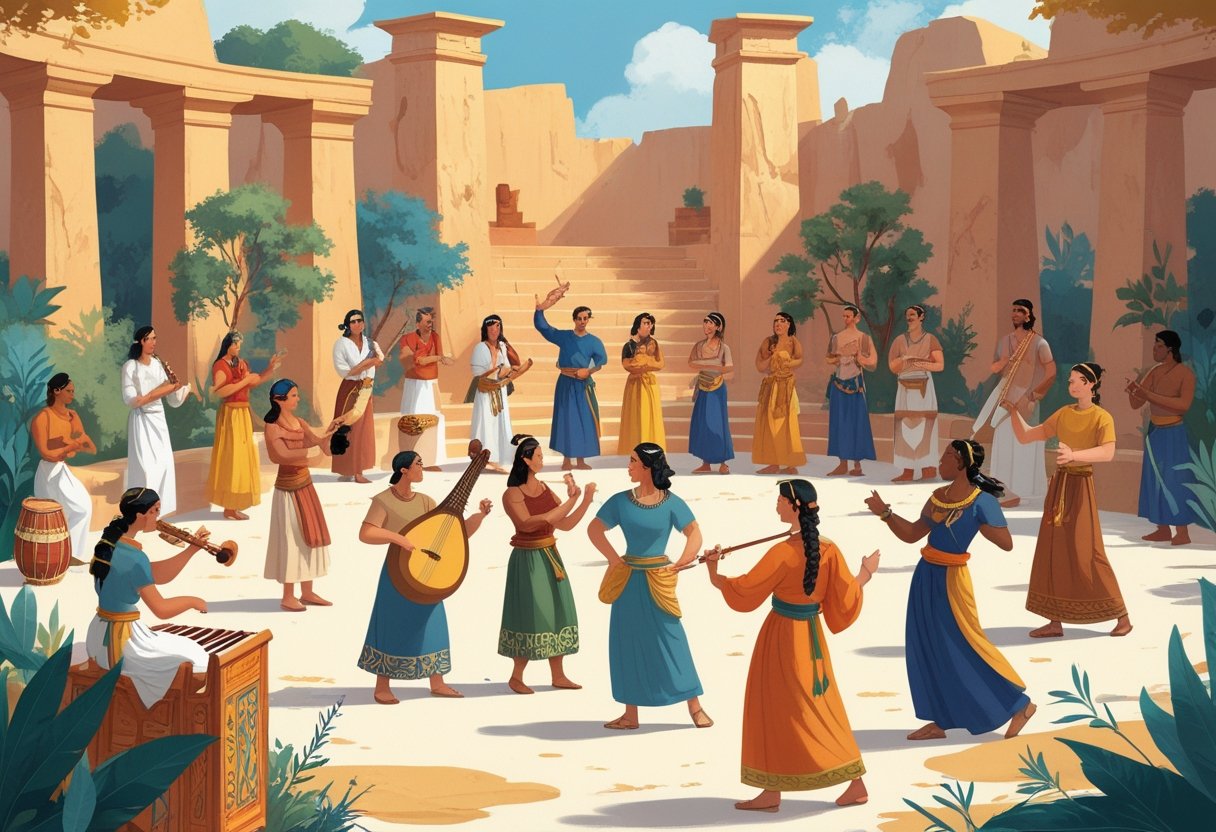
Ancient musical traditions and performance practices connect you to cultures that existed thousands of years ago. These art forms have survived through continuous practice, adapting to modern times while maintaining their historical roots.
Playing Traditional Instruments
You can still play instruments that have existed for millennia. The lyre, used in ancient Greece and Mesopotamia over 4,000 years ago, remains in use today in some Mediterranean communities. The didgeridoo, played by Aboriginal Australians for at least 1,500 years, continues to be both a cultural instrument and popular worldwide.
Drums represent one of the oldest instrument types you’ll find across every continent. Archaeological evidence shows drums existed in ancient Mesopotamia around 3000 BCE. Traditional drum circles and ceremonial drumming practices continue in African, Native American, and Asian cultures.
Common Ancient Instruments Still Played:
- Flutes – Dating back 40,000 years, made from bone or wood
- Harps – Used in ancient Egypt and Mesopotamia since 3000 BCE
- Bagpipes – Traced to ancient Middle Eastern civilizations
- Pan pipes – Played in ancient Greece and pre-Columbian Americas
Storytelling and Oral Narratives
Storytelling brings communities together to honor their heritage through spoken word performances. This practice predates written language by thousands of years. You’ll find oral traditions remain vital in many indigenous cultures worldwide, passing down history, wisdom, and cultural values through generations.
Professional storytellers called griots in West Africa maintain centuries-old traditions of memorizing and reciting family histories and epic tales. Irish seanchaí continue the Celtic tradition of oral storytelling that stretches back to pre-Christian times. These performers use memory techniques, rhythm, and dramatic expression to keep ancient stories alive.
Folk Singing Practices
Traditional folk songs preserve melodies and lyrics from ancient times. You’re hearing musical forms when you listen to folk music that date back hundreds or thousands of years. Music played an important role from the earliest civilizations and continues to shape modern culture.
Sea shanties, work songs, and ballads all originated as functional music in ancient and medieval societies. These songs helped coordinate labor, share news, and entertain communities. Modern folk singing circles and festivals keep these traditions active, with performers learning songs passed down through oral tradition rather than written notation.
Gardening and Nature-Based Hobbies
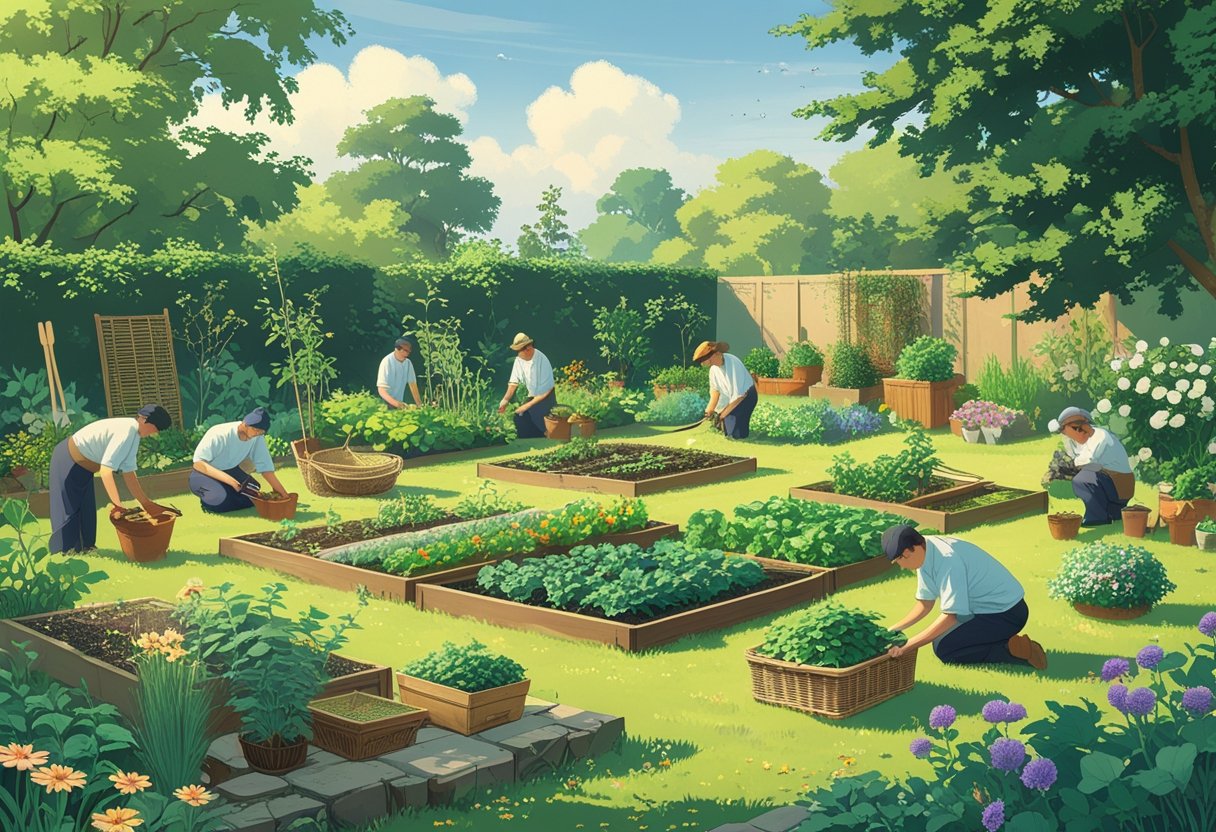
People have grown medicinal plants, watched birds, and fished using time-tested methods for thousands of years. These practices connect you to the natural world while providing food, medicine, and a deeper understanding of ecosystems.
Herbalism and Plant Cultivation
Growing herbs and medicinal plants dates back to ancient civilizations in Egypt, China, and Greece. You can still use these ancient gardening techniques to grow healthy plants without modern chemicals.
Companion planting is one method where you grow certain plants together to help each other thrive. For example, planting basil next to tomatoes helps repel pests naturally. Ancient farmers also used crop rotation to keep soil healthy and prevent disease.
You can start an herb garden with common plants like mint, chamomile, and lavender. These plants have been used for medicinal purposes for centuries. They’re easy to grow and require minimal space, making them perfect for beginners.
Many traditional farming techniques worked with the local terrain and natural cycles rather than against them. This approach creates healthier soil and stronger plants over time.
Bird Watching
Bird watching began as a scientific pursuit in the 1700s but has roots in much older nature observation practices. You observe different bird species, track their behaviors, and record migration patterns throughout the seasons.
This hobby requires minimal equipment to start. You need a basic pair of binoculars and a field guide to identify local birds. Over time, you can learn to recognize birds by their calls and flight patterns.
Bird watching helps you develop patience and attention to detail. You’ll notice seasonal changes in your area as different species arrive and depart. Many bird watchers keep journals to track what they see and when they see it.
Fishing Techniques Passed Down Generations
Ancient fishing methods like hand-line fishing, spearfishing, and net casting remain effective today. These techniques require skill and knowledge of fish behavior that fishermen have refined over centuries.
You learn to read water conditions, understand fish habitats, and time your fishing to match seasonal patterns. Traditional fly fishing uses handmade lures that mimic insects, a practice that dates back to ancient Macedonia.
Many families still teach younger generations how to tie specific knots, prepare bait, and cast lines properly. These skills connect you to both nature and cultural traditions that have sustained communities for generations.
Social and Community-Centered Activities
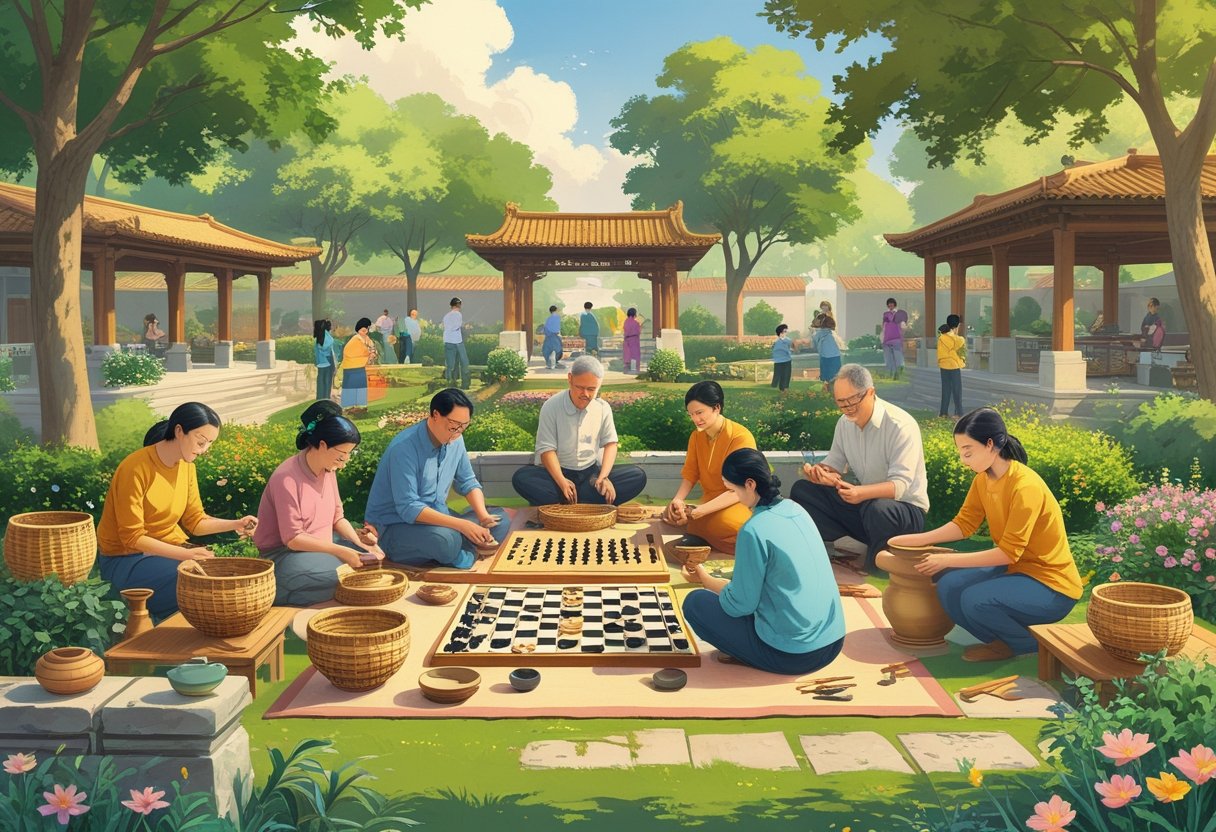
People have always gathered to create, celebrate, and build together. These shared activities strengthened bonds between neighbors and passed down skills through generations.
Traditional Festive Cooking
You can trace festive cooking back thousands of years to when communities gathered to prepare special meals for celebrations and religious ceremonies. Ancient civilizations dedicated entire days to cooking feasts that brought everyone together.
Today, you’ll find people continuing these traditions during holidays and special occasions. Families still gather to make tamales during Christmas in Latin American communities, just as their ancestors did centuries ago. Italian families carry on the tradition of making pasta by hand for Sunday dinners and feast days.
Common festive foods still prepared today:
- Moon cakes for Mid-Autumn Festival
- Challah bread for Jewish Sabbath
- Easter bread in Orthodox Christian communities
- Dumplings for Lunar New Year
These cultural activities help pass on and strengthen values, beliefs, and practices through food preparation. You learn recipes from older family members, and the process becomes as important as the meal itself.
Dyeing and Textile Decoration
Ancient cultures developed complex dyeing techniques using plants, minerals, and insects to create vibrant colors for fabrics. Egyptians used indigo and madder root, while Romans prized purple dye from sea snails.
You can still practice these ancient methods today. Natural dye workshops teach you to extract colors from onion skins, turmeric, and avocado pits. Tie-dye, batik, and shibori techniques that originated in Asia and Africa remain popular ways to decorate textiles.
Many artisans now combine traditional dyeing with modern designs. You’ll find hand-dyed fabrics at craft markets, and textile decoration remains a way for communities to express cultural identity through patterns passed down for generations.
Stone Carving for Communal Spaces
Stone carving served practical and artistic purposes in ancient societies. Communities created monuments, boundary markers, and decorative elements for public gathering places. These carvings told stories and marked important locations.
You can see this tradition continuing in modern communities. Local artists carve memorial stones, create public sculptures, and design decorative elements for parks and buildings. Stone carving classes teach you the same basic techniques used by ancient craftspeople.
Types of communal stone work you might encounter:
- Memorial benches in public parks
- Carved entrance markers for neighborhoods
- Decorative fountains and water features
- Engraved plaques for historical sites
The process requires patience and skill, but you’re participating in one of humanity’s oldest art forms when you shape stone for shared spaces.
Evolution and Modern Relevance of Ancient Hobbies
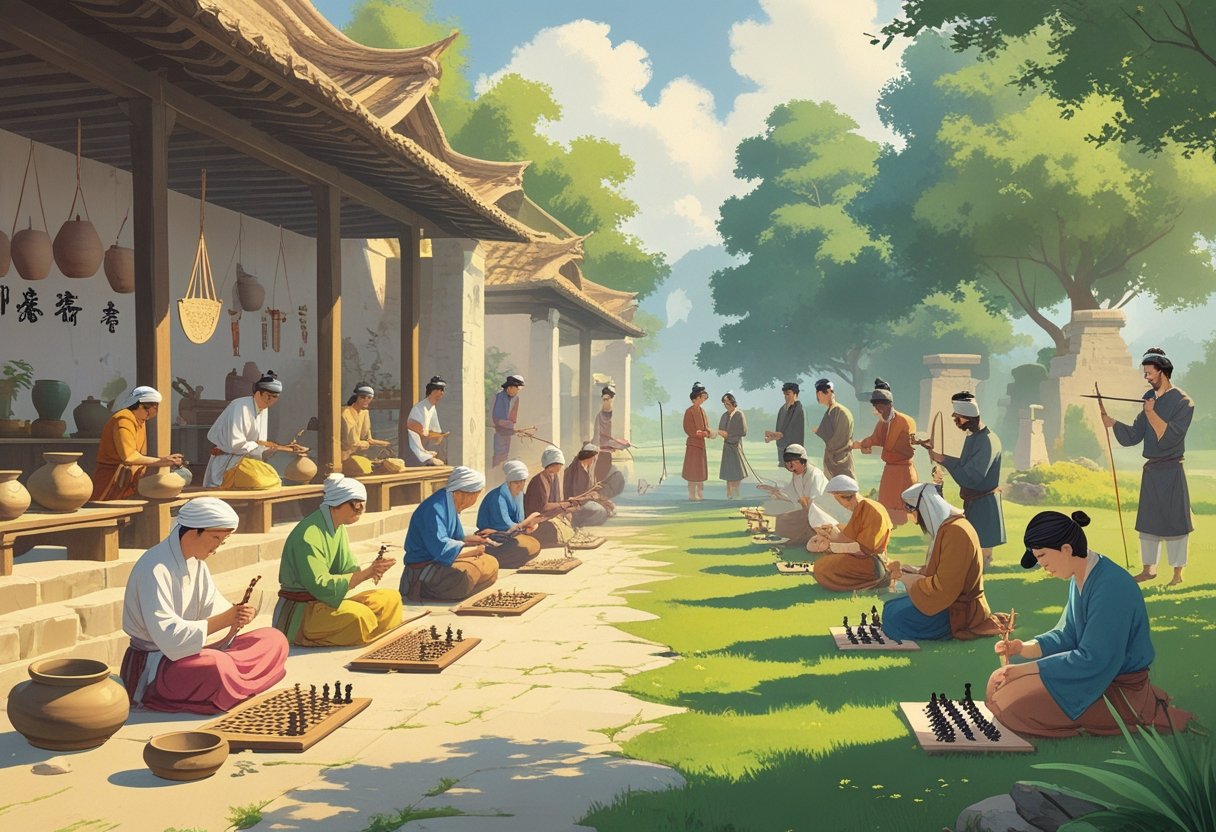
Ancient hobbies have adapted to contemporary tools and platforms while maintaining their core practices, with digital communities now supporting global networks of practitioners and renewed interest driving cultural preservation efforts across generations.
Preservation in the Digital Age
Technology has transformed how you can learn and practice ancient hobbies. Online tutorials, video demonstrations, and virtual workshops make skills like pottery, calligraphy, and weaving accessible to anyone with internet access. You no longer need to find a local master craftsperson to begin your journey.
Digital platforms have created global communities where practitioners share techniques, showcase their work, and preserve traditional knowledge. Social media groups dedicated to ancient crafts often have thousands of members exchanging tips and historical information. You can now connect with fellow enthusiasts worldwide who practice the same ancient hobby.
How hobbies have changed reflects this shift from geographically limited activities to globally accessible practices. Mobile apps help you track your progress in activities like archery or meditation, while online marketplaces let you source authentic materials from their places of origin.
Revival Movements and Global Appeal
Many ancient hobbies are experiencing renewed popularity as people seek meaningful activities beyond screen time. Blacksmithing classes, once nearly extinct, now have waiting lists in urban areas. You might find traditional archery clubs, herbalism workshops, and ancient cooking classes in your own community.
This revival often connects to broader movements valuing sustainability and handcrafted goods. When you practice ancient textile techniques or natural dyeing, you participate in eco-conscious alternatives to mass production. The evolution of hobbies across eras shows how cultural values shape which activities gain prominence.
Young people are increasingly drawn to these traditional practices as forms of self-expression and cultural connection. You bring fresh perspectives while honoring historical methods, creating hybrid approaches that blend old and new.
Sustaining Ancient Hobbies for Future Generations
Educational institutions now recognize the value of teaching ancient skills alongside modern subjects. Museums offer hands-on workshops where you can try activities like flint knapping, papermaking, or traditional brewing. Community centers and cultural organizations host regular classes that pass knowledge from experienced practitioners to beginners.
Mentorship programs pair you with skilled artisans who provide personalized instruction in traditional crafts. These relationships preserve techniques that books and videos cannot fully capture. Master-apprentice models from ancient guilds still prove effective for transmitting nuanced knowledge.
Documentation efforts ensure these hobbies survive beyond individual practitioners. You can contribute by recording your learning process, creating instructional content, or supporting cultural preservation initiatives. The significance of hobbies in human culture extends beyond personal enjoyment to maintaining connections with your heritage and history.