

Best Guitar Strings for Tone and Durability in 2027
Guitar strings are the foundation of your instrument’s sound and playability. Whether you’re strumming acoustic ballads, shredding electric solos, or plucking classical melodies, the right strings can transform your playing experience. Fresh strings produce brighter tones, better sustain, and more accurate intonation compared to worn-out ones.
The type of material used in guitar strings significantly affects their tone, longevity, and feel under your fingers. Steel strings for acoustic and electric guitars come in various alloys like bronze, phosphor bronze, and nickel-plated steel, each offering distinct tonal characteristics. Classical guitars use nylon strings, which produce warmer, mellower tones. String gauge matters too—lighter gauges are easier to play and bend, while heavier gauges offer fuller tone and volume but require more finger strength.
Coating technology has also become an important consideration, as coated strings resist corrosion from sweat and oils, lasting significantly longer than uncoated options. Some players prefer the natural feel and bright sound of uncoated strings despite their shorter lifespan. We tested dozens of string sets across different materials, gauges, and price points to find the options that deliver the best combination of tone, durability, and value.
Best Guitar Strings
Below is our full list of the best guitar strings. We evaluated each set based on tone quality, durability, playability, and value to help you find the right strings for your instrument and playing style.
Elixir 80/20 Bronze Acoustic Strings

These strings offer exceptional longevity and consistent tone quality that makes them worth considering if you’re tired of frequent string changes.
Pros
- Extended lifespan means fewer replacements and better long-term value
- NANOWEB coating protects against corrosion while maintaining bright tonal characteristics
- Smooth feel reduces finger squeak during position changes
Cons
- Higher upfront cost compared to uncoated string options
- Some players find the coating affects the natural feel they prefer
- Brightness may not suit those seeking warmer, mellower tones
The Elixir 80/20 Bronze Acoustic Strings stand out for their proprietary NANOWEB coating technology. This protective layer covers the entire string surface, including the gaps between windings where grime typically accumulates.
The light gauge set provides balanced tension that works well for various playing styles. The 80/20 bronze composition delivers crisp highs and focused midrange frequencies. Players can expect a bright sound profile that cuts through in ensemble settings.
Manufacturing takes place in the United States under controlled conditions. The coating resists environmental factors like humidity and hand oils that normally degrade string performance. This protection translates to strings that maintain their initial tone characteristics much longer than traditional options.
We notice the value proposition becomes clear over time rather than immediately. While the initial purchase price exceeds standard strings, the extended playable life reduces the frequency of replacements. The consistent tone means less adjustment to changing string characteristics between changes.
Elixir Phosphor Bronze Acoustic Strings

These strings offer exceptional longevity and consistent tone quality that can reduce the frequency of string changes for acoustic guitar players.
Pros
- NANOWEB coating technology shields against corrosion and debris while maintaining tone quality over extended periods
- Phosphor bronze construction delivers warm, balanced sound with clear high frequencies
- Wide player base and high satisfaction ratings indicate reliable performance across different playing styles
Cons
- Premium pricing compared to uncoated string options may not fit all budgets
- Coated feel might require adjustment for players accustomed to traditional uncoated strings
- Light gauge may not suit those who prefer heavier string tension
The Elixir Phosphor Bronze strings stand out for their durability claims backed by proprietary coating technology. The NANOWEB coating covers the entire string surface, including the spaces between windings, to prevent buildup that typically diminishes tone. This protection extends string life considerably beyond standard options.
Sound characteristics lean toward a rich, full-bodied profile with enhanced clarity in the upper register. The phosphor bronze wrap wire contributes to the warm tonal balance that many acoustic players seek. Manufacturing takes place in the United States with both laboratory and field testing protocols.
The light gauge set includes strings ranging from .012 to .053, suitable for players who prefer moderate tension and easier fretting. With over twelve thousand ratings averaging 4.8 stars, these strings have established strong acceptance among users. The investment may pay off through reduced replacement frequency, though the initial cost exceeds basic string sets.
D’Addario XL Nickel Regular Light Strings

These strings offer reliable performance and bright tone at a reasonable price point, making them a solid choice for electric guitarists across different skill levels and musical styles.
Pros
- Consistent intonation and durability backed by decades of manufacturing refinement
- Bright, versatile sound works well across multiple musical genres
- Three-pack format provides better value and keeps spare sets on hand
Cons
- Nickel-plated wrap may wear faster than coated alternatives
- Light gauge might not suit players who prefer heavier string tension
- Brightness in tone may require adjustment for those accustomed to warmer-sounding strings
The D’Addario XL Nickel strings have maintained their position as an industry standard since 1974. The nickel-plated steel wrap wire over a high carbon steel core delivers a bright character that adapts well to clean and distorted tones alike.
The 10-46 gauge configuration strikes a balance between playability and tone. This setup provides enough tension for stable tuning without requiring excessive finger strength, which explains its popularity among beginners and experienced players.
We appreciate the proprietary Hex-Core design that contributes to tuning stability. The manufacturing takes place in New York under controlled specifications, which helps maintain quality consistency across production runs.
The three-pack format offers practical advantages beyond cost savings. Having backup sets available means fewer interruptions when a string breaks during practice or performance. The recyclable VCI bags include reward codes that can be registered for the Players Circle program, adding a small bonus for repeat customers.
These strings suit rock, blues, jazz, and pop styles effectively. The bright tonal profile cuts through band mixes well, though some players seeking warmer vintage tones might find them too crisp for their preferences.
Ernie Ball Super Slinky Electric Guitar Strings

These strings deliver reliable performance and a bright tone at an accessible price point, making them suitable for players across different skill levels.
Pros
- Nickel-plated steel construction provides a well-balanced and bright tonal character
- Element Shield Packaging helps maintain freshness and extends shelf life
- Manufactured in California with consistent quality control standards
Cons
- Uncoated design means they may require more frequent replacement than treated alternatives
- The 9-42 gauge set might feel too light for players who prefer heavier tension
- No warranty coverage is included with purchase
The Super Slinky gauge set has maintained popularity since its introduction, offering a lighter feel that many electric guitarists favor. The nickel-plated steel wrapped around hex-core wire creates a foundation for clarity across different playing styles.
We find the 9-42 gauge configuration strikes a middle ground between playability and tonal output. The lighter tension makes bending easier while still providing enough mass for adequate volume and sustain. This gauge selection works well for both rhythm work and lead playing.
The Element Shield Packaging addresses a common issue with string degradation during storage and shipping. Fresh strings produce better sound quality and feel more comfortable under the fingers. Manufacturing standards maintained at the California facility contribute to consistency between sets, which matters when you develop preferences for specific tonal characteristics.
The tin-plated high-carbon steel plain strings complement the wound strings’ nickel construction. This combination produces a balanced frequency response without excessive brightness or muddiness. The uncoated nature means direct contact with the core materials, though it also means oxidation and wear occur at a natural rate.
D’Addario EJ11 80/20 Bronze Strings
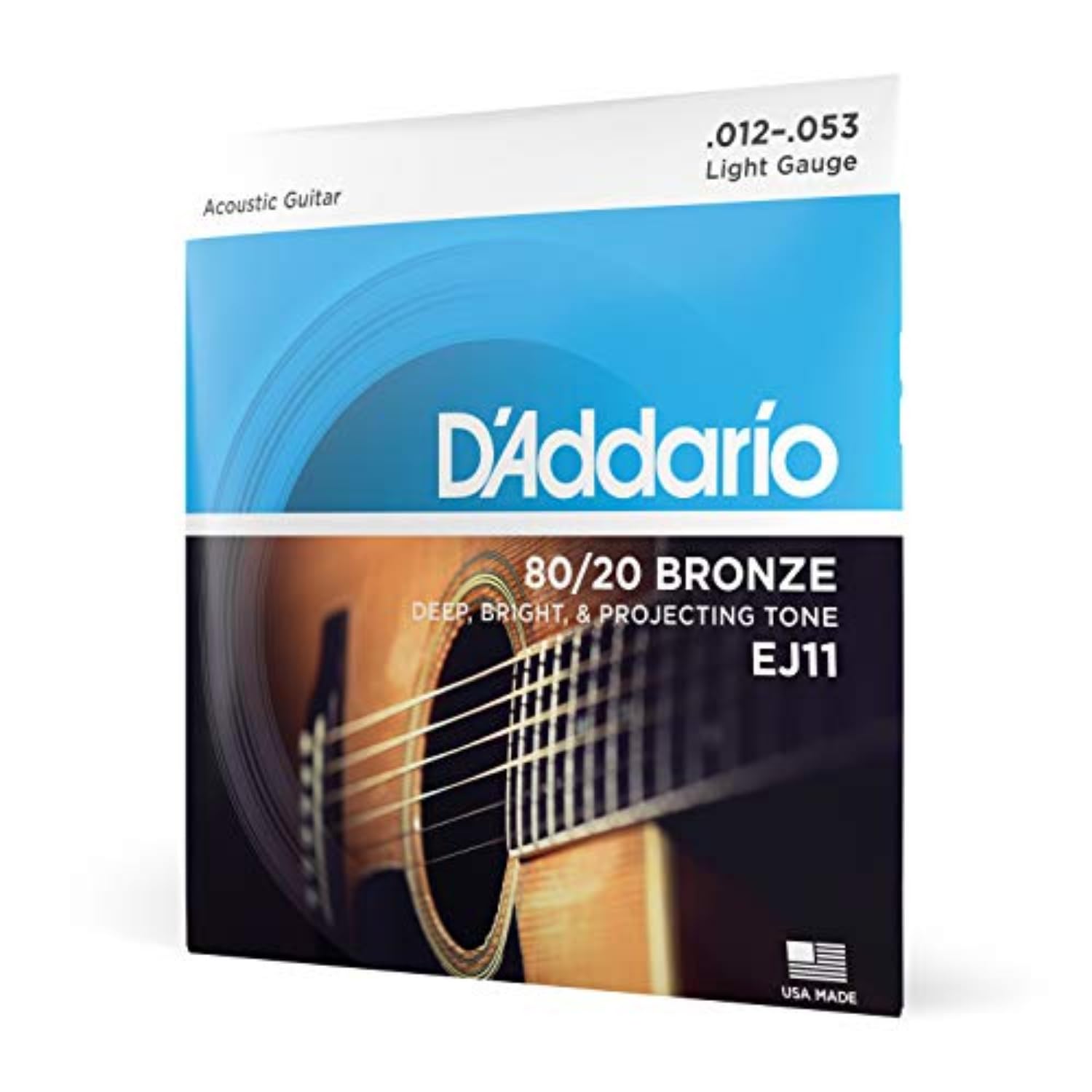
These strings deliver a bright, projecting tone that works well for recording and live performance, though their brilliance may not suit every playing style.
Pros
- Crisp, bright tonal quality with excellent projection that cuts through in a mix
- Manufactured in the USA with quality control standards that ensure consistent performance
- Packaging includes a code for reward points and reduces environmental waste
Cons
- The bright sound profile may be too trebly for players who prefer warmer tones
- Uncoated construction means shorter lifespan compared to coated alternatives
- Light gauge may lack volume for aggressive strumming styles
The D’Addario EJ11 80/20 Bronze Strings offer a tonal character rooted in nearly a century of string making tradition. The 80/20 bronze alloy produces a sparkling quality that emphasizes high-end frequencies and harmonic clarity.
These strings use a hexagonal high carbon steel core wrapped with 80/20 bronze wire. This construction method provides stable tuning and balanced tension across all six strings. The light gauge set measures 12-53, which offers moderate resistance under the fingers while producing adequate volume.
Recording engineers often select these strings for their clear definition in multi-track situations. The bright tonal signature helps acoustic guitar parts remain distinct when layered with other instruments. We find the projection suitable for both fingerpicking and flatpicking techniques.
The manufacturing process takes place at D’Addario’s New York facility using digital controls for precision. Each string undergoes quality checks to maintain specifications across production runs. The VCI bag protects against corrosion during storage and includes recyclable materials.
Players seeking vintage-inspired tone will appreciate the authentic 80/20 bronze formula that dates back to the 1930s. The strings produce the classic bright sound associated with traditional acoustic recordings. However, those who prefer mellower tones or extended string life may want to consider coated options instead.
Buying Guide
When selecting guitar strings, we need to consider several key factors that affect playability and tone. The material composition directly impacts the sound characteristics and longevity of the strings.
Material Types
Different materials produce distinct tonal qualities. Nickel-plated steel offers a balanced tone suitable for various playing styles. Pure nickel provides a warmer, vintage sound. Stainless steel delivers brightness and excellent corrosion resistance.
Gauge Selection
String gauge refers to the thickness of the strings, measured in thousandths of an inch. Lighter gauges are easier to bend and fret, making them ideal for beginners. Heavier gauges produce more volume and sustain but require more finger strength.
| Gauge Type | Typical Range | Best For |
|---|---|---|
| Extra Light | .008-.038 | Beginners, fast playing |
| Light | .009-.042 | Versatile playing styles |
| Medium | .010-.046 | Standard tuning, balanced tone |
| Heavy | .011-.050+ | Drop tuning, aggressive playing |
Coating Considerations
Coated strings feature a thin polymer layer that extends their lifespan by preventing corrosion. We find they maintain brightness longer than uncoated options. However, they typically cost more and may feel different under the fingers.
Winding Style
The outer wrap on wound strings comes in different styles. Roundwound strings are the most common and provide bright tone. Flatwound strings offer a smooth feel and mellow sound. Halfwound strings split the difference between the two.
We should also consider how frequently we play when choosing strings. Regular players benefit from durability-focused options, while occasional players might prioritize tone over longevity.