10 AI-Powered Creative Hobbies That Will Transform Your Artistic Expression in 2026
AI is transforming creative hobbies by acting as a personalized assistant and creative partner, making artistic pursuits more accessible and affordable than ever before. These intelligent tools are breaking down traditional barriers that once prevented people from exploring their creative potential, from high costs to technical complexity.
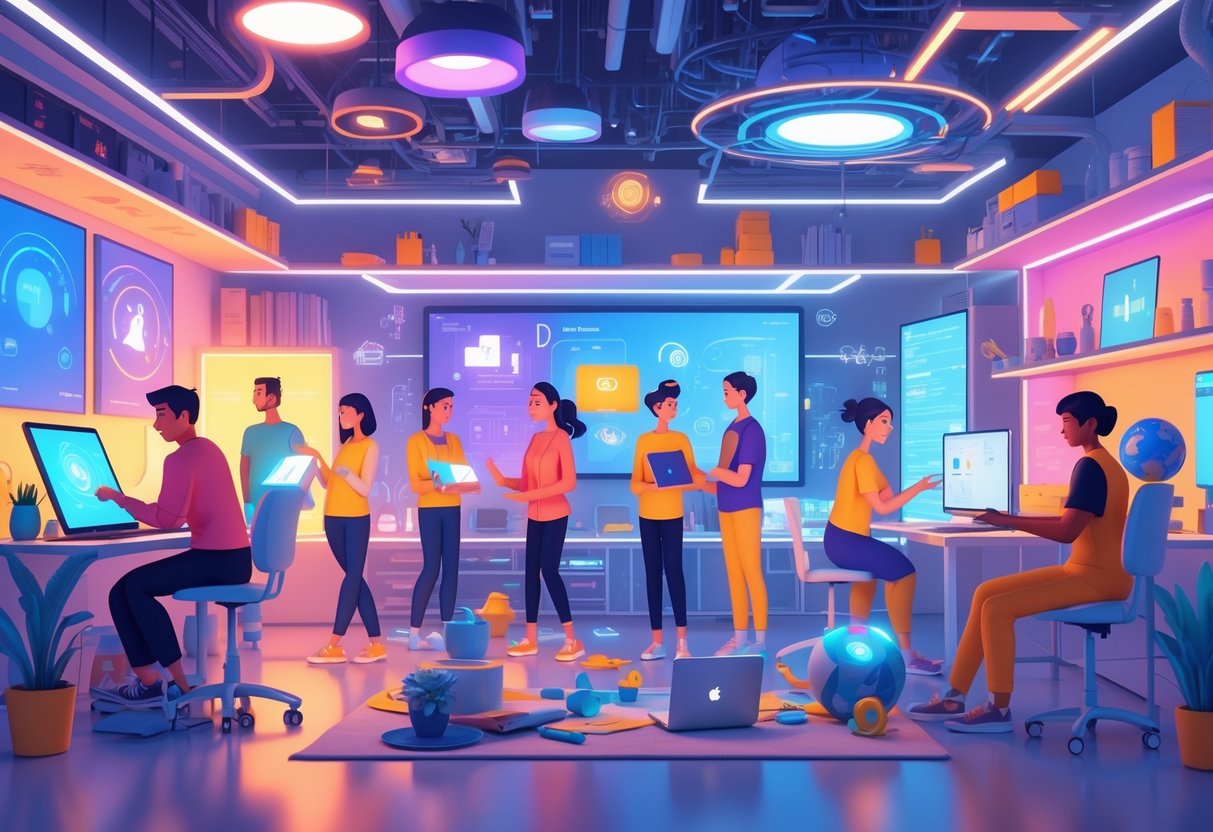
Whether you’re interested in digital art, music composition, or storytelling, AI tools are rekindling creativity by breaking financial barriers for creative hobbies. You no longer need expensive software or years of training to create professional-quality content. AI serves as your creative collaborator, offering inspiration, guidance, and technical assistance.
The landscape of creative hobbies is rapidly evolving as AI transforms leisure time in 2025 by lowering barriers and enhancing creativity across multiple disciplines. From generating art and composing music to enhancing photography and guiding craft projects, these tools are opening new possibilities for artistic expression.
Key Takeaways
- AI tools make creative hobbies more accessible by reducing costs and technical barriers
- These technologies serve as creative partners that provide inspiration and guidance across multiple artistic disciplines
- AI-powered creative tools are transforming how people learn, create, and express themselves in their leisure time
Overview of AI-Powered Creative Hobbies
AI transforms creative hobbies by acting as personalized assistants, creative partners, and smart tutors that lower barriers to entry while enhancing your artistic capabilities. These technologies break down financial and technical obstacles that previously limited creative exploration.
What Defines an AI-Powered Creative Hobby
An AI-powered creative hobby combines traditional artistic activities with artificial intelligence tools that enhance or assist your creative process. These tools function as collaborative partners rather than replacements for human creativity.
Key characteristics include:
- Intelligent assistance for technique guidance and skill development
- Automated generation of base materials like sketches, chord progressions, or story outlines
- Real-time feedback on your creative work and progress
- Personalized recommendations for improvement and new techniques
AI tools rekindle creativity by removing financial barriers that previously made creative hobbies expensive or inaccessible. You can now access professional-grade creative assistance without costly software or equipment.
The technology adapts to your skill level and preferences. Beginners receive step-by-step guidance while experienced creators get advanced suggestions for refinement.
Benefits of Integrating AI into Hobbies
AI integration enhances personalization, creativity, and learning within your leisure activities while building stronger creative communities.
Learning Acceleration
- Instant feedback on techniques and composition
- Customized tutorials based on your progress
- Error detection and correction suggestions
Creative Enhancement
- Generate initial concepts to overcome creative blocks
- Explore styles and techniques outside your comfort zone
- Combine multiple artistic disciplines seamlessly
Accessibility Improvements
- Lower entry costs for expensive creative pursuits
- Simplified complex processes for beginners
- Affordable creative outlets through generative AI tools
Time Efficiency
- Automate repetitive tasks like background generation
- Quick iteration and experimentation
- Focus energy on creative decision-making
Popular Trends in AI Creativity
Current AI creativity trends span multiple artistic disciplines with increasing sophistication and accessibility.
Visual Arts
- AI image generators for concept art and illustrations
- Style transfer applications for artistic effects
- Automated color palette and composition suggestions
Music Production
- AI-assisted melody and harmony generation
- Automated mixing and mastering tools
- Collaborative composition with AI partners
Writing and Storytelling
- AI writing tools for creative inspiration and plot development
- Character development assistance
- Interactive storytelling platforms
Digital Crafting
- 3D modeling with AI-powered design suggestions
- Pattern generation for textiles and crafts
- Virtual prototyping for physical projects
Cross-Disciplinary Integration
- Multi-modal AI tools combining text, image, and audio
- Real-time collaboration between human and AI creativity
- Personalized hobby recommendations based on your interests and skills
These trends demonstrate AI’s role as a creative amplifier rather than a replacement, helping you explore new artistic territories while maintaining your unique creative voice.
Digital Art Creation with AI
AI tools now enable you to create professional-quality artwork without traditional artistic training. These platforms analyze millions of images to generate original pieces, transform existing artwork through style transfers, and produce custom illustrations for personal or commercial use.
Generating Artwork Using AI Tools
Modern AI art generators like DALL-E 3, Midjourney, and Stable Diffusion transform text prompts into detailed images within seconds. You simply describe what you want to see, and the AI creates original artwork based on your specifications.
These platforms use diffusion models trained on vast image datasets. They understand artistic concepts, lighting, composition, and color theory automatically.
Popular AI Art Generation Tools:
- DALL-E 3: Best for photorealistic images and precise prompt following
- Midjourney: Excels at stylized, artistic interpretations
- Stable Diffusion: Open-source with extensive customization options
- Adobe Firefly: Integrated with Creative Suite applications
You can specify art styles like “oil painting,” “watercolor,” or “digital art.” The AI interprets these styles and applies them to your subject matter.
Most platforms offer iteration controls. You can generate multiple variations of the same prompt or use specific seeds to reproduce consistent results.
Style Transfer and Image Enhancement
AI-powered art creation tools analyze patterns, colors, and artistic styles to enhance existing images with minimal human input. You can upload your photos or drawings and transform them using famous artistic styles.
Neural style transfer algorithms separate content from style in images. They preserve your image’s structure while applying new artistic elements like brushstrokes, color palettes, or textures.
Common Style Transfer Applications:
- Converting photographs into paintings
- Applying impressionist techniques to digital art
- Creating vintage or retro aesthetic effects
- Enhancing low-resolution images with AI upscaling
Tools like RunwayML and DeepArt offer real-time style transfer capabilities. You can see changes instantly as you adjust parameters.
Image enhancement features include noise reduction, detail sharpening, and color correction. AI algorithms identify and improve specific elements like faces, landscapes, or architectural details automatically.
Custom Illustration Projects
AI tools for digital art creation make image generation accessible and user-friendly for creating personalized illustrations. You can develop consistent character designs, book illustrations, logo concepts, and marketing materials.
Character consistency remains challenging but improving. Some platforms now maintain character appearance across multiple images using reference photos or detailed descriptions.
Project Types You Can Create:
- Children’s book illustrations with consistent characters and settings
- Logo designs with multiple variations and color schemes
- Social media graphics optimized for different platform requirements
- Product mockups showing items in realistic environments
Many AI tools offer batch processing capabilities. You can create series of related images using similar prompts or style parameters.
Custom training options allow you to fine-tune models on your specific art style. This creates more personalized results that match your artistic vision consistently.
Professional artists increasingly use AI as a starting point for larger projects. They generate initial concepts quickly, then refine details manually using traditional digital art techniques.
Music Composition and Audio Innovation
AI transforms music creation through intelligent songwriting assistance, automated audio editing capabilities, and real-time collaborative production tools. These technologies enable you to compose original melodies, enhance existing tracks, and work with AI systems as creative partners.
AI-Assisted Songwriting
You can generate melodies, chord progressions, and complete compositions using AI-powered generative music techniques that analyze musical patterns from vast datasets. These tools identify harmonic structures and melodic elements that human composers might overlook.
Popular AI songwriting platforms include:
- AIVA – Composes classical and contemporary pieces
- Amper Music – Creates custom tracks for media projects
- OpenAI’s MuseNet – Generates music in various styles and genres
You input parameters like genre, mood, tempo, and key signature to guide the AI’s creative output. The system produces musical elements that you can modify, combine, or use as inspiration for your own compositions.
AI composition tools raise questions about authorship and copyright ownership. You maintain creative control by selecting, editing, and arranging the AI-generated material to fit your artistic vision.
Remixing and Audio Editing
AI streamlines audio production through automated mixing, mastering, and sound enhancement features. You can separate vocals from instrumentals, remove background noise, and adjust audio levels using machine learning algorithms.
Key remixing capabilities:
- Stem separation – Isolates individual instruments from mixed tracks
- Audio restoration – Removes clicks, hums, and distortion
- Dynamic mixing – Balances frequencies and volumes automatically
Tools like LALAL.AI and Spleeter extract vocals, drums, bass, and other elements from existing songs. You can then remix these isolated tracks or replace specific instruments with your own recordings.
AI mixing and mastering tools analyze your tracks and apply professional-grade processing techniques. These systems adjust compression, EQ, and spatial effects to match industry standards.
Collaborative Music Production
You can work alongside AI systems that respond to your musical input in real-time during composition and performance. These collaborative tools adapt to your playing style and generate complementary musical parts.
Collaborative features include:
- Real-time accompaniment – AI generates backing tracks as you play
- Style matching – System learns your musical preferences and patterns
- Interactive jamming – AI responds to chord changes and rhythmic cues
AI tools for music production enable you to experiment with different arrangements without requiring additional musicians. The AI suggests harmonic variations, rhythmic patterns, and instrumental additions based on your creative direction.
You maintain artistic control while leveraging AI’s ability to generate multiple musical possibilities quickly. This partnership expands your creative options and accelerates the songwriting process.
Creative Writing and Storytelling with AI
AI transforms how you approach creative writing by offering intelligent prompts, grammar corrections, and real-time storytelling feedback. These tools analyze writing patterns and provide personalized guidance for poetry, interactive fiction, and scriptwriting projects.
AI for Poetry and Narratives
Modern AI writing tools for creative projects help you overcome writer’s block and generate fresh ideas for poems and stories. These platforms analyze successful writing patterns to suggest improvements in rhythm, meter, and narrative structure.
You can use AI to experiment with different poetic forms like sonnets, haikus, or free verse. The technology suggests word alternatives, helps maintain consistent tone, and offers rhyme scheme recommendations.
For narrative writing, AI assists with character development and plot progression. Tools like Sudowrite and NovelAI provide suggestions for dialogue, scene transitions, and story pacing.
Key AI poetry features:
- Rhyme and meter analysis
- Style mimicry of famous poets
- Emotion and tone adjustments
- Metaphor and imagery suggestions
Interactive Fiction Development
Interactive fiction requires branching storylines and multiple character paths. AI helps you map complex narrative structures and maintain consistency across different story branches.
You can create choice-driven narratives where readers influence plot outcomes. AI tracks character relationships, plot threads, and ensures logical story progression regardless of reader decisions.
The technology generates dialogue options and consequence scenarios for each choice point. This reduces development time while maintaining narrative quality across all possible story paths.
Interactive fiction elements AI handles:
- Character consistency across multiple storylines
- Dialogue generation for different personality types
- Plot branching logic and consequences
- Reader engagement optimization
Scriptwriting Assistance
AI streamlines screenplay formatting and dialogue creation for film, television, and theater projects. These tools understand industry-standard formatting requirements and automatically structure your scripts correctly.
You receive suggestions for scene descriptions, character actions, and dialogue improvements. AI-powered writing assistants analyze pacing and tension to enhance dramatic effectiveness.
The technology helps develop character voices by maintaining consistent speech patterns and personality traits throughout your script. You can also generate multiple dialogue variations to find the most impactful lines.
AI assists with industry requirements like proper scene headings, character name formatting, and action line structure. This ensures your scripts meet professional standards without manual formatting work.
AI Video Editing and Animation
AI-powered video editing tools now automate time-consuming tasks like cutting footage and removing filler words with single-click commands. Advanced animation generators can transform text prompts into professional-quality animated sequences, while AI enhancement tools add sophisticated visual effects without manual keyframing.
Automated Video Production
Modern AI video editors transform the editing process by handling repetitive tasks automatically. You can upload raw footage and receive polished videos with minimal manual intervention.
Text-based editing tools let you edit videos like documents. When you delete sentences from transcripts, the corresponding video segments disappear automatically. This approach eliminates the need to scrub through timelines manually.
Key automation features include:
- Automatic removal of “ums,” “ahs,” and silent pauses
- Scene detection and intelligent cutting
- Color correction and audio leveling
- Subtitle generation and synchronization
Voice cloning technology allows you to fix mistakes without re-recording. You simply type replacement words, and the AI generates speech in your voice. This saves hours of reshooting when you notice small errors.
AI video generators help automate manual tasks associated with video creation. You can generate complete videos from long-form content or convert written articles into engaging video presentations.
AI-Generated Animations
Text-to-animation tools create professional animated content from written descriptions. You type prompts describing characters, scenes, and movements, then receive fully rendered animations within minutes.
Leading AI animation platforms offer different specialization areas. Some excel at character animation, while others focus on motion graphics or explainer video styles.
Popular animation styles available:
- 2D character animations
- Motion graphics and infographics
- 3D rendered scenes
- Whiteboard-style explanations
Neural network-based tools provide precise control over animation parameters. You can adjust timing, camera angles, and visual styles without traditional keyframe animation skills.
Many platforms include pre-built character libraries and scene templates. This lets you focus on storytelling rather than technical animation details. You can customize existing assets or generate entirely new characters from descriptions.
Enhancing Visual Effects
AI enhancement tools add professional visual effects to your videos without complex software knowledge. These systems analyze your footage and apply appropriate effects automatically.
Smart upscaling increases video resolution while maintaining quality. You can transform low-resolution clips into high-definition content suitable for modern displays. The AI reconstructs missing pixel information intelligently.
Common enhancement capabilities:
- Background replacement and green screen removal
- Object tracking and motion blur
- Color grading and cinematic filters
- Noise reduction and stabilization
Real-time processing allows you to preview effects instantly. You can experiment with different looks and styles without waiting for lengthy render times. This speeds up the creative decision-making process significantly.
Advanced systems recognize objects and people in your footage. They can selectively apply effects to specific elements while leaving others unchanged. This precision gives you creative control previously requiring expensive professional software.
Photography Enhancement Using AI
AI transforms digital photography by automatically restoring old images, organizing photo collections, and applying intelligent adjustments that would take hours to complete manually. These tools analyze pixel data and apply machine learning algorithms to enhance image quality with minimal user input.
Image Restoration and Upscaling
AI-powered restoration tools can repair damaged photographs by filling in missing pixels and removing artifacts. These systems analyze surrounding image data to reconstruct details that were previously lost or corrupted.
Upscaling capabilities include:
- Increasing resolution by 2x to 8x without quality loss
- Reconstructing fine details in low-resolution images
- Sharpening blurry or out-of-focus areas
- Removing noise from high-ISO photographs
Modern AI upscaling algorithms like Real-ESRGAN and ESRGAN use deep neural networks trained on millions of image pairs. They predict what high-resolution details should look like based on low-resolution input.
AI tools can automatically analyze photographs and make intelligent editing adjustments including noise reduction and sharpening. Popular tools include Topaz Gigapixel AI for upscaling and Adobe’s Super Resolution feature in Lightroom.
Automated Photo Tagging
AI photo tagging systems identify objects, people, locations, and activities in your images without manual input. These tools use computer vision to recognize thousands of different elements and assign relevant keywords automatically.
Key tagging features:
- Facial recognition: Identifies specific people across your photo library
- Object detection: Labels items like cars, animals, food, and buildings
- Scene classification: Recognizes settings like beaches, mountains, or cities
- Activity recognition: Detects events like weddings, sports, or concerts
Google Photos and Apple Photos include built-in AI tagging that creates searchable databases of your images. You can search for terms like “dog,” “sunset,” or “birthday” and the system returns relevant photos instantly.
Third-party tools like Adobe Lightroom and Luminar Neo offer more advanced tagging options with customizable keyword sets and batch processing capabilities.
Smart Filters and Adjustments
AI-powered editing tools apply professional-grade adjustments automatically by analyzing image composition, lighting, and subject matter. These systems make targeted corrections that adapt to each photo’s specific characteristics.
Intelligent adjustment types:
- Sky replacement: Automatically masks skies and replaces them with realistic alternatives
- Portrait enhancement: Smooths skin, brightens eyes, and whitens teeth naturally
- Color grading: Applies cinematic color schemes based on mood and style
- Exposure correction: Balances highlights and shadows in high-contrast scenes
Fotor’s AI-powered creative suite offers comprehensive photo editing tools including automated enhancement features. Luminar Neo provides advanced AI tools that are intuitive and deliver impressive results with minimal adjustments.
These smart filters analyze image histograms, detect faces and objects, and apply adjustments selectively rather than globally, resulting in more natural-looking enhancements.
Handcrafts and Maker Projects with AI Guidance
AI transforms traditional crafting by generating personalized project ideas and creating detailed patterns for everything from woodworking to textile arts. These tools provide step-by-step instructions and material lists tailored to your skill level and preferences.
AI-Powered Design Suggestions
AI-powered craft platforms analyze your preferences, available materials, and skill level to generate personalized project ideas. You input parameters like project type, difficulty, and time constraints to receive customized recommendations.
These systems suggest modifications to existing designs based on your specific needs. For example, you might request a bookshelf design for a narrow space, and the AI adjusts dimensions and construction methods accordingly.
Popular AI craft platforms include:
- Material requirement calculators
- Difficulty assessment tools
- Time estimation features
- Cost breakdown generators
AI hobby platforms offer tutorials across multiple craft categories, from woodworking to jewelry making. The systems adapt instructions based on your progress and feedback, making complex projects more accessible to beginners.
Pattern Generation for DIY Crafts
AI generates original patterns for textiles, woodworking templates, and decorative designs. You specify dimensions, style preferences, and complexity levels to receive downloadable patterns ready for production.
Pattern generation tools create variations of traditional designs, allowing customization of colors, sizes, and decorative elements. This eliminates the need to purchase commercial patterns or spend hours drafting designs manually.
Common pattern types include:
- Sewing and quilting templates
- Woodworking cut lists and diagrams
- Embroidery and cross-stitch charts
- 3D printing models
The systems optimize material usage by arranging pattern pieces efficiently, reducing waste and costs. You can preview how patterns will look when completed before starting your project.
Exploring Future Trends in AI Creativity
The landscape of AI-powered creative hobbies is rapidly evolving with new platforms emerging daily, collaborative communities reshaping how creators share their work, and ethical frameworks being established to guide responsible creative AI use. These developments will fundamentally change how you approach and engage with AI as a creative tool.
Emerging AI Hobby Platforms
New AI creative platforms are launching with specialized tools for hobbyists rather than professionals. RunwayML offers versatile AI-powered creativity tools including style transfer and image generation specifically designed for artists and designers to experiment with.
Platform Categories Growing in 2024-2025:
- Voice synthesis platforms for podcast creators
- 3D modeling tools with AI assistance
- Interactive storytelling engines
- Music composition apps with genre-specific training
You can expect platforms to become more user-friendly with drag-and-drop interfaces. Many will offer free tiers with basic AI models and premium subscriptions for advanced features.
Mobile-first platforms are prioritizing smartphone compatibility. This shift allows you to create AI art, music, and stories directly from your device without desktop software.
Integration capabilities are expanding rapidly. New platforms connect with existing creative software like Photoshop, Blender, and Logic Pro, letting you incorporate AI tools into established workflows.
Community Collaboration and Sharing
AI creative communities are forming around shared models and collaborative projects. You can now contribute to datasets, share custom AI models, and participate in community challenges that push creative boundaries.
Key Community Features:
- Model sharing repositories
- Collaborative training datasets
- Real-time creative sessions
- Cross-platform project integration
Discord servers and Reddit communities have become hubs for sharing techniques and troubleshooting AI tools. These spaces offer immediate feedback and support for your creative experiments.
Open-source AI models are democratizing access to advanced creative tools. You can download, modify, and share AI models without licensing restrictions, fostering innovation in hobby applications.
Community-driven competitions are emerging monthly. These events challenge you to create within specific parameters using designated AI tools, building skills while connecting with other creators.
Ethical Considerations for AI Hobbies
Training data transparency is becoming a critical concern for hobby creators. You should verify that AI tools you use have obtained proper licensing for their training datasets to avoid copyright infringement.
Essential Ethical Guidelines:
- Disclose AI assistance in your creative work
- Respect original artists’ styles and intellectual property
- Avoid generating content that mimics living artists without permission
- Consider environmental impact of compute-intensive AI generation
Bias in AI models affects creative output quality and representation. You need to understand these limitations when creating diverse characters, stories, or artistic styles to ensure inclusive representation.
Commercial use restrictions vary significantly between platforms. Read terms of service carefully before selling AI-assisted artwork, music, or writing to understand ownership rights and attribution requirements.
Human creativity augmented by AI represents the future direction rather than replacement. Your creative input, curation, and artistic vision remain essential components of meaningful AI-assisted work.
Data privacy considerations matter when uploading personal creative projects to AI platforms. Review privacy policies to understand how your work may be used for model training or commercial purposes.
Frequently Asked Questions
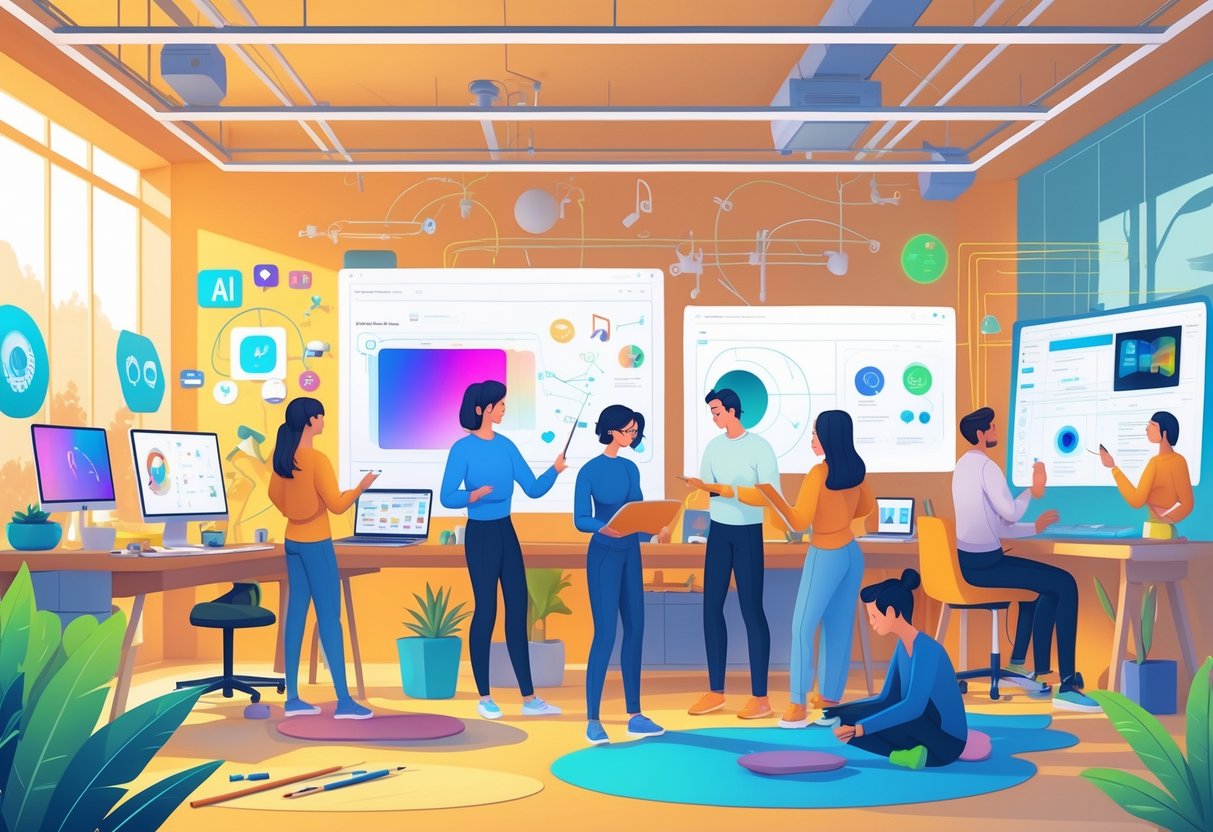
AI technology provides specific solutions for creative challenges, from generating color palettes in digital art to composing melodies based on musical theory. These tools offer practical assistance in photography analysis, story development, project planning, and recipe optimization.
How can AI assist in creating personalized digital art?
AI analyzes your artistic preferences and style choices to generate custom color palettes, composition suggestions, and design elements. You can input reference images or describe your vision to receive tailored recommendations for brushwork, lighting, and visual effects.
Tools like style transfer algorithms can blend your artistic approach with different techniques or historical art movements. AI can also suggest improvements to your digital compositions by analyzing balance, contrast, and visual flow patterns.
Machine learning models can learn from your previous artwork to predict which design choices align with your personal aesthetic preferences.
What tools are available for writing music with artificial intelligence?
AIVA and Amper Music generate original compositions based on your specified genre, mood, and instrumentation preferences. These platforms allow you to adjust tempo, key signatures, and musical arrangements to match your creative vision.
OpenAI’s MuseNet creates multi-instrument compositions across various musical styles, from classical to jazz and pop. You can input melody fragments or chord progressions to receive full orchestral arrangements.
Soundraw and Boomy offer user-friendly interfaces for creating royalty-free music tracks for personal projects or commercial use.
Could AI be used to enhance my skills in photography composition?
AI-powered apps analyze your photos to suggest improvements in framing, rule of thirds application, and subject positioning. These tools identify composition weaknesses and recommend specific adjustments for stronger visual impact.
Machine learning algorithms can evaluate lighting conditions and suggest optimal camera settings for different scenarios. Some applications provide real-time feedback through your camera viewfinder to guide composition decisions.
AI can also analyze successful photographs in similar styles to yours and highlight composition techniques you can apply to your own work.
In what ways can artificial intelligence facilitate the process of writing and storytelling?
AI writing assistants help you develop character backgrounds, plot outlines, and dialogue suggestions based on your story parameters. These tools can generate alternative plot directions when you encounter writer’s block.
Language models can provide research assistance, fact-checking, and historical context for period pieces or technical subjects in your stories. You can also use AI to maintain consistency in character voices and narrative tone throughout longer works.
Grammar and style checkers powered by AI offer advanced editing suggestions beyond basic spell-check, including improvements for sentence flow and readability.
What are the best practices for integrating AI into crafting and DIY projects?
Use AI pattern generators to create custom templates for quilting, woodworking, or 3D printing projects based on your skill level and available materials. Input your project dimensions and preferences to receive detailed cutting guides and assembly instructions.
AI can optimize material usage by calculating the most efficient layout for fabric cuts or wood pieces, reducing waste and project costs. Some tools provide step-by-step video tutorials customized to your specific project requirements.
Consider using AI for color matching and design validation before starting physical work on your crafting projects.
How does AI contribute to the innovation in culinary arts and cooking?
AI recipe generators create personalized dishes based on your dietary restrictions, available ingredients, and flavor preferences. These systems can suggest ingredient substitutions and cooking method modifications for optimal results.
Machine learning analyzes successful flavor combinations to recommend spice pairings and seasoning ratios you might not have considered. Some AI tools can predict cooking times and temperatures based on ingredient quantities and preparation methods.
AI-powered meal planning systems can optimize your grocery shopping and reduce food waste by suggesting recipes that use overlapping ingredients throughout the week.