
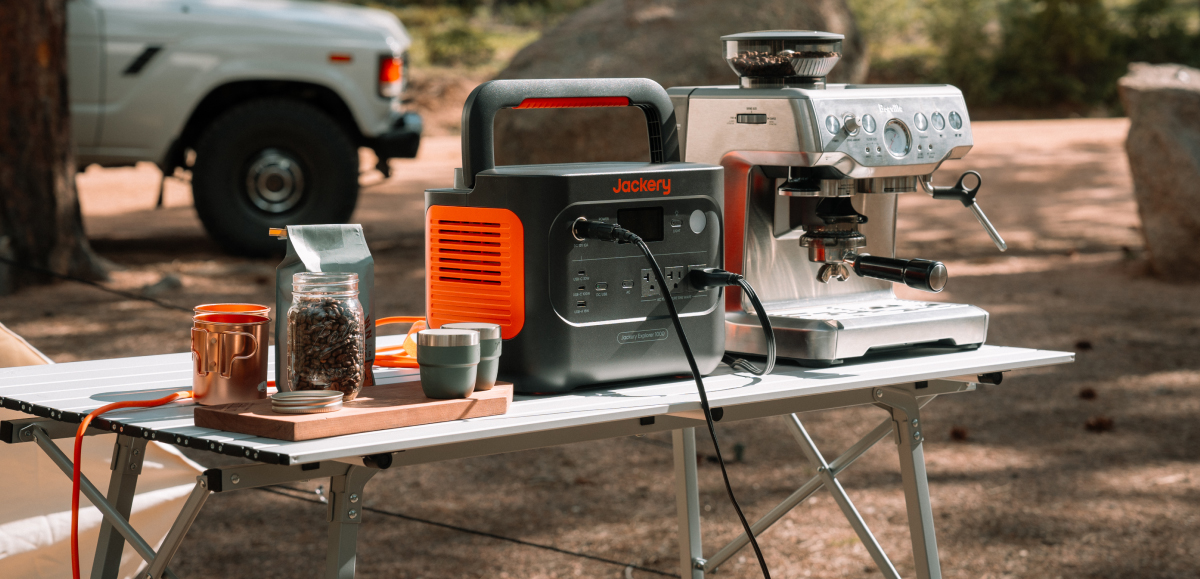
5 Best Portable Power Stations for Car Camping and Short Power Outages (2027)
Portable power stations have become one of the most useful pieces of equipment for outdoor enthusiasts, road-trippers, and homeowners looking to prepare for unexpected power outages. These rechargeable battery systems provide a convenient way to bring electricity wherever you need it, without the noise, fumes, and maintenance associated with traditional gas generators.
Whether you’re spending a weekend car camping, working remotely from a campsite, or preparing for a winter storm that could knock out electricity for several hours, a portable power station can make a significant difference.
The good news is that you don’t need to spend thousands of dollars to get a capable unit. Several manufacturers now offer powerful portable battery systems with enough capacity to operate refrigerators, charge laptops, run lighting, power internet equipment, and operate some kitchen appliances.
For this guide, we’re focusing on five different brands, with every recommendation staying under $1,000.
We’ll compare battery capacity, power output, portability, charging options, and practical applications to help you decide which model makes the most sense for your needs.
What to Look for When Buying a Portable Power Station
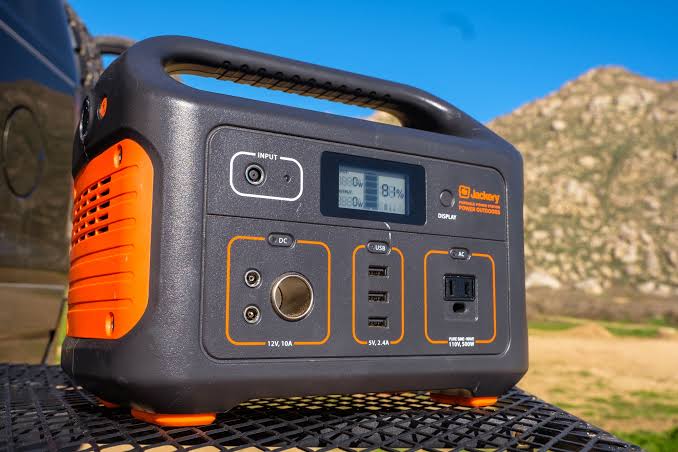
Before comparing individual models, it’s worth understanding a few specifications that determine how useful a power station will actually be.
1. Battery capacity (Wh)
Battery capacity is measured in watt-hours (Wh). It tells you how much energy the battery can store.
For example:
- 500Wh: Suitable for charging electronics, phones, cameras, and smaller devices.
- 1,000Wh: A good starting point for camping and short power outages.
- 1,500–2,000Wh: Better for refrigerators, multiple devices, and longer outages.
If you’re planning to use your power station for emergency backup, more battery capacity generally means more flexibility.
2. Continuous AC output (W)
Wattage determines how much power the station can deliver at one time.
A power station with 1,800W of continuous output can operate many household appliances, including some microwaves, coffee makers, and electric cooking appliances.
However, always check the appliance’s startup requirements and the power station’s continuous output rating rather than relying solely on its advertised surge rating.
3. Battery chemistry
Look for lithium iron phosphate (LiFePO4 or LFP) batteries.
Compared with many traditional lithium-ion battery chemistries, LiFePO4 batteries generally offer longer cycle life and good thermal stability. They’re an excellent choice for equipment you plan to keep for years.
4. Charging options
A good power station should offer multiple ways to recharge:
- Standard household AC outlets.
- Vehicle charging.
- Compatible portable solar panels.
Solar compatibility is particularly useful for camping and extended power outages.
Our Top 5 Portable Power Stations Under $1,000
For this comparison, we’re featuring five different manufacturers: Jackery, EcoFlow, Anker, BLUETTI, and ALLPOWERS.
1.Jackery Explorer 1000 v2 (Dune White)
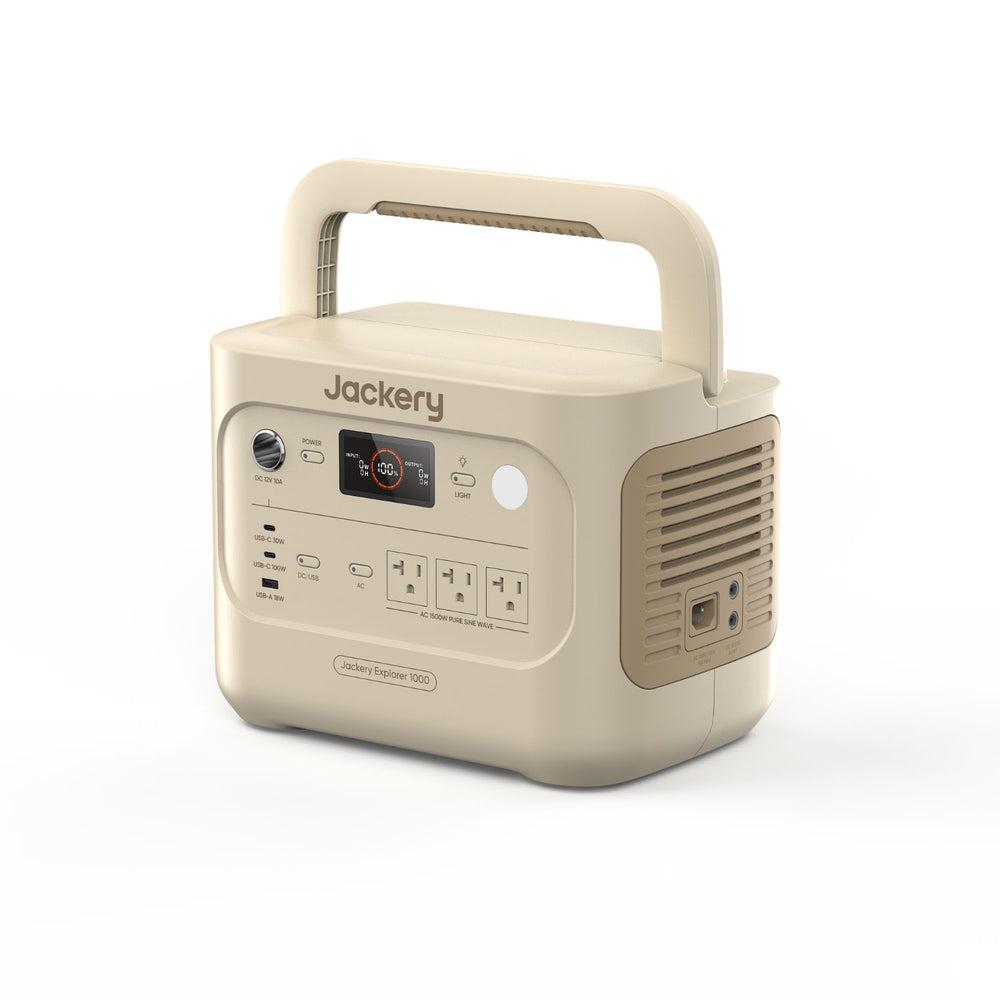
Jackery Explorer 1000 V2 Portable Power Station – Dune White – Yota Force
Best Overall for Car Camping
Approximate price: $519–$589
The Jackery Explorer 1000 v2 is an excellent choice for anyone looking for a portable power station that balances performance, portability, and affordability. Its Dune White color option also offers a clean, modern appearance that stands out from the traditional black and orange designs commonly found in this category.
With a 1,070Wh LiFePO4 battery and 1,500W of continuous AC output, the Explorer 1000 v2 provides enough power for a wide variety of camping equipment and household essentials. It’s capable of charging laptops, smartphones, cameras, and other electronics while also operating small appliances, lights, fans, and compatible refrigerators.
One of its biggest advantages is portability. Weighing approximately 23.8 pounds, it’s relatively easy to transport in a vehicle, making it particularly appealing for weekend camping trips, road trips, and outdoor adventures.
The Explorer 1000 v2 also supports fast AC charging, with a standard full recharge taking approximately 1.6 hours. Its Emergency Super Charge mode can recharge even faster under specified conditions using the Jackery app.
For emergency preparedness, the 1,070Wh battery provides a useful amount of backup electricity for short power outages. You could use it to keep phones charged, power internet equipment, operate LED lighting, and run a small refrigerator for a limited period.
It also supports solar charging with compatible Jackery SolarSaga panels, making it possible to replenish the battery while camping or during an extended outage.
Key specifications:
- Battery capacity: 1,070Wh
- Continuous AC output: 1,500W
- Surge output: 3,000W
- Battery chemistry: LiFePO4
- Weight: Approximately 23.8 lbs
- AC charging time: Approximately 1.6 hours
- Maximum solar input: 400W
- Warranty: Up to 5 years when purchased directly from Jackery under its warranty terms
Pros:
- Relatively lightweight and easy to transport.
- Long-lasting LiFePO4 battery rated for 4,000 cycles to at least 70% capacity.
- Strong 1,500W AC output.
- Fast charging capabilities.
- Multiple AC and USB charging ports.
- Compatible with portable SolarSaga panels.
- Attractive Dune White color option.
Cons:
- Less battery capacity than larger 1,500–2,000Wh power stations.
- 1,500W output limits which larger appliances you can operate.
- Solar panels are an additional expense unless purchasing a bundle.
Bottom line: The Jackery Explorer 1000 v2 is a particularly good choice for people who prioritize portability and versatility. Its 1,070Wh capacity provides enough power for most basic camping needs, while its 1,500W output makes it useful for short-term home backup. If you don’t need a massive battery system, this is a practical and relatively affordable option that can serve multiple purposes.
Where to buy: Jackery Explorer 1000 v2 – Official Store. Jackery currently lists the Dune White standalone model around $589, with solar bundles available at higher prices.
2. EcoFlow DELTA 3 Classic
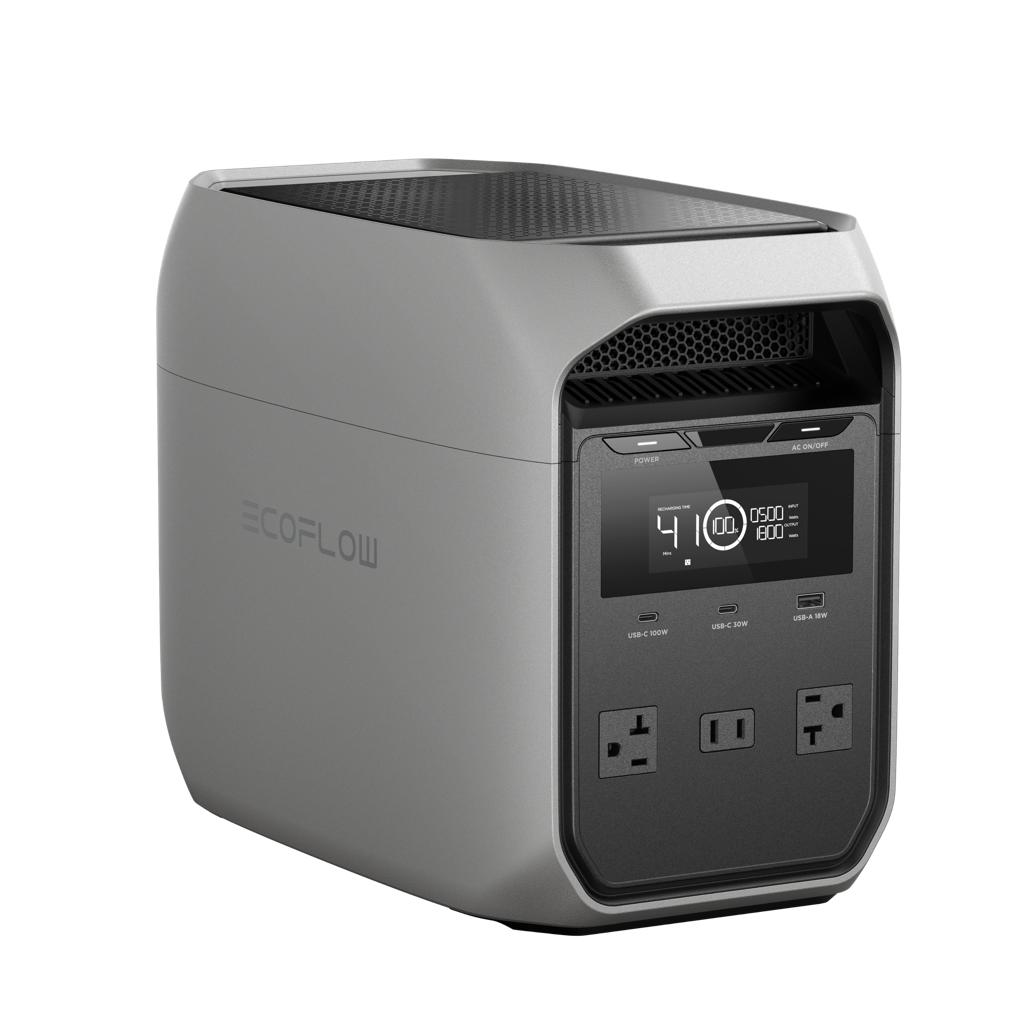
Best for Fast Charging and Everyday Versatility
EcoFlow is another major name in portable power, and the DELTA 3 Classic offers a compelling combination of charging speed, power output, and portability.
It features a 1,024Wh LiFePO4 battery and 1,800W of continuous AC output. While it doesn’t have the capacity of the larger Jackery, it has plenty of power for most basic camping and emergency applications.
One of its standout features is its fast AC charging capability. EcoFlow advertises charging from 0% to 80% in approximately 45 minutes under its specified charging conditions. This is particularly useful if you have limited time to recharge before heading out on a trip or if electricity has just been restored.
The DELTA 3 Classic also supports up to 500W of solar input, giving you the ability to recharge using compatible portable solar panels.
Key specifications:
- Battery capacity: 1,024Wh
- Continuous AC output: 1,800W
- Surge output: 3,600W
- Battery chemistry: LiFePO4
- Maximum solar input: 500W
- Approximate price: $479–$499
Pros:
- Extremely fast AC charging.
- Good power output for its size.
- Multiple charging options.
- Solar compatible.
- Relatively easy to transport.
Cons:
- Less battery capacity than the 1,500Wh models.
- Solar panels are generally sold separately.
- Not designed to power an entire home.
Bottom line: The EcoFlow DELTA 3 Classic is a great choice if you value convenience and fast recharging. It’s particularly appealing for people who frequently travel and want to recharge their battery quickly between trips.
3. Anker SOLIX C1000X Gen 2
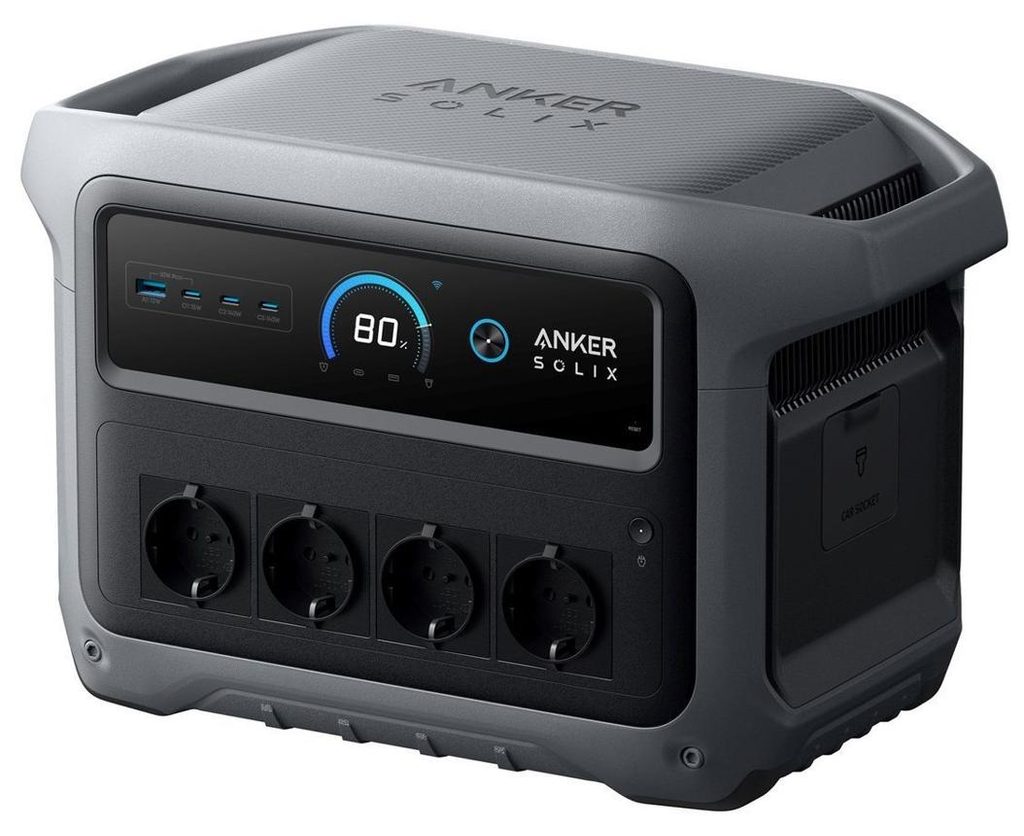
Best for Portability and High Power Output
Anker is widely known for its charging accessories, power banks, and portable electronics. Its SOLIX line brings that experience into the larger portable power station market.
The C1000X Gen 2 offers 1,024Wh of battery capacity and an impressive 2,000W of continuous AC output.
One of its biggest advantages is the relationship between its size and power output. It provides enough AC power to operate many household appliances while remaining relatively easy to move around.
At approximately 25 pounds, it’s considerably lighter than most 2,000Wh power stations. This makes it a particularly appealing option for people who regularly load and unload camping equipment.
It’s also capable of fast AC charging and supports compatible solar charging equipment.
Key specifications:
- Battery capacity: 1,024Wh
- Continuous AC output: 2,000W
- Battery chemistry: LiFePO4
- Weight: Approximately 25 lbs
- Charging: AC, vehicle, and solar
- Approximate price: $500–$550 on sale
Pros:
- Strong output for a relatively compact unit.
- Easy to transport.
- Good charging performance.
- Suitable for camping and household essentials.
- Anker’s established charging ecosystem.
Cons:
- Limited battery capacity compared with 1,500–2,000Wh units.
- High-wattage appliances will drain the battery quickly.
- Solar panels add to the overall investment.
Bottom line: The Anker SOLIX C1000X Gen 2 is a strong choice for people who prioritize portability. If you’re regularly taking your power station camping, its lighter weight could be more valuable than having an additional 500–1,000Wh of capacity.
4. BLUETTI AC180
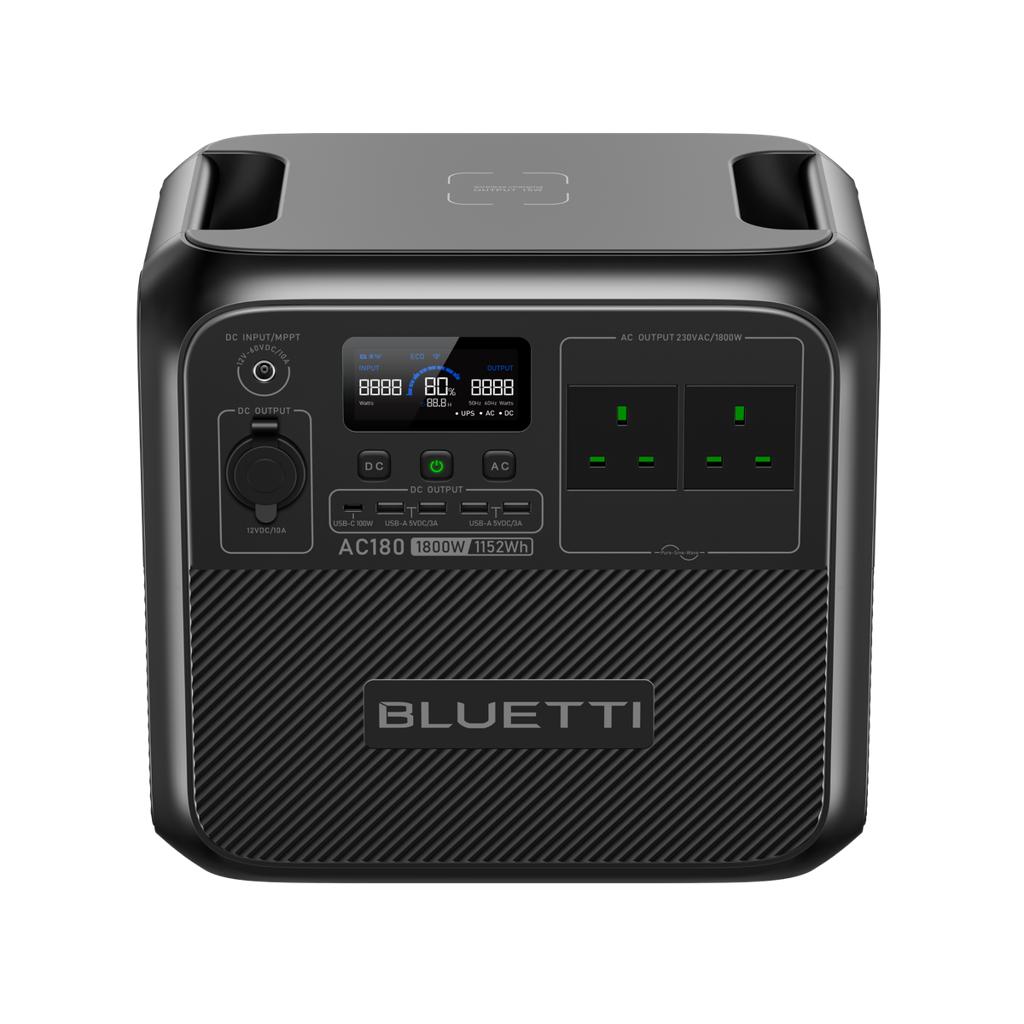
Best Budget-Friendly Option
The BLUETTI AC180 is one of the more interesting options for shoppers who want a capable portable power station without spending close to $1,000.
It features a 1,152Wh LiFePO4 battery and 1,800W of continuous AC output. This gives it slightly more battery capacity than many competing 1,000Wh models.
The AC180 also includes BLUETTI’s Power Lifting mode, which can support certain resistive heating loads up to a higher advertised wattage. However, this feature reduces the voltage supplied to compatible loads and isn’t equivalent to providing its full rated output at higher wattages.
For camping, the AC180 can handle lighting, laptops, fans, phones, and many other electronics. During an outage, it can also provide backup power for a refrigerator, internet equipment, and other essentials.
Key specifications:
- Battery capacity: 1,152Wh
- Continuous AC output: 1,800W
- Power Lifting mode: Up to 2,700W for compatible resistive loads
- Battery chemistry: LiFePO4
- Charging: AC, vehicle, and solar
- Approximate price: $450–$500
Pros:
- Good battery capacity for the price.
- Strong AC output.
- Solar charging capability.
- Multiple output ports.
- Excellent entry-level emergency backup option.
Cons:
- Heavier than some competing 1,000Wh units.
- Less capacity than the larger 1,500–2,000Wh models.
- Power Lifting mode has limitations.
Bottom line: The BLUETTI AC180 is a good value for people who want to get started with portable power. It’s capable enough for many common camping and emergency applications without requiring a major investment.
5. ALLPOWERS R1500
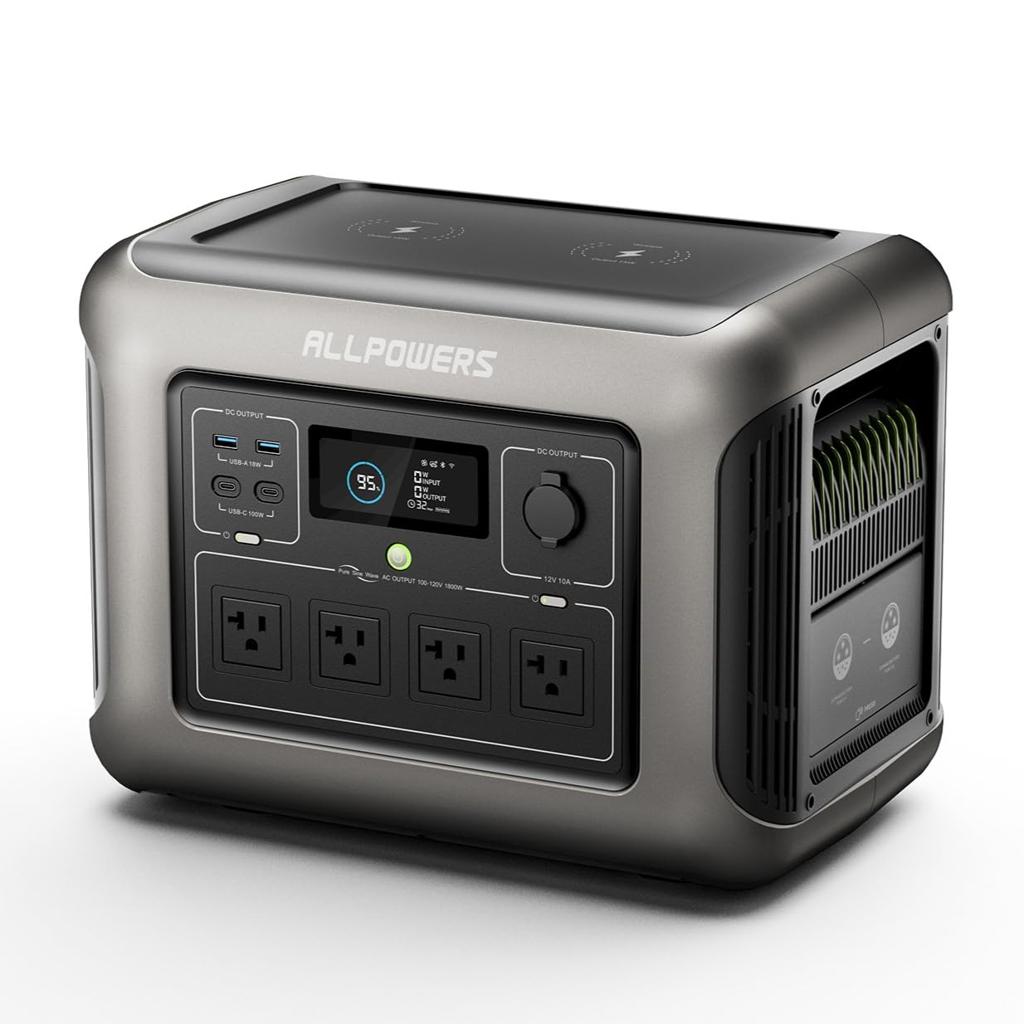
Best Alternative for Value and Expandability
ALLPOWERS might not be as recognizable as Jackery, Anker, or EcoFlow, but the company offers several competitive portable power stations.
The R1500 is a particularly interesting option because it combines a 1,152Wh LiFePO4 battery with 1,800W of continuous AC output.
It also supports multiple charging methods, including AC, vehicle, and solar charging. The manufacturer advertises fast AC charging, with the ability to reach approximately 80% in around 45 minutes under specified conditions.
Another appealing feature is its expandable battery capability, allowing users to increase available capacity with compatible additional battery equipment.
For someone interested in building a more capable emergency backup setup over time, this flexibility is worth considering.
Key specifications:
- Battery capacity: 1,152Wh
- Continuous AC output: 1,800W
- Peak output: 3,000W
- Battery chemistry: LiFePO4
- Charging: AC, vehicle, and solar
- Approximate price: $539
Pros:
- Competitive price for its capacity.
- Expandable battery capability.
- Multiple charging options.
- Fast AC charging.
- Good power output for camping and emergency use.
Cons:
- Less established brand recognition.
- Check warranty and support terms before purchasing.
- Additional batteries increase the overall investment.
Bottom line: The ALLPOWERS R1500 is worth considering if you’re looking for a little more flexibility and don’t necessarily need to purchase from one of the biggest names in the industry.
Side-by-Side Comparison
Here’s how the five models compare based on their advertised specifications and approximate current pricing.
| Power station | Capacity | Output | Approx. price |
|---|---|---|---|
| Jackery 1500 v2 | 1,536Wh | 2,000W | $849 |
| EcoFlow DELTA 3 Classic | 1,024Wh | 1,800W | $499 |
| Anker C1000X Gen 2 | 1,024Wh | 2,000W | $550 |
| BLUETTI AC180 | 1,152Wh | 1,800W | $499 |
| ALLPOWERS R1500 | 1,152Wh | 1,800W | $539 |
Prices are approximate U.S. retail prices and promotional estimates checked November 4, 2026. Verify current pricing before purchasing. Specifications are based on manufacturer information and product listings. jackery.com+5
What Can You Actually Power?
One of the biggest mistakes people make when purchasing a portable power station is focusing entirely on battery capacity without considering how much electricity their devices actually consume.
A 1,000Wh battery sounds like a lot, but high-wattage appliances can drain it surprisingly quickly.
Here are some realistic examples using a 1,000Wh power station. These estimates assume approximately 85% usable energy after conversion losses.
| Device | Approx. consumption | Estimated runtime |
|---|---|---|
| Smartphone | 15Wh per charge | 50–55 charges |
| Laptop | 60W | 14 hours |
| LED lights | 20W | 42 hours |
| Starlink | 50–75W | 11–17 hours |
| Small refrigerator | 60W average | 14 hours |
| Electric hot plate | 1,500W | 34 minutes |
Actual results will vary based on temperature, device efficiency, battery condition, and power consumption.
Can You Run a Refrigerator During a Power Outage?
Yes. This is one of the most practical uses for a portable power station.
A typical refrigerator might average approximately 50–100W over time, depending on its size, age, temperature settings, and how frequently its compressor runs.
A 1,000Wh power station could potentially keep a refrigerator operating for approximately 8–16 hours, while a 1,500–2,000Wh model could provide considerably more runtime.
Remember that refrigerator startup loads can be higher than their normal running consumption. Always check the appliance’s specifications.
Can You Run Starlink?
Yes. Portable power stations are particularly useful for keeping internet access available during an outage or while camping.
Depending on the Starlink equipment and operating conditions, power consumption can range considerably. A reasonable planning estimate is 50–75W for many setups.
This makes a 1,000Wh power station capable of providing several hours of internet access without requiring a traditional generator.
Can You Cook With One?
You can, but this is where battery capacity becomes important.
An electric hot plate, microwave, or electric kettle can consume 1,000–1,500W or more.
Even if a power station has sufficient AC output to operate the appliance, the battery may not last very long.
For occasional cooking, these units are useful. For extended cooking during a prolonged outage, a propane camping stove or another appropriate cooking method may be more practical.
Never use outdoor combustion appliances indoors or in enclosed spaces.
Are Solar Panels Worth Buying?
If you plan to use your power station for car camping or emergency preparedness, solar panels are worth considering.
A compatible 200W portable solar panel can help replenish your battery during the day, reducing your reliance on household electricity or vehicle charging.
For example, a 1,000Wh power station paired with a 200W solar panel could theoretically recharge in approximately five hours of ideal full-power production. In real-world conditions, expect longer.
Solar charging is particularly useful for:
- Multi-day camping trips.
- Extended power outages.
- Keeping electronics charged without running your vehicle.
- Maintaining battery capacity when electricity isn’t available.
If you’re purchasing a power station primarily for emergencies, I’d consider budgeting for a compatible 200W solar panel eventually.
You don’t necessarily need to buy one immediately, though. A power station that can be charged from a household outlet and your vehicle is already useful.
Power Station vs. Traditional Gas Generator
How does a portable power station compare with a traditional gas generator?
| Feature | Power station | Gas generator |
|---|---|---|
| Noise | Very quiet | Generally noisy |
| Exhaust | None during battery operation | Produces exhaust |
| Indoor operation | Generally suitable | Never indoors |
| Maintenance | Minimal | Regular maintenance |
| Fuel storage | Not required | Requires gasoline or other fuel |
| Long-term runtime | Limited by battery | Can run while fueled |
| Solar charging | Often supported | Generally not |
| High-wattage appliances | Limited by battery and inverter | Often better suited |
For occasional outages lasting several hours, a portable power station is an excellent solution.
For extended outages lasting multiple days, a gas generator may be more practical because you can continue replenishing its fuel supply.
There’s also no reason you can’t eventually own both. They serve different purposes.
Important Safety and Storage Considerations
A portable power station is relatively low maintenance, but there are a few things worth remembering.
Keep it properly charged. Don’t leave your power station sitting empty for months. Follow the manufacturer’s storage recommendations and periodically check its charge level.
Avoid extreme temperatures. Don’t leave the unit sitting in a hot vehicle for extended periods. Follow the manufacturer’s operating and charging temperature limits.
Don’t overload it. Pay attention to continuous wattage and surge ratings. Running too many appliances simultaneously can trigger overload protection.
Use appropriate extension cords. Make sure cords are rated for the connected appliances and their power requirements.
Don’t connect it directly to household wiring. Never plug a power station into a wall outlet to energize your home circuits. Proper transfer equipment installed by a qualified electrician is required for that type of backup arrangement.
Final Verdict: Which Portable Power Station Should You Buy?
All five options offer something different, but there are a few that stand out depending on your priorities.
Jackery Explorer 1500 v2 Portable Power Station | 1536Wh | 2000W | 400 | Outbound Power
Best overall: Jackery Explorer 1500 v2
The larger battery capacity makes it a great choice for both camping and household emergency backup.
EcoFlow DELTA 3 Classic – EcoFlow New Zealand | Official Store
Best charging performance: EcoFlow DELTA 3 Classic
Fast charging, good output, and a relatively compact design.
Anker SOLIX C1000X Gen2 Tragbare Powerstation – 1024 Wh | 2000 W kaufen
Best portability: Anker SOLIX C1000X Gen 2
A good combination of lightweight design and substantial AC output.
BLUETTI AC180 Solar Portable Power Station | 1,800W 1,152Wh – BLUETTI CA
Best budget option: BLUETTI AC180
Good capacity and output without spending close to $1,000.
High-power Power Station-Allpowers – Best Portable Power Station,Solar Panel & Solar Generator
Best alternative: ALLPOWERS R1500
An interesting option for buyers looking for value and expandable capacity.
Ultimately, I’d recommend prioritizing battery capacity if emergency preparedness is your primary goal. The difference between a 1,000Wh and 1,500Wh power station can be meaningful when you’re trying to keep a refrigerator, internet connection, and essential electronics running during an outage.
If you’re primarily interested in car camping, portability and charging speed become more important.
For most people, a 1,000–1,500Wh LiFePO4 power station is an excellent starting point. It provides enough capacity for a variety of everyday uses without requiring the size, weight, or expense of a much larger home backup system.
A portable power station isn’t going to replace your home’s electrical supply, but having a reliable source of backup electricity can make an unexpected outage considerably easier to manage.