Best Glassblowing Supplies for Beginners Essential Tools and Starter Kits
Glassblowing is a creative hands-on hobby that lets you shape melted glass into art and functional items. Many people are drawn to it because of the beautiful pieces you can make, from small beads to simple cups or sculptures.
If you are just starting, it is important to have the right supplies to work with glass safely and learn good techniques.
There are a few main categories of glassblowing supplies. These include the torch, glass rods or tubes, protective eyewear, and some basic shaping tools.
Beginners also need a safe working area and heat-resistant surfaces, since working with glass requires high temperatures.
When picking out glassblowing supplies, safety and ease of use should come first. Look for eyewear that protects against UV and infrared rays, and a torch that is made for beginners and easy to control.
Make sure the glass rods or tubes are compatible with the torch and fuel type. The tools should feel comfortable in your hand and not be too heavy or large for beginners.
Next, you will see a list of the best glassblowing supplies for beginners and what makes each one a good option.
Best Glassblowing Supplies for Beginners
Here are the best glassblowing supplies to help you get started. These products are known for their quality, safety, and ease of use for beginners.
AAProTools Glassblowing Leaf Masher Plier

If you’re starting out in glassblowing and want a tool for shaping beads and leaves, this masher plier set is worth considering for basic projects.
Pros
- The flat masher design helps shape glass beads and leaves easily
- Stainless steel construction adds durability
- Ergonomic grip offers better comfort during use
Cons
- Not ideal for more advanced or larger glassblowing needs
- Limited user feedback due to a small number of reviews
- May take practice to use correctly for clean shapes
You can use this AAProTools masher plier to create leaf-shaped beads, which is handy if you plan to do detail work in your lampworking or boro glass projects. The ergonomic handle may make it more comfortable, especially if you are still building hand strength.
Stainless steel makes it a sturdy choice that can handle the heat and pressure. This tool’s main downside is its simplicity.
It’s made for smaller, beginner-friendly glasswork rather than large pieces or more complex designs. With only a few reviews, it’s hard to judge long-term performance.
If you want a basic tool to add to your starter glassblowing kit, this masher plier could help you learn the basics of bead and leaf shaping without a big investment. Be aware that you may need other tools as your skills improve or your projects grow in size.
OTOOLWORLD Graphite Casting Plate

This graphite plate is a useful starting point if you are new to glassblowing and want a basic casting surface.
Pros
- Works well for casting various metals and glass
- Has a smooth surface for easier release of materials
- High purity graphite helps prevent contamination
Cons
- Smaller size may be limiting for bigger projects
- Only one plate included in the package
- Lacks extra features or add-ons
You get a simple rectangular plate made from high purity graphite. Its surface helps with smooth casting and keeps your glass or metal free from extra debris.
Graphite material is reliable and resists heat, making it fit for beginner glass projects. Because of its compact size, this plate works best for smaller pieces or practicing basic techniques.
It does not come with accessories, so you may need other tools to complete most glassblowing tasks. If you are testing out casting for the first time, you may find that the straightforward design suits your needs.
Consider your project size and what tools you already have before deciding if this is a good fit for your beginner setup.
Cybring Glassblowing Torch

This is a solid choice if you want a budget-friendly beginner torch for glassblowing and soldering projects.
Pros
- Generates enough heat for melting glass and small metalwork
- Can be used with one hand, which gives you better control
- Made from brass for added durability
Cons
- The valve can be hard to adjust accurately
- Some parts feel a bit flimsy
- Can get noticeably hot during longer sessions
The Cybring Glassblowing Torch lets you work with MAPP or propane gas, offering strong heat that is suitable for glassblowing, simple jewelry making, and soldering tasks. Its one-handed operation helps when you’re moving between materials or tools.
You might appreciate the adjustable airflow, which allows for some control over the flame size and shape. Built with brass, the torch feels sturdy where it matters most, though some external parts could be stronger.
For hobbyists on a budget or students new to glassblowing, this tool is affordable and capable of handling small-scale pieces. Be aware that the torch gets hot with extended use, so short breaks are a good idea for safety.
You should also note that the flame valve can be very sensitive, which could be frustrating when you’re just starting. You may want to consider safety gloves and eye protection to make your early glassblowing experiences safer and more comfortable.
Delphi Glass Stained Glass Start-Up Kit

If you want an easy way to start learning stained glass, this kit has most of what you need right out of the box.
Pros
- Comes with essential tools and supplies to help you get started
- Good instructions make it easier to learn the basics
- Quality tools included for better, smoother results
Cons
- Some kits may arrive with paste flux instead of the preferred liquid flux
- The glass colors may be less vibrant than expected
- Mineral oil for cutting is not included
You get a collection of beginner tools and supplies in one package, which makes it simple to start your first stained glass project without buying everything separately. Most kits like this include glass pieces, a glass grinder, and the main hand tools, so you can practice cutting, shaping, and even soldering.
Clear instructions are provided to help guide you step by step. These instructions are helpful, especially if you’re new to stained glass and need guidance on how to safely use each item in the kit.
One downside is that the kit sometimes ships with paste flux instead of liquid, which some find more difficult to use. You might also need to get mineral oil yourself, as it’s not part of the set.
Some have noted the colors of the included glass don’t always match photos, though they’re still suitable for beginner practice.
LIFEHIM Borosilicate Glass Tubes Starter Kit
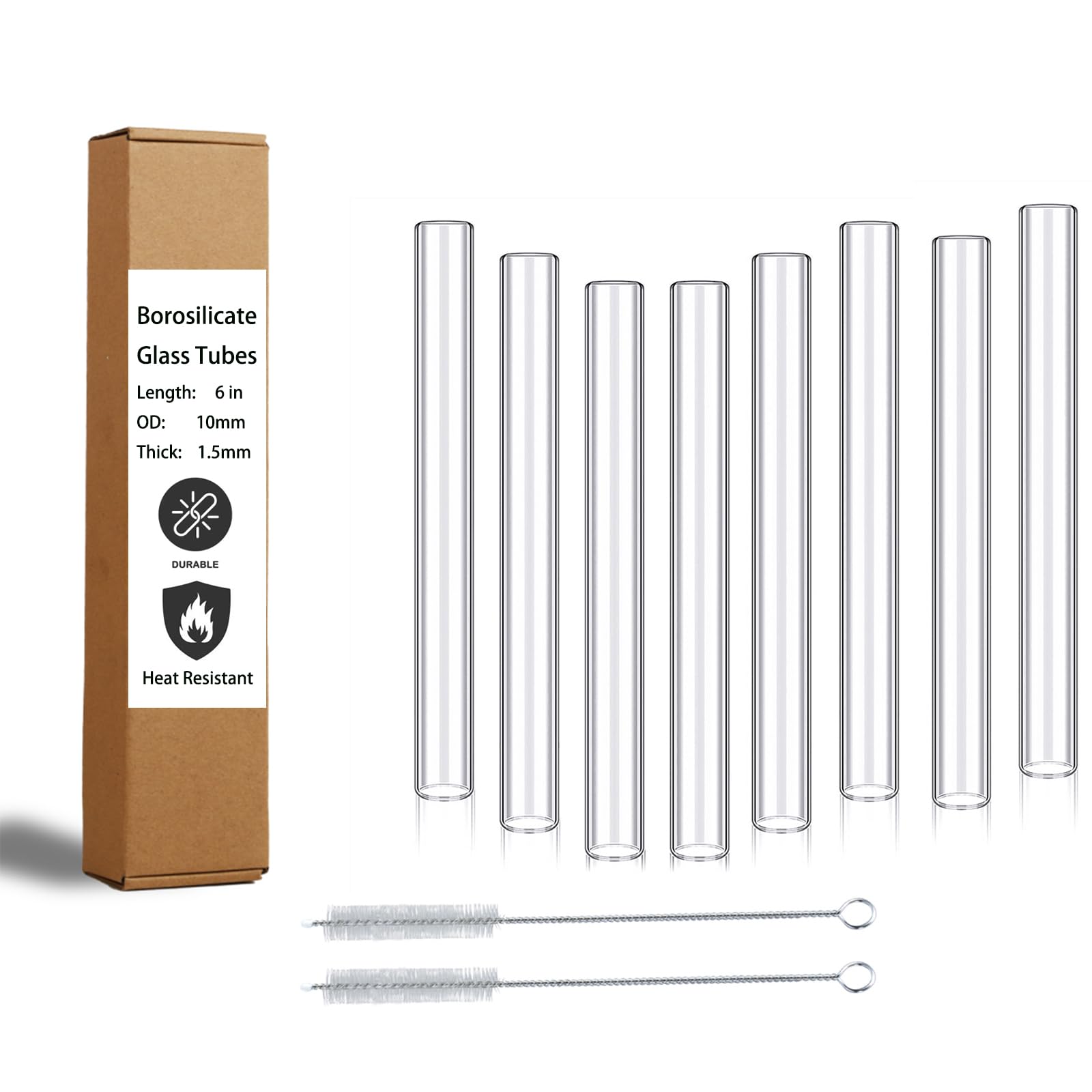
This kit is a practical choice if you want quality glass tubes for starting out with glassblowing or crafting.
Pros
- Thick glass helps prevent breakage during projects
- Comes with cleaning brushes for easy maintenance
- Suitable for both science and art applications
Cons
- Only includes 8 tubes, which may not be enough for larger projects
- Tubes are only 6 inches long, limiting some uses
- Not every beginner will need all the included accessories
If you’re looking for sturdy starter tubes, these borosilicate glass tubes stand out for their solid build and heat resistance. The kit includes eight glass tubes and two cleaning brushes, making it fairly complete for most entry-level projects.
These tubes can handle high temperatures, so they work well for basic glassblowing, crafts, or even chemistry experiments. You get a clear set of tubes for various uses, from making small art pieces to conducting simple science tests.
The thick walls help resist cracking, which is helpful for anyone learning to use heat with glass. Keeping them clean is easy, thanks to the brush set in the box.
While eight tubes can cover a few small projects, you might run out if you want to experiment a lot or work on larger crafts. The length and size limit you to compact creations, but for most beginners, this is enough to practice skills and explore glassblowing as a new hobby.
Buying Guide
When starting with glassblowing, it is important to select tools and supplies that fit your skill level. Look for items designed for beginners, as these are often safer and easier to use.
Quality materials are important. Choose tools made from metals that can handle high heat, such as stainless steel.
For safety gear, make sure goggles are rated to protect against both heat and bright light. Try to find a starter kit that includes the basics you need.
This often saves money and ensures compatibility of the tools. If buying items separately, check that each one works with the others.
Pay attention to the following features:
| Feature | Why It Matters |
|---|---|
| Heat Rating | Must handle high glassblowing temps |
| Grip Comfort | Helps prevent hand fatigue |
| Size/Weight | Should match your hand and strength |
| Safety Gear | Essential for eye and skin protection |
Think about your workspace. Make sure your supplies fit your available area and that you have proper ventilation.
Check if the tools are easy to clean. Tools that are simple to care for will last longer and work better.
Ease of use can be more important than advanced features when you are just starting out. Price is also a factor.
Basic tools and safety gear do not have to be expensive, but avoid very cheap items, as they may not last or work well.
Frequently Asked Questions
When starting glassblowing, you need to know what tools and safety items to get, where to shop, and how to find help. Picking the right supplies can make learning easier and safer for you.
What are the essential tools included in a beginner’s glassblowing kit?
You should have a torch, glass rods or tubes, tweezers, a graphite paddle, and safety glasses. Most kits also include a marver and a pair of heat-resistant gloves.
These basic tools are needed to start making simple glass items.
How should I choose the right type of glass for starting out in glassblowing?
Soft glass like soda-lime glass is common and easier to work with for beginners. It melts at a lower temperature than borosilicate glass.
Borosilicate is stronger and less likely to crack, but it needs a hotter torch.
Is it worth investing in a glassblowing kit that comes with a kiln for a beginner?
A kiln is helpful for annealing, which makes your finished glass pieces stronger and less likely to break. If you plan to make thicker or larger pieces, having a kiln is useful.
For small projects, you can sometimes use a studio kiln if you do not have your own.
What are the safety considerations to keep in mind when selecting glassblowing supplies for the first time?
Always use eye protection that is rated for glasswork. Make sure your workspace is well-ventilated.
Use heat-resistant gloves and keep a fire extinguisher close by. Never work with glass near flammable materials or without proper supervision if you are new.
Where can I find reliable and affordable glassblowing equipment for new learners?
You can shop at specialty online stores like Delphi Glass and Mountain Glass Arts. Some local art stores also carry beginner kits.
Check if there are school programs or community centers that offer loans or discounts for students.
Can you recommend any beginner-friendly glassblowing classes or online tutorials?
Many local studios offer beginner classes where you can use their equipment and learn from a teacher.
Online, you can try free video lessons on YouTube from channels such as “Corning Museum of Glass” or “Glass Art Society.”
Some websites offer step-by-step courses for beginners with detailed instructions and safety tips.