Passive Income Hobbies You Can Start Today: 15 Proven Ways to Earn Money While Doing What You Love
You spend hours each week on hobbies you love, but what if those same activities could generate income while you sleep? Passive income hobbies let you turn your creative skills and interests into money-making ventures that continue earning long after you’ve finished the initial work. From digital content to handmade crafts, many hobbies offer the potential to build income streams with minimal ongoing effort.

The key is choosing hobbies that create products or content that can sell repeatedly without requiring your constant attention. Whether you enjoy writing, crafting, investing, or creating digital products, there are practical ways to monetize what you already do for fun. These aren’t get-rich-quick schemes but real strategies that can add extra money to your budget over time.
This guide will walk you through different types of passive income hobbies and show you how to get started. You’ll learn about digital content creation, crafting, investing strategies, publishing opportunities, and even how collecting can become profitable. Each approach requires some upfront work, but the goal is to create something that keeps earning after the initial effort is done.
Understanding Passive Income Through Hobbies

Passive income from hobbies requires an upfront investment of time and effort to create something that continues earning money with minimal ongoing work. The key is identifying which activities have income potential and understanding both the realistic benefits and limitations of this approach.
What Makes a Hobby a Source of Passive Income
A hobby becomes a source of passive income when you create something once and earn from it repeatedly. This differs from active income where you trade your time directly for money each hour you work.
The most successful passive income hobbies share specific traits. They produce digital products, content, or systems that can be sold or monetized multiple times without your constant involvement. Photography becomes passive when you upload images to stock photo sites. Writing becomes passive when you publish ebooks or create blog content with ads.
Your hobby needs a dedicated audience willing to pay for your output. Market demand determines whether your passion can generate income. A hobby with 100 enthusiasts might not support passive income, while one with thousands of potential customers offers better opportunities.
The initial setup requires significant work. You’ll spend weeks or months creating products, building audiences, or developing systems. Only after this foundation is complete does the income become more passive.
Benefits of Combining Hobbies With Income Generation
You already spend time on activities you enjoy, so monetizing them adds financial value without sacrificing enjoyment. Turning hobbies into income streams means getting paid for work that doesn’t feel like a job.
Financial flexibility improves when you have multiple income sources beyond your main job. Even small amounts of passive income reduce financial stress and give you more choices. An extra $200 per month covers groceries or helps pay down debt.
Your skills improve faster when there’s a financial incentive. Knowing people will pay for your photography pushes you to get better at composition and editing. This creates a positive cycle where better skills lead to more income.
The work-life balance shifts in your favor. Unlike a second job with set hours, passive income from hobbies lets you work on your schedule. You can create content during weekends and earn from it throughout the week.
Common Misconceptions About Passive Income Hobbies
The term “passive” misleads many people into thinking no work is required. Passive income requires an initial investment of time and resources before the hands-off phase begins. You might spend six months building a YouTube channel before earning consistent income.
Money doesn’t arrive immediately or automatically. Your hobby needs time to build an audience, gain visibility, and establish trust. Most people wait three to twelve months before seeing meaningful income.
Not every hobby translates well to passive income. Activities that require your physical presence for each transaction remain active income sources. Teaching piano lessons stays active, but selling piano tutorial videos becomes passive.
Scale matters more than most beginners realize. A single ebook might earn $50 monthly, but ten ebooks could generate $500. Building repeatable income systems requires creating multiple products or income streams from your hobby.
Maintenance work never completely disappears. You’ll update content, respond to customer questions, and adjust your approach based on results. The workload decreases significantly compared to active income, but it doesn’t vanish entirely.
Digital Content Creation as a Passive Income Hobby

Creating digital content lets you build assets that generate income long after you publish them. Your work can earn money repeatedly through ad revenue, affiliate commissions, and licensing fees.
Blogging and Niche Websites
Blogging remains one of the most accessible ways to start earning passive income. You write articles once, and they continue attracting readers and generating revenue through ads, affiliate links, and sponsored content.
The key to success is choosing a specific niche where you have knowledge or interest. Popular profitable niches include personal finance, health and wellness, technology reviews, and hobby-specific topics. Your blog earns money primarily through display ads like Google AdSense and affiliate marketing programs.
You need to publish consistently for the first few months to build an audience. Most successful bloggers publish 2-4 posts per week initially. After building a content library of 50-100 articles, your older posts continue bringing in traffic and income with minimal updates.
Your earning potential grows as your traffic increases. Blogs with 50,000 monthly visitors can earn $500-$2,000 per month from ads alone.
YouTube Channels
YouTube videos offer strong passive income potential because they continue earning ad revenue for years after upload. According to data on content creator passive income, successful channels build multiple revenue streams beyond just ads.
Your channel needs 1,000 subscribers and 4,000 watch hours to join the YouTube Partner Program. After meeting these requirements, you earn money from ads shown on your videos. Additional income comes from affiliate links in video descriptions, sponsorships, and channel memberships.
Tutorial videos, product reviews, and educational content perform well because people search for them repeatedly. A single popular video can generate income for years. You’ll need to upload regularly at first, but older videos continue working for you.
Plan to invest in basic equipment like a decent camera and microphone. Many successful creators start with just a smartphone and improve their setup as they grow.
Selling Stock Photography
Stock photography lets you earn money each time someone downloads your photos. You upload images once to platforms like Shutterstock, Adobe Stock, or Getty Images, and they sell repeatedly without additional work from you.
Popular stock photo categories include:
- Business and office settings
- Technology and devices
- Food and cooking
- Nature and landscapes
- Lifestyle and wellness
You earn between $0.25 and $120 per download depending on the platform and license type. Photographers with large portfolios of 500+ images can earn $500-$2,000 monthly. Your income grows as you add more high-quality images to your portfolio.
Focus on creating images that solve specific needs for businesses and content creators. Generic photos of common subjects sell better than artistic shots. You don’t need professional equipment—many stock photographers use modern smartphones with good cameras.
Crafting and Handmade Goods for Passive Earnings

You can turn your crafting skills into passive income by selling digital products or setting up automated shops that run with minimal daily effort. These methods let you create items once and sell them repeatedly without making new inventory each time.
Creating Printables and Digital Downloads
Digital products require no physical materials or shipping costs. You create the item one time and sell it unlimited times without restocking.
Popular digital craft products include:
- Wall art and posters
- Planner pages and organizers
- Greeting cards and invitations
- Sewing patterns and templates
- Knitting or crochet instructions
- Coloring pages
- Printable labels and tags
Selling digital patterns or templates allows you to earn money without constantly producing physical items. You upload your designs to platforms like Etsy, Creative Market, or your own website. Customers purchase and download files instantly.
Creating quality templates takes time upfront. You need design software like Canva or Adobe Illustrator. Once your digital product is ready, it sells automatically while you sleep or work on new projects.
Automated Online Shops
Print-on-demand services handle production and shipping for you. You upload your designs to platforms like Printful or Printify, which print them on products when customers order.
Your designs can appear on mugs, t-shirts, phone cases, tote bags, and pillows. You set your profit margin above the base cost. The platform produces the item, ships it, and sends you the difference.
You can also create online courses or tutorials teaching your crafting skills. Record videos showing your techniques and sell access through platforms like Teachable or Skillshare. Students can purchase and watch lessons anytime without your direct involvement.
These automated systems require setup time and occasional updates. However, they generate income with minimal daily management once established.
Investing-Oriented Hobbies for Passive Returns

You can build wealth through investment hobbies that generate regular income with minimal day-to-day effort. These approaches let you put money to work through stocks that pay dividends or real estate investments you can make from your computer.
Dividend Stock Investing
Dividend stock investing means buying shares in companies that pay you cash regularly just for owning their stock. Most dividend-paying companies distribute payments four times per year, though some pay monthly.
You can start with just a few hundred dollars through online brokers. Many investors use dividend reinvestment plans to automatically buy more shares with their payments, which helps grow their portfolio faster.
Key steps to get started:
- Open a brokerage account with low or no trading fees
- Research companies with a history of consistent dividend payments
- Look for dividend yields between 2-6% to balance income and safety
- Diversify across different industries to reduce risk
Blue-chip companies like consumer goods manufacturers and utilities tend to offer reliable dividends. You’ll need to track your investments and review company performance quarterly, but this typically takes just a few hours per month. The income you earn gets reported on tax forms, so keep records of all dividend payments you receive.
Real Estate Crowdfunding
Real estate crowdfunding lets you invest in property projects without buying entire buildings yourself. You pool money with other investors through online platforms to fund commercial buildings, apartment complexes, or housing developments.
Most platforms require minimum investments between $500 and $5,000. You earn returns through rental income distributions or profits when properties sell, which usually happens after 3-7 years.
Common platform types:
- Equity crowdfunding: You own a share of the property and receive rental income
- Debt crowdfunding: You act as a lender and earn interest payments
- REITs: You buy shares in companies that own multiple properties
These investments are less liquid than stocks because you can’t easily sell your position before the project ends. Many platforms also restrict access to accredited investors who meet certain income or net worth requirements. You’ll receive regular updates about property performance and income distributions, but the platform handles all property management tasks.
Writing and Publishing for Residual Income

Writers can build income streams that pay repeatedly from a single piece of work. The two main paths involve creating digital books or audio versions that sell while you focus on new projects.
Self-Publishing eBooks
You can publish eBooks through platforms like Amazon Kindle Direct Publishing, Apple Books, and Google Play Books without paying upfront costs. Self-publishing a short ebook requires minimal investment and uses skills you already have as a writer.
Your earnings come from royalties each time someone buys your book. Amazon pays 35% to 70% royalties depending on your pricing and distribution choices. You keep the rights to your work and control the price.
Popular eBook categories include:
- How-to guides and tutorials
- Recipe collections
- Short fiction and novellas
- Personal development books
- Industry-specific knowledge
You write the book once and earn money from sales for years. Focus on topics you know well or problems you can solve for readers. A 10,000 to 20,000-word eBook takes less time than a full-length book but can still generate steady income.
Audiobook Creation
Audiobooks let you reach listeners who prefer audio content over text. You can convert your existing eBooks into audio format or create original audio content. Platforms like ACX connect you with narrators or let you record the audiobook yourself.
ACX distributes your audiobook to Audible, Amazon, and iTunes. You earn royalties of 25% to 40% based on your distribution rights choice. The setup takes time initially, but sales continue without additional work.
Hiring a narrator costs $50 to $400 per finished hour of audio. You can also split royalties with the narrator instead of paying upfront. Your own narration saves money if you have decent recording equipment and a quiet space.
Apps, Games, and Software Development as Passive Ventures

Creating digital products like mobile apps and web tools can generate income long after you build them. These ventures require upfront work but can earn money through downloads, subscriptions, or ads with minimal ongoing effort.
Designing Mobile Apps
Mobile apps represent one of the most accessible paths to passive income for software developers. You can create apps that solve specific problems, entertain users, or improve daily tasks.
Popular monetization methods include:
- In-app purchases
- Subscription models
- Display advertising
- Premium versions
You don’t need to be an expert programmer to start. Many no-code platforms let you build functional apps without writing complex code. Focus on identifying a specific need in the market rather than creating something generic.
The key to success lies in developing helpful, easy-to-use, and innovative apps that attract a dedicated user base. Games can be particularly profitable if they engage players and encourage repeat usage. Research your target audience before you begin development to ensure demand exists for your idea.
Building Web Tools
Web-based tools and software-as-a-service (SaaS) products offer recurring revenue potential through monthly or annual subscriptions. These tools run in browsers and don’t require app store approval.
Common web tool categories include:
- Productivity software – Task managers, time trackers, project planners
- Business utilities – Invoice generators, analytics dashboards, scheduling systems
- Creative tools – Image editors, design templates, content generators
Start small with a focused solution rather than building a complex platform. A simple calculator, converter, or automation tool can attract consistent users. Web tools often cost less to maintain than mobile apps since you only manage one version.
You’ll need basic hosting and domain costs, but these expenses stay low as you grow. Focus on solving one problem exceptionally well rather than offering dozens of mediocre features.
Monetizing Collecting and Reselling Hobbies
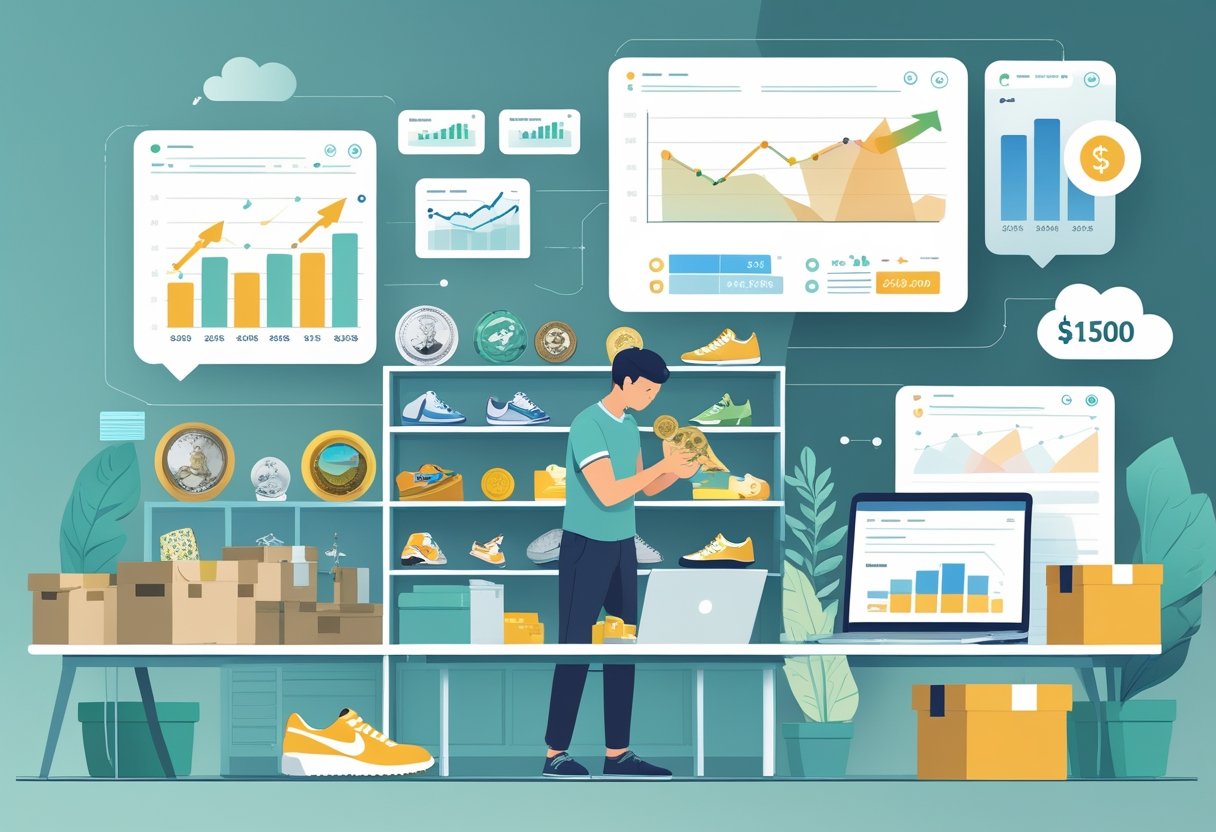
Certain collectibles appreciate over time and create multiple income streams, while automated selling platforms let you list items once and generate sales with minimal ongoing effort.
Collectibles That Generate Ongoing Income
Vintage items, rare books, and trading cards can build value while sitting in your collection. You don’t need to sell everything at once. Instead, you can list high-demand items on multiple platforms and wait for the right buyer.
Some collectibles work better than others for passive income:
- Vintage electronics: Old gaming consoles and computers from the 1980s and 1990s
- First edition books: Signed copies or rare printings gain value over time
- Sports cards and memorabilia: Graded cards from retired players
- Antique furniture: Mid-century modern pieces remain popular
- Vinyl records: Original pressings of classic albums
You can find undervalued items at estate sales, thrift stores, and garage sales. Research sold listings on eBay to understand current market prices. Grade and authenticate valuable items to increase their selling price.
Store your collectibles properly to maintain their condition. Temperature-controlled spaces prevent damage to books, cards, and electronics.
Automating Online Sales
Online marketplaces handle most of the selling process after you create your listings. eBay, Facebook Marketplace, and specialized platforms like PWCC for cards or Discogs for records let you set fixed prices or accept offers.
You can use these automation tools:
- Listing templates: Create one detailed description and photos, then reuse them for similar items
- Automatic relisting: Set items to relist if they don’t sell within a timeframe
- Buy It Now pricing: Eliminate auction waiting periods with fixed prices
- Shipping calculators: Built-in tools calculate costs based on buyer location
Connect your selling accounts to shipping services like Pirate Ship or ShipStation. These platforms generate labels automatically when items sell. You can also batch-ship multiple items on the same day to save time.
Set up email notifications for sales instead of checking platforms constantly. Most marketplaces deposit payments directly to your bank account without extra steps.
Tips for Getting Started With Passive Income Hobbies

Success with passive income hobbies requires picking activities that match your skills and interests while avoiding setup mistakes that drain time and money. You need a clear plan to start small and grow your income over time.
Choosing the Right Hobby for You
Start by listing hobbies you already enjoy or skills you’ve developed over time. You’ll stick with activities that genuinely interest you rather than chasing trends that don’t match your strengths.
Consider how much time you can invest upfront. Some hobbies that make money require significant setup before generating income, while others produce faster results.
Match your hobby to available resources. If you have a camera and enjoy photography, you can sell digital prints without buying new equipment. Writing requires nothing more than a computer you already own.
Test your idea on a small scale first. Create one digital product or offer one service before investing in inventory or expensive tools. This approach lets you gauge interest without financial risk.
Avoiding Common Pitfalls
Don’t expect immediate returns from your passive income hobby. Most passive income streams require upfront work before they generate consistent money.
Avoid spreading yourself too thin across multiple hobbies at once. Focus on one income stream until it runs smoothly before adding another.
Skip platforms that charge excessive fees or require large upfront payments. Many legitimate sites let you start with little to no money.
Don’t neglect the business side of your hobby. Track expenses, set prices that cover your costs, and treat your passive income like a real business even when starting small.
Scaling Your Passive Income Efforts
Build systems that reduce your daily involvement. Automate order processing, use email templates, or create product bundles that sell repeatedly without extra work.
Reinvest early profits into tools that save time. Photo editing software, website hosting, or design templates help you produce more content faster.
Expand to multiple sales channels once one platform works well. If your digital downloads sell on one marketplace, list them on two or three others to reach more buyers.
Track which products or services generate the most income with the least effort. Double down on your best performers and phase out items that require too much maintenance for the return they provide.