100 Unique Hobbies You’ve Never Heard Of: Discover Unconventional Activities to Transform Your Free Time
Most people stick to the same handful of popular pastimes like reading, cooking, or playing sports. But there’s a vast world of unusual and little-known hobbies that can spark new interests, develop surprising skills, and connect you with fascinating communities you never knew existed. These activities range from collecting strange items to mastering obscure crafts that few people practice.

You might think you’ve exhausted all possible ways to spend your free time. The truth is that countless unusual hobbies exist beyond mainstream activities. Some involve rare collecting pursuits, while others focus on creative arts, outdoor adventures, or tech-based projects that push boundaries.
This guide explores 100 unique hobbies across different categories to help you find something completely different. You’ll discover rare collecting ideas, creative pursuits you’ve never tried, obscure indoor and outdoor activities, and niche cultural hobbies that will make you stand out. You’ll also learn practical ways to discover and start these unheard-of activities.
What Makes a Hobby Unique?

A hobby becomes unique when it breaks away from common pastimes and offers something different from mainstream activities. The most unusual hobbies often combine unexpected skills, serve niche interests, or involve materials and methods that most people never consider.
Defining Uniqueness in Hobbies
A unique hobby stands apart from popular activities like reading, cooking, or playing sports. These unconventional and unique hobbies typically have smaller communities and less mainstream recognition.
Several factors make a hobby truly unique. The activity might use uncommon materials or tools that you won’t find in typical stores. It could involve skills that aren’t taught in standard classes or workshops.
Some hobbies qualify as unique because they serve very specific interests. For example, competitive duck herding or extreme ironing attract passionate followers but remain unknown to most people. The rarity of practitioners often defines uniqueness more than the activity itself.
Key markers of unique hobbies include:
- Limited accessibility to required materials or locations
- Small, dedicated communities rather than mass appeal
- Unusual combinations of existing skills or interests
- Recent development or revival of forgotten practices
The Appeal of Unconventional Activities
You might wonder why people choose unusual hobbies over more common ones. Unique hobbies offer a sense of individuality that popular activities can’t provide. When you pursue an uncommon interest, you stand out from others who spend their free time the same way.
These activities often create stronger connections with fellow enthusiasts. Smaller communities tend to be more welcoming and supportive because members share a specific passion that outsiders rarely understand.
Unique hobbies can boost your creativity in unexpected ways. Learning interesting hobbies you likely haven’t heard of challenges your brain to think differently. You develop problem-solving skills that don’t come from following established paths.
Many people find that uncommon hobbies reduce stress better than popular ones. The novelty keeps your mind engaged and prevents the boredom that sometimes comes with mainstream activities.
Trends in Uncommon Hobbies
The internet has changed how random hobbies spread and gain followers. Social media platforms let niche communities form regardless of geographic location. You can now find fellow enthusiasts for even the most obscure interests.
Current trends show growing interest in hands-on activities that don’t involve screens. People are seeking tactile experiences after spending work hours on computers and phones.
Popular categories of emerging unique hobbies:
- Historical crafts and forgotten skills
- Extreme versions of everyday activities
- Collecting unusual or specific items
- Nature-based activities with unique twists
- Competitive versions of non-sport activities
Sustainability influences hobby choices more than before. You might notice more people choosing activities that repurpose materials or connect them with nature. This shift reflects broader environmental awareness while still offering the novelty that makes hobbies feel special.
Rare Collecting Hobbies
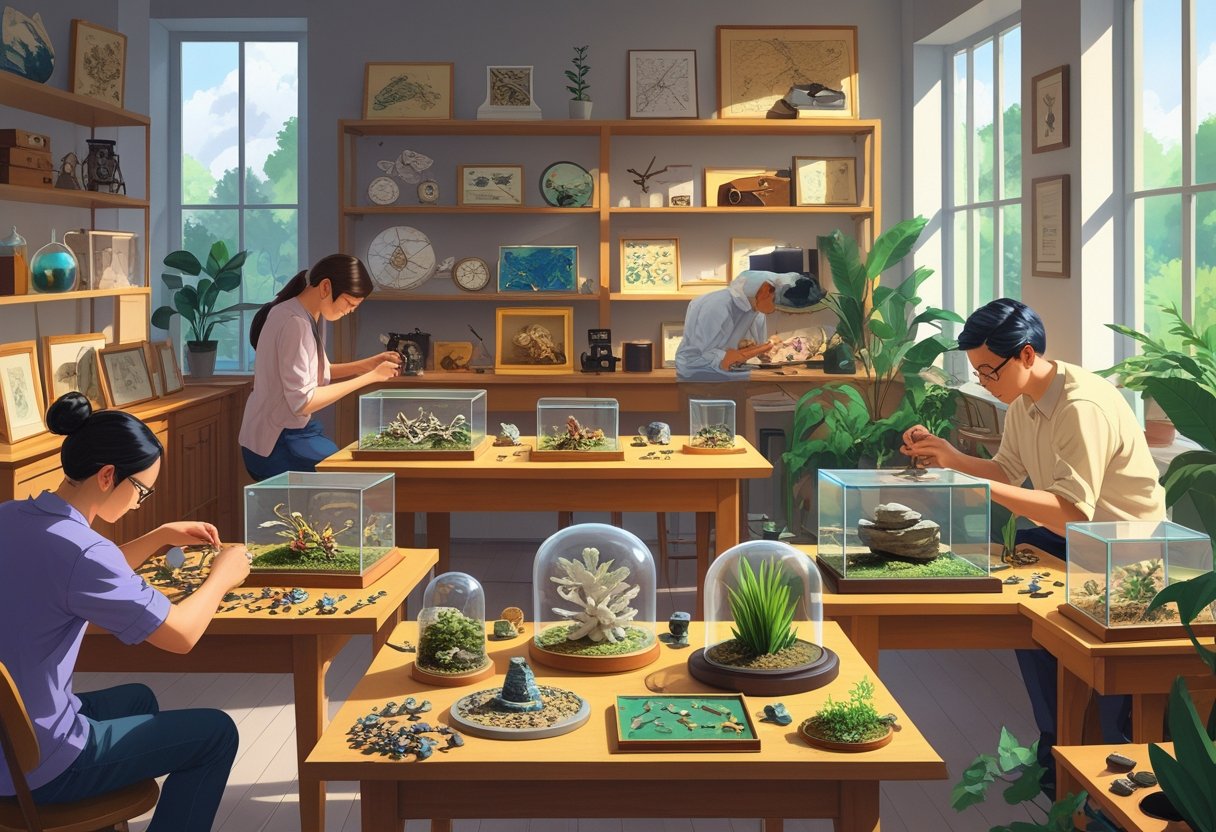
Some collectors search for items most people throw away or never notice. These unusual collecting hobbies focus on mistakes in money, space rocks, and paper memories from events.
Collecting Currency Errors
You can build a collection around mistakes made during the money printing process. These errors happen when coins or bills don’t come out correctly at the mint or printing facility.
Common types of currency errors include:
- Double strikes – when a coin gets stamped twice
- Off-center prints – when the design doesn’t line up properly
- Missing layers – when one color or element doesn’t print
- Wrong denominations – when the wrong value appears on currency
The value of error currency depends on how rare and noticeable the mistake is. A slightly off-center penny might only be worth a few dollars. A major error on paper money could be worth thousands.
You’ll need to learn how to spot real errors versus fake ones. Some people try to create damage and pass it off as a minting error. Join online forums and groups where experienced collectors share their knowledge about authentic errors.
Gathering Meteorite Fragments
Meteorites are pieces of rock from space that survive the trip through Earth’s atmosphere. You can legally own and collect these objects in most places.
There are three main types you’ll encounter. Stone meteorites are the most common but hardest to identify. Iron meteorites contain metal and attract magnets. Stony-iron meteorites mix both materials and are the rarest.
You can buy meteorite pieces from dealers, online marketplaces, and rock shows. Prices range from $1 per gram for common types to hundreds of dollars per gram for rare specimens. Always ask for authentication papers that prove what you’re buying is real.
Some collectors hunt for meteorites in desert areas where the dark rocks stand out against light sand. You’ll need a metal detector, GPS device, and knowledge of recent meteor fall locations.
Ticket Stub Archiving
Your ticket stubs from concerts, movies, and sporting events create a physical record of experiences. Many people save these small pieces of paper as memory triggers.
You should store ticket stubs in protective sleeves or albums made for trading cards. Regular photo albums work too. Keep them away from direct sunlight to prevent fading.
Organization methods include:
- Sorting by date or year
- Grouping by event type (concerts, sports, theater)
- Arranging by venue or location
- Creating themed collections (one band, one sports team)
Digital backup helps preserve your collection. Scan or photograph each stub before the ink fades. Many thermal-printed tickets lose their text within months if not protected properly.
The hobby connects to collecting various memorabilia that documents personal history. Your collection tells a story about the events you attended and the moments that mattered to you.
Creative and Artistic Pursuits You’ve Never Tried

You can transform everyday materials into stunning art forms through unconventional mediums like soap bars, dirty walls, discarded milk cartons, and colorful tape. These unusual creative outlets require minimal investment but offer maximum room for experimentation and personal expression.
Soap Carving Artistry
Soap carving turns ordinary bars of soap into detailed sculptures using simple tools. You only need a bar of soap, a small knife or carving tool, and a steady hand to create intricate designs.
The soft texture of soap makes it perfect for beginners who want to practice sculpting without expensive materials. You can carve flowers, animals, geometric patterns, or miniature buildings with just a few hours of practice.
Start with basic shapes like hearts or stars before moving to complex designs. Softer soaps like glycerin bars work better than hard soaps because they’re easier to shape and less likely to crack.
Basic tools you’ll need:
- Bar soap (glycerin or castile)
- Small carving knife or craft blade
- Toothpicks for fine details
- Paper towels for cleanup
The finished pieces make unique gifts or decorative bathroom items. You can add color by using pre-colored soap bars or painting your finished carving with soap-safe dyes.
Reverse Graffiti
Reverse graffiti creates art by cleaning dirt off surfaces rather than adding paint to them. You make images by selectively removing grime from walls, tunnels, or sidewalks using brushes, pressure washers, or stencils.
This art form is completely legal in most places because you’re cleaning, not vandalizing. Environmental artist Paul Curtis popularized this technique in the early 2000s by creating murals on dirty city walls.
You can practice on any dirty surface like a grimy window, dusty car, or stained concrete wall. Use stencils to create sharp designs or freehand your work with brushes and water.
The temporary nature of reverse graffiti adds to its appeal. Rain and new dirt will eventually cover your work, making each piece truly temporary art.
Milk Carton Sculpting
Milk carton sculpting involves cutting, folding, and reshaping empty cartons into functional objects or decorative pieces. The waterproof coating and sturdy structure of milk cartons make them ideal for creating planters, organizers, bird feeders, and small furniture.
You can build surprisingly strong structures by combining multiple cartons. Clean and dry the cartons thoroughly before starting your project to avoid odors.
Cover the cartons with fabric, paint, or decorative paper to hide the original packaging. The rectangular shape naturally lends itself to architectural projects like miniature buildings or storage boxes.
Popular projects include:
- Desktop organizers
- Succulent planters
- Children’s toy storage
- Decorative light covers
This hobby costs nothing if you drink milk regularly and helps reduce waste by repurposing containers.
Tape Art Installations
Tape art uses colored masking tape or electrical tape to create large-scale geometric designs on walls, floors, or windows. You build up layers of tape in different colors to form patterns, murals, or three-dimensional illusions.
The tape peels off cleanly without damaging surfaces, making it perfect for temporary installations in your home or office. You can experiment with designs knowing you can easily remove and redo your work.
Artists create everything from simple striped patterns to complex optical illusions that appear to jump off the wall. The creative hobby of tape art requires only basic supplies but produces professional-looking results.
Plan your design on paper first and use a level to keep lines straight. Start with small projects like geometric shapes on a single wall before attempting full-room installations.
Unusual Outdoor And Nature Hobbies

Some outdoor hobbies push beyond typical hiking or gardening into truly unique territory. These activities combine nature with creativity, challenge, or unconventional approaches that most people have never considered.
Moss Gardening
Moss gardening involves cultivating different moss species to create miniature landscapes or green walls. You collect moss from your local area or purchase specific varieties to grow in shaded spots where grass struggles to survive.
This hobby works well in damp, shady areas of your yard. You can create moss gardens in containers, on rocks, or directly on soil. The practice requires patience since moss grows slowly, but it needs minimal maintenance once established.
Key benefits of moss gardening:
- Requires no mowing or fertilizing
- Stays green year-round in most climates
- Prevents soil erosion on slopes
- Creates habitat for small insects and organisms
You start by preparing the surface and keeping it moist during the first few weeks. Moss prefers acidic soil with pH levels between 5.0 and 6.0. You can blend moss with buttermilk or beer to create a slurry that helps it adhere to vertical surfaces or rocks.
Extreme Ironing
Extreme ironing combines the mundane task of ironing clothes with adventurous outdoor locations. You take an ironing board and iron to challenging spots like mountains, forests, or underwater caves to press clothing.
This activity started in England in 1997 and has grown into an international phenomenon. Participants photograph themselves ironing in extreme locations to document their achievements. Some people have ironed while rock climbing, skiing, canoeing, or even skydiving.
The hobby requires proper safety equipment for whatever extreme location you choose. You need a portable ironing board, a battery-powered or cordless iron, and the outdoor gear necessary for your chosen environment.
Popular extreme ironing locations:
- Mountain peaks and cliffs
- Underwater while scuba diving
- On top of moving vehicles
- While bungee jumping or zip-lining
Tree Shaping
Tree shaping guides living trees into specific forms or structures as they grow. You train young trees over several years to create chairs, arches, living fences, or artistic designs without cutting the wood.
This practice requires long-term planning since trees grow slowly. You use techniques like grafting, bending, and pruning to direct growth patterns. Some tree shapers create functional furniture that remains rooted in the ground, while others grow decorative sculptures.
The process starts with selecting fast-growing, flexible species like willow, poplar, or certain fruit trees. You plant multiple trees close together and gradually train their branches using frames, ties, or grafting techniques. Results become visible after three to five years, but complete projects can take a decade or more.
You need to monitor your shaped trees regularly and adjust their training as they grow. This hobby combines gardening knowledge with artistic vision and patience.
Obscure Indoor Activities
Some people transform simple objects into competitive challenges, while others take familiar puzzles to extreme levels of difficulty and speed.
Dice Stacking
You can stack dice using a cup in ways that seem to defy physics. This hobby involves placing multiple dice inside a cup, then quickly flipping the cup to create vertical towers of dice in a single motion. The dice land stacked on top of each other rather than scattered across the table.
Advanced stackers can create towers of four or more dice in under a second. You need standard six-sided dice and a plastic cup to start. The technique requires precise wrist movements and timing.
Competitors perform tricks like stacking dice while the cup is still in motion or creating multiple towers simultaneously. You can practice this unusual hobby at home with minimal equipment cost. The learning curve is steep, but basic stacks become possible within a few hours of practice.
Speedcubing Variants
Speedcubing goes far beyond the standard 3×3 Rubik’s Cube. You can compete with cubes ranging from 2×2 to 21×21, each requiring different solving strategies. Some variants include solving cubes one-handed, blindfolded, or with your feet.
Popular speedcubing variants:
- Pyraminx (pyramid-shaped puzzle)
- Megaminx (12-sided puzzle)
- Square-1 (shape-shifting cube)
- Mirror cube (solved by shape, not color)
Blindfolded solving requires you to memorize the cube’s configuration before putting on a blindfold and solving it from memory. The current world record for a standard 3×3 solve is under 4 seconds. You can find communities and competitions dedicated to these unique hobbies in most major cities.
Jigsaw Puzzle Competitions
Competitive jigsaw puzzling turns a relaxing pastime into a timed sport. You race against others to complete identical puzzles as quickly as possible. Most competitions use puzzles with 500 to 1,000 pieces.
Teams typically consist of two to four people who develop specific strategies. Some members sort edge pieces while others work on distinct color sections. Professional competitors can finish a 500-piece puzzle in under two hours.
The World Jigsaw Puzzle Championship attracts participants from over 40 countries. You compete in multiple rounds with different puzzle types and piece counts. Speed matters, but accuracy is essential since missing or incorrectly placed pieces result in penalties.
Tech-Driven Unique Hobbies

Technology opens doors to hobbies that mix digital skills with creative expression in unexpected ways. These activities let you experiment with cutting-edge tools while building something entirely new.
Robotic Fish Racing
Robotic fish racing combines engineering skills with competitive sport. You build small underwater robots that look and move like real fish using servo motors and waterproof electronics.
The robots swim through obstacle courses in pools or tanks. You control them with wireless signals while they navigate through hoops, around corners, and past other competitors. Some hobbyists program their fish to swim independently using sensors that detect walls and objects.
Building a robotic fish requires basic knowledge of circuit boards and motor control. You can start with kits that cost between $50 and $200, or design your own from scratch. The challenge comes from making your robot both fast and stable underwater.
Competitions happen at maker fairs and tech meetups. You’ll need to waterproof all electronic parts and balance the weight so your fish swims straight. Many builders add LED lights or realistic fins to make their robots look more lifelike.
Voice Synthesis Experimentation
Voice synthesis lets you create artificial voices or clone existing ones using AI software. You train models on voice samples to generate speech that sounds natural and realistic.
Modern tools make this tech hobby accessible without advanced coding skills. You can experiment with changing pitch, tone, and accent to create unique character voices. Some hobbyists use synthesis to preserve voices of family members or create narration for videos and games.
Free programs like Coqui TTS and paid options like Descript give you different levels of control. You’ll need audio recordings to train your models. Better quality recordings produce more realistic results.
The hobby raises important questions about ethics and consent. You should only synthesize voices you have permission to use. Many creators focus on making original character voices or improving accessibility tools for people who have lost their ability to speak.
Drone Light Painting
Drone light painting creates glowing trails in long-exposure photographs by flying drones with LED lights attached. You program flight paths that draw shapes, words, or abstract designs in the night sky.
The process requires a camera with manual settings and a drone you can control precisely. You set your camera to expose for 10 to 30 seconds while flying the drone through your planned pattern. The LED lights leave bright streaks that form your final image.
Advanced hobbyists use multiple drones at once to create complex patterns. You can program exact flight paths using GPS coordinates or fly manually for more organic designs. Popular subjects include spirals, geometric shapes, and writing.
You’ll need dark locations away from light pollution for the best results. Start with simple patterns like circles or figure-eights before attempting detailed images. Some practitioners combine drone light painting with other digital hobbies like photo editing to enhance their final artwork.
Cultural and Social Niche Hobbies

Some hobbies let you dive into history by acting out forgotten battles, while others involve creating entire languages from scratch or designing family crests using ancient rules.
Historical Reenactment of Obscure Events
You can go beyond the typical Civil War or Renaissance fair reenactments by focusing on lesser-known historical moments. People in uncommon hobbies communities gather to recreate events like the Pig War of 1859, the Great Emu War of 1932, or medieval peasant uprisings.
You’ll need to research specific historical details about clothing, weapons, and social customs from your chosen period. This means reading primary sources, studying museum collections, and connecting with other reenactors who share your interest in these overlooked events.
The hobby requires you to make or buy accurate costumes and props. You’ll attend gatherings where participants stay in character and follow historical protocols. Many groups focus on educational outreach, teaching others about these forgotten moments in history through live demonstrations.
Invented Language Creation
Creating your own language, called conlanging, involves building complete grammar systems, vocabulary, and writing systems from nothing. You start by deciding on basic sounds your language will use, then create rules for how words form and sentences structure themselves.
Basic elements you’ll develop:
- Phonology (sound systems)
- Grammar rules
- Vocabulary and word roots
- Writing systems or alphabets
- Cultural context for language use
You can join online communities where thousands of language creators share their work and give feedback. Some people create languages for fictional worlds, while others design them as thought experiments or artistic projects. The process teaches you how real languages work and evolve over time.
Heraldry Design
You can learn the medieval art of creating coats of arms using strict traditional rules that date back centuries. Heraldry follows specific guidelines about colors, symbols, and layouts that you must understand before designing legitimate crests.
The practice uses a special vocabulary. Tinctures refer to colors and metals, while charges are the symbols placed on shields. You’ll learn terms like “azure” for blue, “or” for gold, and “rampant” for a standing lion pose.
Modern heraldry designers create personal arms, family crests, or organizational symbols. You study historical examples and apply traditional blazoning language to describe your designs. Some practitioners work with heraldic authorities in countries that still officially grant arms.
How to Discover and Start Unheard-Of Hobbies

Finding unusual hobbies requires looking beyond mainstream lists and tapping into niche communities where people pursue activities like competitive duck herding or creating miniature food sculptures. You’ll need to gather the right supplies and connect with others who share these interests to build skills and stay motivated.
Finding Inspiration for Unusual Hobbies
Start by exploring curated lists of unusual hobbies that feature activities most people haven’t heard of. These collections often include indoor and outdoor options that go beyond typical pastimes.
Browse social media platforms like Reddit, Instagram, and TikTok using search terms like “weird hobbies” or “niche interests.” You’ll find communities dedicated to activities ranging from extreme ironing to throat singing.
Visit local maker spaces, community centers, and specialty shops where you might discover activities like glass blowing, blacksmithing, or geocaching. Talk to staff members and regular visitors about what they do in their free time.
Check out lists that include oddball activities designed to spark curiosity. These resources can help you find hobbies that match your personality and available time.
Pay attention to activities mentioned in documentaries, podcasts, and YouTube channels that focus on subcultures and unique lifestyles. You might discover interests you never knew existed.
Sourcing Supplies and Communities
Research online retailers that specialize in niche hobby supplies. Etsy, specialized forums, and hobby-specific websites often carry materials you won’t find in regular stores.
Join Facebook groups, Discord servers, and subreddit communities dedicated to your chosen hobby. These spaces let you ask questions, share progress, and learn from experienced practitioners.
Look for local clubs or meetup groups in your area. Many unusual hobbies have small but dedicated communities that welcome newcomers and offer hands-on guidance.
Where to Find Hobby Communities:
- Online forums and message boards
- Local community centers
- Specialty shops and workshops
- Convention centers hosting niche events
- University clubs and adult education programs
Start with basic supplies before investing in expensive equipment. Many hobbyists sell used gear or can recommend budget-friendly alternatives for beginners.
Tips for Sharing Your Unique Interests
Share your hobby on social media platforms where visual content performs well. Instagram and TikTok work great for showcasing unique activities through photos and short videos.
Create a blog or YouTube channel to document your learning process. This helps you connect with others who share your interest and builds a record of your progress over time.
Be prepared to explain your hobby clearly when people ask questions. Practice a simple 30-second description that highlights what makes the activity interesting without overwhelming listeners.
Invite friends to try your hobby with you instead of just talking about it. Hands-on demonstrations make unusual hobbies more accessible and less intimidating to outsiders.
Attend conventions, workshops, or exhibitions related to your hobby. These events put you in contact with serious practitioners and help you stay current with new techniques and trends.
Respect that not everyone will understand or appreciate your unusual hobby. Focus on connecting with people who show genuine curiosity rather than trying to convince skeptics.