The Best Low-Cost Creative Hobbies to Start in 2026 Without Breaking the Bank
You don’t need to spend a lot of money to explore your creative side and find a fulfilling hobby. Many creative hobbies cost less than $50 to start, and some require nothing more than free tools you already have at home. The idea that creativity requires expensive supplies or special equipment is simply not true.
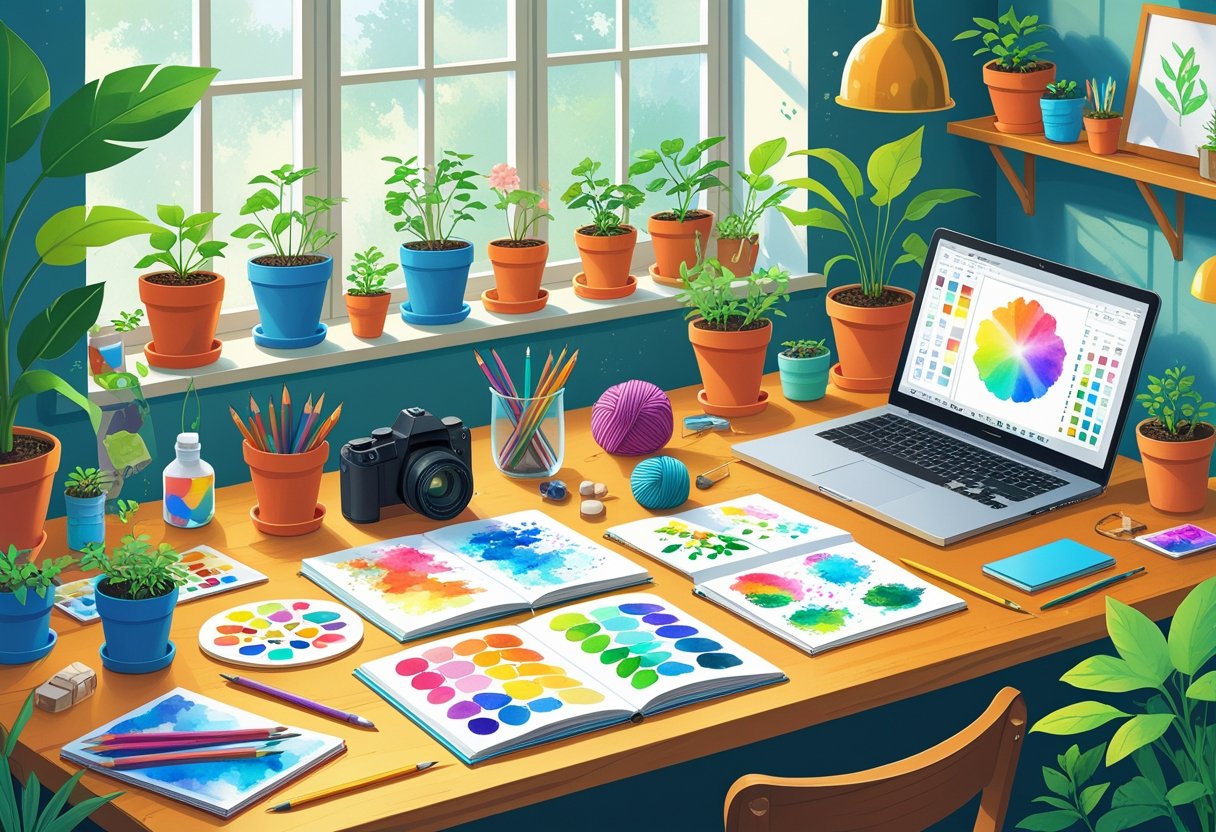
Low-cost creative hobbies give you a chance to express yourself while staying within your budget. You can explore arts and crafts, learn music skills, write stories, or try digital projects without breaking the bank. These activities keep your hands busy and your mind engaged.
This guide walks you through different types of creative hobbies that won’t drain your wallet. You’ll discover options for crafting, performing, writing, and even digital projects that fit your interests and lifestyle. Whether you prefer working alone at home or connecting with others in your community, there’s a budget-friendly creative hobby waiting for you.
Why Choose Low-Cost Creative Hobbies?
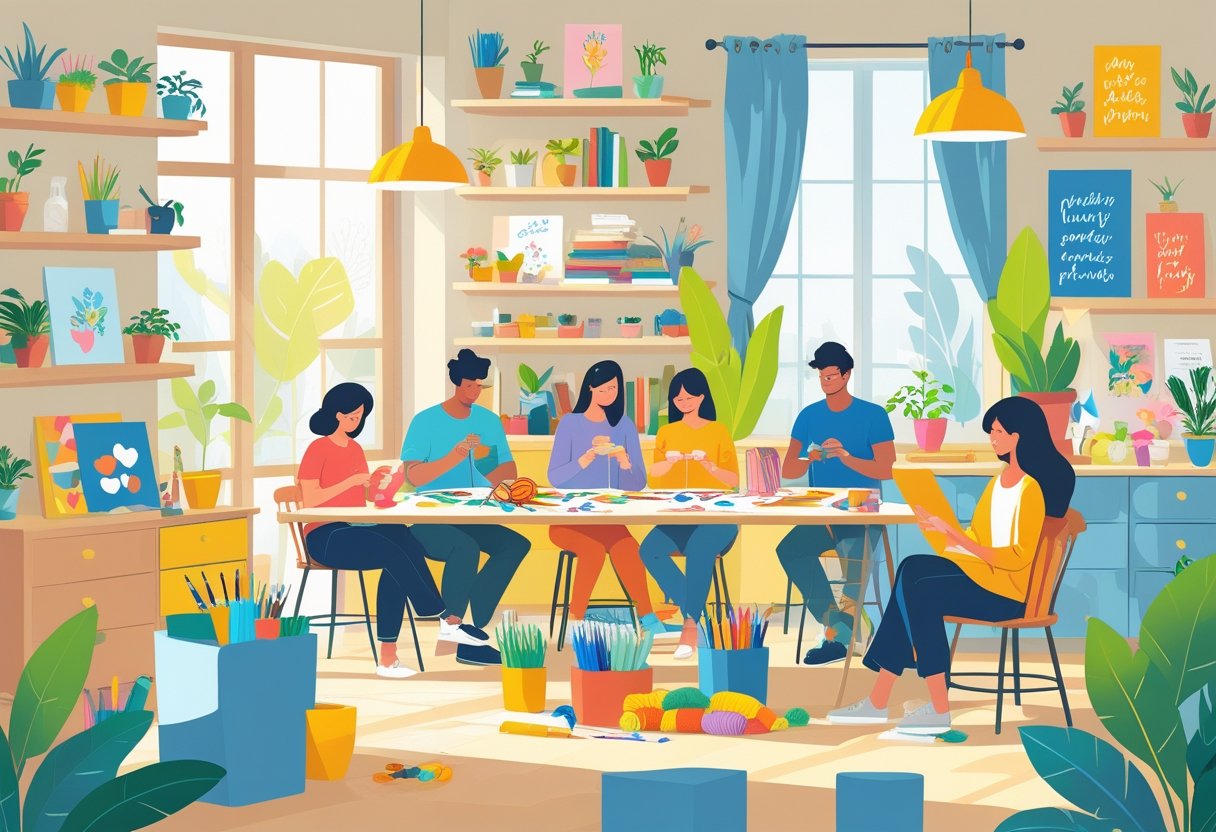
Creative hobbies don’t need to drain your bank account to bring you fulfillment and joy. Budget-friendly creative activities keep your hands busy and your mind engaged without the financial pressure that comes with expensive pastimes.
Benefits of Affordable Creativity
When you choose low-cost creative hobbies, you remove the barrier between wanting to try something new and actually doing it. You can experiment with different activities without worrying about wasted money if one hobby doesn’t stick.
These hobbies let you express yourself through activities like sketching, writing, or upcycling materials you already have at home. You’re free to make mistakes and learn at your own pace because you haven’t invested hundreds of dollars in equipment or classes.
Inexpensive creative hobbies also help you build connections with others who share your interests. Many communities offer free or low-cost groups where you can learn new skills and meet people. You spend less time worrying about costs and more time actually creating.
Reducing Stress and Enhancing Well-Being
Creative activities give your mind a break from daily worries and work stress. When you focus on drawing, crafting, or writing, your brain shifts away from anxious thoughts and into a more relaxed state.
You don’t need expensive art supplies or fancy equipment to experience these mental health benefits. Simple activities like doodling in a notebook or folding origami from scrap paper can calm your nervous system and improve your mood.
The repetitive motions involved in many creative hobbies—like knitting, coloring, or clay modeling—have a meditative quality. Your breathing slows down, your heart rate decreases, and tension leaves your body. These physical changes happen whether you’re using a $5 sketchbook or a $500 tablet.
Accessible to All Skill Levels
You can start affordable hobbies right now, regardless of your experience level. Most low-cost creative activities require minimal supplies that you might already own, like pens, paper, or items from around your house.
Beginners benefit from the low financial risk. You can try scrapbooking with free magazines and glue you have in a drawer. If you discover it’s not for you, you’ve lost almost nothing.
Common starter supplies for under $20:
- Pencils and sketch paper
- Basic watercolor set
- Journal for writing
- Yarn and crochet hook
- Used paperback books for book folding
Advanced creators also appreciate budget-friendly hobbies because skill matters more than expensive tools. Your creativity and practice determine your results, not the price tag on your materials.
Top Low-Cost Arts and Crafts Hobbies
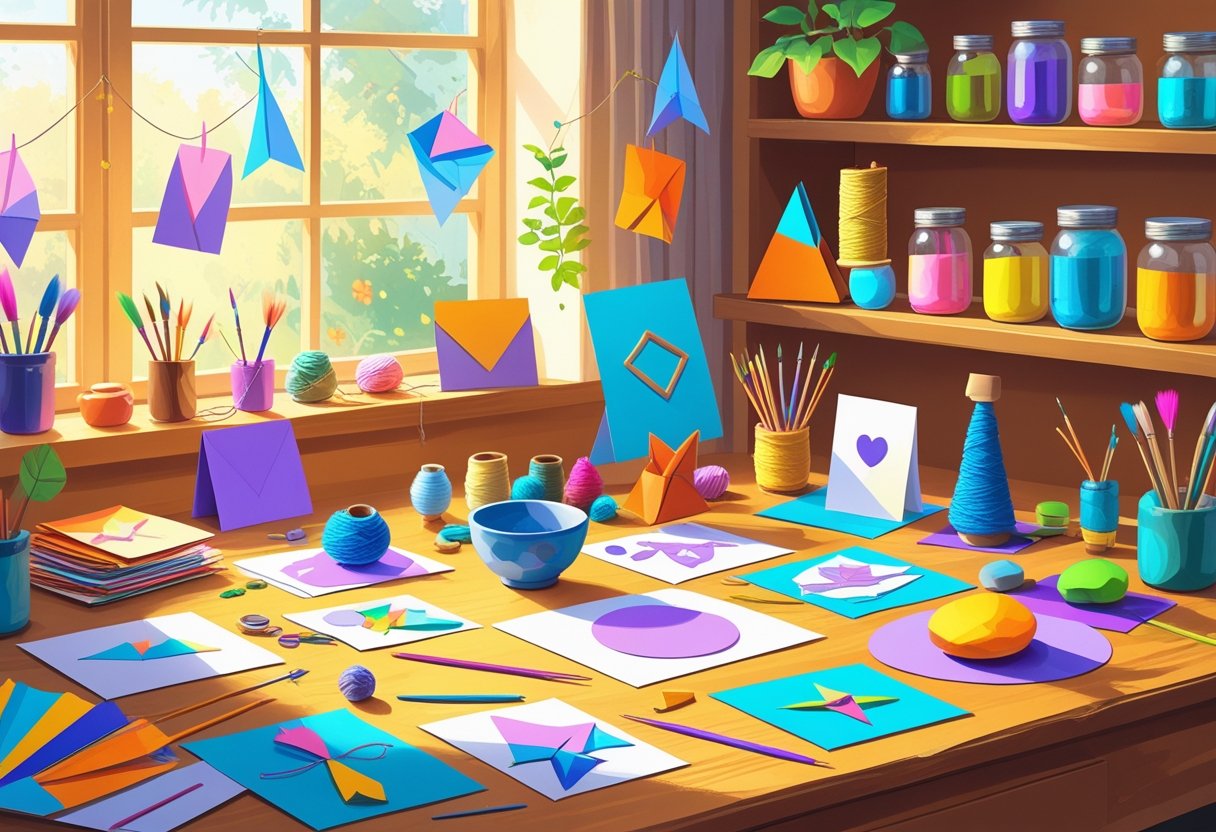
Arts and crafts hobbies let you create beautiful items with materials you already have at home or can buy for just a few dollars. You can start with basic supplies like pencils, paper, and glue to make everything from drawings to decorative objects.
Drawing and Sketching
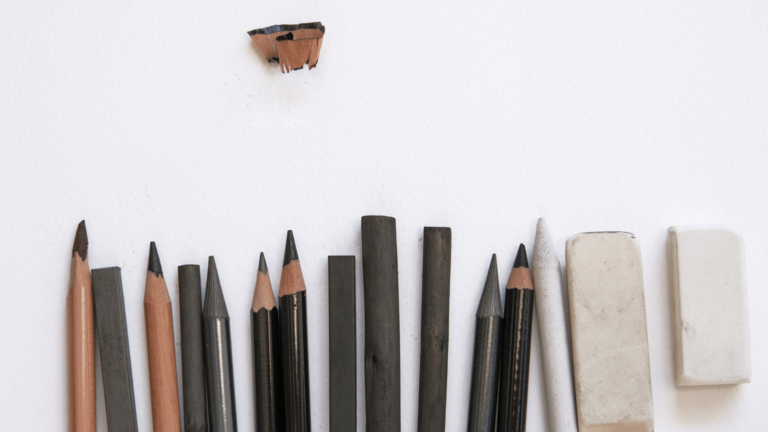
You can start drawing with just a pencil and paper you already have around your house. A basic sketchbook costs between $5 and $15, while a set of quality drawing pencils runs about $10 to $20.
The beauty of drawing as a hobby is that you don’t need expensive equipment to improve your skills. You can practice anywhere and anytime. Start by sketching simple objects around your home like fruit, cups, or furniture.
Free online tutorials on YouTube teach you techniques like shading, perspective, and proportions. You can also check out books from your local library to learn different drawing styles. As you get better, you might want to add colored pencils or charcoal to your collection, but these additions are optional.
Origami and Paper Crafts
Origami requires only square sheets of paper to create intricate designs. You can buy specialized origami paper for $5 to $10, or you can cut regular printer paper into squares. This makes it one of the most affordable crafts you can try.
Paper crafts go beyond origami to include card making, paper flowers, and decorative garlands. You can use old magazines, newspapers, or scrap paper for many recycled craft projects. Greeting cards cost $4 to $6 at stores, but you can make personalized cards for pennies.
Basic supplies you need:
- Scissors (one-time cost of $3-$8)
- Glue stick ($2-$4)
- Ruler ($1-$3)
- Paper (free to $10)
You can find free patterns and folding instructions online for thousands of designs. Start with simple projects like paper cranes or boxes before moving to complex sculptures.
DIY Upcycling Projects
Upcycling turns items you would throw away into useful or decorative objects. Glass jars become storage containers or vases. Old t-shirts transform into tote bags or cleaning rags. Cardboard boxes turn into organizers or pet houses.
This hobby saves you money twice because you avoid buying new items while keeping things out of the trash. Look around your home for materials like bottle caps, tin cans, wine corks, and fabric scraps. These materials are essentially free since you already paid for the original product.
You can paint old furniture with leftover paint or give new life to worn clothing with patches and embroidery. Mason jars work as candle holders, planters, or bathroom storage. Wooden pallets become shelves, coffee tables, or garden planters.
Common upcycling projects:
- Turning old jeans into a denim bag
- Making planters from plastic bottles
- Creating wall art from magazines
- Building shelves from wooden crates
Handmade Jewelry on a Budget
You can make simple jewelry with supplies from craft stores or even household items. A basic jewelry-making kit with pliers, wire, and findings costs $15 to $25 to start. Beads range from $3 to $10 per package depending on the material and quantity.
String bracelets and necklaces require only embroidery floss, which costs less than $1 per skein. You can create friendship bracelets, macramé jewelry, or beaded pieces. Buttons, paper clips, and safety pins can become creative jewelry components when you think outside the box.
Thrift stores sell broken jewelry for pennies that you can take apart and remake into new designs. This gives you access to beads, chains, and clasps at a fraction of retail prices. You can also collect small stones, shells, or dried flowers to incorporate into your designs.
Wire wrapping is a popular technique that requires only wire and stones or beads. A roll of jewelry wire costs $5 to $10 and lasts for many projects.
Budget-Friendly Music and Performing Arts
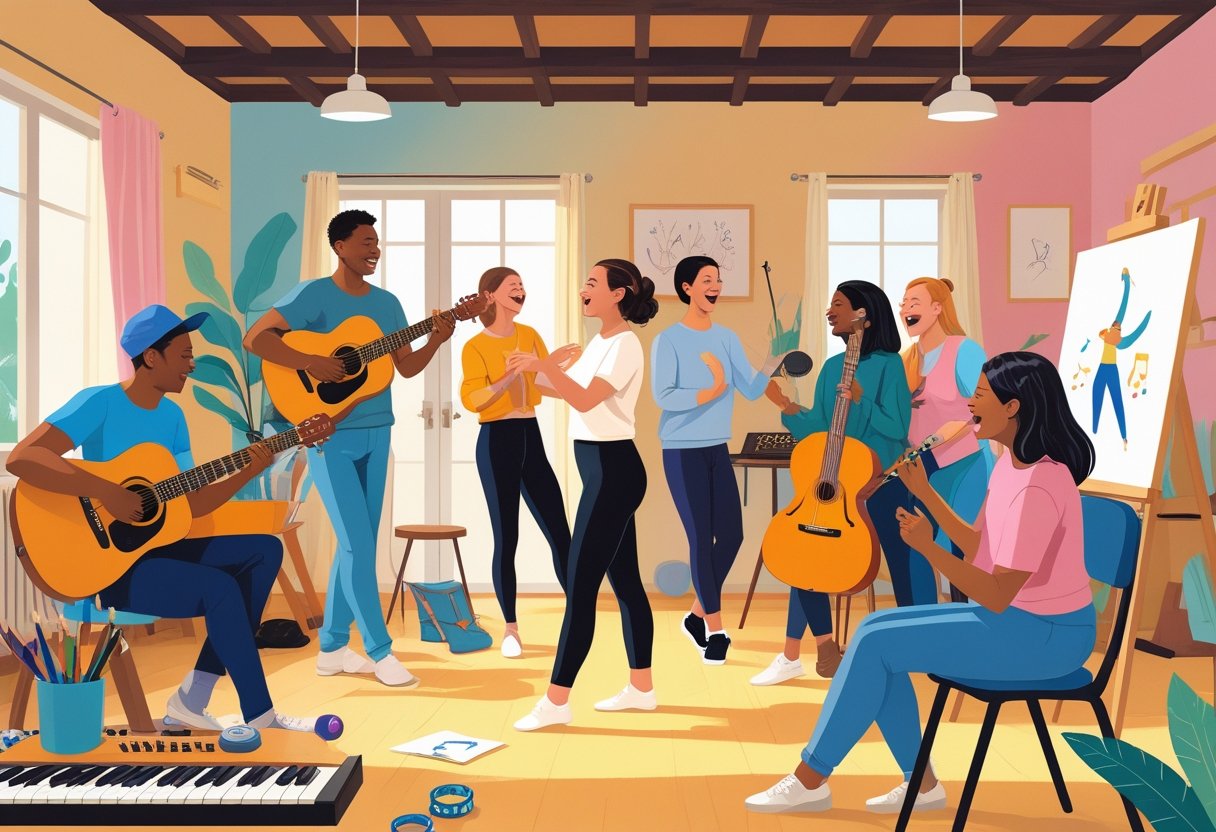
Music and performing arts don’t require expensive lessons or professional studios. You can learn instruments through free online resources, practice vocal techniques in your own home, and create original music with just a computer or smartphone.
Learning a Musical Instrument for Less
You can start learning an instrument without spending hundreds of dollars on private lessons. YouTube offers thousands of free tutorials for guitar, piano, ukulele, and other instruments. Many beginner instruments cost under $50, and some affordable hobbies require minimal startup costs.
Low-cost instrument options include:
- Harmonica – $10 to $30 for a quality beginner model
- Ukulele – $40 to $80 for a decent starter instrument
- Recorder – $5 to $15, perfect for learning music theory
- Keyboard – Used models start around $50
Free apps like Simply Piano, Yousician, and Fender Play offer trial periods that teach basic techniques. Your local library may also loan instruments or provide access to online learning platforms. Practice doesn’t require fancy equipment—just consistency and patience.
Singing and Vocal Training at Home
Vocal training costs nothing beyond your time and effort. Your voice is an instrument you already own. Online platforms like YouTube feature professional vocal coaches who teach breathing techniques, pitch control, and proper posture for free.
You can practice scales, warm-ups, and songs without any special equipment. Recording yourself on your phone helps you identify areas for improvement. Apps like Vanido and Sing Sharp provide instant feedback on pitch accuracy.
Joining a community choir gives you performance experience and training at little or no cost. Many churches, community centers, and local groups welcome singers of all skill levels. This provides regular practice and social connection without the expense of private lessons.
Digital Beat-Making and Music Production
You can produce music on your computer or phone using free software. GarageBand comes pre-installed on Apple devices and offers a complete recording studio. Audacity provides free audio editing for Windows and Mac users.
Free music production tools:
- Cakewalk by BandLab – Professional-level digital audio workstation
- LMMS – Beat-making and melody creation
- Soundtrap – Browser-based recording with collaboration features
- BandLab – Mobile and desktop production with social sharing
These programs include virtual instruments, drum machines, and effects processors. You don’t need expensive microphones or mixing boards to start creating. Sample libraries and loops are available free online, giving you building blocks for original tracks. Many producers start with just earbuds and a laptop, then upgrade equipment as their skills grow.
Creative Writing and Storytelling Ideas
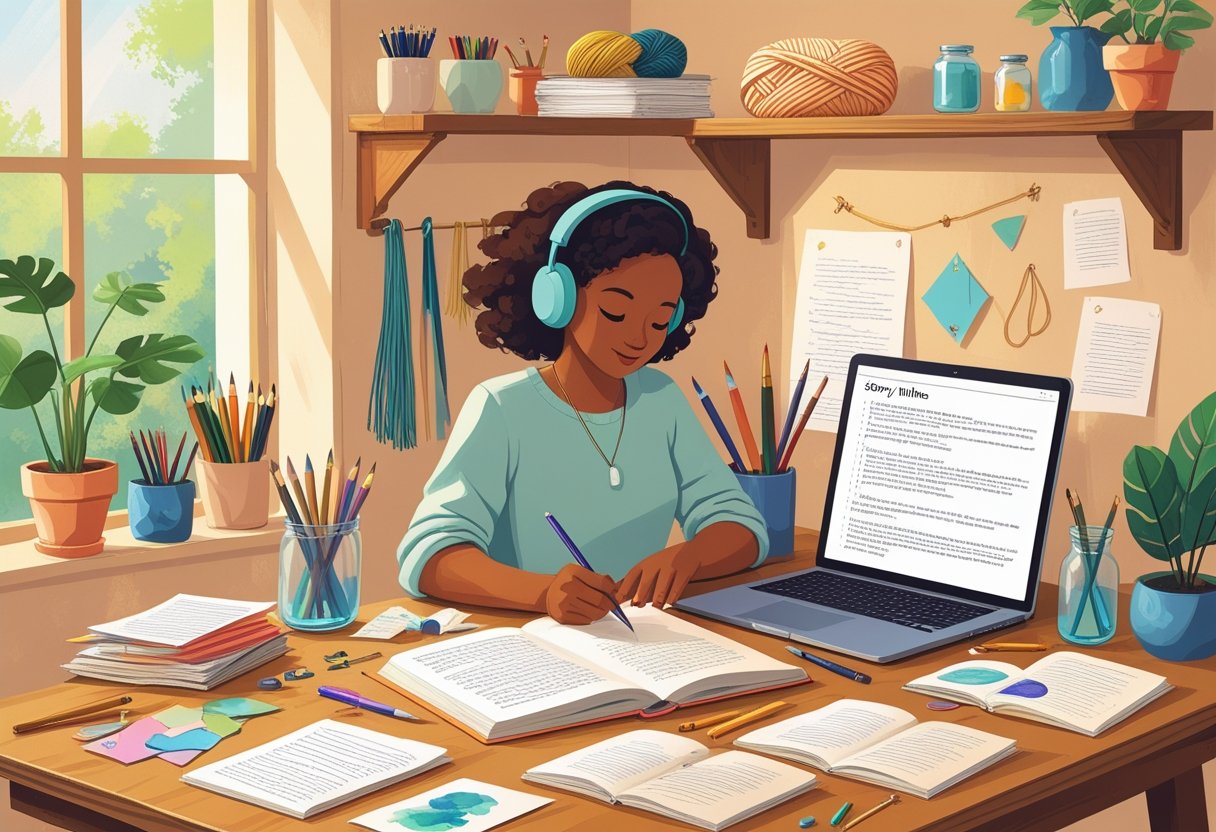
Writing costs almost nothing to start and opens up endless ways to express yourself. You can begin with just a pen and paper or use free tools on your phone or computer.
Journaling and Poetry
Journaling requires only a notebook and pen to get started. You can write about your daily experiences, work through emotions, or track personal goals. Many people find that keeping a gratitude journal improves their mood and outlook on life.
Poetry lets you play with language in short bursts. You don’t need special training or expensive materials. Start by writing about objects you see around you or memories that stand out. Free poetry prompts are available online to help you practice different styles like haikus, sonnets, or free verse.
Both journaling and poetry build writing skills while boosting creativity. You can write for five minutes or an hour depending on your schedule. Keep your writing private or share it with friends and online communities for feedback.
Short Story Writing
Short stories let you create complete narratives without committing to a novel. You can write a full story in 1,000 to 5,000 words and finish it in days or weeks. This makes it easier to see your progress and stay motivated.
Free writing software like Google Docs works perfectly for drafting stories. You can also find free 30-day writing prompts online to spark ideas when you feel stuck. Online writing communities offer free feedback and support from other writers.
Focus on writing one scene at a time. Start with a character facing a problem and work toward a resolution. You’ll improve your storytelling skills with each piece you complete.
Blogging with Minimal Expenses
You can start a blog for free using platforms like WordPress.com, Blogger, or Medium. These sites host your content without charging monthly fees. You just need an internet connection to write and publish your posts.
Pick a topic you know well or want to learn more about. Write about your hobbies, share tutorials, review books or movies, or document personal projects. Consistent posting helps you build an audience over time.
Free stock photo sites provide images to make your posts more engaging. You can upgrade to a custom domain later if your blog grows, but it’s not necessary when starting out.
Digital and Tech-Based Creative Pursuits
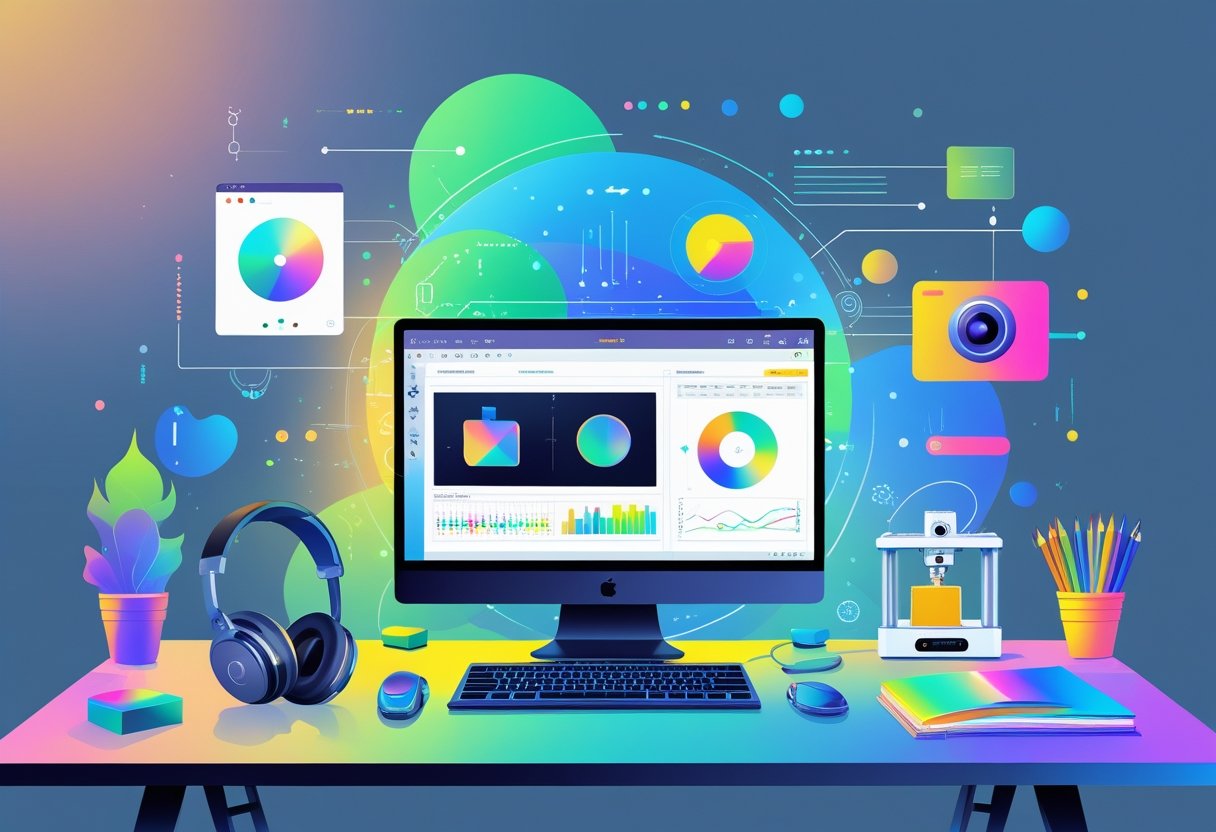
Your computer or smartphone opens up a world of creative opportunities that cost little or nothing to start. These digital hobbies eliminate traditional barriers like expensive equipment and studio space while giving you professional-grade tools.
Smartphone Photography
Your phone camera is powerful enough to capture professional-quality images. Modern smartphones include features like portrait mode, night mode, and manual controls that rival dedicated cameras.
You can learn photography basics through free apps and online tutorials. Focus on understanding composition rules like the rule of thirds, lighting techniques, and how to frame your subjects. Apps like Snapseed and Lightroom Mobile offer free editing tools that let you adjust colors, contrast, and sharpness.
Practice costs nothing beyond the time you invest. Take photos during your daily routine, experiment with different angles, and study how light changes throughout the day. Join online photography communities where you can share your work and get feedback from other photographers.
Graphic Design with Free Tools
Canva and GIMP provide free design software that professionals use for real projects. These programs let you create social media graphics, posters, logos, and digital art without spending money on expensive subscriptions.
Start with templates to understand design principles like color harmony, typography, and visual hierarchy. You’ll learn how fonts work together, which colors complement each other, and how to balance elements on a page. As you gain confidence, create your own designs from scratch.
Online courses and tutorials teach you specific skills like photo manipulation, vector graphics, and layout design. Practice by redesigning everyday items like restaurant menus or event flyers. Build a portfolio by offering to create graphics for local nonprofits or small businesses.
Animation and Video Editing Basics
Free software like DaVinci Resolve and Blender gives you access to the same tools used in Hollywood productions. You can edit videos, create animations, and add special effects without any upfront investment.
Start with simple projects like cutting together phone videos or creating basic motion graphics. Learn fundamental concepts like timing, transitions, and pacing. YouTube tutorials walk you through everything from basic cuts to advanced color grading.
Animation requires patience but offers unique creative satisfaction. Begin with short loops or simple character movements before tackling complex projects. The skills you develop translate directly to paid freelance work or content creation for your own channels.
Mindful and Meditative Craft Activities
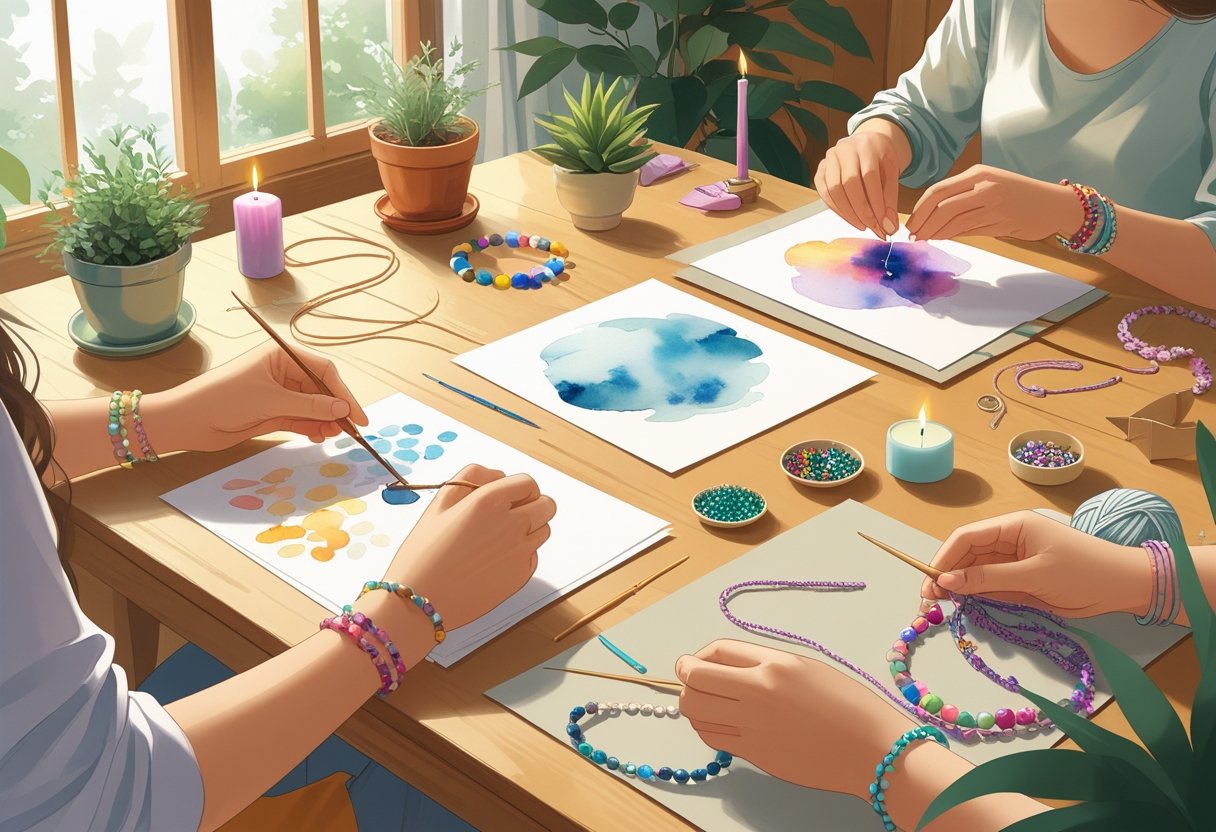
Craft activities can help you focus on the present moment while keeping costs low. Simple supplies like coloring books, yarn, and basic writing tools create opportunities for relaxation without expensive equipment.
Coloring for Relaxation
Adult coloring books cost between $5 and $15, making them one of the most affordable mindfulness crafts for adults. You only need a coloring book and colored pencils or markers to start.
The repetitive motion of filling in patterns helps calm your mind. You focus on choosing colors and staying within lines, which pulls your attention away from daily stress.
Basic supplies you need:
- Adult coloring book ($5-$15)
- Set of colored pencils ($3-$10)
- Markers or gel pens (optional, $5-$12)
Free printable coloring pages online let you try this hobby before buying books. Many libraries also lend coloring books at no cost.
Knitting and Crocheting Economically
Knitting can become a meditative practice when you focus on the rhythm of each stitch. Starting costs range from $10 to $20 for basic supplies.
Buy acrylic yarn instead of wool to keep costs down. A single skein costs $3 to $6 and makes scarves, dishcloths, or small blankets. Knitting needles or crochet hooks cost $5 to $10 for a basic set.
The repetitive movements create a calming rhythm. You count stitches and follow patterns, which keeps your hands busy and your mind focused on simple tasks.
Thrift stores often sell yarn and needles at lower prices. Online videos teach basic stitches for free, so you don’t need expensive classes.
Calligraphy and Hand Lettering
Hand lettering requires minimal investment to start. A basic brush pen costs $2 to $5, and practice paper costs just a few dollars.
You practice forming each letter slowly and carefully. This deliberate pace helps you concentrate on individual strokes rather than rushing through tasks.
Starter supplies:
- Brush pens or markers ($2-$8)
- Practice paper or printer paper ($3-$5)
- Free printable practice sheets (online)
You can practice on regular printer paper before buying special calligraphy paper. Many free tutorials and practice sheets exist online to guide your learning without paid courses.
Growing and Sharing Through Low-Cost Communities
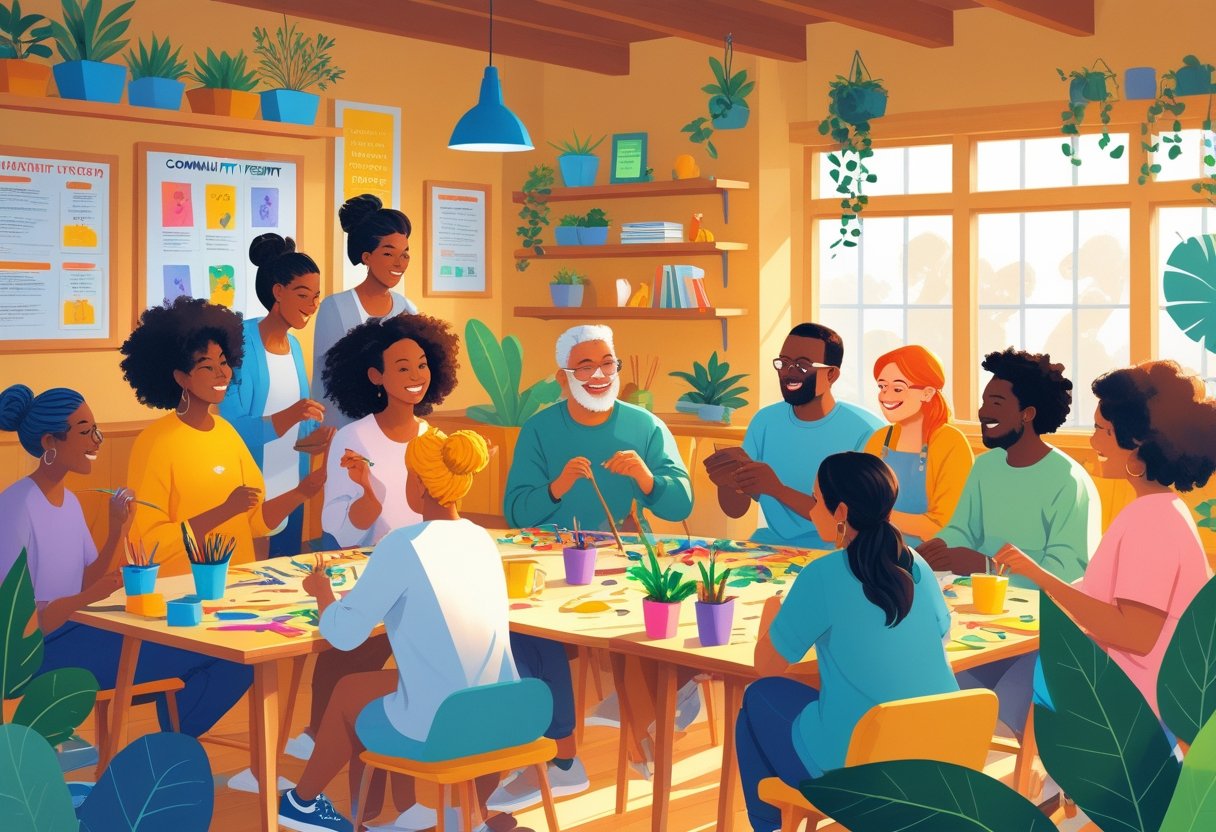
Creative communities offer free ways to learn new skills and connect with others who share your interests. You can find support and inspiration both online and in your local area without spending money.
Online Groups for Creative Inspiration
Social media platforms like Facebook, Reddit, and Discord host thousands of free groups dedicated to specific creative hobbies. You can join communities focused on painting, writing, crafting, or any other creative pursuit that interests you.
These groups let you share your work and get feedback from experienced creators. Many members post tutorials, tips, and resource recommendations that help you improve without paying for classes. You can ask questions and get answers from people who have already solved the problems you’re facing.
Reddit communities like r/crafts, r/writing, and r/learnart have millions of members who actively share their knowledge. Discord servers often host live feedback sessions and creative challenges that keep you motivated. YouTube channels frequently have companion communities where viewers support each other’s creative journeys.
The best part is that you can participate as much or as little as you want. You can lurk and learn by reading others’ posts, or you can become an active contributor who helps newer members.
Local Workshops and Meetups
Libraries, community centers, and recreation departments regularly offer free or low-cost creative workshops. These in-person sessions teach skills like knitting, watercolor painting, poetry writing, and pottery basics.
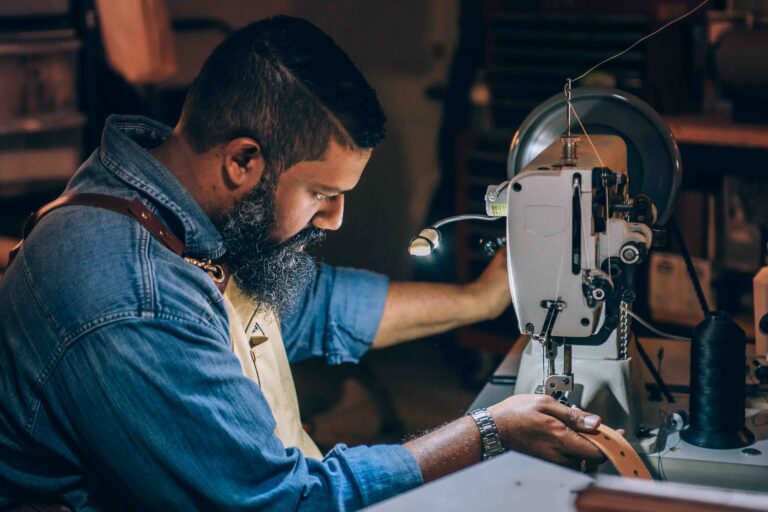
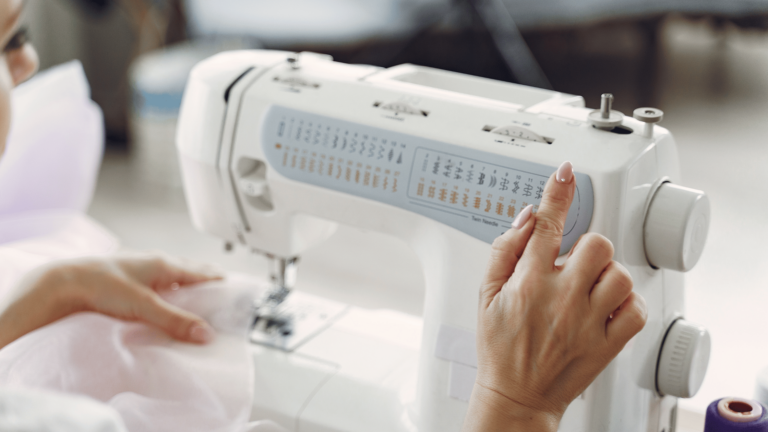
Many cities have tool libraries where you can borrow expensive equipment like sewing machines, 3D printers, and woodworking tools. You only pay a small annual membership fee or sometimes nothing at all. This lets you try new hobbies without buying costly gear upfront.
Community gardens bring neighbors together while providing space to grow plants and learn gardening skills. These spaces often welcome beginners and provide free seeds, tools, and mentorship from experienced gardeners.
Check your local community bulletin boards and websites for upcoming events. Many workshops fill up quickly, so sign up early when you find something that interests you.
Skill-Sharing and Collaboration
Trading skills with others eliminates the need to pay for instruction. You might teach someone to knit while they teach you digital photography. This exchange benefits both people without any money changing hands.
Local maker spaces and art collectives often work on a skill-sharing model. Members contribute their knowledge in exchange for access to shared tools and workspace. You can learn woodworking, metalworking, screen printing, and other equipment-intensive hobbies this way.
Collaboration projects let you create things beyond your individual skill level. A writer might partner with an illustrator to make a zine. A musician could team up with a video editor to produce music videos. These partnerships teach you new techniques while producing work neither person could make alone.
You can organize your own skill-sharing sessions with friends or neighbors. Set up regular meetups where each person teaches something they know well. This builds a supportive creative network in your immediate community.