10 Best Hobbies for Marine Biologists to Enjoy on Land: Activities to Balance Your Career and Personal Life
Marine biologists spend much of their professional time in the water or at research facilities. But their passion for ocean life doesn’t have to stop when they step onto dry land.
Many engaging hobbies allow marine biologists to stay connected to their field while enjoying time away from their primary work environment.
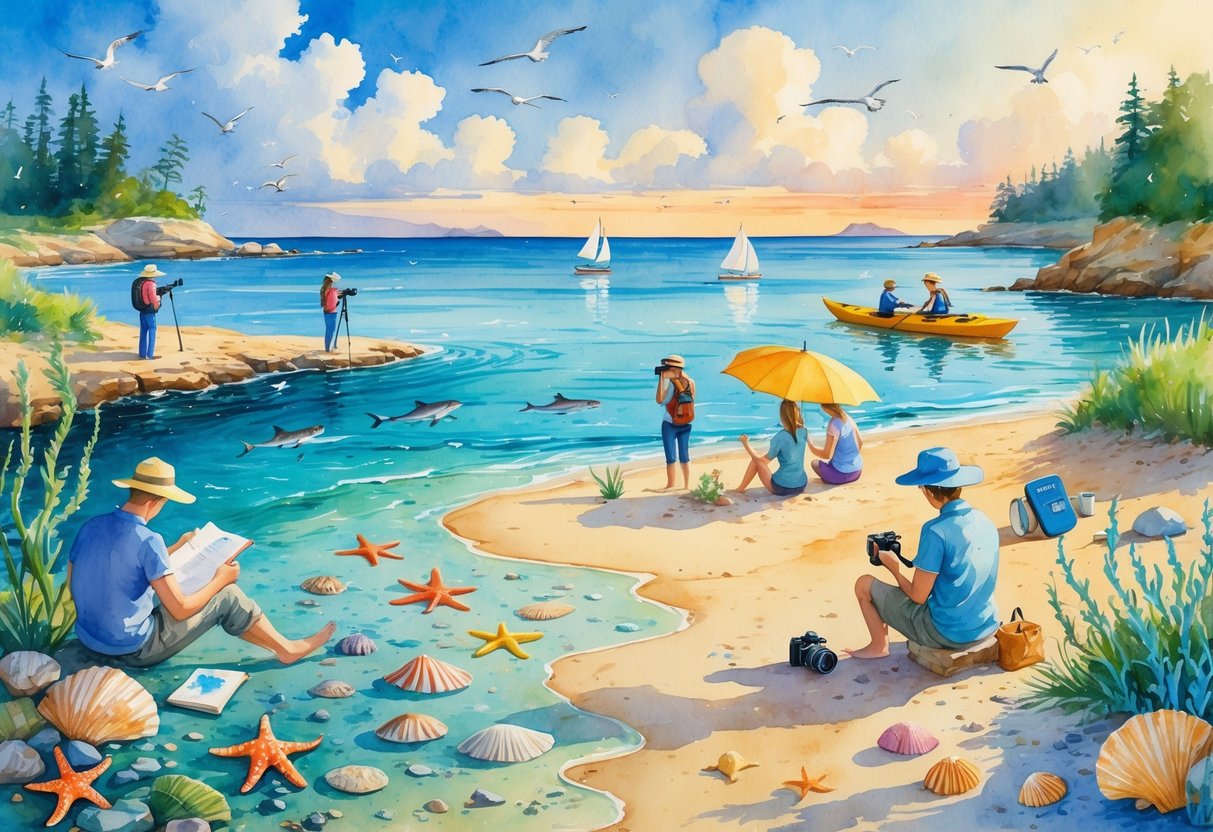
Land-based hobbies offer marine biologists ways to expand their knowledge, contribute to conservation efforts, and maintain their connection to marine science without needing to be in or near the water. These activities range from educational pursuits to creative outlets.
They can fit into busy schedules and provide both relaxation and professional development.
Whether you want to deepen your understanding of marine ecosystems, share your knowledge with others, or simply enjoy ocean-related activities in your free time, there are many options to explore.
10) Attending marine biology webinars and online courses
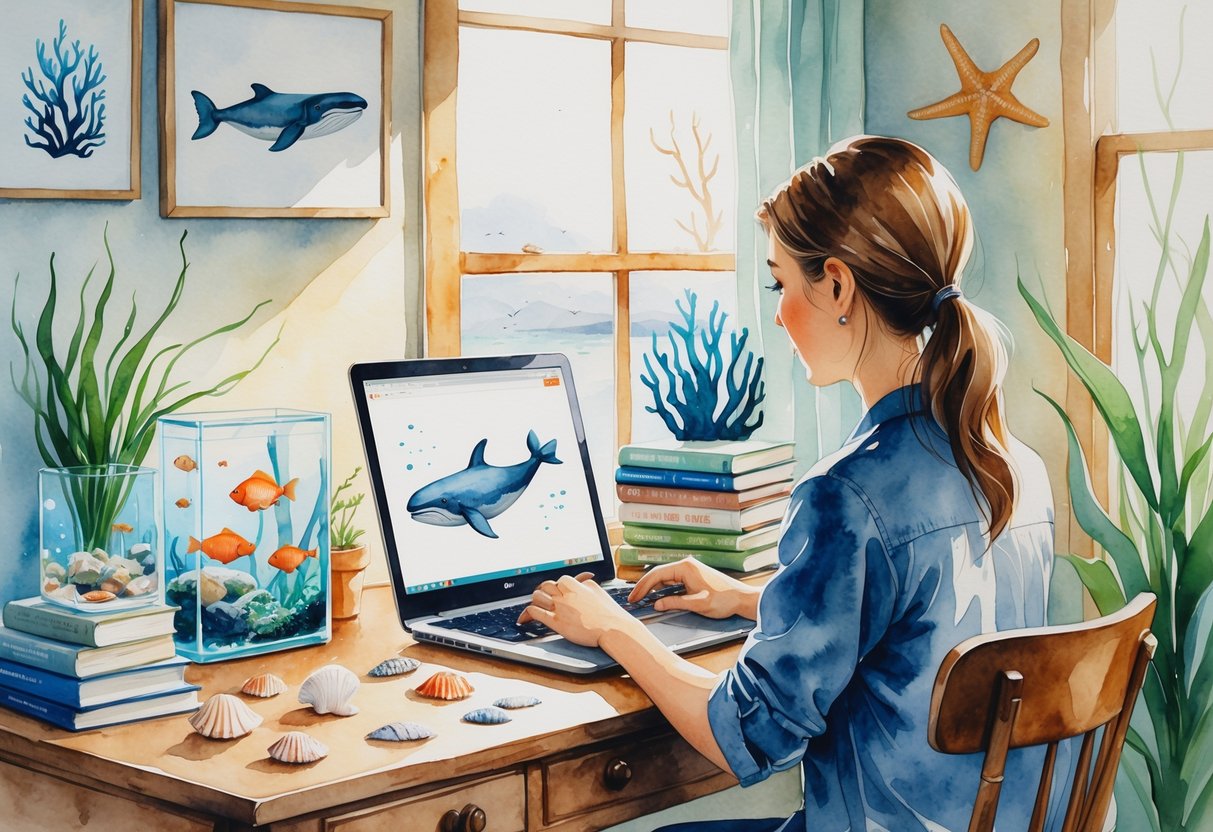
You can keep learning about marine science from your living room through webinars and online courses. Many organizations offer free monthly webinars on topics like coral reefs and ocean ecosystems.
These sessions let you connect with other marine biology enthusiasts without leaving home. Online courses give you the flexibility to study at your own pace.
You can find options ranging from university-level programs to shorter courses that focus on specific marine species or ecosystems. Some platforms offer certificates when you complete their programs, which can help build your professional skills.
The content varies widely depending on what interests you. You might study whale behavior through video case studies or explore microscopic plankton through interactive data tools.
Some courses cover conservation biology while others focus on marine biotechnology applications. Most online learning options are designed for different skill levels.
Whether you’re a professional marine biologist or just curious about ocean life, you can find courses that match your knowledge level. Many programs include access to recorded lectures, so you can review material whenever you need to.
You’ll learn from experienced instructors and course materials without the commitment of a full degree program. It’s a practical way to stay engaged with your field during your time on land.
9) Using remote sensing and marine biology apps
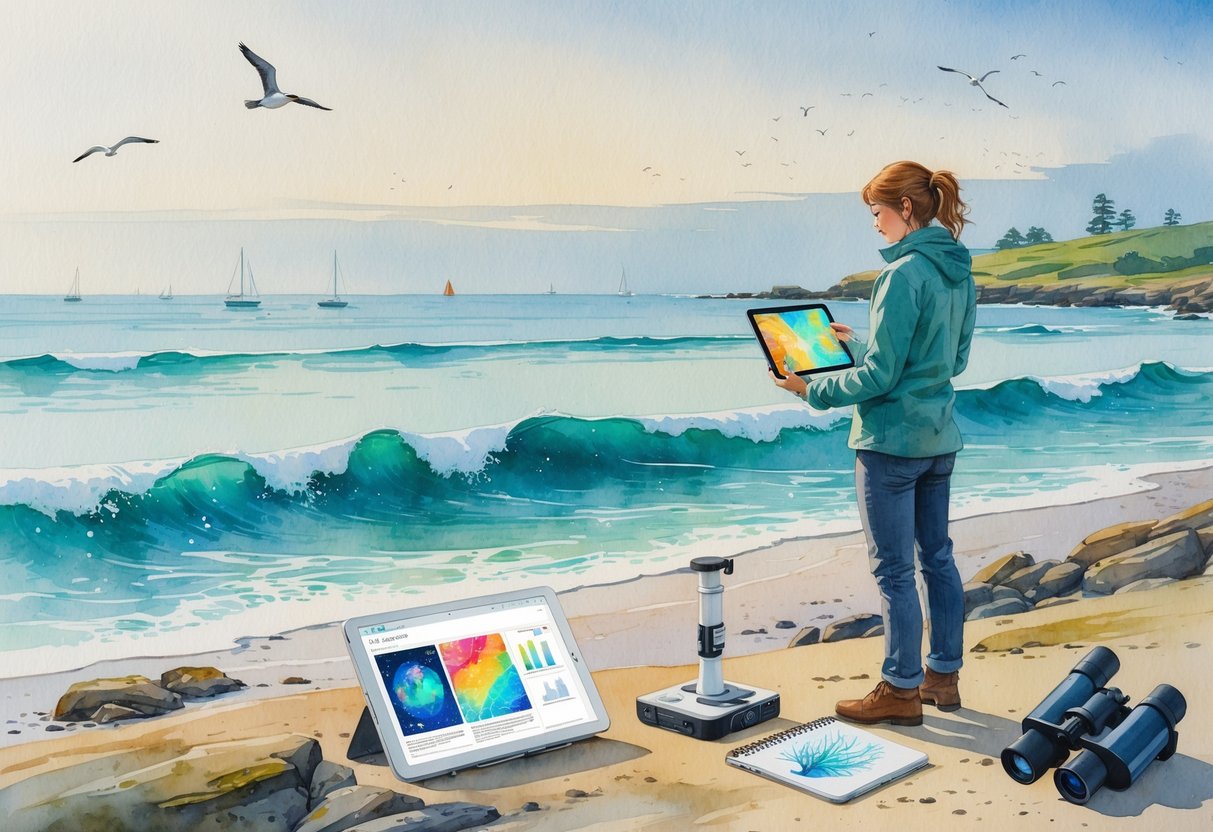
Technology brings marine research right to your home. Remote sensing apps let you explore ocean data without getting wet.
You can study water temperatures, track algae blooms, and monitor coastal changes from your computer or phone. Marine biology apps offer tools that professional scientists actually use.
These programs help you identify species, study ecosystems, and even contribute to real research projects. Many apps include databases with thousands of marine organisms and their habitat information.
You can analyze satellite imagery to observe ocean patterns and marine environments. Remote sensing technology shows you things that aren’t visible from the surface.
This includes underwater features, current patterns, and changes in water quality over time. Some apps connect you with citizen science projects.
You can report your coastal observations and help scientists collect data. This turns your hobby into meaningful contributions to marine research.
New tools use artificial intelligence to process ocean data faster and more accurately. You can now detect small changes in marine ecosystems that were impossible to spot before.
These digital tools work well for marine biologists who want to stay connected to their field while on land. You don’t need expensive equipment to get started.
Most apps are free or low-cost, making marine research accessible from anywhere.
8) Studying marine species identification and taxonomy
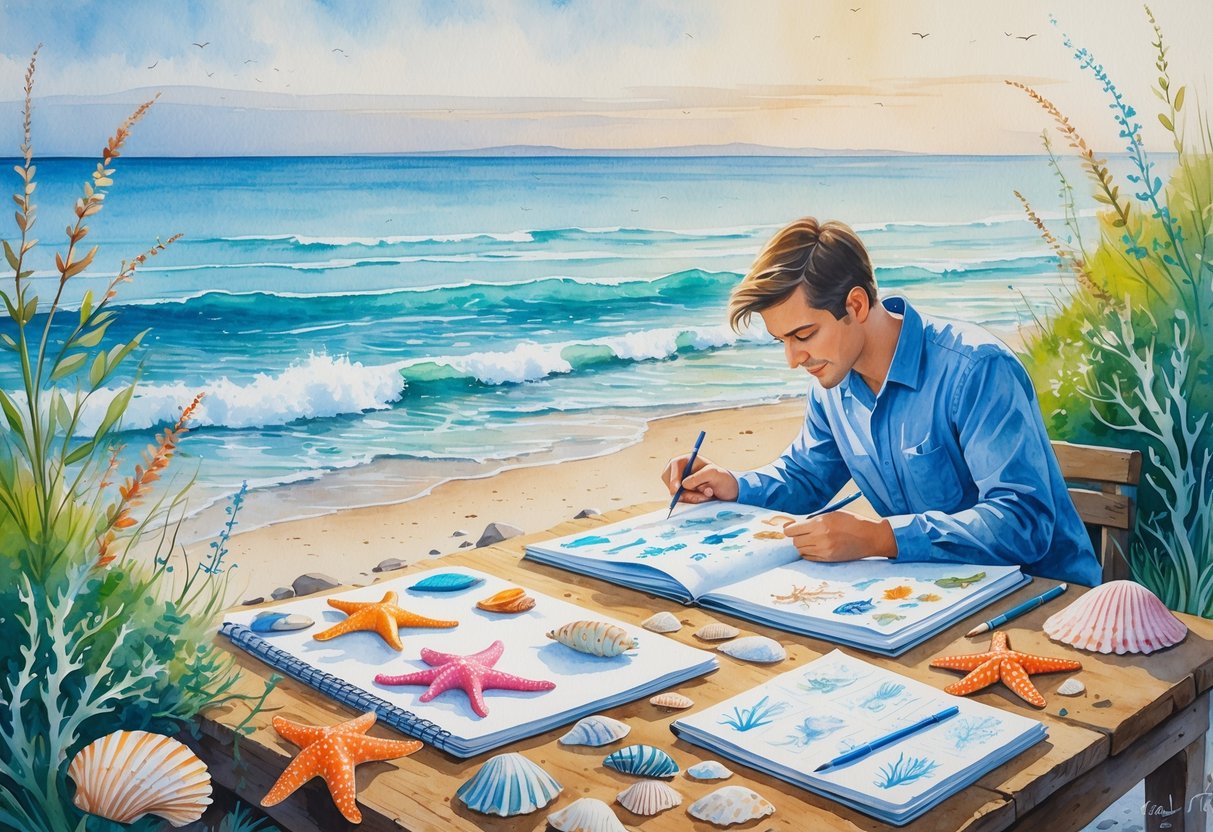
You can sharpen your professional skills from home by studying marine species identification and taxonomy. This hobby helps you become better at recognizing different marine organisms and understanding how they relate to each other.
Start by reviewing field guides and identification keys for species in your local area or regions you study. You can practice with photos and videos of marine life to test your identification abilities.
Many online databases and apps now offer interactive tools for learning species characteristics. Taxonomy work involves understanding how scientists classify and name marine organisms.
You can study the latest research papers to learn about newly discovered species or reclassified organisms. Join online communities where marine biologists share identification challenges and discuss taxonomic updates.
These groups often post mystery species for members to identify, which makes learning more engaging. You can also create your own reference materials by organizing notes on key identification features.
Focus on distinguishing characteristics like fin rays, scale patterns, or shell structures. This practice reinforces your memory and builds a personal resource you can use later.
Building strong identification skills on land makes your fieldwork more efficient. You’ll spend less time looking up basic species information and more time on detailed observations.
7) Volunteering with marine wildlife rehabilitation centers
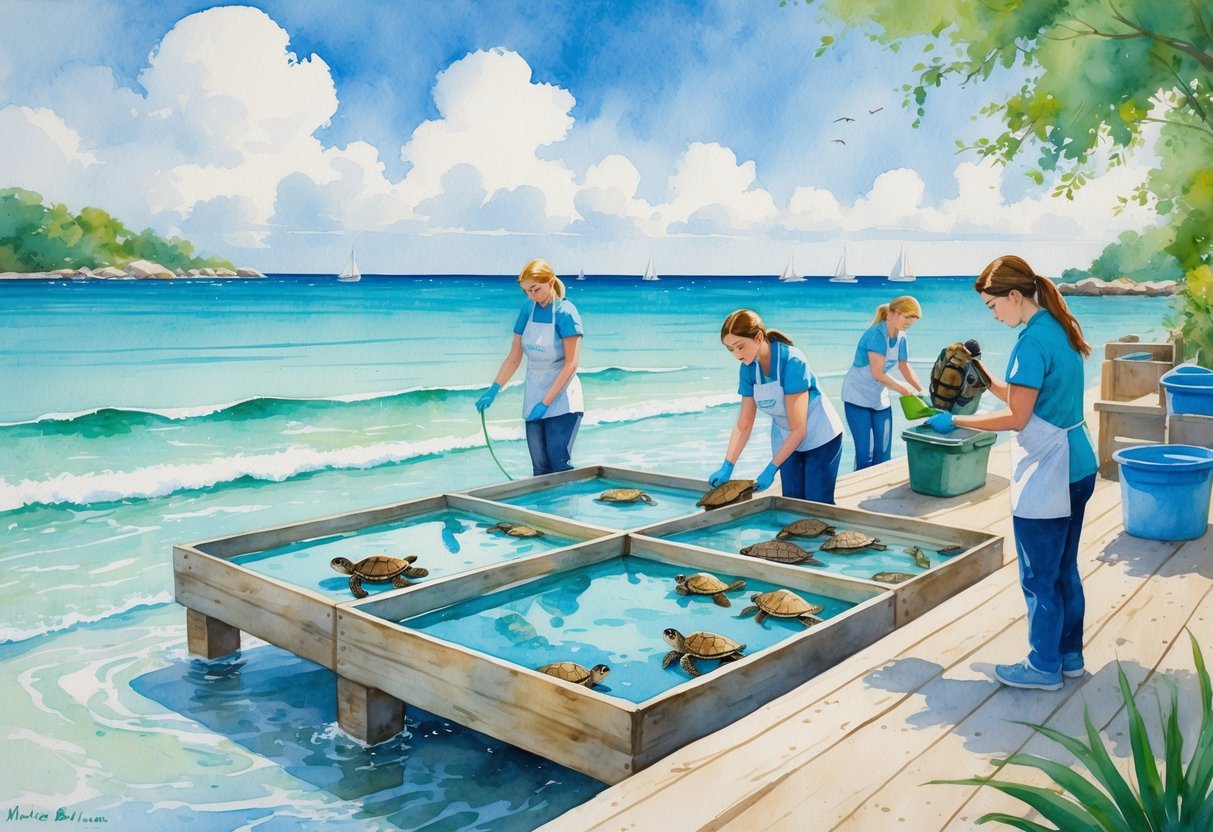
Marine wildlife rehabilitation centers provide care for sick and injured marine animals. When you volunteer at these facilities, you help marine mammals and sea turtles recover so they can return to the ocean.
Your work at a rehabilitation center keeps you connected to marine life even when you’re on land. You’ll assist with daily animal care tasks and support the center’s conservation mission.
This hands-on experience lets you apply your marine biology knowledge in a practical setting. The volunteer process typically starts with an application and orientation.
You’ll complete required training before working with animals. Centers need volunteers to help with feeding schedules, habitat maintenance, and monitoring animal health.
Some positions involve preparing food, cleaning enclosures, and recording behavioral observations. You don’t need diving experience for this hobby.
The work happens entirely on shore in rehabilitation facilities. Many centers also need help with educational programs and visitor services.
Volunteering offers flexible schedules that fit around your main work. You can commit to regular shifts or participate during specific seasons when stranded animals arrive most often.
Each hour you contribute supports wildlife conservation and helps injured animals survive. You’ll work alongside veterinarians, biologists, and other volunteers who share your passion for ocean wildlife.
The experience strengthens your understanding of marine animal health and rehabilitation practices.
6) Creating ocean-inspired art and crafts
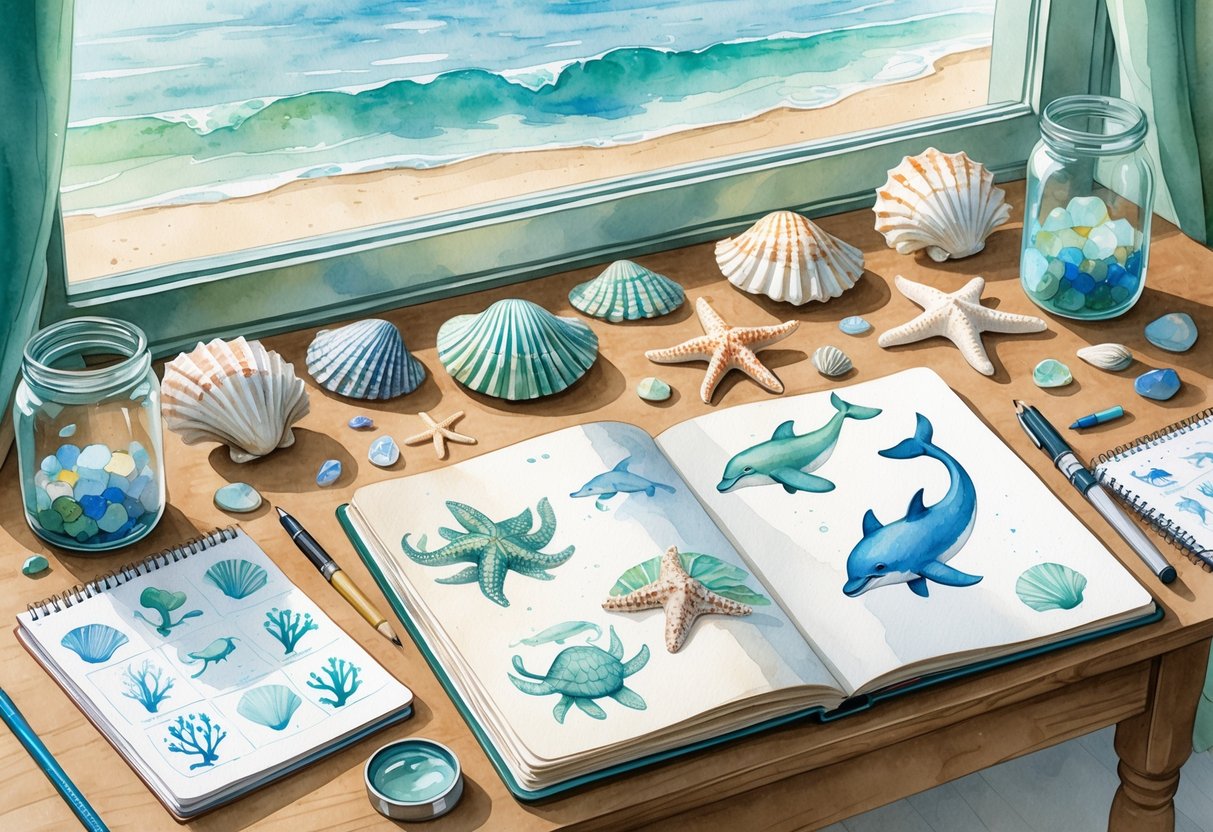
Making ocean-themed art brings the marine world into your home. You can work with different materials like paint, clay, fabric, or recycled items to create pieces that reflect your love of the sea.
Painting watercolor ocean scenes lets you capture the colors and movement of water. You can also try sculpting marine animals from clay or creating jewelry using shells and sea glass.
These activities combine your knowledge of marine life with creative expression. Crafting ocean-themed items serves both decorative and educational purposes.
You might make detailed models of coral reefs, design ocean conservation posters, or build dioramas of different marine habitats. Each project helps you share what you know about ocean ecosystems with others.
The supplies for these hobbies are easy to find and affordable. Basic art materials work well for most projects.
You can collect natural items like shells and driftwood during beach visits to add authentic touches to your work. This hobby works well year-round regardless of weather or location.
You can set up a small workspace at home and create whenever you have free time. The finished pieces make great gifts or can be used to teach others about marine biology.
Starting is simple. Pick a marine subject you find interesting and choose a medium you want to try.
Practice basic techniques and gradually work toward more complex projects as your skills develop.
5) Joining marine life photography clubs
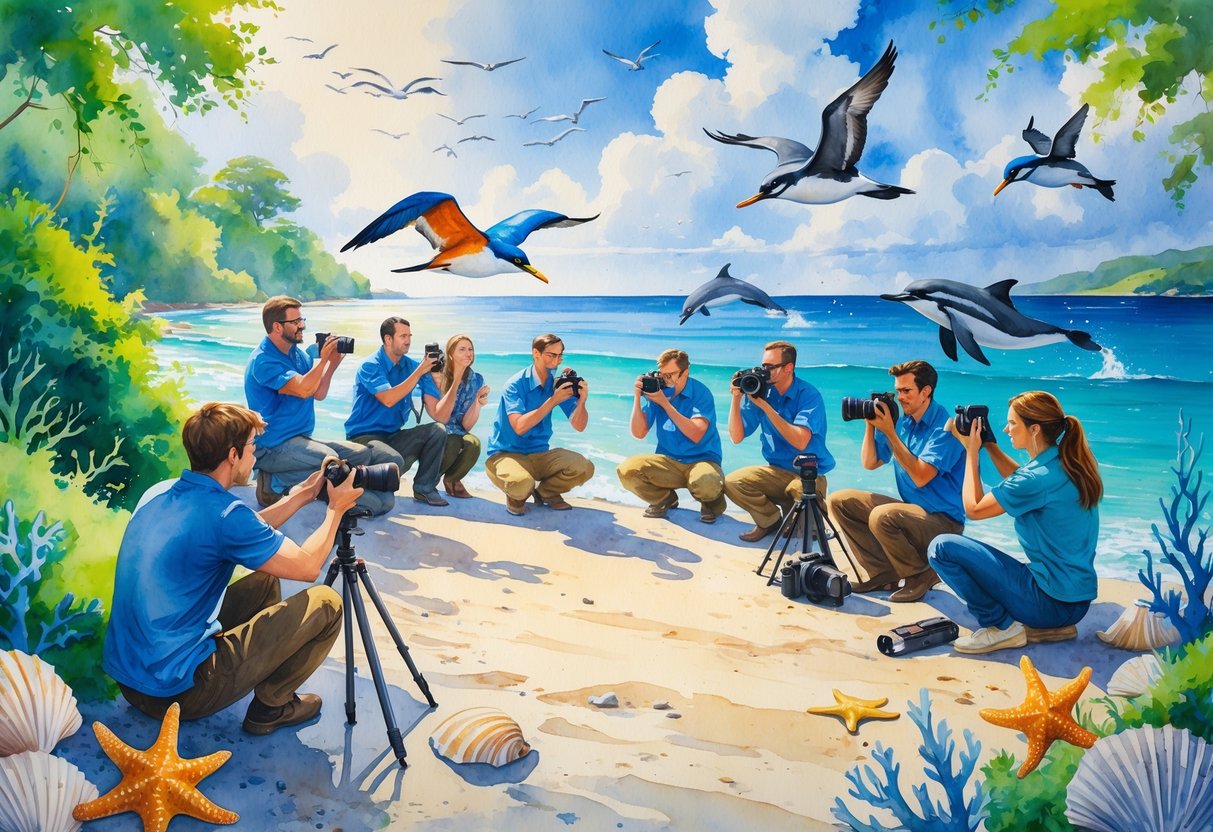
Photography clubs focused on marine life give you a chance to connect with others who share your interests. You can learn new techniques for capturing ocean creatures and underwater scenes while staying on land.
These groups often meet regularly to discuss photo editing, equipment choices, and composition tips. Many clubs organize field trips to aquariums, tide pools, and coastal areas.
You get to practice your skills in different settings without needing expensive scuba gear. Members share their knowledge about lighting, camera settings, and how to photograph marine subjects through glass or in challenging conditions.
These clubs provide feedback on your work from experienced photographers. You can improve your skills faster by learning from people who understand both photography and marine biology.
Some groups even host competitions or exhibitions that showcase member photos. Online photography communities offer similar benefits if no local clubs exist in your area.
You can participate in virtual photo critiques and challenges from home. Many groups focus specifically on marine subjects, from fish and coral to seabirds and coastal landscapes.
Membership often includes access to workshops and educational resources. You learn about the technical side of photography while staying connected to marine biology.
These clubs help you develop a creative hobby that complements your scientific interests and lets you share the beauty of ocean life with others.
4) Microscopic examination of plankton samples at home
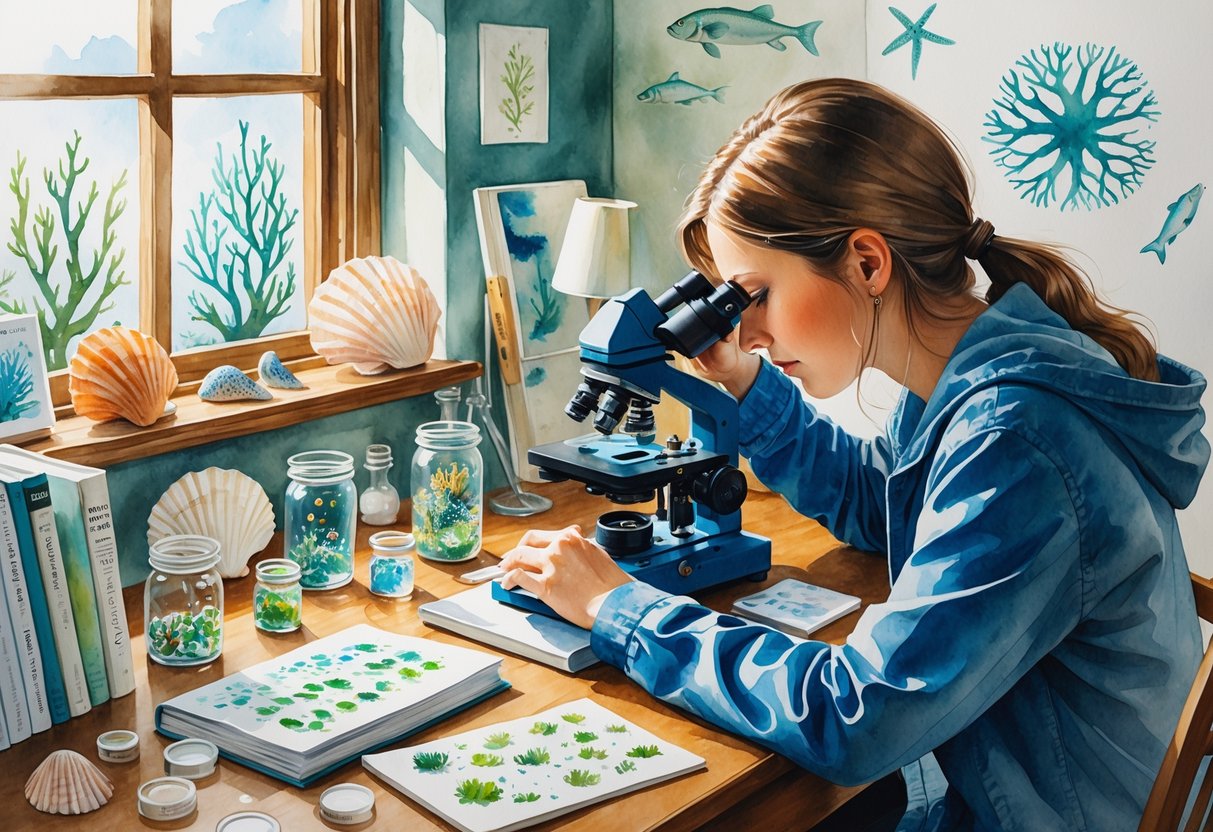
You can explore the microscopic world of plankton without leaving your home. This hobby lets you study the tiny organisms that form the base of aquatic food webs.
All you need is basic equipment and samples from local water sources. Start by collecting plankton samples from ponds, lakes, or coastal areas using a simple plankton net.
You can make your own net or purchase one from science supply stores. If you live far from water sources, you can order preserved samples from companies like Carolina Biological Supply Company or Ward’s.
Fresh samples work best because they show natural colors and movements. You’ll observe both phytoplankton (plant-like organisms) and zooplankton (animal-like organisms).
A stereo microscope gives you a quick overview in a petri dish, while a compound microscope reveals finer details. When you collect samples, dilute them if they look too dense.
Plankton need space to move and breathe. Keep your samples in a well-lit area with gentle aeration to maintain healthy specimens.
Look for identifying features like the silica cell walls of diatoms or the jerky swimming motion of copepods. You’ll quickly learn to recognize different species and understand their behaviors.
This hands-on practice sharpens your observation skills and deepens your knowledge of aquatic ecosystems.
3) Participating in coastal clean-up and conservation events
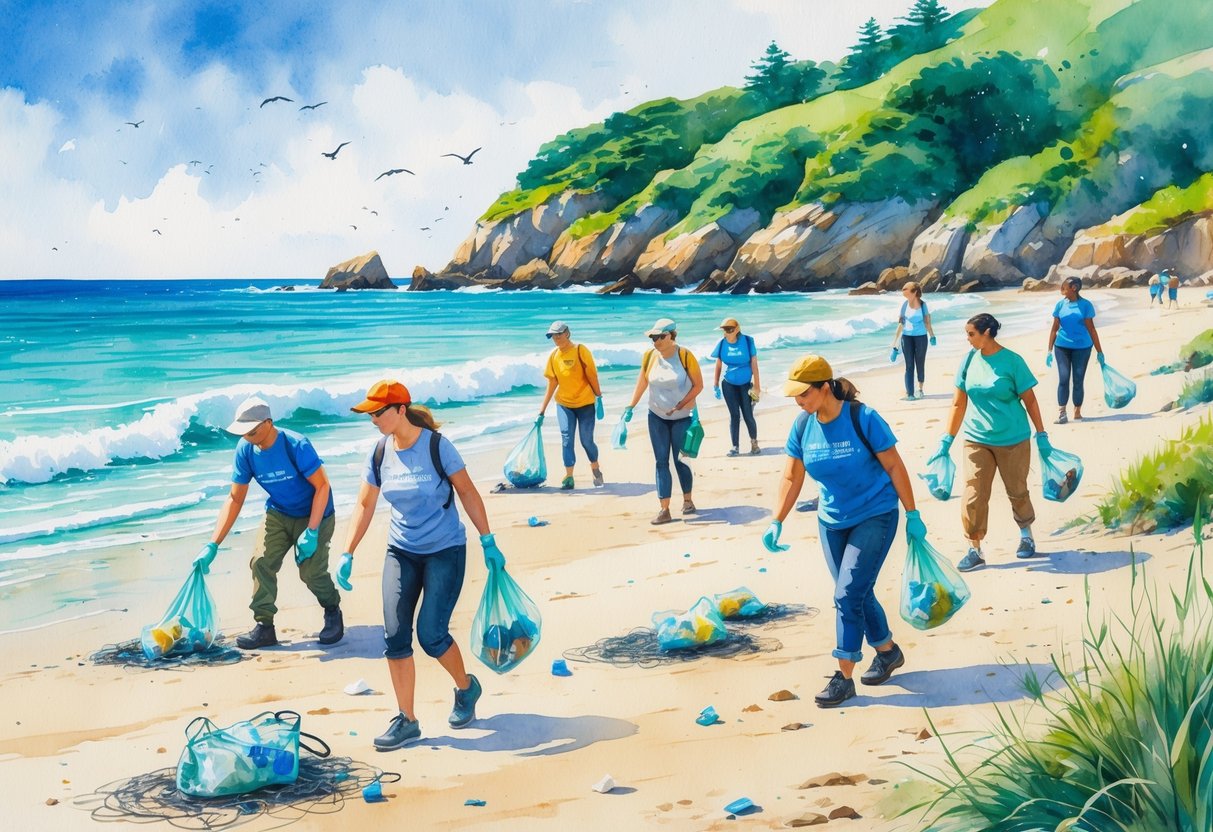
Coastal clean-up events give you a chance to apply your marine biology knowledge while making a real difference. These organized gatherings bring volunteers together to remove trash and debris from beaches and shorelines.
You can find events through local coastal parks, conservation groups, or national marine sanctuaries in your area. Beach cleanups do more than just remove litter.
They help protect marine animals from harmful debris and keep pollution from spreading through ocean currents. Your background in marine biology makes you especially valuable at these events because you can identify and document different types of marine debris and their effects.
Many cleanup programs happen monthly or seasonally. The International Coastal Cleanup takes place every September and connects over one million volunteers worldwide.
You can also volunteer for activities like water quality monitoring, wildlife surveys, and underwater reef cleanups if you have diving certification. These events offer great networking opportunities with other conservation-minded people.
You’ll meet fellow marine enthusiasts, environmental professionals, and community members who share your passion for ocean health. Getting involved is simple.
Check with your local parks department or search for marine conservation organizations near you. Most events welcome volunteers of all experience levels and provide supplies.
You can participate solo or bring friends and family along to share the experience.
2) Building and maintaining a saltwater aquarium
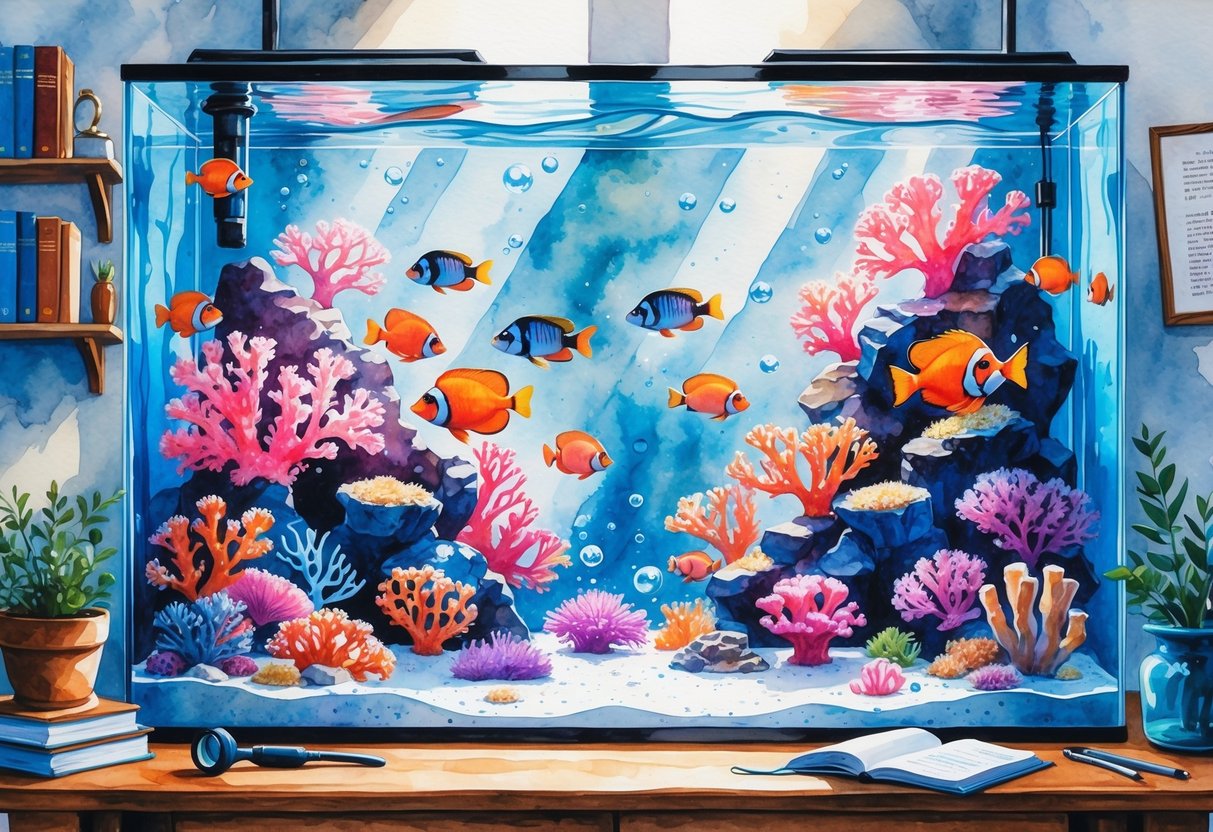
Building a saltwater aquarium lets you bring your professional knowledge home. You can create a small ocean ecosystem right in your living room.
This hobby connects directly to your marine biology background. Setting up a saltwater tank requires specific equipment and careful planning.
You need a tank, filtration system, lighting, heater, and salt mix. The setup process involves cycling the tank to establish beneficial bacteria before adding any animals.
Water quality management is the most important part of keeping a healthy aquarium. You’ll test parameters like salinity, pH, ammonia, nitrite, and nitrate levels regularly.
These measurements help you maintain stable conditions for your marine life. Choosing the right species for your tank takes research and patience.
Start with hardy fish and simple corals if you’re new to the hobby. Your marine biology training gives you an advantage in understanding species compatibility and habitat needs.
Regular maintenance keeps your aquarium thriving. You’ll perform water changes, clean equipment, and monitor your animals for signs of stress or disease.
This hands-on work reinforces concepts you study professionally. The hobby offers a creative outlet while keeping your skills sharp.
You can experiment with different aquascaping designs and coral arrangements. Many marine biologists find that maintaining an aquarium at home deepens their understanding of ocean ecosystems and animal behavior.
1) Reading marine biology journals and scientific articles
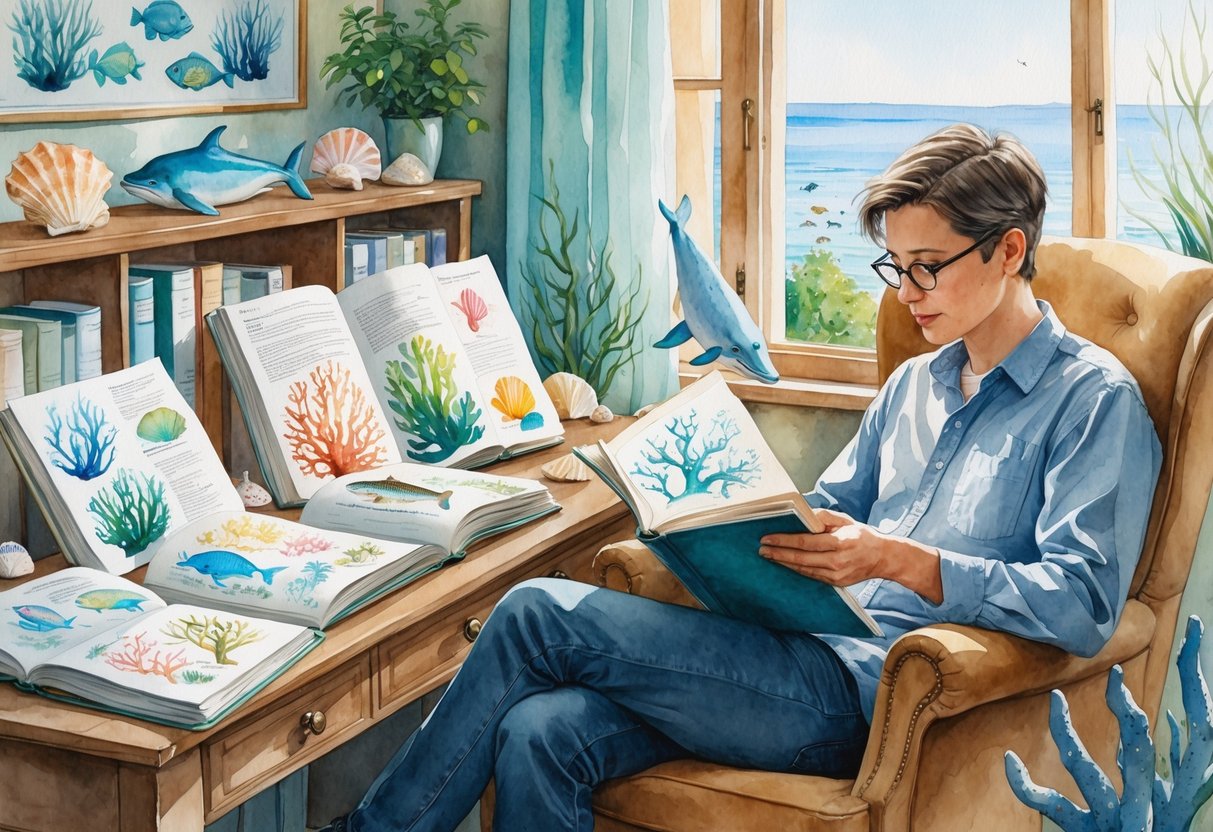
Reading scientific journals keeps you connected to your field when you’re away from the water. You can explore the latest research on marine ecosystems, species discoveries, and conservation efforts from your home or local library.
This hobby lets you stay current with developments in marine science without needing specialized equipment or ocean access. Scientific articles cover topics from coral reef ecology to marine mammal behavior.
You can read about climate change impacts on ocean life, new species classifications, or breakthrough research methods. Many journals publish studies on both plant and animal marine life, giving you a broad view of ocean science.
Open-access journals make it easy to read peer-reviewed research without expensive subscriptions. You can find articles on specific topics that interest you, whether that’s deep-sea biology, coastal ecosystems, or fisheries management.
Reading these publications helps you understand complex scientific concepts and research methodologies. This hobby also improves your professional skills.
You learn how scientists structure their studies, analyze data, and present findings. Regular reading keeps your scientific knowledge sharp and helps you think critically about marine biology topics.
You can set aside time each week to read articles that catch your attention. Some marine biologists make this part of their daily routine, while others prefer longer reading sessions on weekends.
The flexibility makes it easy to fit into any schedule.
Benefits of Land-Based Hobbies for Marine Biologists
Marine biologists spend much of their professional lives focused on ocean ecosystems and aquatic research. Land-based hobbies provide mental refreshment, strengthen analytical thinking, and spark new approaches to marine science challenges.
Enhancing Cognitive Skills
Land-based hobbies build cognitive abilities that directly support your marine biology work. When you engage in activities like bird watching or nature photography, you sharpen your observational skills and attention to detail.
These same skills help you spot behavioral patterns in marine species and identify subtle changes in aquatic environments. Puzzle-based hobbies such as chess or strategy games strengthen your problem-solving abilities.
You develop better analytical thinking that applies to research design and data interpretation. Your brain forms new neural pathways that improve memory retention and pattern recognition.
Reading scientific literature from other biology fields exposes you to different research methods. You might discover techniques from terrestrial ecology that adapt well to marine studies.
This cross-disciplinary learning expands your methodological toolkit. Garden-based activities teach you about broader ecological principles.
You observe plant growth cycles, soil chemistry, and terrestrial food webs firsthand. These concepts often have marine parallels that deepen your understanding of ocean ecosystems.
Improving Work-Life Balance
Your career demands long hours in labs, on boats, or underwater. Land-based hobbies give you structured time away from marine environments.
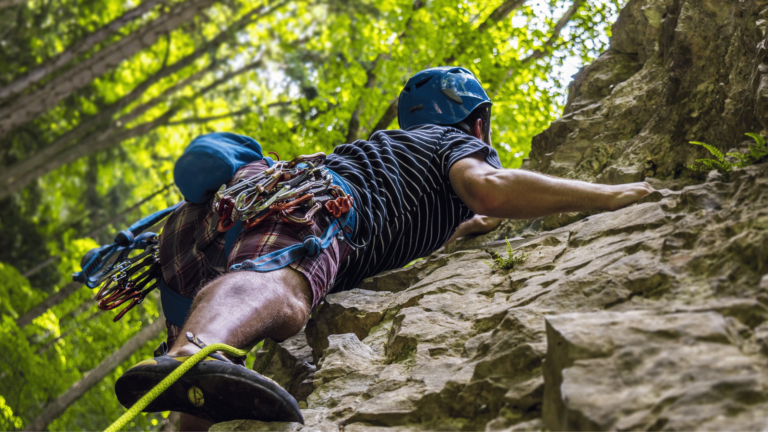
This separation prevents burnout and maintains your enthusiasm for ocean research. Physical activities like hiking or rock climbing provide exercise without water exposure.
Your body needs recovery time from diving and swimming. These hobbies keep you active while giving your muscles different movement patterns.
Social hobbies connect you with people outside marine science. You gain fresh perspectives and reduce professional isolation.
Conversations about non-marine topics refresh your mental state and reduce work-related stress. Regular hobby time establishes boundaries between work and personal life.
You return to research with renewed focus and energy. Your productivity increases when you’re not mentally exhausted.
Fostering Creativity and Inspiration
Creative hobbies unlock new ways of thinking about marine biology challenges. Painting or drawing improves your ability to visualize complex systems and communicate research findings.
You develop skills in presenting data through visual formats that engage broader audiences. Writing fiction or poetry exercises different parts of your brain than scientific writing.
You learn to explain concepts in accessible language. This skill proves valuable when writing grant proposals or public education materials.
Music and performing arts strengthen pattern recognition abilities. You notice rhythms and sequences that might apply to marine animal behavior studies.
Creative expression also reduces stress that can block innovative thinking. Crafting or building projects develop spatial reasoning and hands-on problem solving.
You learn to work with materials and tools that might inspire new research equipment designs. These practical skills complement your theoretical knowledge.
Integrating Hobbies With Marine Biology Careers
Your hobbies can directly strengthen your professional work in marine biology while opening doors to new connections in the field. The skills you build and people you meet through leisure activities often translate into career advantages.
Building Transferable Skills
Photography hobbies teach you composition and lighting techniques that improve scientific documentation of marine specimens. When you photograph landscapes or wildlife on land, you develop the same visual storytelling abilities needed for research presentations and grant proposals.
Scuba diving as a hobby builds comfort in underwater environments before you need those skills for fieldwork. Your personal dive logs and certifications become professional credentials.
Writing blogs or articles about ocean topics sharpens your science communication skills. These same abilities help you publish research papers and explain complex findings to the public.
Skills That Transfer Well:
- Drawing and illustration for creating detailed species diagrams
- Coding and data analysis from gaming or tech hobbies
- Public speaking through community groups or clubs
- Video editing for documenting research expeditions
Your physical hobbies like kayaking or hiking build the stamina needed for long field days collecting samples.
Networking and Community Engagement
Volunteer beach cleanups connect you with conservation organizations that might fund your research or offer job opportunities. You meet other marine science professionals in casual settings where authentic relationships form.
Joining aquarium societies or coastal restoration groups puts you in contact with educators, policy makers, and fellow researchers. These connections often lead to collaborative projects or job referrals.
Attending hobby-focused conferences or workshops in photography, sailing, or environmental advocacy expands your professional network beyond traditional academic circles. The marine biology community values people who engage with ocean issues through multiple channels.
Local nature clubs and citizen science projects give you leadership experience while contributing real data to research databases. Your hobby participation demonstrates commitment to marine conservation that employers notice on resumes.
Frequently Asked Questions
Marine biologists often wonder how to balance their professional expertise with land-based leisure activities, from creative pursuits like ocean-inspired art to educational options such as online courses and taxonomy studies.
What hobbies can marine biologists engage in that complement their profession?
You can pursue hobbies that build on your marine science knowledge while staying on land. Online courses and webinars let you learn about new research methods and species discoveries from your home.
These activities keep your skills sharp between field seasons. Remote sensing apps and marine biology software allow you to analyze ocean data and track marine populations from anywhere.
You can also study marine species identification and taxonomy using field guides and online databases. This helps you prepare for upcoming research projects or simply deepens your understanding of ocean life.
Which land-based activities are recommended for marine biologists to unwind?
Creating ocean-inspired art offers a relaxing way to express your connection to the sea. You can paint coastal scenes, make jewelry from ethically sourced shells, or craft marine-themed decorations.
Volunteering with marine wildlife rehabilitation centers gives you hands-on experience with animals while contributing to conservation. These facilities often need help with tasks like preparing food, cleaning enclosures, and educating visitors.
The work feels meaningful without the pressure of your regular research duties.
How can marine biologists apply their skills in everyday leisure activities?
Your identification skills translate well to birdwatching, especially when observing seabirds and shorebirds. You already know how to use field guides and binoculars effectively.
Your understanding of animal behavior helps you predict where species will appear and what they might do. Data analysis abilities from your research work can enhance hobbies like citizen science projects.
You can contribute to environmental monitoring programs by collecting and submitting observations. Your training makes you particularly valuable for projects that track coastal ecosystems or migrating species.
What are the creative pastimes suitable for marine biologists?
Photography lets you document marine life and coastal environments in artistic ways. You can focus on tide pool creatures, beach landscapes, or abstract patterns in sand and water.
Writing about your marine experiences through blogs or creative nonfiction combines your scientific knowledge with storytelling. You might share expedition stories, explain complex ocean concepts to general audiences, or write about conservation issues.
Ocean-inspired crafts like making sea glass art or designing aquarium decorations allow you to work with your hands while celebrating marine themes.
Are there any educational hobbies that marine biologists can enjoy on land?
Webinars and online courses keep you updated on the latest marine research and techniques. You can learn about emerging fields like ocean robotics or climate change impacts on marine ecosystems.
Many institutions offer free or low-cost options that fit into busy schedules. Studying taxonomy and species identification deepens your expertise in specific groups of organisms.
You can focus on areas outside your research specialty or become more skilled at identifying challenging species. Field guides, online databases, and virtual museum collections provide endless learning opportunities from home.
Which hobbies help with the physical demands of marine biology when on land?
Yoga and stretching routines improve flexibility needed for field work like bending over tide pools or working in small boats.
These activities also reduce muscle tension from long hours at microscopes or computers.
Swimming and water aerobics maintain your comfort level in aquatic environments while providing low-impact exercise.
Rock climbing builds upper body strength useful for climbing on research vessels or rocky shores.
Hiking keeps your endurance high for long field days and helps you stay comfortable walking on uneven coastal terrain.