
10 Best Hobbies for Uber & Lyft Drivers Between Rides to Maximize Downtime and Earnings
Driving for Uber or Lyft gives you flexibility, but it also means dealing with downtime between rides.
Those quiet moments add up during a shift, and how you use that time can make a real difference in your day.

The right hobbies can turn your waiting time into opportunities for personal growth, relaxation, or skill development.
Instead of just scrolling through social media, you can use these breaks to work toward goals that matter to you.
This guide covers practical activities you can do from your car that keep you engaged and ready to accept your next ride request.
10) Play brain games like Lumosity
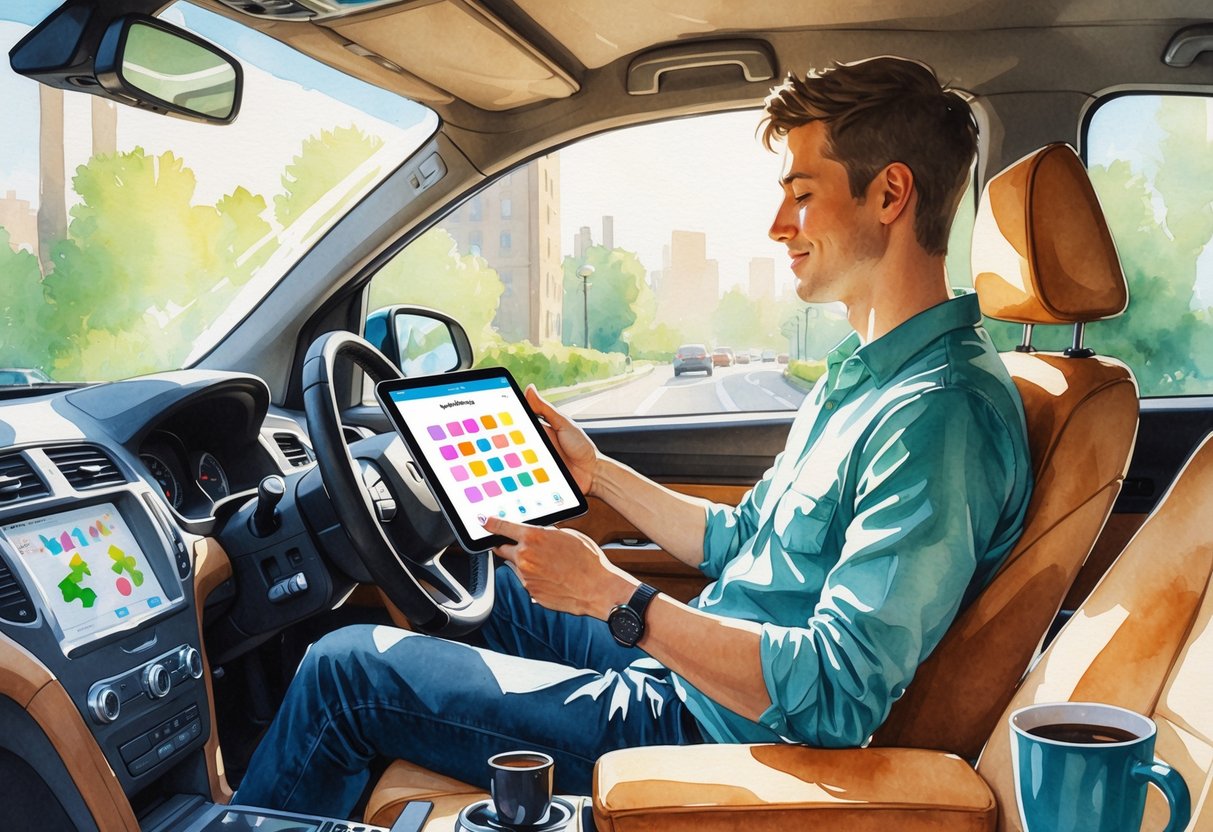
Waiting between rides gives you the perfect opportunity to keep your mind sharp with brain training apps.
Lumosity offers quick games that target memory, attention, and problem-solving skills.
Each session takes just a few minutes, which fits perfectly into the unpredictable schedule of rideshare driving.
The app adapts to your skill level as you progress.
You can choose from different games based on what you want to work on.
Some focus on math skills, while others help with word recognition or pattern matching.
If Lumosity doesn’t appeal to you, there are plenty of alternatives.
Elevate focuses on practical skills like reading speed and vocabulary building.
Peak offers similar cognitive challenges with a different game selection.
CogniFit and NeuroNation provide their own approaches to brain training.
These apps work well for drivers because you can start and stop quickly.
When a ride request comes in, you can pause immediately without losing progress.
Most games last between two and five minutes, so you can squeeze in a session during even short breaks.
Brain games help you stay alert during long shifts.
They give your mind something productive to focus on instead of scrolling through social media.
Many drivers find that mental exercises help them feel more engaged and ready when the next passenger gets in the car.
Most brain training apps offer free versions with basic features.
You can try different ones to see which games you enjoy most before committing to a paid subscription.
9) Create a budget with Mint app

Waiting between rides gives you the perfect chance to check your finances.
The Mint app helps you track your spending and create a budget in one place.
It’s free and pulls together all your financial accounts so you can see everything at once.
You can set up Mint in less than an hour.
The app shows where your money goes each month by tracking your expenses automatically.
This makes it easy to spot areas where you might be spending too much.
Creating a budget as a rideshare driver is important because your income can change from week to week.
Mint lets you set spending limits for different categories like gas, food, and car maintenance.
You’ll get alerts when you’re close to going over your budget.
The app also helps you set financial goals.
You can save for car repairs, a vacation, or an emergency fund.
Mint shows your progress so you stay motivated.
Between rides, open the app and review your transactions.
Make sure everything is categorized correctly.
Check your budget to see how much you have left to spend in each category.
This keeps you aware of your financial situation without taking much time.
The app works on your phone, so you can manage your money anywhere.
A few minutes here and there adds up to better control over your finances.
8) Do light stretching or seated exercises

Sitting in your car for hours can make your body stiff and sore.
Between rides, you can do simple stretches and exercises right in your driver’s seat.
These activities help keep your muscles loose and your blood flowing.
Start with basic neck stretches by slowly rolling your head from side to side.
You can do shoulder rolls by moving your shoulders in circles forward and backward.
These simple movements take less than a minute but help reduce tension.
Seated exercises work well for rideshare drivers because you don’t need to leave your car.
Try toe taps by lifting your feet up and down while seated.
You can also do seated marches by lifting your knees one at a time.
Ankle circles help prevent swelling in your legs from sitting too long.
Your upper body needs attention too.
Do steering wheel squeezes by gripping your wheel firmly and holding for a few seconds.
Seated twists help your back stay flexible.
Just turn your upper body to look behind you, hold for a moment, and repeat on the other side.
These exercises only take five to ten minutes between rides.
You can do them while you wait for your next passenger request.
Regular stretching helps reduce joint pain and keeps your body feeling better during long driving shifts.
This hobby costs nothing and improves your health while you work.
7) Organize digital photos on your phone

Your phone probably holds hundreds or thousands of photos that need sorting.
The time between rides gives you a perfect chance to clean up your camera roll and organize your memories.
Start by gathering all your photos in one place.
If you have pictures spread across different apps, move them to your phone’s main photo storage app.
This makes the organizing process much easier.
Delete the bad photos first.
Get rid of blurry shots, duplicates, and pictures you don’t need anymore.
This simple step frees up storage space and makes your gallery less cluttered.
Create albums to group similar photos together.
You can organize by date, event, or subject.
For example, make separate albums for family photos, work-related images, or vacation pictures.
Use descriptive names for your albums so you can find photos quickly later.
Instead of “Album 1,” try names like “Summer 2025” or “Road Trip Photos.”
Take a few minutes during each break to sort recent photos.
Regular organizing prevents your camera roll from getting messy again.
You don’t need to make it perfect.
Even basic sorting helps you find photos faster when you need them.
Most phones have built-in tools that make organizing easier.
Your photo app might suggest albums or group photos by location automatically.
Use these features to speed up the process.
6) Study stock market trends using Yahoo Finance

Downtime between rides gives you a chance to learn about investing.
Yahoo Finance offers free tools that help you track stocks and understand market movements.
You can access everything through their mobile app while waiting for your next passenger.
The platform provides real-time market data and stock prices.
You can set up price alerts for stocks you want to watch.
This helps you stay informed without constantly checking your phone.
Yahoo Finance lets you build a virtual portfolio to track investments.
You can research different companies and read about market trends.
The app shows charts and data that explain how stocks perform over time.
Learning about the stock market takes practice.
Start by following a few companies you know well.
Read their financial information and watch how their stock prices change throughout the day.
You don’t need any special education to use Yahoo Finance.
The tools are designed for beginners and experienced investors alike.
Spending 10 to 15 minutes between rides adds up to valuable learning time over weeks and months.
This hobby can help you make smarter financial decisions.
You’ll understand how markets work and what affects stock prices.
Many rideshare drivers use their earnings to invest, and knowing market basics helps you choose where to put your money.
5) Work on creative writing or journaling

Waiting between rides gives you short windows of time that work well for writing.
You can keep a notebook or use your phone to jot down thoughts, stories, or daily observations.
These quick writing sessions fit naturally into the breaks between passengers.
Journaling helps you process your experiences as a driver.
You meet different people and see various parts of your city every day.
Writing about these encounters gives you a way to reflect on what you’ve learned and noticed during your shifts.
Creative writing builds useful skills beyond just storytelling.
You develop better communication abilities and learn to organize your thoughts more clearly.
These skills can help you in conversations with passengers or if you want to pursue other work in the future.
You don’t need special training to start writing.
Begin with simple entries about your day or try describing an interesting passenger you met.
You can also collect new words you hear or write short stories during longer breaks.
The best part about writing as a hobby is that it requires almost no equipment.
A small notebook fits easily in your car, or you can type on your phone.
You can write for five minutes or twenty minutes, depending on how much time you have between rides.
This flexibility makes writing one of the most practical hobbies for drivers with unpredictable schedules.
4) Read eBooks on Kindle app
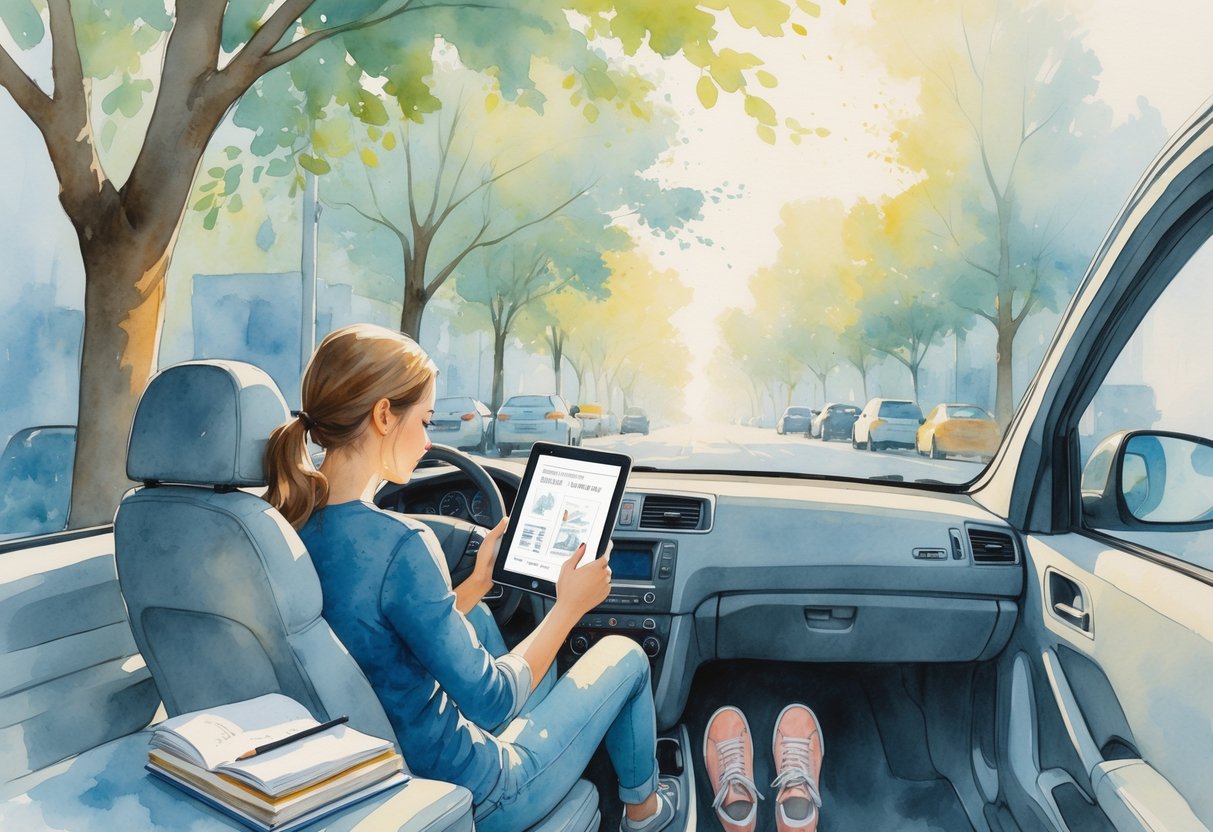
Reading eBooks on the Kindle app is a simple way to use your downtime between rides.
You can download the free Kindle app on your phone or tablet and access thousands of books right away.
The app lets you pick up where you left off, even if you only have five or ten minutes to read.
You can adjust the text size and brightness to make reading comfortable in your car during day or night shifts.
Many rideshare drivers read books about driving tips and strategies to improve their earnings.
Other drivers prefer fiction, self-help books, or non-fiction topics that interest them.
The choice is yours.
You don’t need an actual Kindle device to use the app.
Your smartphone works just fine.
The app syncs across all your devices, so you can start reading on your phone and continue later on a tablet or computer at home.
Reading helps keep your mind active during slow periods.
It’s better than mindlessly scrolling through social media.
Plus, you’re learning something new or enjoying a good story.
The Kindle app also includes features like bookmarks and highlights.
These tools help you save important passages or mark your place quickly when a ride request comes in.
You can return to your book as soon as you drop off your passenger.
3) Listen to educational podcasts like ‘Freakonomics’

Educational podcasts are perfect for drivers who want to learn something new while waiting for their next ride. You can expand your knowledge without taking your eyes off the road or your hands off the wheel.
Freakonomics Radio is a great starting point. The show explores interesting topics like human behavior, economics, and everyday mysteries.
Host Stephen J. Dubner breaks down complex ideas into easy-to-understand stories. You can find many other podcasts that work well for learning between rides.
These shows cover topics like science, history, personal development, and finance. Most episodes are between 20 to 60 minutes long, which fits perfectly into your waiting time.
Podcasts let you turn downtime into productive time. You can listen while parked at popular pickup spots or during slow periods.
Many drivers say this habit helps them feel less bored and more energized throughout their shifts. Getting started is simple.
Download a podcast app on your phone and search for topics that interest you. You can listen at regular speed or speed things up to get through episodes faster.
Many apps also let you download episodes ahead of time so you don’t use up your data. Educational podcasts give you something to think about and discuss with passengers who want to chat.
You might even discover new interests or skills that benefit you outside of driving.
2) Practice mindfulness meditation

Waiting between rides gives you a perfect chance to practice mindfulness meditation. This simple activity helps reduce stress and creates a mental break during your workday.
You can do it right in your parked car without any special equipment. Start with basic breathing exercises.
Focus on your breath moving in and out for just a few minutes. Notice how your chest rises and falls.
This helps clear your mind between passengers. You can also practice body scan meditation while sitting in your driver’s seat.
Pay attention to different parts of your body, starting from your head down to your toes. Notice any tension in your shoulders, back, or legs from sitting.
This awareness helps you relax tight muscles. Another option is to focus on your surroundings without judgment.
Listen to the sounds around you. Notice what you see through your windshield.
Feel the seat beneath you. This grounds you in the present moment.
These short meditation sessions fit naturally into your wait times. Even two or three minutes between rides adds up throughout your shift.
Regular practice can improve your overall mood and help you handle difficult passengers better. The best part is that mindfulness meditation is free and works anywhere.
You control when and how long you practice. Many drivers find it helps them stay calm during busy traffic or long shifts.
1) Learn a new language using Duolingo app

Waiting between rides gives you the perfect chance to learn a new language. Duolingo makes this easy with lessons that take just 5 to 10 minutes to complete.
The app is free to use and works on your phone. You can start and stop lessons whenever you need to, which fits well with the unpredictable schedule of rideshare driving.
When you get a ride request, you simply close the app and come back to it later. Duolingo uses games and points to keep you interested.
You earn rewards as you complete lessons and can track your progress with streaks. The app covers over 40 languages, so you can pick one that interests you or helps you talk with more passengers.
Each lesson teaches you through speaking, listening, reading, and writing exercises. The app adjusts to your skill level as you improve.
You can set daily goals based on how much time you have available. Learning a new language helps your brain stay sharp during long driving shifts.
It also gives you a useful skill that could help you connect with passengers who speak different languages. You might even earn better tips when you can greet riders in their native language.
The short lesson format means you can learn during brief waiting periods at airports, popular pickup spots, or between rides in your regular area.
How Hobbies Benefit Rideshare Drivers

Hobbies help you manage the unique challenges of rideshare driving by reducing stress between trips, maintaining mental sharpness during long shifts, and improving your ability to focus when passengers enter your vehicle.
Reducing Stress and Fatigue
Rideshare driving creates physical tension from sitting for hours and mental strain from navigating traffic and managing different passengers. Hobbies give your mind a break from these stressors during downtime.
Physical activities like stretching or walking between rides help counter the effects of prolonged sitting. Your body needs movement to prevent stiffness and maintain energy levels throughout your shift.
Creative hobbies such as sketching or journaling shift your attention away from work demands. This mental reset prevents burnout that comes from constantly thinking about the next ride request.
Reading or listening to podcasts about topics unrelated to driving creates psychological distance from work stress. You return to each new ride feeling refreshed rather than drained from continuous work mode.
Boosting Mental Well-Being
Engaging in hobbies between rides protects your mental health during repetitive work patterns. Rideshare driving involves waiting, driving, and repeating this cycle for hours.
Learning-based hobbies like studying a new language or taking online courses give you a sense of progress and accomplishment. This counters feelings of stagnation that can develop from routine work.
Social hobbies such as texting friends or participating in online communities help you maintain connections outside of brief passenger interactions. These relationships provide emotional support that short customer exchanges cannot.
Hobbies that produce tangible results create satisfaction beyond your earnings. Completing a puzzle, finishing a chapter, or reaching a fitness goal adds purpose to your wait time.
Improving On-the-Job Focus
The right hobbies sharpen your mental abilities and translate into better driving performance. Your brain needs stimulation to stay alert during slow periods.
Puzzle games and brain teasers keep your mind active during gaps between rides. This mental engagement prevents the drowsiness that comes from passive waiting and helps you stay sharp when passengers arrive.
Meditation or breathing exercises between trips improve your ability to handle difficult situations calmly. You respond to challenging passengers or stressful traffic with better composure.
Physical hobbies like brief exercise routines increase blood flow and oxygen to your brain. This boost in alertness helps you maintain the concentration needed for safe driving throughout your entire shift.
Maximizing Your Downtime Safely
Downtime between rides offers opportunities to pursue hobbies, but your primary job requires you to stay ready for the next pickup. The key is balancing personal activities with passenger readiness and choosing smart locations where you can engage in hobbies without compromising safety or earnings.
Prioritizing Passenger Readiness
Your app needs to stay on and accessible at all times during your driving shift. Keep your phone charged and visible so you can respond to ride requests within seconds.
Missing requests because you’re too absorbed in an activity costs you money and lowers your acceptance rate. Choose hobbies that allow you to stop immediately when a ride comes through.
Activities like reading, listening to podcasts, or sketching work well because you can pause them instantly. Avoid hobbies that require deep concentration or can’t be interrupted quickly.
Keep your car organized and passenger-ready even during hobby time. Don’t spread materials across the back seat or create clutter that takes time to clean up.
Store hobby supplies in a small bag or container that you can quickly move to the trunk or front passenger footwell.
Finding the Right Time and Place
Park in high-demand areas near restaurants, shopping centers, or entertainment districts where ride requests come frequently. This reduces your wait time and keeps your earnings steady.
Sitting in residential areas far from activity hubs means longer gaps between rides. Your parking spot needs to be safe and legal.
Look for well-lit public parking lots, designated rideshare waiting zones at airports, or street parking in busy commercial areas. Avoid parking in isolated areas or places where you’ll receive tickets.
Gas stations, grocery store lots, and coffee shop parking areas work well for short breaks. These locations offer restrooms, snacks, and the option to stretch your legs while staying in zones with steady ride demand.
Frequently Asked Questions

Rideshare drivers often wonder how to make the most of their downtime and what activities work best in a car setting. These questions cover practical hobbies, skill-building options, and ways to stay relaxed while waiting for your next passenger.
What are some quick and engaging hobbies for rideshare drivers during downtime?
Brain games like Lumosity offer quick mental challenges that fit perfectly between rides. You can complete a game in just a few minutes and improve your cognitive skills at the same time.
Organizing your digital photos is another engaging option that doesn’t require much space or equipment. You can sort through your camera roll, delete unwanted pictures, and create albums right from your phone.
Reading ebooks or listening to audiobooks lets you enjoy stories without carrying physical books. These activities keep your mind active and can be paused instantly when you get a ride request.
How can Uber and Lyft drivers utilize their free time productively between rides?
Creating a budget with apps like Mint helps you track your expenses and income as a driver. You can categorize your spending, set financial goals, and see where your money goes each month.
Studying stock market trends using Yahoo Finance turns downtime into learning opportunities. You can research companies, follow market news, and build your investment knowledge.
Taking online courses through your phone lets you learn new subjects at your own pace. You can watch short video lessons and complete quizzes whenever you have a few free minutes.
What portable hobbies can Uber and Lyft drivers easily carry in their vehicle?
Sketching or drawing requires only a small notebook and a pencil. These supplies take up minimal space in your car and let you practice art whenever inspiration strikes.
Knitting or crocheting projects are easy to store in a small bag. You can work on scarves, hats, or blankets a few rows at a time between passengers.
Journaling needs just a notebook and pen to record your thoughts and experiences. You can write about your day, track your goals, or practice gratitude during quiet moments.
Are there any hobbies that Uber and Lyft drivers can do that might also help increase their earnings?
Learning about the stock market can help you make better investment decisions with your rideshare income. Understanding basic trading and portfolio management gives you tools to grow your money over time.
Studying local events and traffic patterns helps you position yourself in high-demand areas. This knowledge lets you predict where riders will need pickups and reduces empty miles between fares.
Practicing photography during breaks can develop into a side business. You can sell your photos online or offer photography services to supplement your driving income.
Can Uber and Lyft drivers learn new skills in their spare time between passengers?
You can take online courses on your phone to learn coding, graphic design, or marketing. Many platforms offer bite-sized lessons that work well for the unpredictable schedule of rideshare driving.
Language learning apps let you practice vocabulary and grammar in short sessions. Building language skills can help you communicate with more passengers and may lead to better tips.
Podcast listening exposes you to new ideas and expert knowledge across countless topics. You can learn about business, history, science, or any subject that interests you while staying alert for ride requests.
What types of relaxation techniques can drivers practice during periods of low ride requests?
Light stretching or seated exercises help relieve tension from sitting behind the wheel. You can do neck rolls, shoulder shrugs, and seated twists right in your driver’s seat.
Deep breathing exercises calm your mind and reduce stress in just a few minutes. Try breathing in for four counts, holding for four, and exhaling for four.
Meditation apps guide you through short relaxation sessions that fit between rides. Even five minutes of quiet mindfulness can improve your focus for the next passenger.