Hobbies You Can Do Before Bed: Relaxing Activities to Improve Your Sleep Quality
The hours before bed often feel rushed or wasted as you scroll through your phone or watch TV without much thought. Many people struggle to wind down properly at night, which can make falling asleep harder. The right bedtime hobbies can help you relax your mind and body while creating a peaceful transition from your busy day to restful sleep.
Engaging in relaxing activities before bed can improve your sleep quality and reduce stress levels. You don’t need expensive equipment or special skills to start a calming nighttime hobby. Simple activities done consistently can make a real difference in how well you sleep.
This guide covers different types of hobbies you can do before bed, from creative projects to gentle movement. You’ll learn how to pick activities that match your interests and energy level. These options give you alternatives to screen time that actually help you unwind.
Benefits of Engaging in Hobbies Before Bed
Doing hobbies before bed helps your body and mind get ready for sleep. These activities work by calming your nervous system, lowering stress levels, and creating a routine that tells your brain it’s time to rest.
Promoting Relaxation
Arts and crafts before bed can improve sleep by calming your nervous system. When you do calm activities, your body starts to shift from being alert to being ready for sleep.
Your heart rate slows down during relaxing hobbies. Your breathing becomes deeper and more even. These physical changes help you feel less tense.
Engaging in quiet hobbies before bedtime prepares you for a peaceful night’s rest. Activities like reading, knitting, or drawing keep your hands and mind busy without causing excitement. This gentle focus helps you move away from the busy thoughts of your day.
The best hobbies for relaxation don’t require much energy or physical effort. They should feel easy and enjoyable, not like work or another task to finish.
Reducing Stress and Anxiety
Hobbies that promote reading, meditation and relaxation help ease your anxiety right before bed. When you start these activities, your brain gets a signal that it’s time to unwind.
Stress hormones like cortisol drop when you do calming hobbies. Your body releases fewer stress chemicals and produces more relaxation hormones instead. This shift makes it easier to let go of worried thoughts.
Creative hobbies give your mind something positive to focus on. Instead of thinking about work problems or tomorrow’s tasks, you concentrate on your activity. This break from stressful thoughts helps clear your mind.
Regular bedtime hobbies create a buffer between your busy day and sleep time. You need this transition period to process emotions and leave stress behind.
Improving Sleep Quality
Engaging in hobbies before bed can help improve sleep by promoting relaxation and reducing stress. Better sleep quality means you fall asleep faster and wake up less during the night.
Your body learns to recognize bedtime hobbies as a sleep cue. After doing the same calming activity each night, your brain starts to expect sleep to follow. This pattern makes falling asleep more automatic.
Hobbies keep you away from screens and bright lights that block sleep hormones. Many people reach for their phones before bed, but this disrupts natural sleep patterns. Choosing a hobby instead protects your sleep cycle.
The benefits build over time as you stick with your bedtime routine. You’ll likely notice you feel more rested in the morning and have more energy during the day.
Choosing the Right Bedtime Hobby
The best bedtime hobby depends on your personal interests, available time, and how the activity affects your ability to fall asleep. You need to match your hobby choice with activities that calm your mind rather than energize it.
Factors to Consider
Your bedtime hobby should promote relaxation and reduce stress levels before sleep. Engaging in relaxing pre-bedtime hobbies can lead to better sleep quality when you choose activities that help your body wind down.
Avoid hobbies that involve bright screens or intense physical activity within two hours of bedtime. These activities can make it harder to fall asleep because they stimulate your brain and body.
The lighting in your hobby space matters too. Dim lighting helps your body produce melatonin, which signals it’s time to sleep. Bright overhead lights can interfere with this natural process.
Consider the noise level of your hobby. Quiet activities work better than loud ones that might disturb others in your home or keep your mind too alert.
Personal Preferences and Goals
When you enjoy the activity, it’s more likely to have a positive effect on your sleep quality. Pick a hobby that genuinely interests you rather than forcing yourself into something that feels like a chore.
Think about what you want to achieve with your bedtime hobby. Some people want to reduce anxiety, while others want to learn a new skill or simply decompress from their day.
Your current stress level should guide your choice. If you feel anxious most evenings, you might benefit from meditation or gentle stretching. If you need creative expression, drawing or journaling could work better.
Consider whether you prefer solitary activities or ones you can share with a partner. Some hobbies like reading work well alone, while others like playing card games require another person.
Time Commitment and Ease
Choose a hobby that fits within 20 to 45 minutes before your target bedtime. You want enough time to relax without staying up too late.
The hobby should be simple to start and stop. Activities that require extensive setup or cleanup can add stress rather than reduce it.
Quick-start hobbies include:
- Reading a book or magazine
- Light stretching or yoga
- Coloring or sketching
- Listening to calming music
- Writing in a journal
Select hobbies that don’t require intense concentration or problem-solving. Your goal is to calm your mind, not challenge it with complex tasks that keep you mentally engaged for hours.
Creative Hobbies for Evening Relaxation

Engaging your artistic side before bed helps your mind shift away from daily stress. Simple creative activities like sketching, writing, or coloring can calm racing thoughts and prepare you for better sleep.
Drawing and Sketching
Drawing before bed doesn’t require artistic talent or expensive supplies. You can start with a basic pencil and paper to sketch simple objects around your bedroom or create abstract doodles.
The repetitive motion of drawing helps slow your breathing and heart rate. This makes it easier for your body to transition into rest mode. You can spend 15 to 20 minutes working on a single sketch or fill a page with quick drawings.
Keep your supplies on your nightstand so you can easily access them. Try drawing what you see without judging the results. The goal is relaxation, not perfection.
Many people find that creative hobbies like painting and drawing help enrich their lives while reducing stress. Focus on simple subjects like household items, plants, or patterns you notice in your room.
Journal Writing
Writing in a journal before bed helps you process the day’s events and clear your mind. You can write about anything that comes to mind without worrying about grammar or structure.
Try these journal prompts for evening writing:
- Three things you felt grateful for today
- One challenge you faced and how you handled it
- Your plans or hopes for tomorrow
- A memory that made you smile
Set a timer for 10 minutes and write continuously without stopping. This practice, called free writing, helps release thoughts that might keep you awake. You don’t need to reread what you wrote.
Some people prefer gratitude journals that focus only on positive moments. Others like to explore problems on paper to find solutions. Choose the style that feels most natural to you.
Adult Coloring
Adult coloring books offer detailed patterns and designs that require focus and attention. This concentration gives your mind a break from worries and screens.
The activity combines creativity with structure since the designs are already drawn for you. You simply choose colors and fill in the spaces. Relaxing art and craft hobbies work well for stress relief regardless of your skill level.
Use colored pencils, markers, or gel pens based on your preference. Colored pencils allow for shading and blending, while markers provide bold, solid colors.
Start with simpler designs if you’re new to coloring. Complex mandalas or nature scenes work well once you get comfortable with the practice. Keep your coloring book and supplies near your bed for easy access during your evening routine.
Mindful and Meditative Hobbies
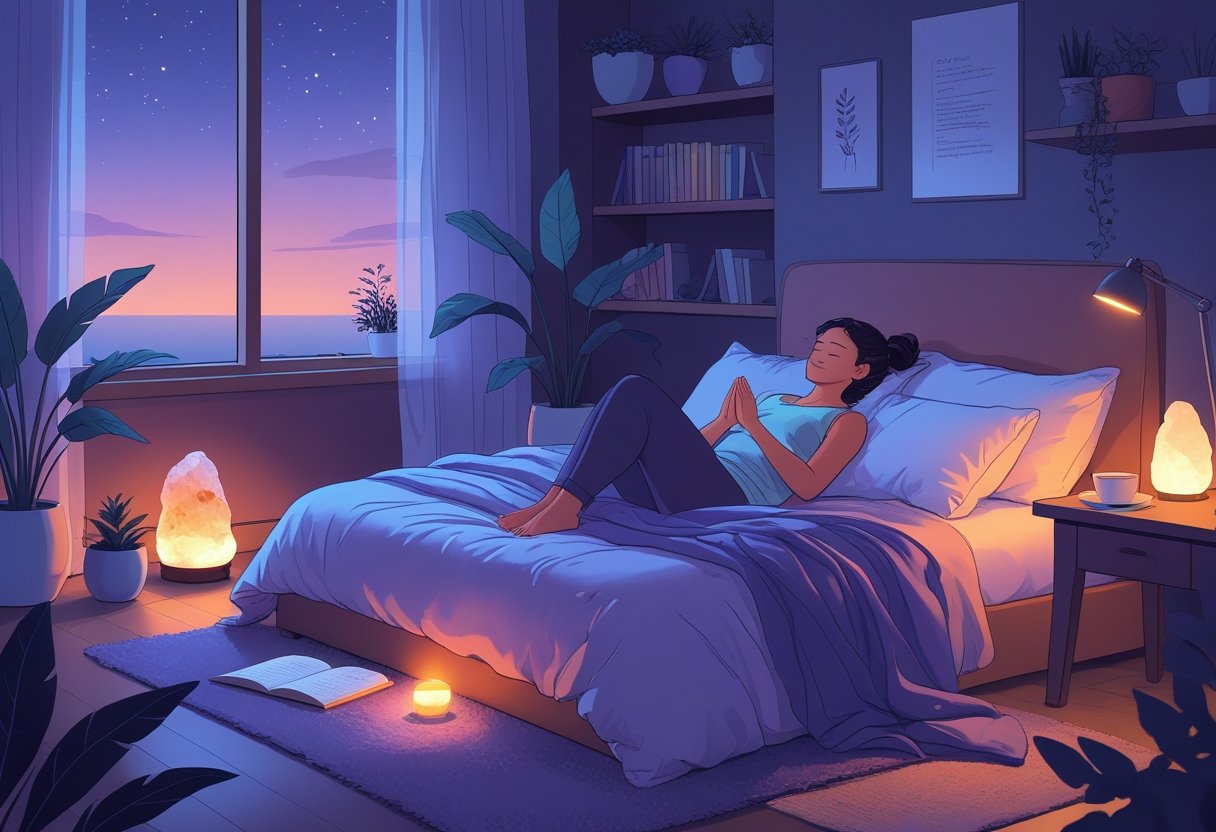
Quiet activities that focus your attention inward can calm racing thoughts and prepare your body for rest. These practices work by activating your relaxation response and reducing the mental chatter that often keeps you awake.
Meditation Techniques
Simple meditation practices help you shift from the day’s stress to a calm state. You can start with just five minutes of sitting quietly and focusing on your breath.
Activities that require uninterrupted focus work well for mindful meditation before bed. Body scan meditation is particularly effective at night. You lie down and bring awareness to each part of your body, starting at your toes and moving up to your head.
Loving-kindness meditation is another option. You repeat positive phrases directed at yourself and others, which can reduce anxiety and negative thoughts. You don’t need special equipment or training to begin.
Common meditation techniques for bedtime:
- Body scan meditation
- Focused attention on breath
- Loving-kindness practice
- Counting breaths
- Mantra repetition
Breathing Exercises
Controlled breathing directly affects your nervous system and heart rate. The 4-7-8 technique is simple: breathe in for four counts, hold for seven, and exhale for eight.
This pattern slows your heart rate and signals your body to relax. Box breathing uses equal counts of four for inhaling, holding, exhaling, and holding again. It’s what military personnel use to stay calm under pressure.
Diaphragmatic breathing engages your belly rather than your chest. Place one hand on your chest and one on your stomach. The stomach hand should rise more than the chest hand. This activates the vagus nerve, which promotes relaxation.
Guided Visualization
Visualization uses mental imagery to create a sense of peace and safety. You imagine a relaxing scene in detail, engaging all your senses.
Picture a beach and notice the sound of waves, the warmth of sand, and the smell of salt air. Your brain responds to vivid imagery similarly to real experiences, triggering actual relaxation responses.
You can use apps or recordings that walk you through peaceful scenarios. These relaxing activities can help calm your mind and prepare you for sleep. Some people prefer creating their own mental scenes based on happy memories or imagined peaceful places.
The practice takes about 10 to 15 minutes and works best when you’re already lying in bed.
Quiet and Calming Hobbies
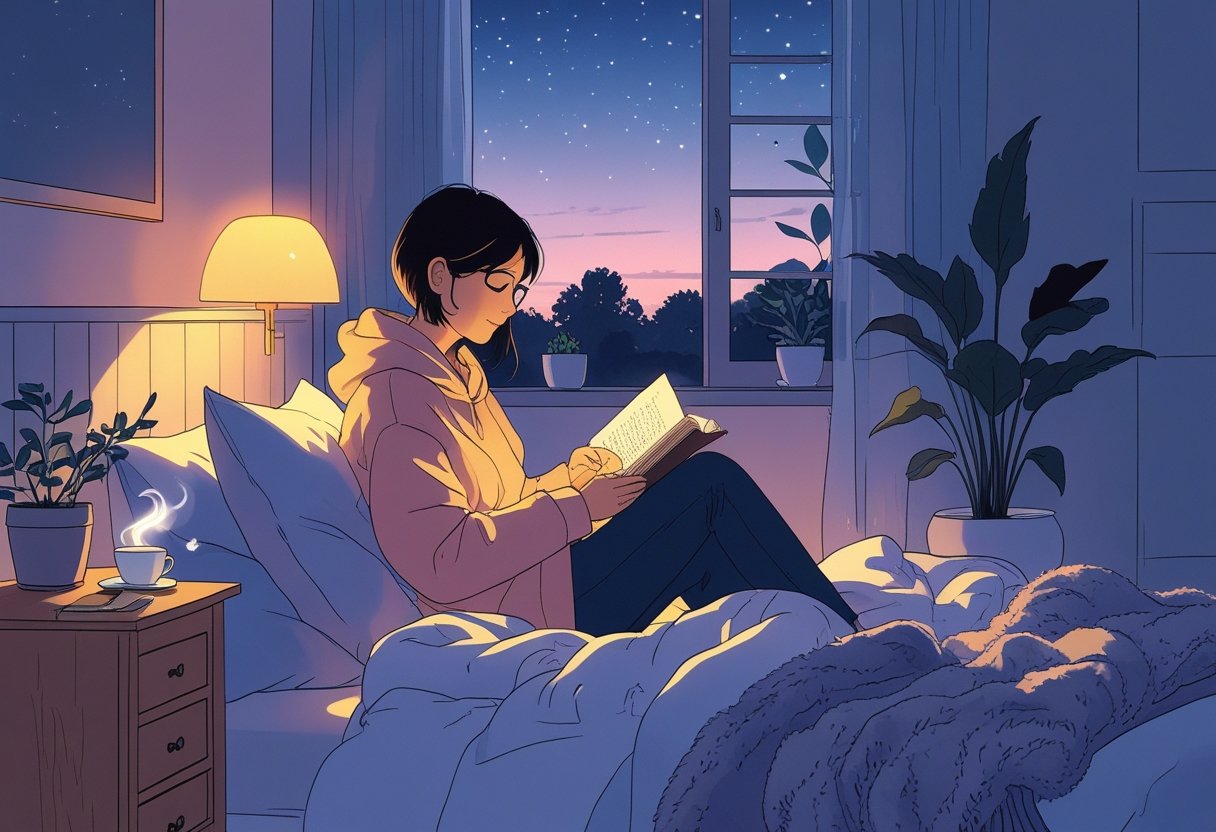
Certain activities naturally quiet your mind and slow your heart rate, making them ideal for the hour before sleep. These hobbies engage your focus without creating stress or excitement that could keep you awake.
Reading Books
Reading before bed helps your brain shift from the day’s activities to a more relaxed state. Choose fiction or light nonfiction that interests you without being too thrilling or mentally demanding.
Physical books work better than screens because they don’t emit blue light that interferes with your sleep cycle. Keep a small reading lamp next to your bed so you can see comfortably without bright overhead lights.
You can set a timer for 20 to 30 minutes to avoid reading too long. This gives you enough time to get absorbed in the story while still leaving time to fall asleep. Mark your page and put the book down even if you want to keep reading.
Knitting or Crocheting
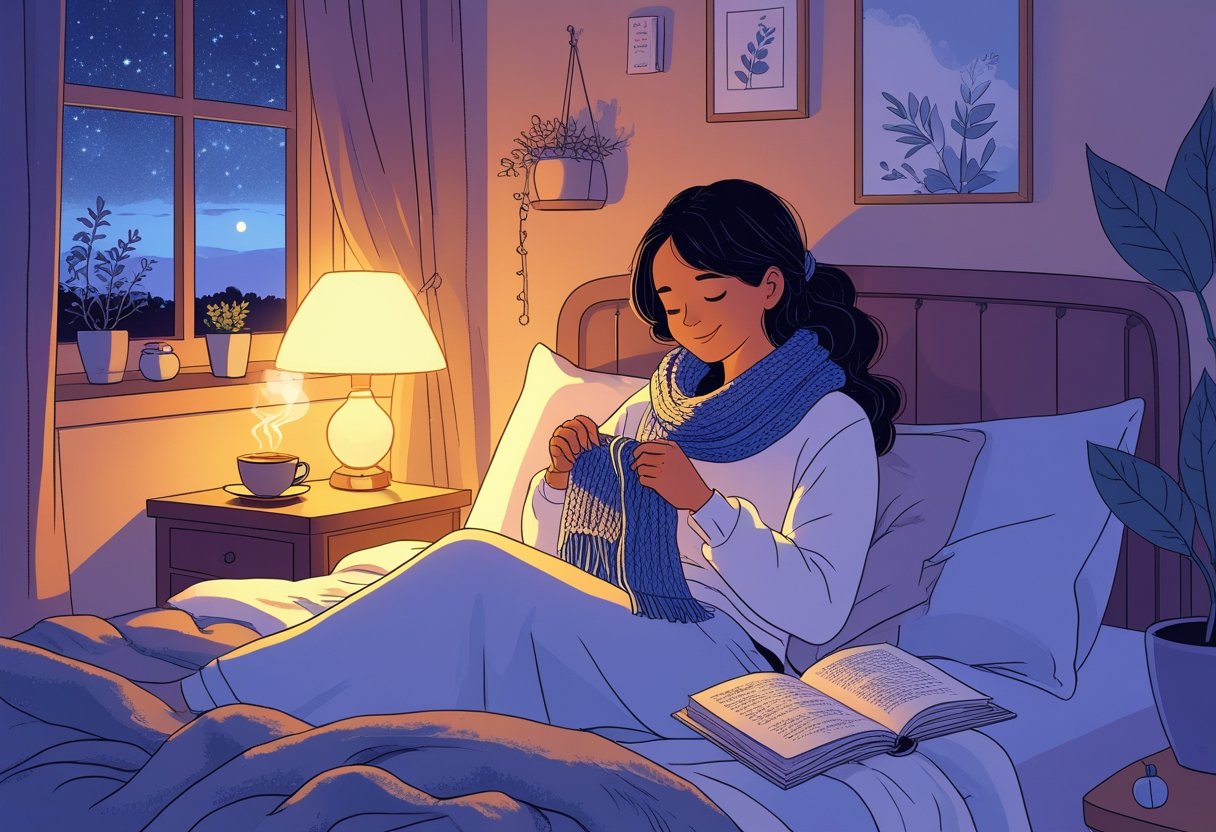
Knitting and crocheting use repetitive hand movements that create a meditative rhythm. The simple stitches you repeat over and over help calm racing thoughts and reduce anxiety.
These crafts are perfect for peaceful leisure because they’re completely silent and don’t require much mental effort once you learn the basic patterns. You can work on simple projects like scarves, dishcloths, or blankets that don’t need complicated instructions.
Keep your supplies in a basket next to your bed for easy access. Choose soft yarns in calming colors that feel pleasant to touch. The gentle motion of your hands combined with the soft texture creates a soothing sensory experience.
Puzzles and Brain Teasers
Light puzzles give your mind something to focus on without creating stress. Crossword puzzles, sudoku, or jigsaw puzzles work well because they’re engaging but not overstimulating.
You want puzzles that are easy to moderate in difficulty. Hard puzzles that frustrate you will have the opposite effect and keep you awake longer. Spend 15 to 20 minutes on a puzzle to help transition your brain toward sleep mode.
Keep a puzzle book on your nightstand or work on a jigsaw puzzle on a nearby table. The focused attention required helps you stop thinking about tomorrow’s tasks or today’s worries.
Gentle Movement Activities Before Sleep
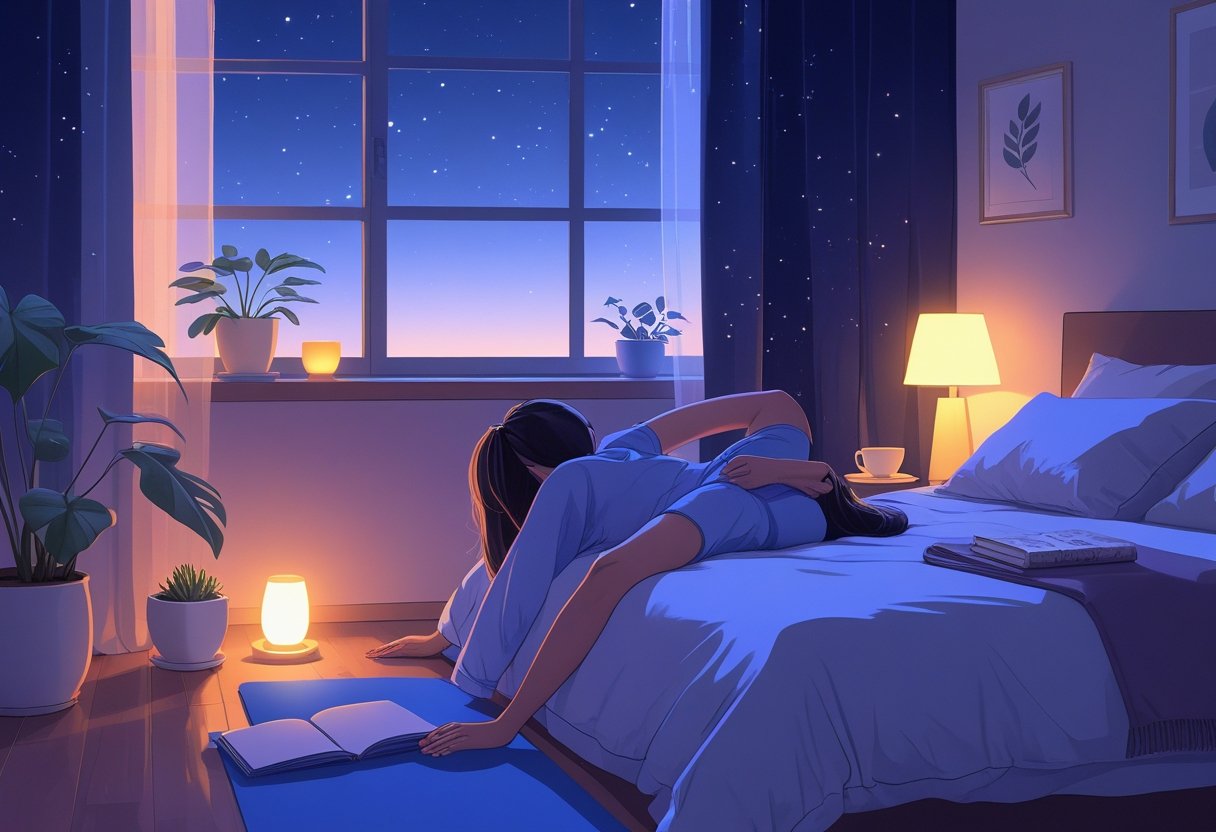
Light physical activity before bed helps your body transition into rest mode. Simple movements can lower stress hormones and prepare your muscles for sleep.
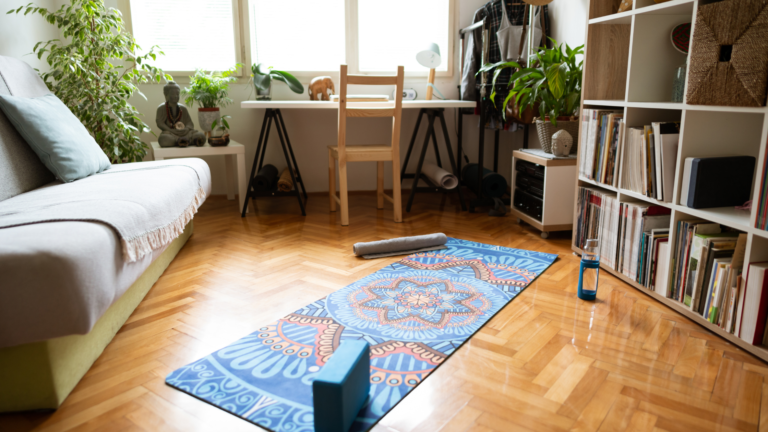
Yoga for Relaxation
Gentle yoga before bed combines slow movements with deep breathing to calm your nervous system. The practice helps quiet your mind while relaxing tense muscles.
Start with simple poses you can hold for 30 seconds to a minute. Child’s pose, legs-up-the-wall, and seated forward fold work well for evening routines. These poses don’t require much energy or skill.
Focus on breathing deeply through your nose while you hold each position. Your breath should feel slow and steady. This signals to your body that it’s safe to relax.
You can do these poses right on your bed if you prefer. Keep the movements gentle and avoid anything that makes your heart rate increase too much.
Light Stretching Routines
Stretching before bed reduces stiffness and can improve how well you sleep through the night. The activity increases blood flow without being too stimulating.
Target areas that hold the most tension during your day. Your neck, shoulders, lower back, and hips often need the most attention. Hold each stretch for 15 to 30 seconds without bouncing.
Side stretches work well while standing with your feet shoulder-width apart. You can also try gentle knee raises or ankle circles while sitting. These movements increase circulation without raising your heart rate too much.
Keep your stretches mild and comfortable. You shouldn’t feel any sharp pain or discomfort during the movements.
Digital and Audio Hobbies at Night
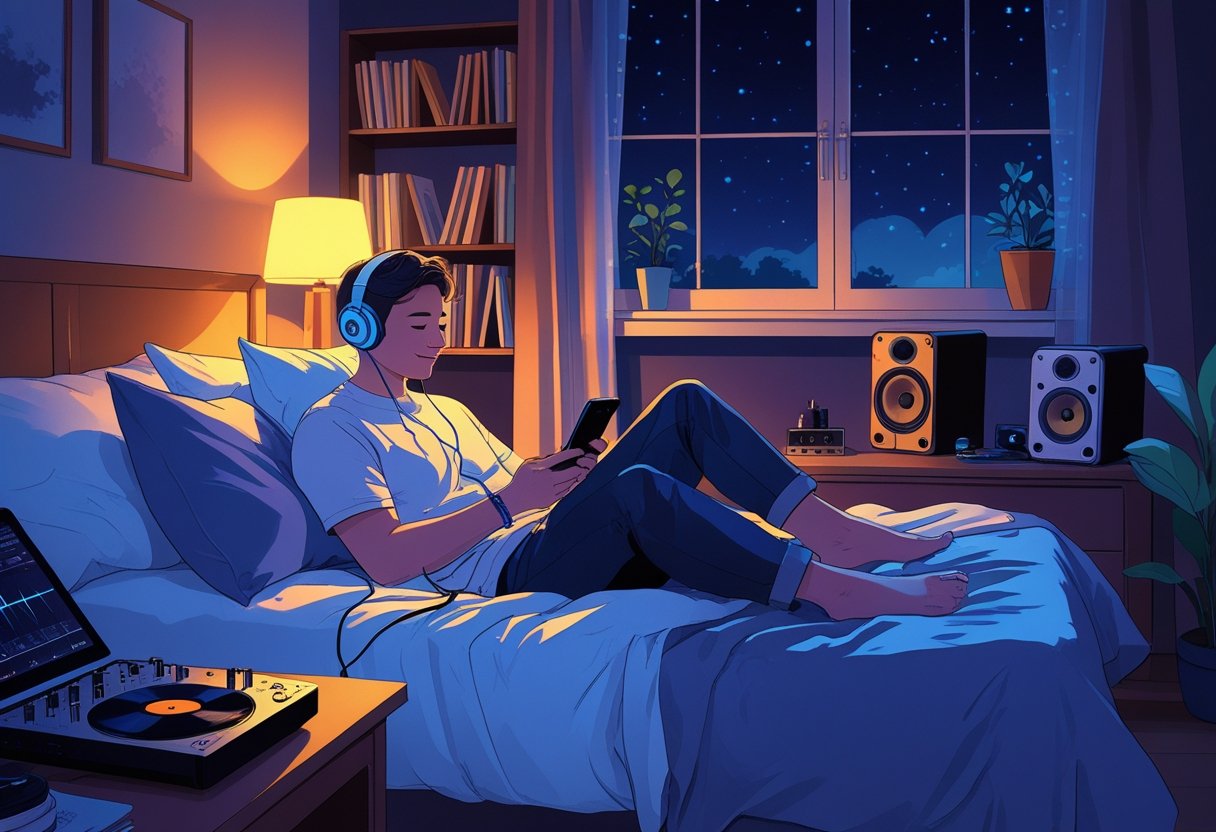
Audio-based activities let you wind down without bright screens while keeping your mind engaged. Music and spoken-word content can help you relax in the minutes before sleep.
Listening to Music
Playing calming music before bed helps your body prepare for rest. Classical, jazz, or ambient soundscapes work well because they lack sudden loud moments or fast tempos that might keep you alert.
You can pair your audio device and listen without looking at a screen by setting up a playlist beforehand. Create different playlists for different moods. Some people prefer instrumental tracks while others like soft vocals.
Keep the volume low enough that you can hear the music clearly but it doesn’t fill the entire room. This creates a peaceful atmosphere without being too stimulating. You might also try nature sounds like rain, ocean waves, or forest recordings.
Best music types for bedtime:
- Classical piano or strings
- Ambient electronic
- Acoustic guitar
- Nature sounds
- Soft jazz
Avoid upbeat songs or anything that makes you want to sing along. The goal is relaxation, not entertainment.
Audiobooks and Podcasts
Audiobooks let you enjoy stories without reading or watching a screen. Pick books you find interesting but not so exciting that you stay awake wondering what happens next. Re-listening to favorite books works well because you already know the plot.
Podcasts offer variety in shorter segments than full audiobooks. Look for calm topics like history, nature, or gentle storytelling rather than true crime or news that might stress you out.
Set a sleep timer on your device so the audio stops after 30 or 60 minutes. This prevents it from playing all night and possibly waking you up. Many audio apps have built-in timers for this purpose.
Choose narrators with soothing voices at a comfortable pace. Fast-talking or dramatic narration can be too engaging when you’re trying to sleep.