

Best Scuba Diving Fins for All Skill Levels in 2025
Scuba diving fins help you move easily and efficiently through the water. They come in different shapes and sizes, but they all make swimming less tiring and give you better control below the surface.
Good fins will allow you to focus on the sights, not on using extra energy to swim. When choosing scuba diving fins, you will need to think about a few key factors.
Foot pocket style, the length and stiffness of the blade, and the materials used all matter. The right fit is important for comfort and to avoid sore feet or blisters.
Travel divers may want fins that are light, while those in stronger currents may prefer stiffer, more powerful blades. Picking the best scuba diving fins means weighing where you will dive, how often you’ll use them, and what feels best on your feet.
With so many types on the market, finding the right pair can make your dives safer and more enjoyable. Below, you’ll find the main features to look for and which fins stand out for most divers.
Best Scuba Diving Fins
Below is our full list of the best scuba diving fins. These top picks can help you move easily underwater and enjoy your dives more.
LUXPARD Open Heel Scuba Diving Fins

If you want balanced performance and easy adjustment for your dives, these fins are a good choice for both new and experienced users.
Pros
- Lightweight, flexible construction reduces leg fatigue
- One-finger buckle release allows for quick and easy removal
- Powerful and efficient thrust for steady swimming
Cons
- Sizing may run large for some divers
- Only one size option (L/XL) limits fit flexibility
- Not suited for small or youth feet
These LUXPARD fins blend strong polypropylene with soft rubber to help you move smoothly underwater without using too much energy. The dual-material design gives you good push-off and helps you keep pace during your dive.
You can easily adjust the straps, and the quick-release buckles mean you can take them off with just one finger. This makes them user-friendly, even when you’re wearing gloves.
The open heel design also works well if you like wearing dive boots. While these fins support a wide range of adult foot sizes, they may feel too roomy if you have smaller feet.
Cressi Tonga Adjustable Travel Fins

If you need lightweight fins that are simple to use and easy to pack for trips, the Cressi Tonga fins could be a smart choice.
Pros
- Light and compact, ideal for travel
- Adjustable straps fit a range of foot sizes
- Comfortable rubber foot pocket
Cons
- Short blades give less powerful propulsion
- Strap material feels thin to some
- Durability could be improved in certain areas
These fins are designed to be compact and portable, making them practical for diving vacations and quick getaways. You can easily fit them into your luggage, thanks to their small size and light weight.
The adjustable straps help you share them with friends or family as long as your foot sizes are similar. Cressi uses a soft foot pocket to provide comfort, and these fins are not likely to rub or pinch.
The large thumb loop on the strap also makes them easier to slip on or off, especially when you are out of the water. Because they are short, the Tonga fins do not produce as much thrust as longer options.
They work well for snorkeling or calm water, but you might want something more powerful for heavy currents or deep dives. Some people have noted that the straps feel a bit thin and may not last as long as they would like, so that is worth keeping in mind.
Scubapro GO Sport Fins

If you need reliable scuba fins that pack easily for travel and work well with boots, the Scubapro GO Sport Fins are worth considering.
Pros
- Lightweight and compact for travel
- Bungee heel strap makes them easy to put on
- Durable build handles rough use
Cons
- Shorter blade may limit power for some divers
- Designed mostly for use with dive boots
- Limited color range
The Scubapro GO Sport Fins make travel simple since they are lightweight and designed to fit in carry-on luggage. You can put them on and take them off quickly thanks to the self-adjusting bungee heel strap, which also fits over dive boots for cold or rocky water.
These fins are tough and hold up well to frequent use. The sturdy Monprene material resists breaking or tearing.
Their design helps with stability and control in the water. While the fins are great for travel, the shorter blades may not be the best if you want maximum kicking power for strong currents.
They work well for both new and experienced divers, but divers who do not use boots may want to look for a different fit.
Cressi Agua Snorkeling Fins

If you want lightweight fins that are easy to use and comfortable for travel or casual dives, these are a solid choice.
Pros
- Very light design helps reduce foot fatigue
- Soft foot pocket offers a gentle, comfortable fit
- Simple to use, even for beginners
Cons
- Sizing can be a bit off—may need to size down
- Not as compact for small carry-ons
- Might lack power for advanced diving activities
You don’t need experience to get good performance out of the Cressi Agua Snorkeling Fins. These fins focus on comfort, thanks to a soft, elastic pocket that adjusts nicely to your feet.
They are lightweight, which makes them comfortable on longer swims. Travelers may find they take up more space than expected, but they are still lighter than many other fins in this category, helping keep your gear bag manageable.
While the fit tends to be soft and easy on the feet, the sizing seems to run a bit large—consider trying a smaller size to get the right fit. These fins are best for new or casual divers and anyone looking for something that feels gentle but offers decent kick power.
Cressi Frog Plus Scuba Diving Fins
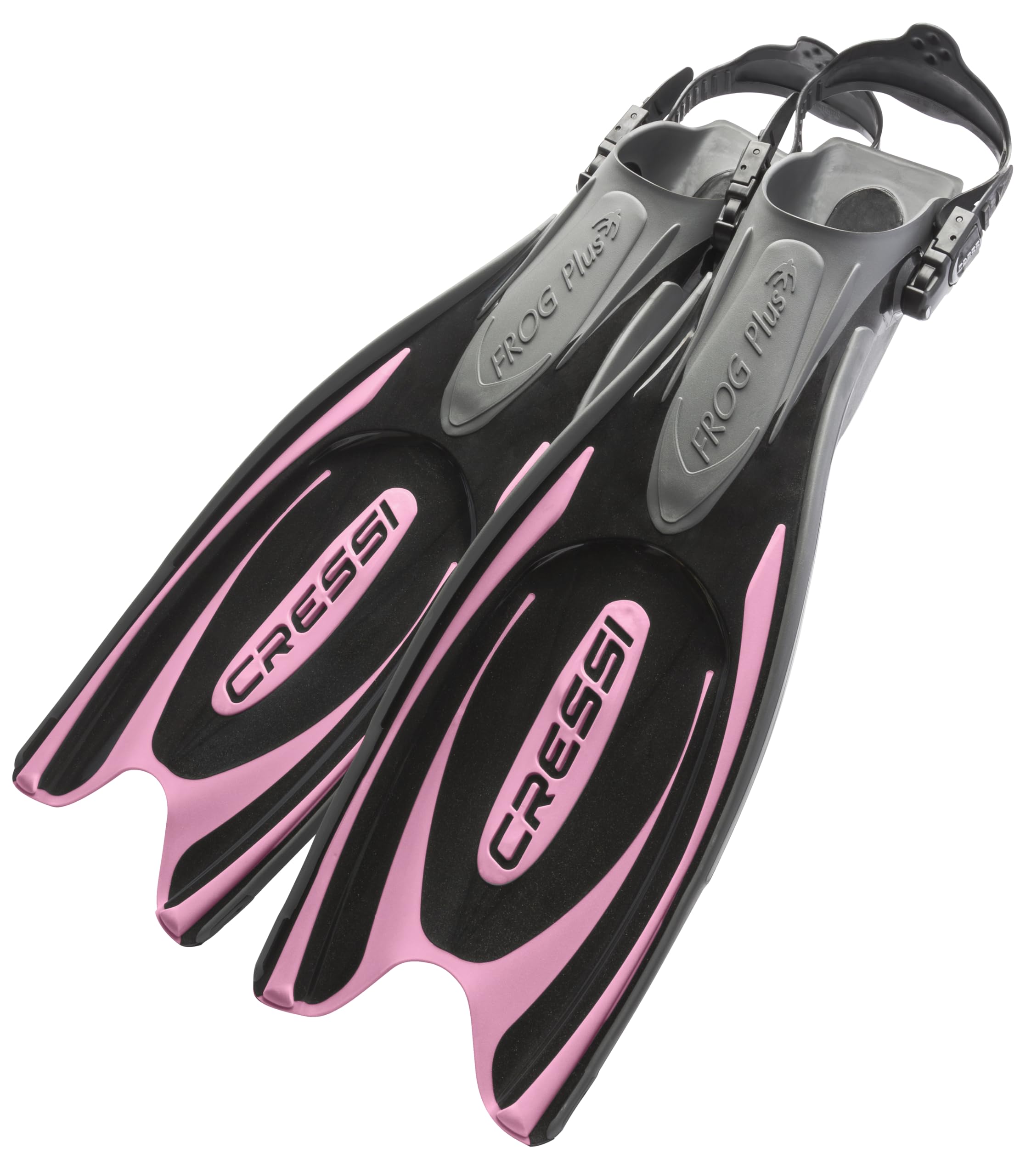
These fins are a smart choice if you want reliable performance, comfort, and durability for scuba diving.
Pros
- Comfortable foot pocket reduces stress on your legs
- Durable materials handle frequent use well
- Powerful blade design boosts efficiency underwater
Cons
- Size may run large for some feet
- The fins are quite long, which can be tricky in tight spaces
- Not the lightest option available
With the Cressi Frog Plus fins, you get a blend of innovation and tradition. Their unique blade uses a special three-material injection process, which works to transfer more energy into each kick.
This helps you swim effectively while making the most of your effort. Many people choose these fins for the comfort of the foot pocket.
The soft material on the sides cushions your feet, and the open heel lets you wear them with different boot styles. Cressi’s design also gives you a bigger surface area, which means the fins deliver a powerful push with every stroke.
Some users mention that the fit can be larger than expected, so you might want to double-check your boot size before buying. Since the fins are a bit long, they may not be the best in crowded environments or when turning in confined areas.
Buying Guide
When shopping for scuba diving fins, start by thinking about the type of diving you plan to do. Some fins work better for calm tropical waters, while others are designed for strong currents or cold water.
Fit and comfort are very important. Fins that are too tight can hurt your feet, while fins that are too loose might slip off.
Try on fins with your usual dive boots if you use them.
Types of Fins:
| Type of Fin | Key Features | Best For |
|---|---|---|
| Full Foot | Lightweight, simple | Warm water, snorkeling |
| Open Heel | Adjustable straps | Cold water, diving with boots |
| Split Fin | Easier kicks, less drag | Reducing fatigue during dives |
Blade stiffness affects performance. Stiff fins give more power but need more leg strength.
Softer fins are easier to kick and better for beginners or long swims. Check the weight and size of the fins, especially if you travel often.
Smaller, lighter fins are easier to pack, but make sure they still give enough power for your needs. Look at the materials and overall build.
High-quality rubber and plastics last longer and resist damage from sun and salt water. Try to choose fins that match your swimming style and the places where you dive most often.
If you are new to diving, simple, easy-to-use fins are usually best.
Frequently Asked Questions
Choosing the right scuba fins can make diving more comfortable and enjoyable.
The best fins depend on your experience level, travel needs, water conditions, and diving style.
What are the top-rated dive fins for handling strong currents?
Fins with stiff blades and good thrust work best in strong currents. Models like the Scubapro Seawing Nova or the Mares Avanti Quattro Plus are often recommended.
These fins help you move more easily and quickly through the water when resistance is higher.
Which scuba diving fins are recommended for new divers?
Many beginners like open-heel fins with adjustable straps. Lightweight models with moderate blade stiffness, such as the Cressi Pro Light or Aqua Lung Express ADJ, are good choices.
These fins offer easy use and comfort while you learn.
What are the best travel-friendly scuba fins for frequent travelers?
Travel fins are lighter and shorter than regular fins, so they fit in most suitcases. Good travel-friendly options include the TUSA SF-22 Solla or the Aqua Lung HotShot.
These fins are easy to pack and carry. They still give you good performance in the water.
Can you explain the different types of diving fins available on the market?
The main types are full-foot fins and open-heel fins. Full-foot fins fit like a shoe and are worn barefoot.
Open-heel fins have straps and are used with dive boots. Blade styles also vary, including paddle, split, and channel fins.
Each style offers different levels of power, speed, and comfort.
What features should women look for in high-quality scuba fins?
Many women prefer fins that are lighter in weight and have shorter blades. Adjustable straps and a comfortable foot pocket are also important.
Look for fins that come in smaller sizes and have soft, flexible materials. This helps prevent blisters and foot pain.
Are there specialized fins recommended for freediving, and how do they differ from scuba fins?
Freediving fins are longer and usually made from softer materials to help you glide with less effort.
They are designed for quiet, efficient movement with one long kick.
Scuba fins are shorter and sturdier.
They are built for power and maneuverability when carrying dive gear.