10 Best Hobbies for Interior Designers to Stay Inspired: Creative Activities That Fuel Professional Growth
Interior designers need fresh ways to keep their creativity flowing. The work can become routine when you focus on client projects day after day.
Finding time for activities outside of regular work helps you see design from new angles. It brings energy back to your professional projects.

The right hobbies can help you stay inspired, learn new skills, and discover fresh ideas that make your design work stronger. Some activities connect directly to design work, like trying new software or working with fabrics.
Others help in less obvious ways, like photography or refreshing your own space with seasonal changes. This guide looks at ten activities that can boost your creative thinking and keep your design skills sharp.
Each one offers different benefits, from learning technical skills to exploring color and texture in hands-on ways.
10) Photography of Interior Spaces
Photography of interior spaces helps you see design in new ways. When you take photos of rooms, you notice details you might miss otherwise.
The camera lens forces you to consider lighting, angles, and composition. You don’t need expensive equipment to start; a decent camera or smartphone works fine for learning the basics.
As you develop your skills, you can invest in better gear if you want. This hobby strengthens your design eye.
You learn how natural and artificial light affects a space throughout the day. You discover which angles best showcase a room’s features.
These insights transfer directly to your design work. Taking interior photos builds your portfolio too.
You can document your projects and share them with potential clients. The photos serve as both creative practice and professional tools.
Start by photographing spaces you already know. Your home or office gives you easy access to practice.
Try different times of day to see how light changes the mood. Experiment with various angles and focal points.
You’ll also study what makes a space photogenic. This awareness helps you design rooms that look good both in person and in photos.
Many clients want spaces that photograph well for social media. Photography slows you down and makes you really look at spaces.
You begin to appreciate small details like texture, shadow, and spatial relationships. This careful observation makes you a better designer overall.
9) Attending Virtual Design Workshops
Virtual design workshops offer you a flexible way to expand your knowledge and connect with other designers from anywhere. You can join sessions that cover current trends, new software tools, and design techniques without traveling.
These online events fit easily into your schedule since most offer live and recorded options. Interactive workshops give you the chance to learn directly from experienced professionals in the field.
You can ask questions, participate in design exercises, and get feedback on your ideas in real time. Many workshops focus on specific topics like sustainable design, color theory, or space planning.
The networking opportunities in virtual workshops help you build connections with designers worldwide. You can exchange ideas and see how others approach design challenges.
This exposure to different perspectives keeps your creative thinking fresh. Regular participation in these workshops helps you stay current with industry changes and innovations.
You learn about new materials, technologies, and design methods as they emerge. Many workshops also provide certificates or continuing education credits that support your professional development.
Virtual workshops are often more affordable than in-person events. You save on travel costs and can choose from a wider range of topics and instructors.
This makes ongoing education more accessible regardless of your location or budget.
8) 3D Interior Design Software Practice
Working with 3D interior design software keeps your technical skills sharp and opens new creative possibilities. You can experiment with design concepts without any real-world constraints or costs.
This makes it a perfect hobby for exploring bold ideas you might not try with actual clients. Programs like SketchUp, Blender, and Homestyler let you build virtual spaces from scratch.
You can test different furniture arrangements, lighting setups, and color schemes in minutes. The instant visual feedback helps you understand spatial relationships better than sketching alone.
Free options like SketchUp Free and Homestyler work well for casual practice sessions. If you want more advanced features, programs like Enscape and Chief Architect offer powerful rendering tools.
Blender is completely free and open-source, though it has a steeper learning curve. Regular software practice improves your speed and efficiency on paid projects.
You learn keyboard shortcuts, discover hidden features, and develop faster workflows. Many designers spend an hour or two each week working on personal projects just to stay current.
You can recreate famous interiors, redesign your own home, or invent completely fictional spaces. Some designers share their practice work on social media to build their portfolios.
Others simply enjoy the creative process without any pressure to impress clients. The software industry updates frequently with new tools and features.
Dedicating time to explore these updates keeps you competitive in the field.
7) Seasonal Decor Refreshes
Updating your space with seasonal decor keeps your design skills sharp and your creative eye active. This hobby lets you experiment with color palettes, textures, and styling without committing to permanent changes.
You can start small by rotating throw pillows, blankets, and wall art every few months. Spring calls for lighter fabrics and softer colors.
Summer works well with brighter tones and natural materials. Fall brings earthy shades and cozy layers, while winter invites deeper colors and warm textures.
Seasonal refreshes teach you about balance and restraint. You learn which elements make the biggest impact and how to update a room without cluttering it.
This practice helps you understand how small changes affect the overall feel of a space. The hobby also keeps you connected to design trends throughout the year.
You’ll notice what works in different lighting conditions and how rooms function across seasons. These observations improve your professional projects.
You don’t need a big budget to start. Swap out a few accessories, change your scent choices, or rearrange existing items to match the season.
Each refresh gives you hands-on experience with styling and composition. This regular practice builds your portfolio too.
Document your seasonal updates to show clients your range and ability to adapt spaces.
6) Lighting Design Experimentation
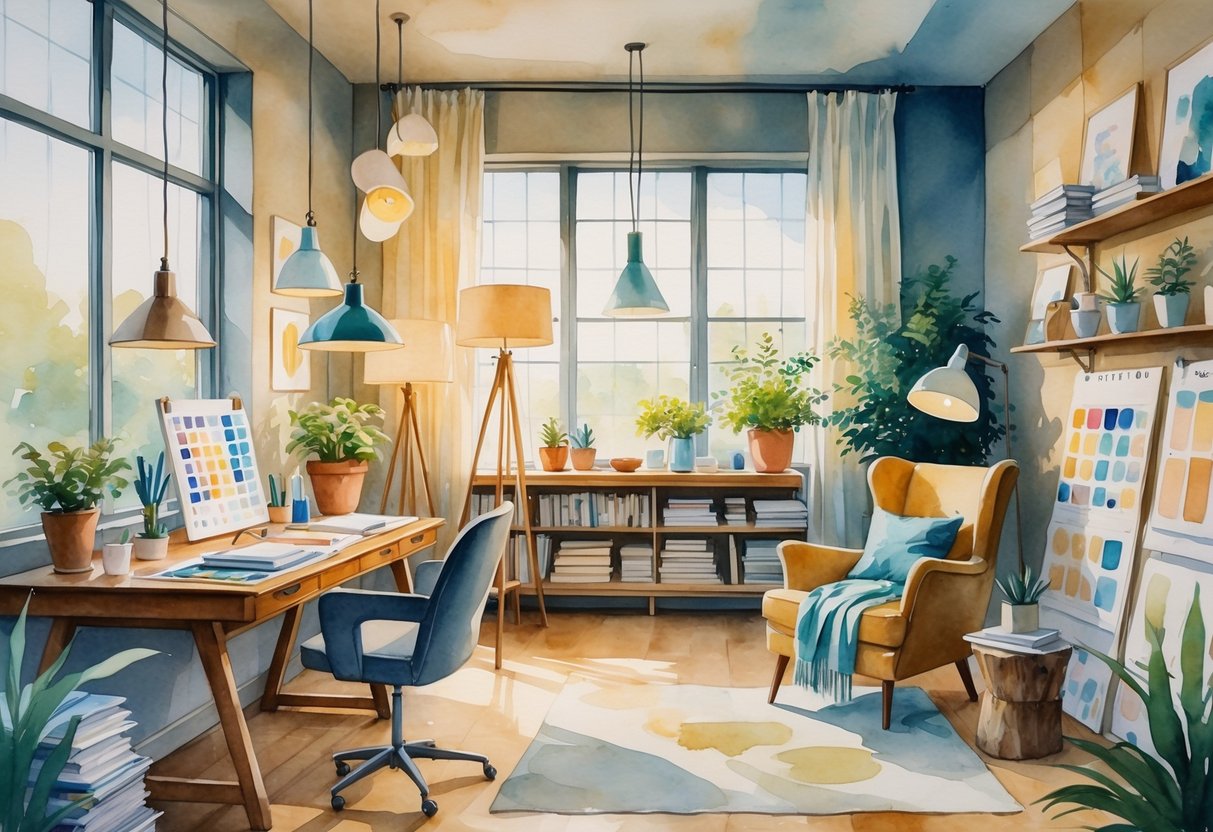
Playing with lighting transforms how you see and experience interior spaces. You can experiment with different types of fixtures, bulbs, and placement options to create various moods and atmospheres in a room.
Start by testing different lighting layers in your own home. Combine ambient, task, and accent lighting to understand how each type serves a specific purpose.
You might try repositioning lamps or adding dimmer switches to see how adjustable light levels change a space throughout the day. Experimenting with color temperature helps you learn which tones work best for different rooms.
Warm light creates cozy environments while cool light promotes focus and energy. You can swap out bulbs in existing fixtures to test these effects without major investments.
Consider how shadows and highlights interact with furniture and architectural features. Move portable lights around to discover how directing light at different angles creates depth and visual interest.
This hobby lets you explore creative solutions for common lighting challenges. You might experiment with smart bulbs that change colors or try unconventional fixtures like LED strips under cabinets.
Testing these options builds your understanding of how lighting affects design elements like color, texture, and spatial perception. Document your experiments with photos taken at different times of day.
This practice helps you notice subtle changes that occur with natural light variations and teaches you how artificial lighting can complement or compensate for these shifts.
5) Furniture Upcycling Projects
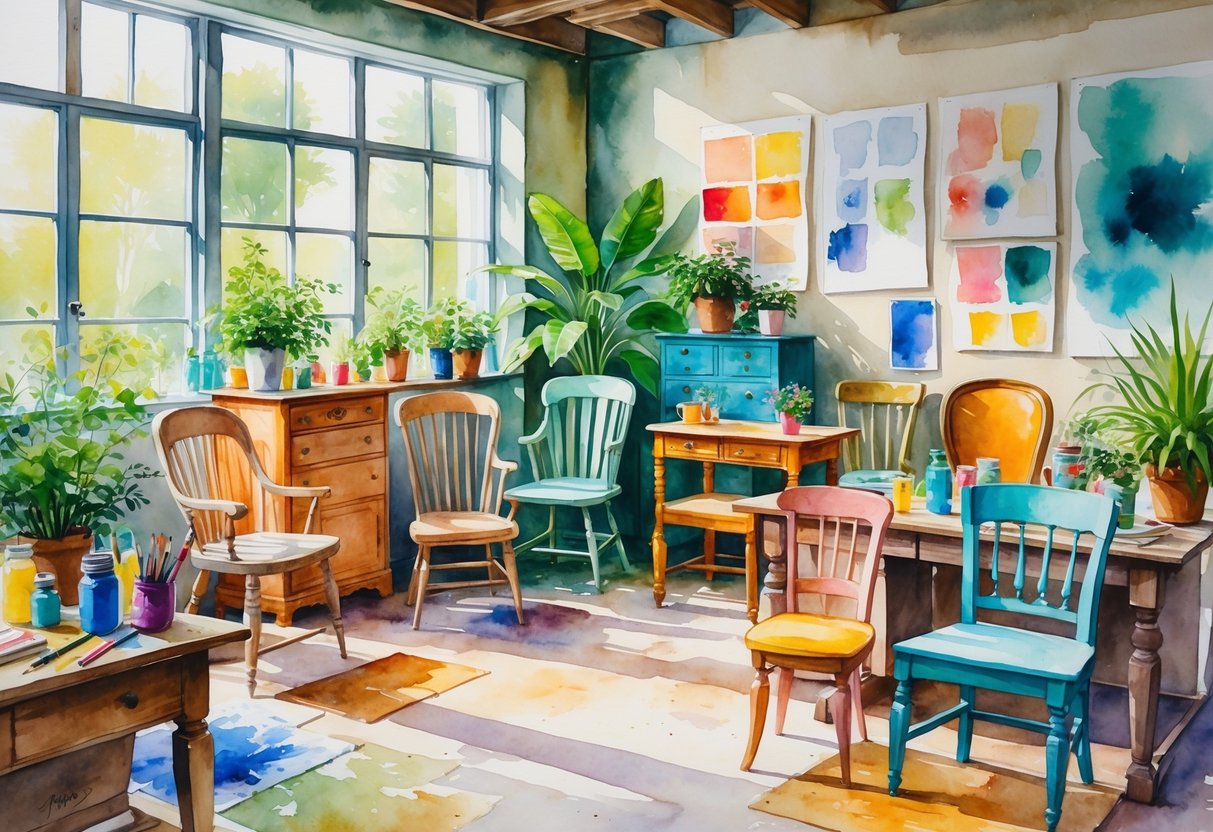
Furniture upcycling lets you transform old pieces into unique designs that reflect your personal style. You can practice color theory, texture combinations, and spatial planning on a smaller scale before applying these concepts to larger projects.
This hands-on work helps you understand materials and construction techniques better. You don’t need expensive tools or materials to start.
Basic supplies like paint, sandpaper, fabric, and wood stain can completely change how a piece looks. You might add new hardware, reupholster cushions, or apply decorative paper to drawer fronts.
Working with furniture teaches you problem-solving skills that apply directly to interior design. You learn to see potential in overlooked items and develop an eye for what works in different spaces.
Each project gives you experience with real materials and finishes that you recommend to clients. Upcycling also keeps you connected to sustainable design practices.
You can create custom pieces that fit exact specifications without the cost of new furniture. This approach shows clients how to refresh their spaces on any budget.
You gain confidence in your design choices when you complete projects from start to finish. The process helps you understand what clients experience during renovations.
You build a portfolio of before-and-after examples that demonstrate your vision and skills.
4) Textile and Fabric Sampling
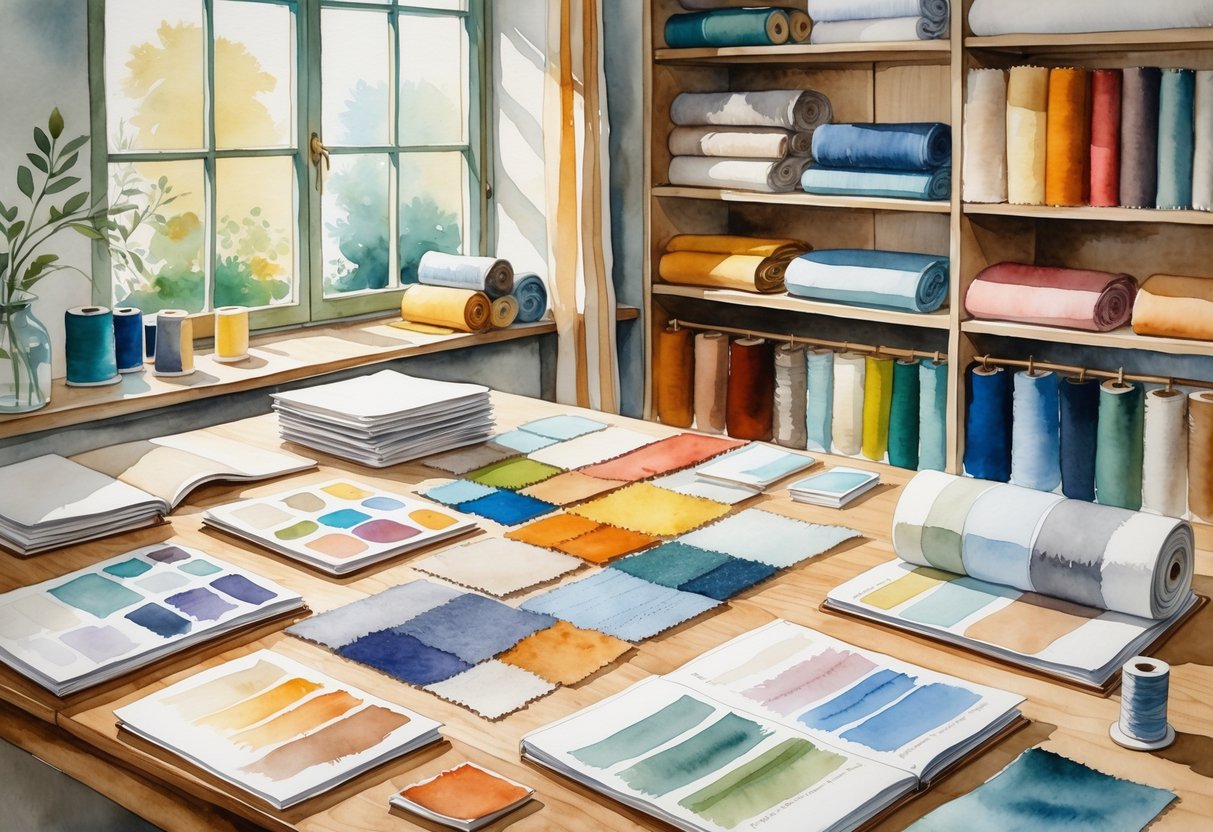
Textile and fabric sampling lets you explore materials that shape interior spaces. You can collect swatches from fabric stores, trade shows, or online suppliers to build a personal reference library.
This hands-on approach helps you understand how different materials look and feel in real life. When you work with fabrics regularly, you learn about their unique properties.
Cotton offers breathability and softness. Linen brings texture and a natural look.
Synthetic fabrics provide durability and easy maintenance. You start to notice how weight, weave, and finish affect a fabric’s appearance and function.
Sampling teaches you to compare materials side by side. You can see how colors shift under different lighting conditions.
You learn which fabrics work best for specific projects, whether you need something for upholstery, curtains, or decorative pillows. Building a sample collection keeps you connected to current trends and new materials.
You can organize your swatches by color, texture, or type to make them easy to reference during projects. This practice helps you make better design decisions for your clients or your own space.
The process of touching and examining fabrics also sparks new ideas. You might discover an unexpected color combination or find a texture that inspires an entire room design.
Regular exposure to textiles keeps your creative mind active and ready for your next project.
3) Color Theory Exploration
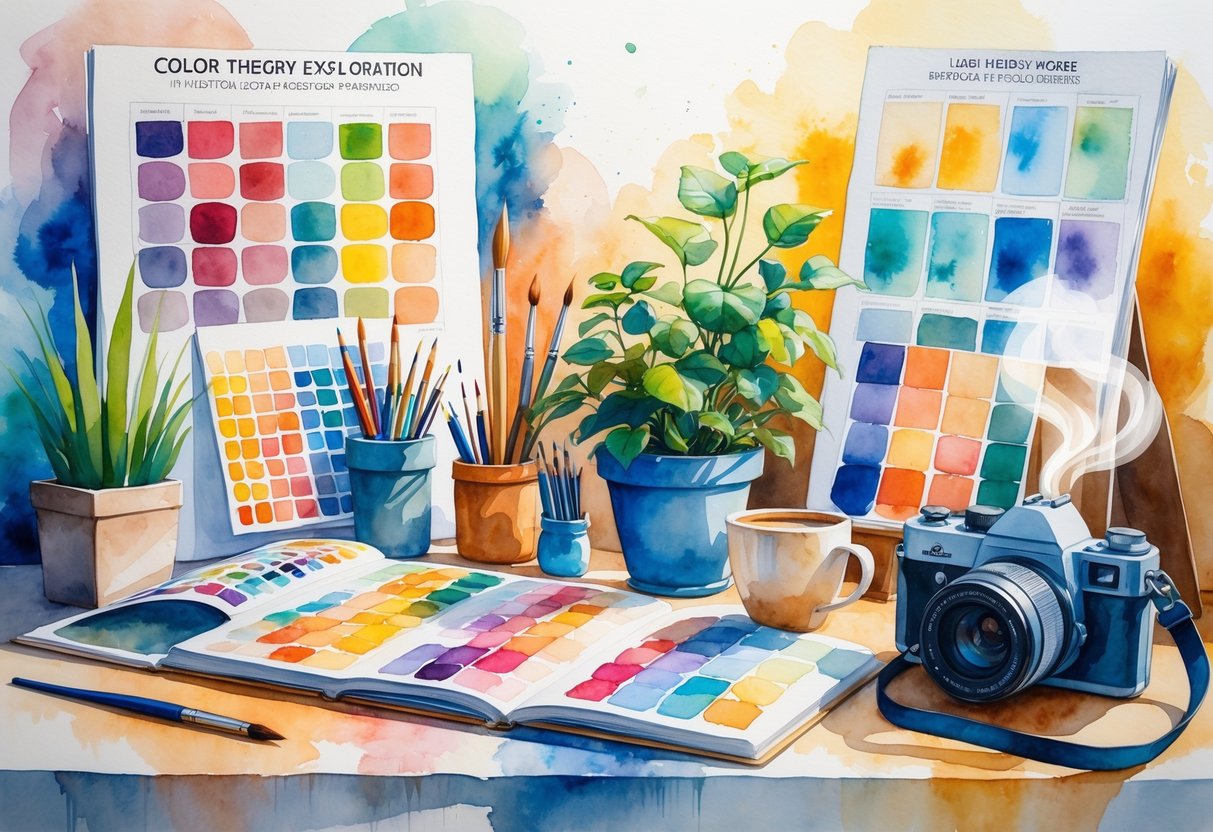
Color theory gives you a structured way to understand how colors work together and affect the spaces you create. When you study the color wheel and learn about complementary, analogous, and triadic color schemes, you build a stronger foundation for your design decisions.
You can practice color theory by creating mood boards for different rooms or design styles. Pick a base color and experiment with different combinations to see what feelings they create.
This hands-on approach helps you move beyond basic color choices. The 60-30-10 rule offers a practical framework to test your skills.
You apply 60% of a dominant color, 30% of a secondary color, and 10% of an accent color in your practice designs. This method teaches you balance and proportion in color distribution.
Digital tools and physical color swatches let you explore endless combinations without committing to actual room changes. You can photograph existing spaces and digitally test new color palettes on them.
This risk-free experimentation builds your confidence with bold color choices. Color psychology adds depth to your exploration.
Blues create calm environments while reds energize spaces. When you understand these effects, you can match colors to specific room purposes and desired moods.
2) Sketching Room Layouts
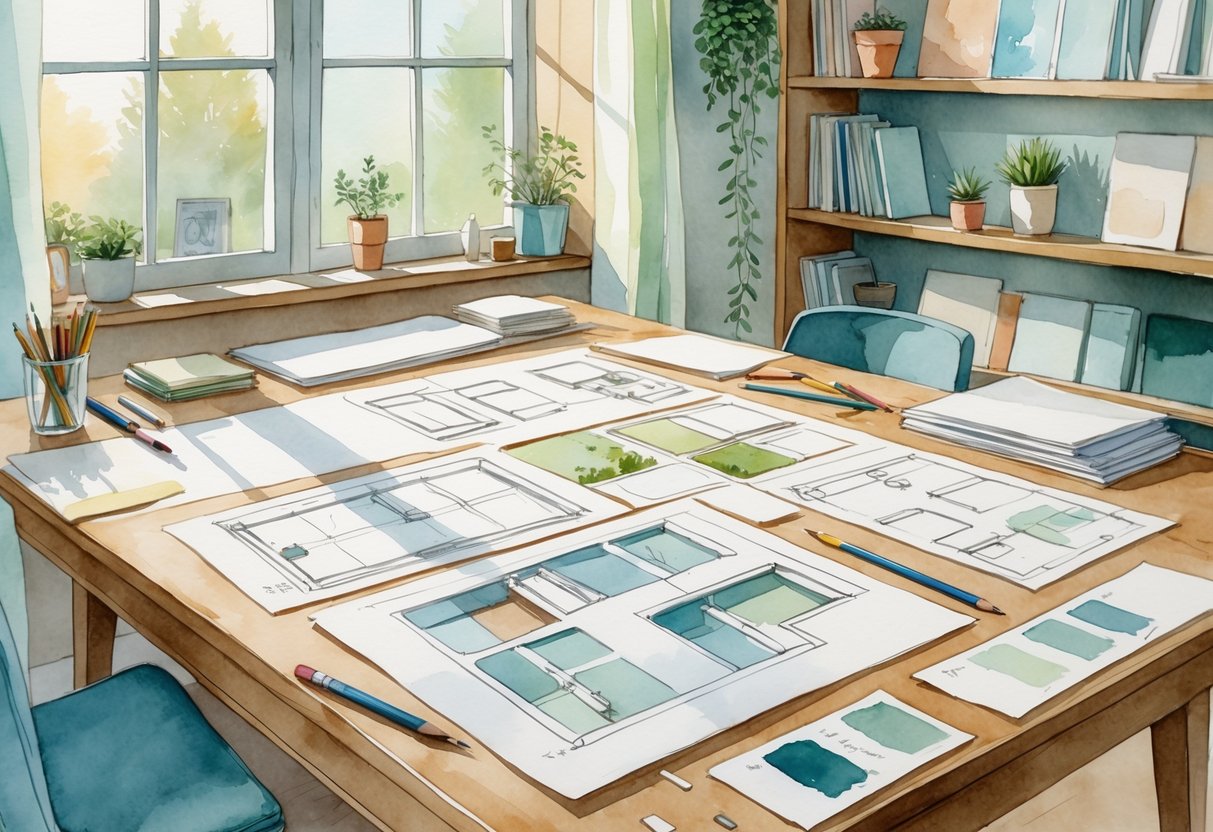
Sketching room layouts keeps your design skills sharp between projects. When you draw spaces by hand, you develop a better understanding of scale and proportion.
This practice helps you visualize how furniture and elements fit together in a room. You can start with simple floor plans using basic measurements.
Grid paper makes it easier to maintain accurate scale when you’re beginning. As you practice more, understanding spatial relationships becomes natural.
This hobby doesn’t require expensive tools. A pencil, eraser, and paper are enough to get started.
You can sketch rooms from your own home or imagine completely new spaces. Regular sketching improves your ability to communicate ideas with clients.
When you can quickly draw a layout during a meeting, you show your vision more clearly. This skill helps you explain concepts that might be hard to describe with words alone.
Digital sketching tools offer another option if you prefer working on a tablet. Many designers use both methods depending on the situation.
Hand sketching often feels more immediate and creative, while digital tools provide precision. Try setting aside time each week to sketch different room types.
Challenge yourself with various layouts like open-concept living areas or small studio apartments. Each sketch you complete builds your visual library and trains your eye for design solutions.
1) Mood Board Creation
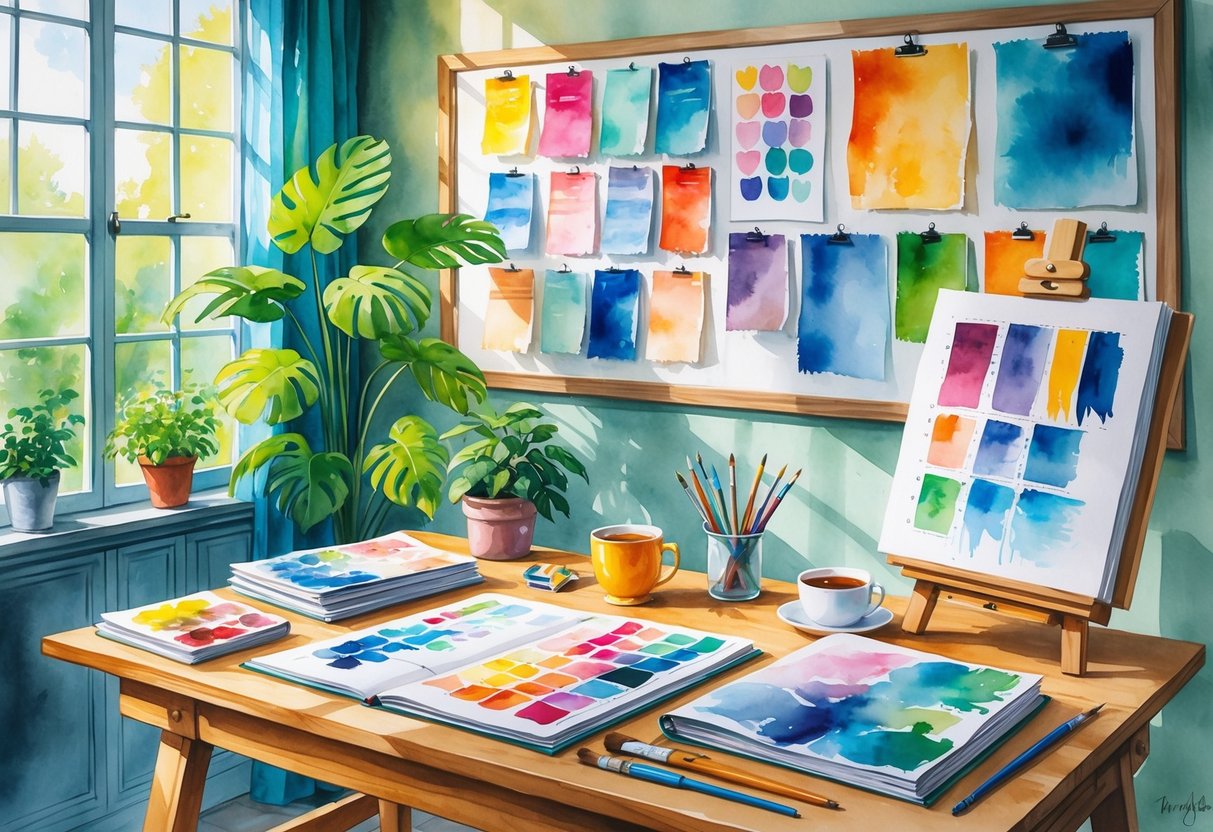
Mood board creation works as both a professional skill and a creative hobby for interior designers. When you build mood boards outside of client work, you can explore design ideas without constraints or deadlines.
This freedom lets you experiment with color combinations, textures, and styles you might not use in paid projects. Creating mood boards helps you stay sharp with your design eye.
You practice curating colors, patterns, and materials in a way that tells a visual story. Each board you make strengthens your ability to spot what works together and what doesn’t.
The process keeps you engaged with design trends and new materials. You might collect fabric swatches, paint chips, photos, or digital images that catch your attention.
Arranging these elements into cohesive boards trains you to think about how different pieces create a unified look. You can make mood boards using physical materials on poster boards or use digital tools on your computer or tablet.
Physical boards let you touch textures and see true colors, while digital boards give you flexibility to move elements around quickly. This hobby also builds a personal collection of inspiration you can reference later.
Your boards become a visual library of ideas that might spark solutions for future client projects. The practice of organizing design elements regularly keeps your creative thinking active and fresh.
The Creative Benefits of Hobbies for Interior Designers
Hobbies sharpen your artistic eye and train your brain to approach design challenges from fresh angles. They also build mental flexibility that translates directly into stronger client solutions.
Enhancing Artistic Vision
Hobbies like photography teach you to notice light, shadow, and composition in ways that improve your space planning. When you practice baking, you learn about color combinations through frosting and plating.
Needlepoint and other textile crafts help you understand patterns, textures, and how materials work together. These activities train your eye to catch details you might otherwise miss.
A photographer naturally spots how natural light moves through a room at different times of day. Someone who paints understands color theory at a deeper level than just reading about it in books.
Expanding Problem-Solving Skills
Design challenges require you to balance aesthetics, function, budget, and client needs all at once. Hobbies give you practice solving complex puzzles in low-pressure settings.
Woodworking teaches you about measurements, materials, and structural limitations. Gardening shows you how to work within constraints like sunlight, space, and seasonal changes.
Cooking demands timing, resource management, and adapting when things go wrong. These experiences build your ability to think through problems step by step.
You learn to pivot when your first idea doesn’t work. You get better at seeing multiple solutions to the same challenge.
Your brain builds new neural pathways when you tackle different types of creative work. This mental cross-training makes you more adaptable when facing unusual client requests or difficult spaces.
Integrating New Skills Into Design Practice
Learning new skills through hobbies enriches your design work and helps you stand out in a competitive field. The key is knowing how to apply what you learn to real projects and maintaining steady progress in your development.
Translating Hobby Insights Into Client Work
When you pick up skills from hobbies, you gain fresh perspectives that directly improve your client projects. Photography teaches you about lighting and composition, which helps you plan room layouts and select fixtures.
Painting develops your color theory knowledge, making it easier to create cohesive palettes for spaces. You can apply these insights in practical ways.
Start by keeping a notebook where you write down techniques you learn from your hobbies. Note how a woodworking project taught you about grain patterns or how gardening helped you understand natural textures.
Ways to apply hobby skills:
- Use photography framing techniques when staging rooms
- Apply color mixing knowledge from painting to fabric and finish selections
- Incorporate woodworking understanding into custom furniture specifications
- Draw on cooking experience to design better kitchen workflows
Test new approaches on smaller client projects first. This builds your confidence before using these techniques on larger commissions.
Your clients benefit from your expanded skillset without knowing the source of your improved abilities.
Encouraging Continuous Growth
Set aside specific time each week for skill development outside your regular design work. Even 30 minutes three times per week keeps your creative abilities sharp and prevents burnout from client demands.
Track what you learn in a simple spreadsheet or journal. Write down new techniques, materials you discover, or design solutions that come from hobby practice.
This record shows your progress and reminds you of ideas when you need them. Join communities related to your hobbies.
Online forums and local groups expose you to different approaches and keep you motivated. These connections often lead to unexpected design solutions.
Challenge yourself with projects that combine multiple skills. Design a space that uses your photography knowledge for lighting, your gardening experience for plant placement, and your painting skills for custom wall treatments.
This integration makes your design work more distinctive and valuable to clients.
Frequently Asked Questions
Interior designers often wonder which hobbies best support their creative growth and professional development. The right activities can sharpen technical skills, spark fresh ideas, and even create new income opportunities.
What hobbies can help interior designers enhance their creativity?
Photography of interior spaces trains your eye to notice lighting, angles, and spatial relationships that you might otherwise overlook. You learn to capture the mood of a room and identify what makes certain spaces feel compelling.
Seasonal decor refreshes push you to reimagine existing spaces with limited resources. This practice builds your ability to create visual impact through small changes rather than complete overhauls.
Lighting design experimentation lets you explore how different light sources transform a room’s atmosphere. You can test fixtures, bulbs, and placement options to understand the technical and emotional effects of illumination.
Are there specific hobbies that can complement an interior designer’s professional skills?
3D interior design software practice strengthens your technical abilities and helps you visualize projects before execution. You gain fluency in tools that clients increasingly expect designers to use.
Attending virtual design workshops exposes you to new techniques, materials, and industry trends. These sessions connect you with other professionals and introduce approaches you can apply to your own projects.
Photography skills translate directly to portfolio creation and client presentations. Strong images of your work communicate your design vision more effectively than descriptions alone.
Which creative hobbies can also be profitable for interior designers?
Photography becomes a revenue stream when you offer professional space documentation to real estate agents, architects, or homeowners. Your design knowledge gives you an advantage in composing shots that showcase spaces at their best.
Creating seasonal decor content for blogs or social media can generate income through sponsorships and affiliate partnerships. You demonstrate your styling abilities while building an audience that may need design services.
Teaching virtual workshops allows you to monetize your expertise without taking time away from client work. You can offer specialized sessions on topics like lighting design or space planning.
How can practicing certain hobbies at home improve an interior designer’s inspiration and work?
Lighting design experimentation in your own space gives you a testing ground for ideas before proposing them to clients. You experience firsthand how different lighting affects daily activities and mood throughout the day.
Seasonal decor refreshes in your home force you to solve real design challenges with existing constraints. You develop creative solutions that you can adapt for client projects with similar limitations.
Working with 3D design software on personal projects lets you explore unconventional ideas without client pressure. This freedom often leads to innovative solutions you can incorporate into professional work.
Can hobbies influence an interior designer’s style and if so, which are the best to explore?
Photography shapes how you see and compose spaces by training you to notice balance, negative space, and focal points. The visual principles you learn through the camera lens inform your design decisions.
Experimenting with lighting design changes your approach to ambiance and functionality in every project. You start considering light as a primary design element rather than an afterthought.
Attending virtual design workshops exposes you to diverse aesthetic approaches and cultural influences. This exposure prevents your style from becoming stagnant and helps you serve clients with varied tastes.
What are recommended hobbies for interior designers looking to expand their business ideas?
Virtual design workshops teach you new service offerings you can add to your business model. You might discover opportunities in specialized areas like sustainable design or small-space solutions.
3D interior design software practice enables you to offer remote design services to clients outside your local area. This technical skill opens geographic markets that traditional designers cannot easily access.
Photography skills allow you to package design consultations with professional documentation services. Clients value the convenience of working with one professional who handles both design and imagery.