10 Dance Hobbies for All Ages: From Ballet to Hip-Hop for Every Skill Level
Dance offers one of the most accessible and rewarding hobbies available today, welcoming participants regardless of age, experience level, or physical ability. From toddlers taking their first ballet steps to seniors discovering the joy of ballroom dancing, movement and rhythm create connections that transcend generational boundaries.
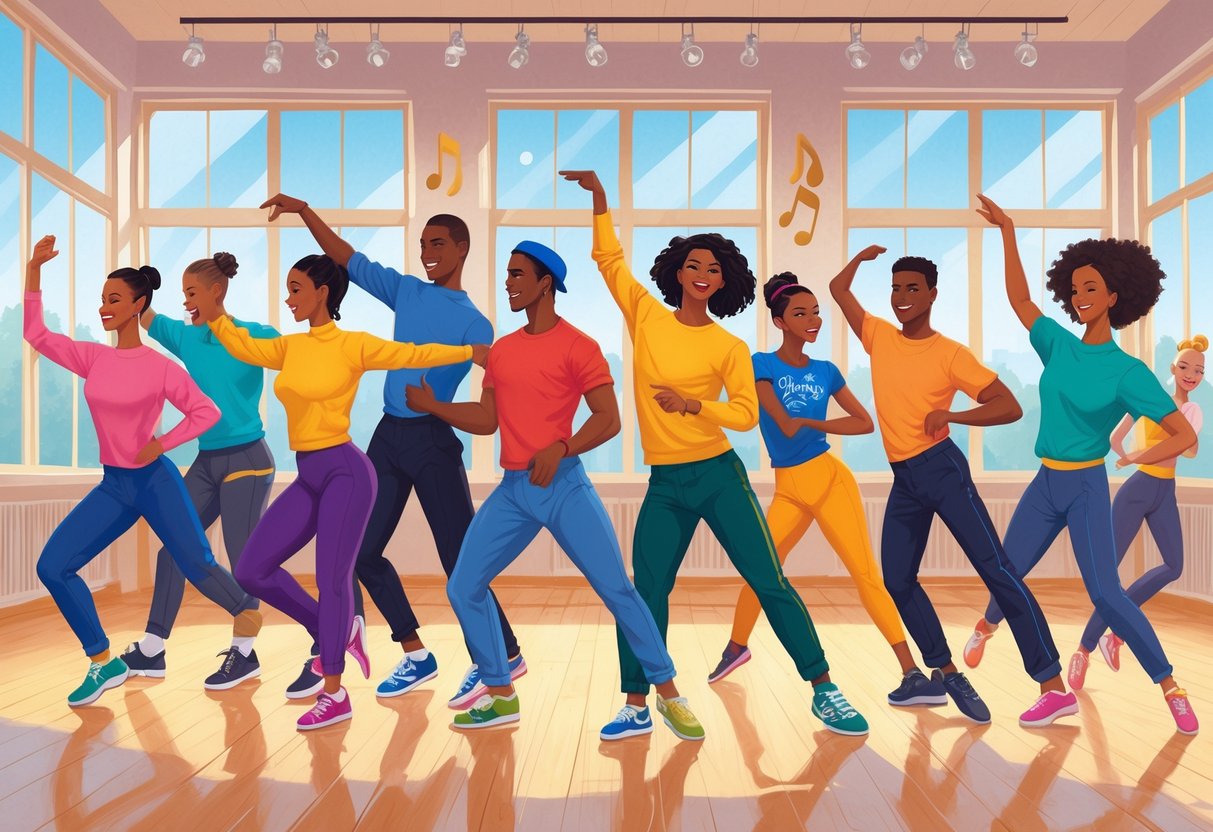
Dancing provides a unique combination of physical fitness, creative expression, and social interaction that makes it suitable for everyone from young children to older adults. Whether you prefer the structured elegance of ballet, the energetic beats of hip-hop, or the romantic partnership of Latin dances, there’s a dance style that matches your personality and goals.
The beauty of dance hobbies lies in their flexibility and adaptability. You can start at any age, progress at your own pace, and choose from numerous styles that range from solo contemporary movement to group folk dances that bring families and communities together.
Key Takeaways
- Dance hobbies accommodate all ages and skill levels with beginner-friendly classes and adaptive instruction methods
- Multiple dance styles from ballet to hip-hop offer diverse options for different interests and physical abilities
- Dancing combines fitness benefits with creative expression and social connections in one accessible activity
Why Dance Hobbies Are Suitable for All Ages
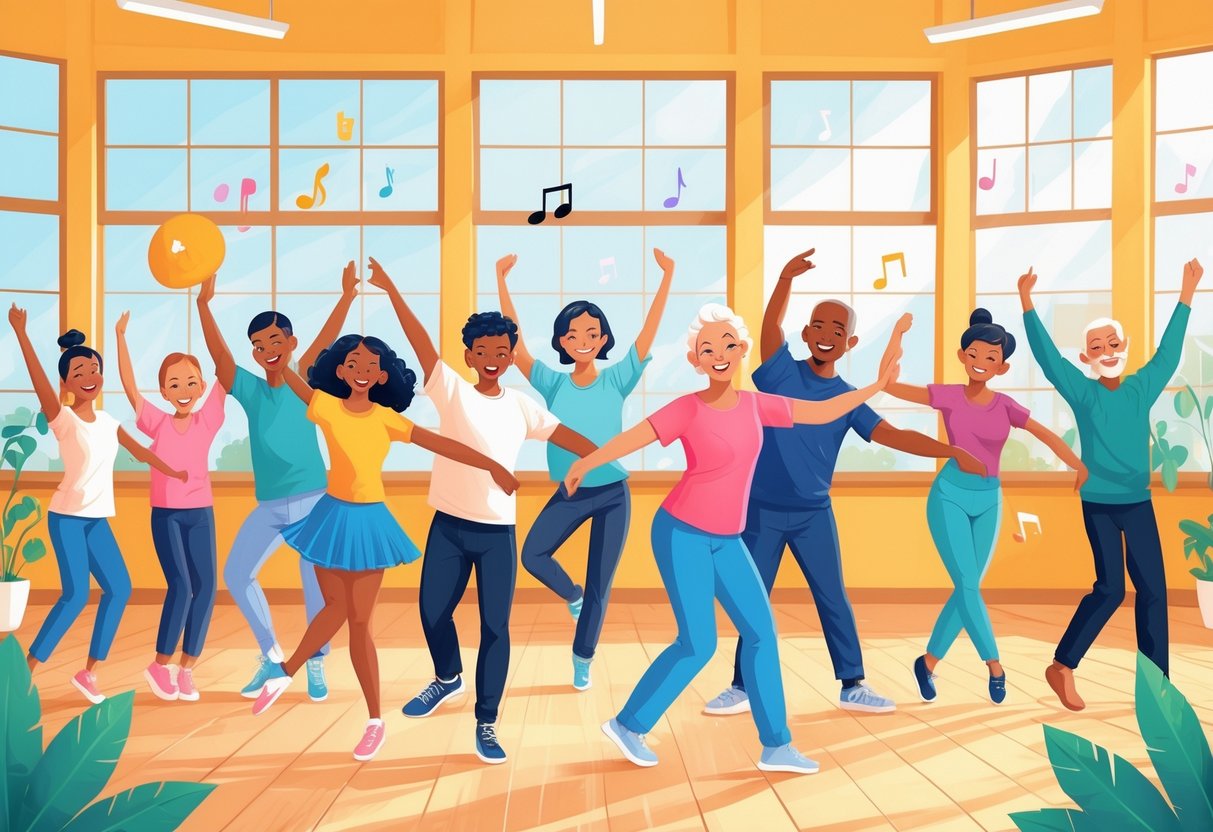
Dance offers unique advantages that span across every life stage, from improving cardiovascular health and bone density to reducing stress and building lasting friendships. These activities adapt naturally to different physical abilities and social needs.
Benefits of Dance for Physical Health
Dancing provides a complete cardiovascular workout that strengthens your heart and improves circulation. A 30-minute dance session can burn between 200-400 calories depending on the intensity and style you choose.
Your balance and coordination improve significantly through regular dance practice. This becomes particularly important as you age, helping prevent falls and maintaining independence.
Key Physical Benefits:
- Increased muscle strength and endurance
- Enhanced flexibility and range of motion
- Better posture and core stability
- Improved bone density
Dance movements engage multiple muscle groups simultaneously. Your legs, core, and arms work together to create fluid motions that build functional strength.
Low-impact dance styles like ballroom or gentle jazz accommodate joint sensitivities. You can modify movements to match your current fitness level while still gaining significant health benefits.
Mental and Emotional Advantages
Learning choreography challenges your memory and cognitive function. You must remember sequences, count beats, and coordinate movements, which keeps your brain actively engaged.
Dance helps combat brain diseases by creating new neural pathways. Social dancing specifically shows promise in slowing cognitive decline and dementia progression.
Your stress levels decrease through the release of endorphins during movement. The rhythmic nature of dance creates a meditative state that reduces anxiety and promotes emotional well-being.
Mental Health Benefits:
- Reduced symptoms of depression
- Enhanced self-confidence and body image
- Improved focus and concentration
- Better emotional regulation
Creative expression through movement allows you to process emotions in a healthy way. Dance becomes an outlet for feelings that might be difficult to express through words alone.
Fostering Social Connections
Dance classes create natural opportunities for meeting people who share similar interests. You interact with partners and fellow students in a supportive, encouraging environment.
Group dances like line dancing or folk traditions build community connections. These activities often welcome newcomers and provide structured social interaction without pressure.
Social Connection Types:
- Partner dancing (ballroom, swing, salsa)
- Group classes with rotating partners
- Performance teams and recitals
- Social dance events and workshops
Many dance communities organize regular social events beyond formal classes. You might attend dance parties, competitions, or cultural celebrations that expand your social circle.
The supportive nature of dance environments helps build confidence in social situations. You practice communication, cooperation, and trust through partner work and group activities.
Cross-generational dance programs bring together participants of different ages. These interactions create mentorship opportunities and break down age-related barriers in communities.
Ballet for Beginners and Beyond
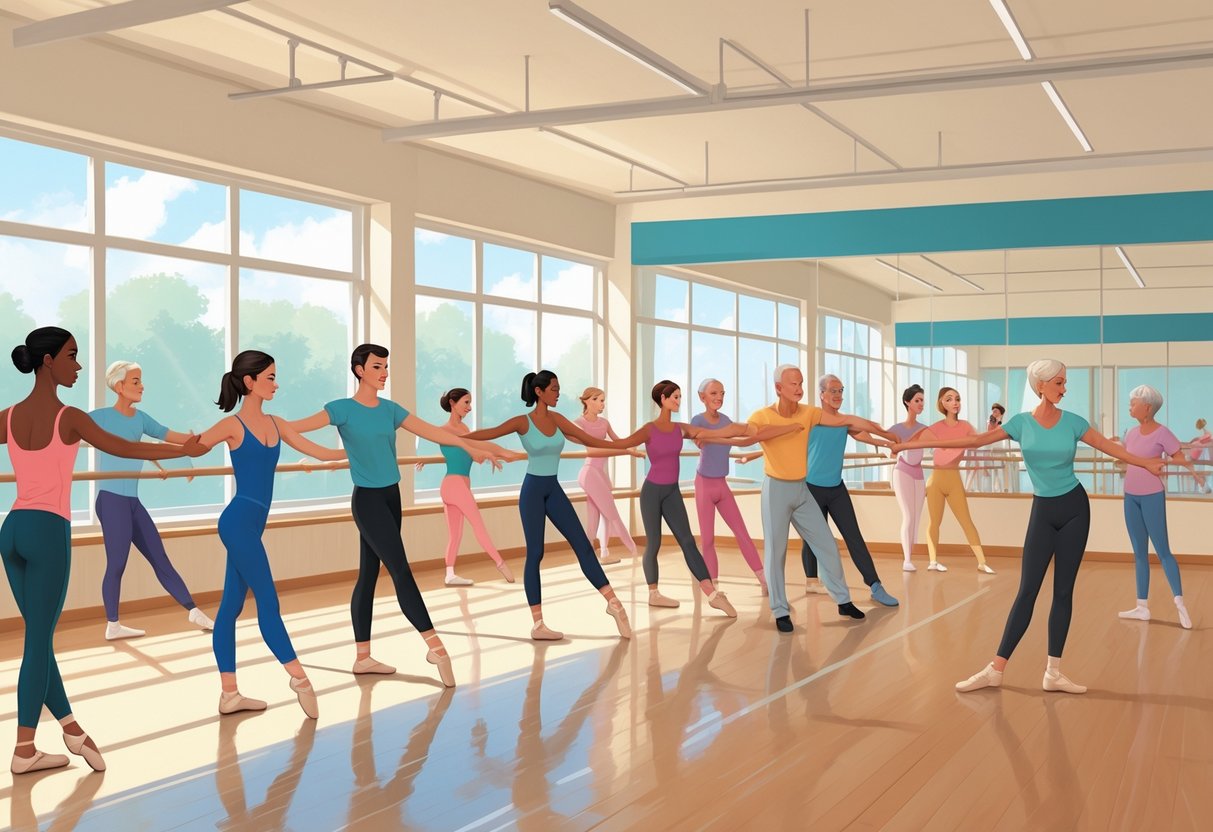
Ballet builds strength, flexibility, and grace through precise movements and positions that form the foundation of classical dance. Ballet welcomes dancers of all ages, from toddlers taking their first steps to adults discovering this art form later in life.
Core Techniques and Movements
Basic positions form the foundation of ballet technique. The five foot positions create stability and proper alignment for all movements.
- First position: Heels together, toes turned out
- Second position: Feet apart, toes turned out
- Third position: One foot in front, heel touching arch
- Fourth position: Feet apart, one in front
- Fifth position: Feet together, heel to toe
Port de bras teaches proper arm movement and carriage. Your arms move in flowing circles while maintaining soft, rounded shapes.
Essential beginner movements include pliés, tendus, and relevés. Pliés bend the knees while keeping your back straight and heels down when possible.
Tendus stretch your foot along the floor, pointing through each part. Relevés lift you onto the balls of your feet, building calf strength and balance.
Age-Appropriate Classes
Children’s classes focus on creativity and basic coordination. Ages 3-5 learn through imaginative play, pretending to be flowers or animals while practicing simple movements.
Youth programs for ages 6-12 introduce formal technique gradually. Students learn proper posture, basic positions, and simple combinations at the barre.
Adult beginner classes accommodate various fitness levels and learning speeds. Adult ballet programs emphasize proper technique while building confidence in a supportive environment.
Senior classes modify movements for joint comfort and mobility. These programs focus on gentle stretching, balance improvement, and maintaining flexibility through low-impact exercises.
Most studios offer drop-in classes or beginner series. Look for instructors who emphasize proper alignment over perfection.
Hip-Hop Dance for All Skill Levels
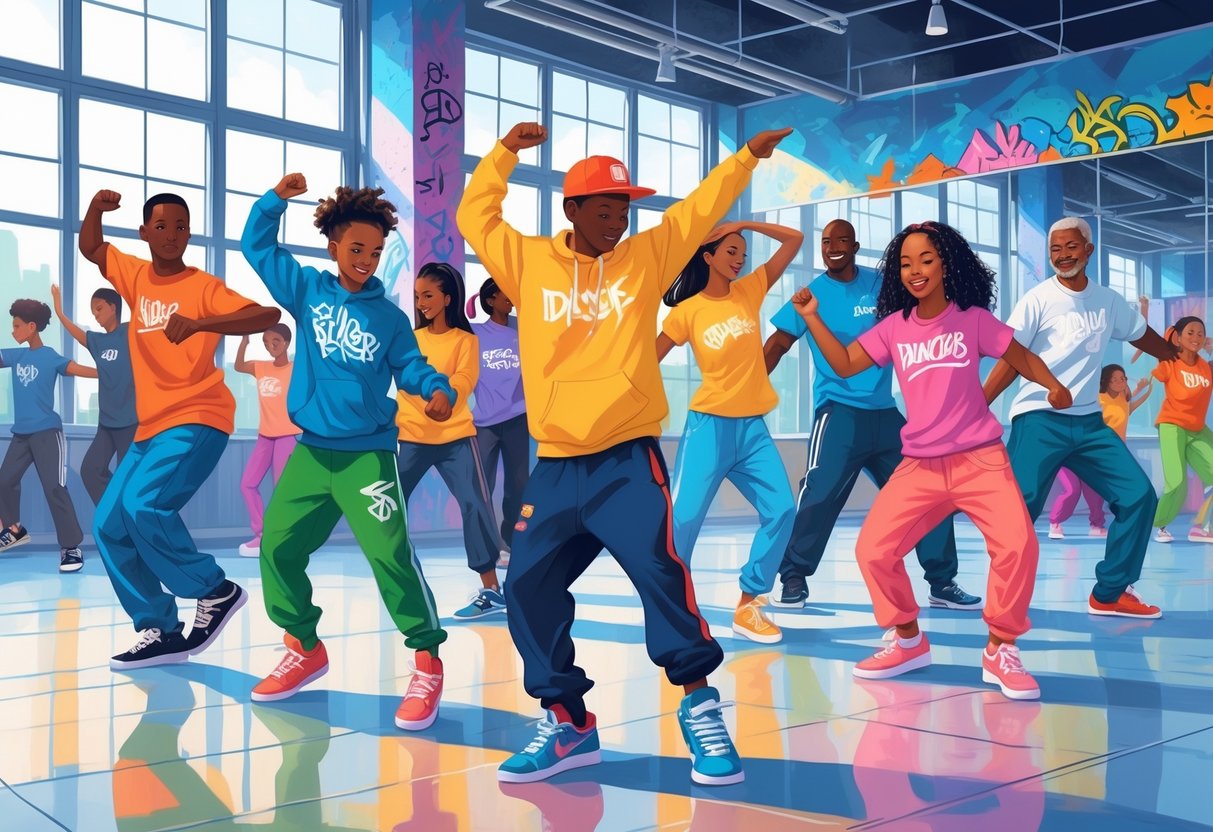
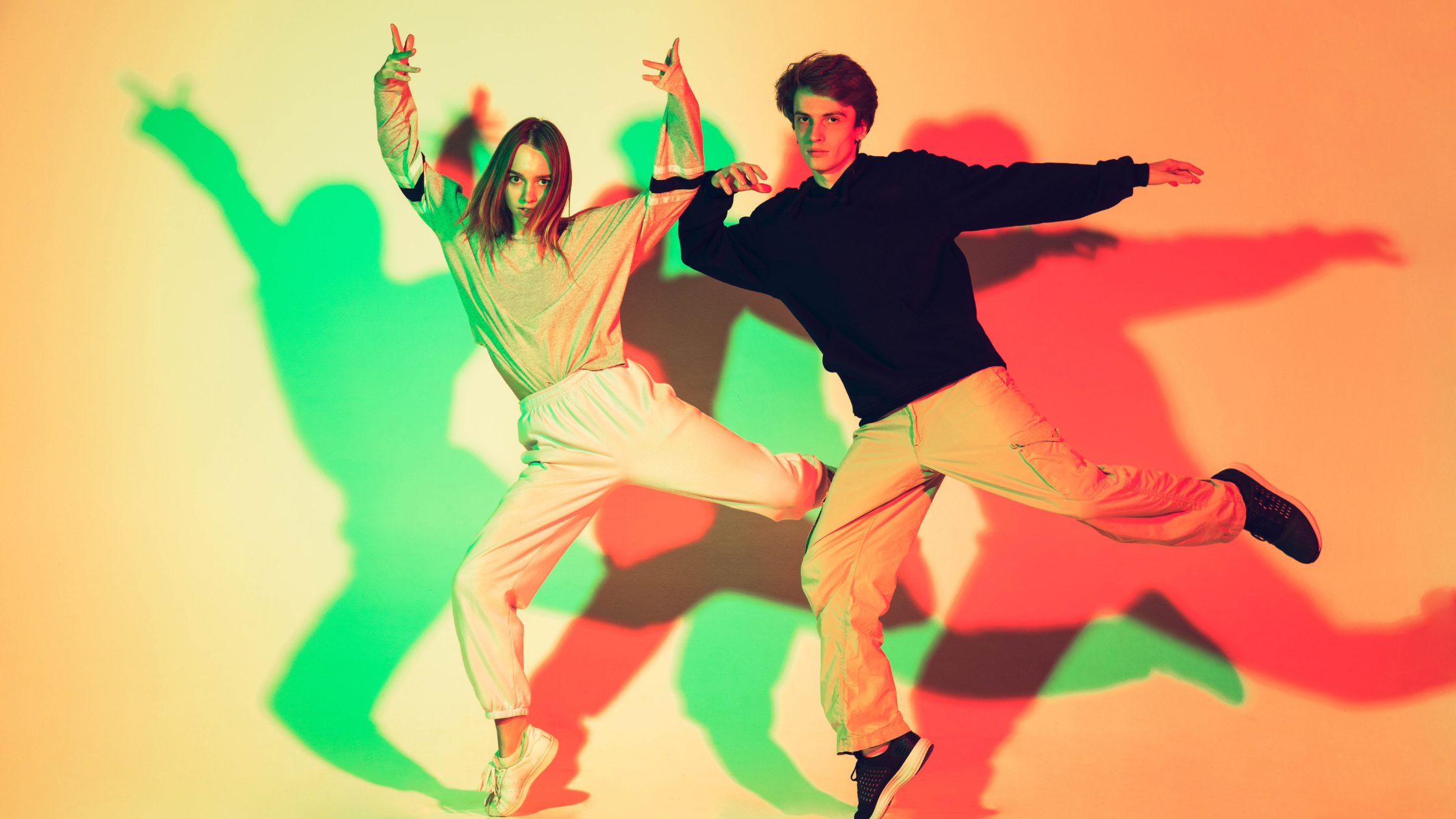
Hip-hop dance welcomes dancers of any age or experience level through its foundational moves like popping, locking, and breaking. This street dance style carries deep cultural roots from 1970s urban communities that continue to shape its creative expression today.
Learning Hip-Hop Basics
Hip-hop dance encompasses several core styles that form the foundation of this street dance genre. Breaking involves floor work and athletic moves, while popping creates sharp muscle contractions. Locking features quick movements followed by brief pauses.
You can start with basic moves regardless of your current skill level. Essential hip hop dance moves include the two-step, body roll, and shoulder bounce. These foundational techniques help you develop rhythm and coordination.
Many dance studios offer hip hop classes that fuse technique, musicality, and the latest trends. Classes typically progress from beginner movements to advanced choreography. YMCA hip hop exercise classes provide structured learning environments for all ages.
Practice Schedule:
- Beginners: 2-3 sessions per week
- Intermediate: 3-4 sessions per week
- Advanced: 4-5 sessions per week
Online platforms also offer hip hop classes organized by skill level from beginner to advanced. This allows you to learn at your own pace and repeat challenging sections.
Cultural Influence in Hip-Hop
Hip-hop dance emerged from African-American and Latino communities in the South Bronx and Harlem during the 1970s. This cultural foundation shapes every aspect of the dance style today.
The dance form serves as more than physical movement. It represents cultural expression, community identity, and artistic freedom. Hip-hop provides a rich foundation for creative expression within freestyle dance.
Understanding this cultural context enhances your dance practice. Hip-hop celebrates individuality while honoring its historical roots. Dancers often incorporate personal style into traditional moves.
The music drives the movement patterns and energy levels. Hip-hop beats typically feature strong downbeats and syncopated rhythms. You develop musicality by listening to classic hip-hop tracks and contemporary artists.
Respect for the culture includes learning about pioneer dancers and the social movements that influenced hip-hop’s development. This knowledge deepens your connection to the dance form and improves your authentic expression on the dance floor.
Ballroom Dancing for Social Engagement
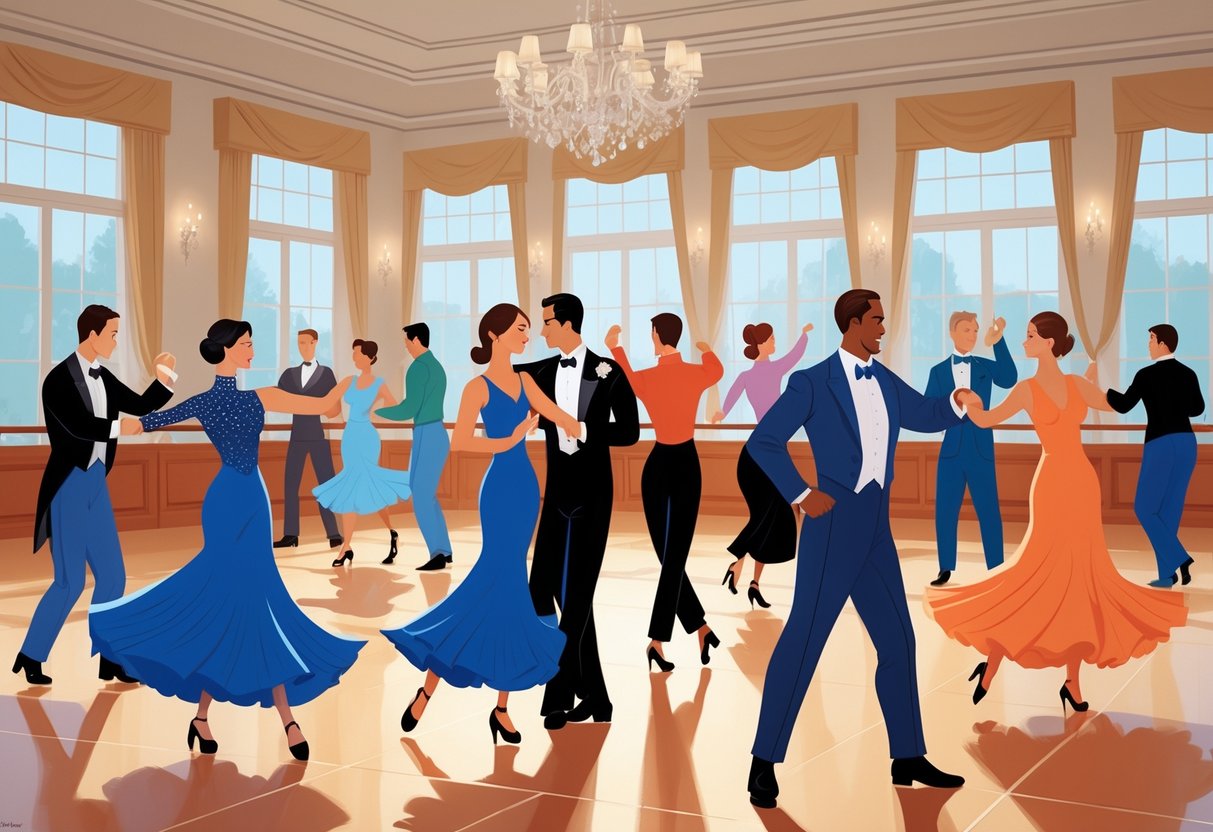
Ballroom dancing creates natural opportunities to connect with others through structured partner movements and shared learning experiences. The dance styles range from smooth waltzes to energetic Latin rhythms, each requiring different levels of communication and coordination between partners.
Popular Ballroom Styles
Standard dances include waltz, foxtrot, tango, and quickstep. These styles emphasize smooth, flowing movements across the dance floor with close partner connection.
The waltz uses a 3/4 time signature with rise and fall motions. You’ll learn box steps, promenades, and natural turns that create an elegant flowing pattern.
Foxtrot combines slow and quick steps in 4/4 time. This dance teaches you smooth walking movements and basic patterns like the feather step and three-step.
Latin styles feature more dynamic hip movements and varied hold positions. Cha-cha, rumba, samba, and jive each offer distinct rhythms and energy levels.
Cha-cha uses sharp, staccato movements with triple steps. You’ll practice basic steps, crossovers, and underarm turns that emphasize precise timing.
Rumba focuses on hip motion and romantic expression. The basic box step, walks, and spot turns help you develop smooth weight transfers between feet.
These ballroom dancing styles are accessible to people of all ages and backgrounds, making it easy to find dance partners and join social events.
Partner Dynamics
Partner connection starts with proper frame and posture. You maintain contact through your hands, arms, and torso to communicate movement intentions and maintain balance together.
Leading and following requires clear communication through physical cues. Leaders initiate movements through subtle pressure and direction changes, while followers respond by maintaining connection and interpreting signals.
The closed hold position places your right hand on your partner’s back with your left hand extended. This creates a stable frame for standard dances like waltz and foxtrot.
Open positions allow for more varied movements and spins. You maintain connection through one or both hands while creating space for individual expression and styling.
Social etiquette includes asking for dances politely, thanking partners, and rotating between different people during social events. Most dance venues encourage mixing with various partners to improve skills and meet new people.
You’ll develop trust and coordination through regular practice with different partners. Each person brings unique styling and interpretation, helping you adapt your technique and become a more versatile dancer.
Ballroom dancing provides opportunities to build relationships and create community connections that often extend beyond the dance floor into lasting friendships.
Contemporary and Modern Dance
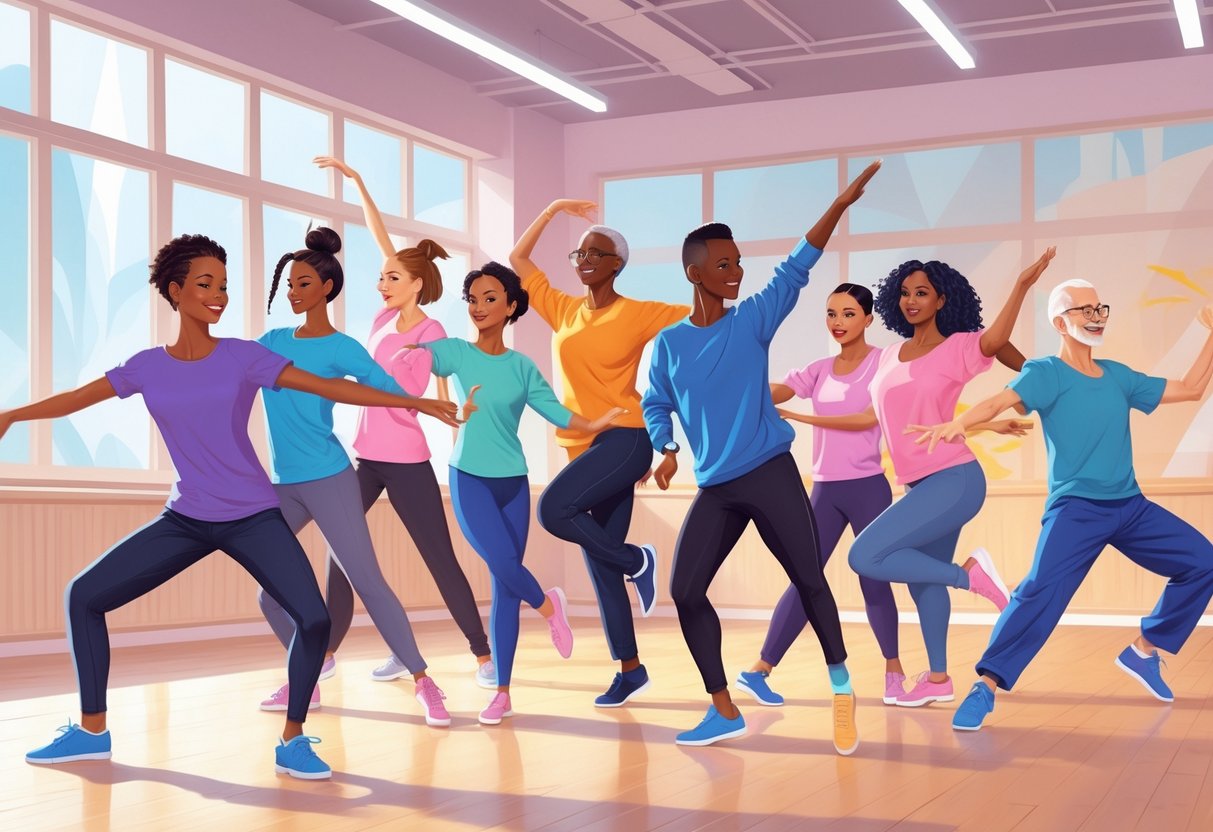
Contemporary dance combines multiple dance styles including ballet, jazz, and modern techniques to create fluid, expressive movement. This dance form emphasizes storytelling through body language and allows dancers to explore personal creativity through structured techniques and free-form improvisation.
Expressive Movement Techniques
Contemporary dance focuses on natural body alignment and gravity-based movements. You’ll learn to contract and release your torso, creating flowing sequences that connect your entire body.
Floor work plays a central role in contemporary technique. You’ll practice rolling, sliding, and transitioning between standing and ground-level positions smoothly.
Weight shifting becomes essential as you master how to fall and recover safely. This technique allows you to create dramatic drops and rises that define contemporary style.
Your spine serves as the movement center. You’ll develop spinal articulation by isolating each vertebra during curves and extensions.
Breath coordination drives every gesture. You match your inhales and exhales to movement phrases, creating organic timing that feels natural rather than forced.
Level changes add visual interest to your dancing. You’ll move seamlessly between high jumps, medium walks, and low crawls within single combinations.
Contemporary technique emphasizes emotional expression through physical choices. You learn to translate feelings into specific movement qualities like sharp angles for anger or flowing circles for joy.
Improvisation in Contemporary Dance
Improvisation develops your ability to create movement spontaneously while maintaining technical quality. You start with simple prompts like “move like water” or “respond to the music’s rhythm.”
Contact improvisation involves dancing with partners through shared weight and touch. You’ll learn to give and receive support while maintaining continuous movement flow.
Structured improvisation uses specific rules or limitations. You might improvise using only your arms, staying in one spot, or responding to particular sounds in the music.
Emotional improvisation connects internal feelings to external movement. You explore how different emotions change your posture, speed, and spatial choices naturally.
Floor improvisation focuses on ground-based movement exploration. You’ll discover rolling patterns, weight transfers, and creative ways to stand up and lie down.
Music interpretation through improvisation builds your listening skills. You learn to highlight different instrumental layers, tempo changes, and musical phrases through movement choices.
Group improvisation creates collaborative dances where multiple people respond to each other in real-time, building collective movement conversations.
Latin Dances: Salsa, Bachata, and More
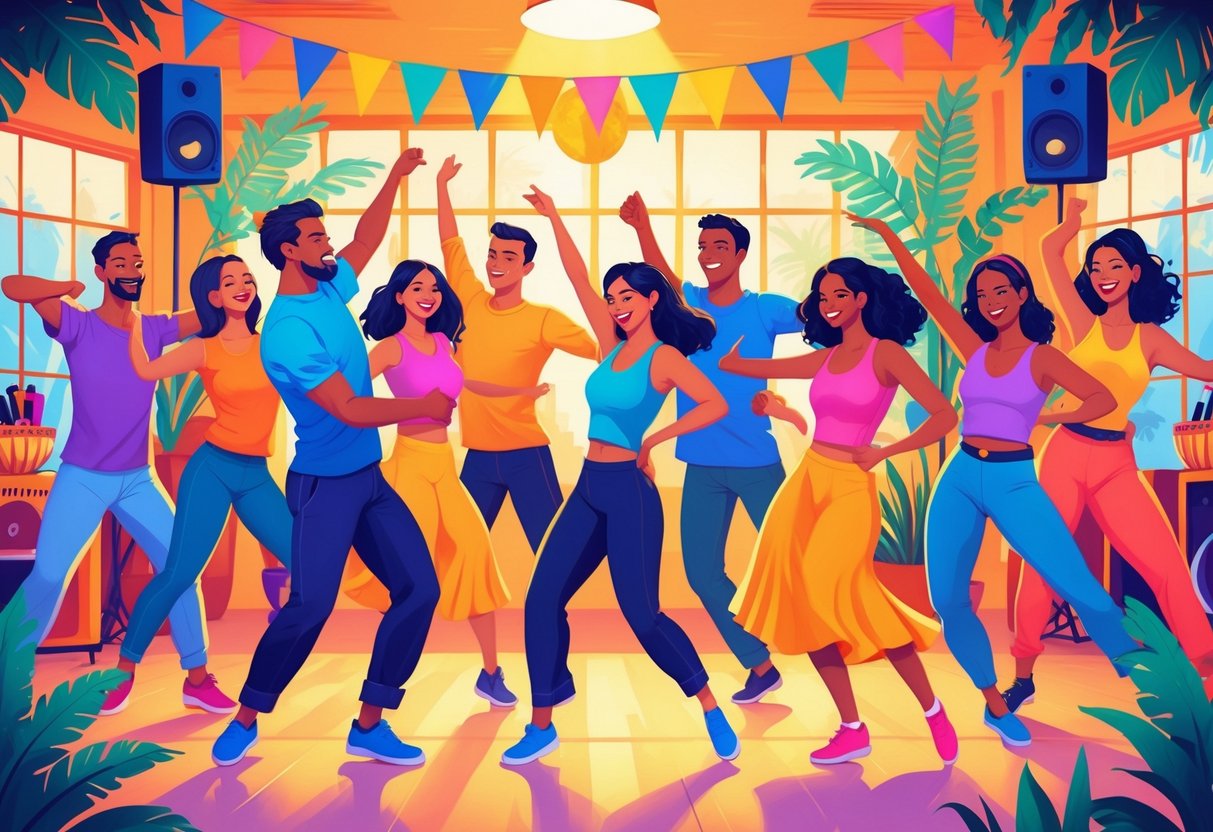
Latin dance styles offer diverse rhythmic expressions from across Latin America and the Caribbean, each with distinct musical patterns and cultural backgrounds. These dances create strong community bonds through social events, classes, and regular dance gatherings that welcome dancers of all skill levels.
Rhythmic Styles and Traditions
Salsa stands as the most iconic Latin dance style, combining Cuban Son, Mambo, and Puerto Rican Bomba influences. You’ll experience fast-paced rhythms with intricate footwork patterns that challenge your coordination and timing.
Bachata originated in the Dominican Republic and offers a contrasting experience. This dance style moves at slower, more sensual tempos compared to salsa, making it accessible for beginners while maintaining cultural authenticity.
Popular Latin Dance Styles:
| Dance | Origin | Tempo | Difficulty |
|---|---|---|---|
| Salsa | Caribbean | Fast | Intermediate |
| Bachata | Dominican Republic | Slow-Medium | Beginner |
| Merengue | Dominican Republic | Medium | Beginner |
| Samba | Brazil | Fast | Advanced |
Competitive dancers focus on five main styles: samba, paso doble, cha-cha-cha, rumba, and jive for Dancesport competitions. Social dancers explore broader varieties including mambo, bolero, and cumbia.
Community and Social Events
Latin dance communities center around regular social gatherings called socials or milongas. You’ll find weekly events at dance studios, community centers, and nightclubs that feature live DJs playing traditional and contemporary Latin music.
Most venues offer beginner lessons before social dancing begins. These pre-dance classes typically last 30-60 minutes and cover basic steps for the evening’s featured dance style.
Typical Social Dance Schedule:
- 7:00 PM – Beginner lesson
- 8:00 PM – Intermediate workshop
- 9:00 PM – Open social dancing
- 12:00 AM – Event conclusion
Salsa and bachata remain the most popular choices among social dancers worldwide. You can participate regardless of whether you attend with a partner, as partner rotation during lessons and social dancing is standard practice.
Many communities organize monthly themed events, seasonal festivals, and weekend workshops featuring visiting instructors. These gatherings strengthen local dance networks while introducing you to regional style variations and advanced techniques.
Family-Friendly Group Dance Activities
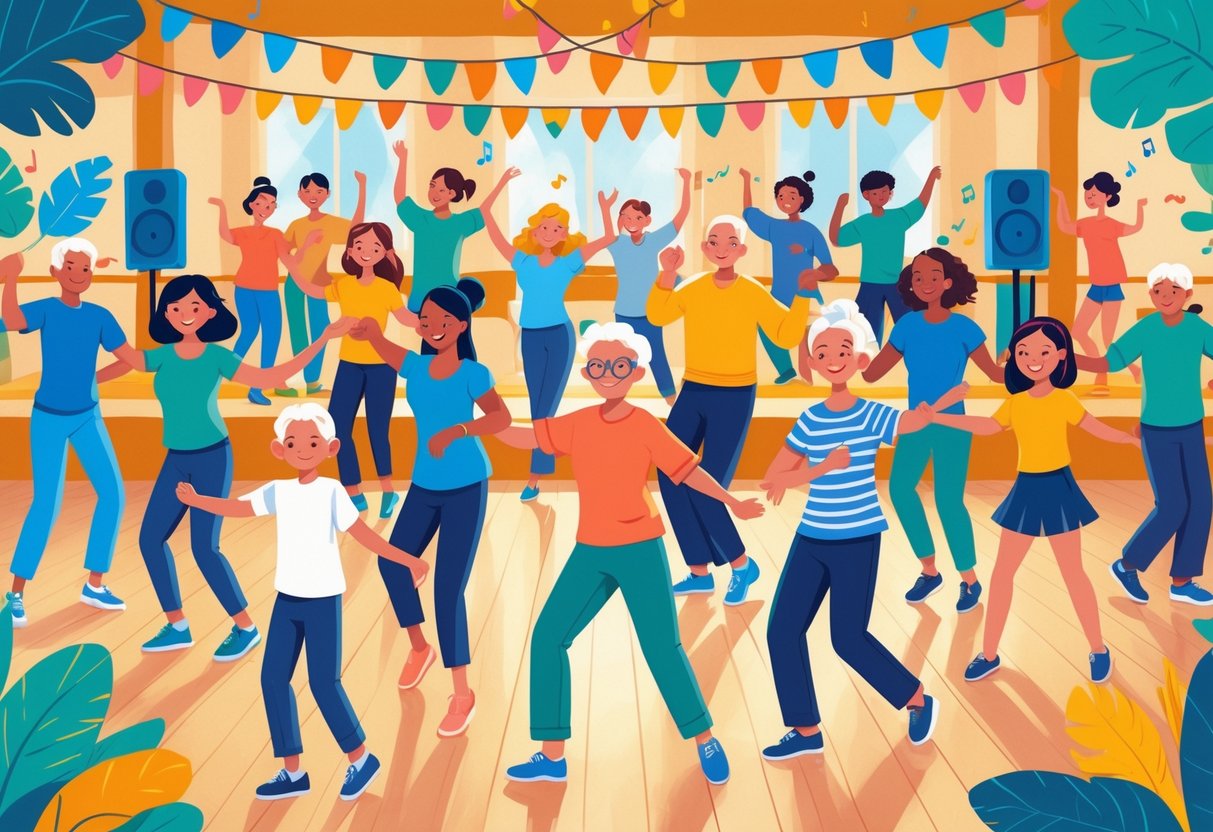
Group dance activities create opportunities for families to bond while learning coordinated movements together. These activities range from traditional community dances to organized events that accommodate various skill levels and ages.
Line Dancing and Square Dancing
Line dancing offers an accessible entry point for families new to group dancing. You don’t need a partner, making it perfect for families with different numbers of participants.
Popular line dances like the Cupid Shuffle feature side steps and heel touches, perfect for all ages and great for group participation. The Cha Cha Slide provides clear verbal instructions throughout the song, guiding dancers through side steps, hopping, and turning movements.
Square dancing requires four couples arranged in a square formation. A caller announces the moves, such as “do-si-do” or “allemande left.” This traditional dance form teaches cooperation and listening skills while providing moderate physical activity.
Benefits for families:
- No prior experience required
- Builds coordination and memory
- Encourages teamwork
- Provides cardiovascular exercise
Organizing Inclusive Events
Family dance parties require thoughtful planning to ensure everyone can participate. Start by clearing adequate space and selecting music that appeals to different generations.
Create a playlist mixing current hits with classic songs familiar to grandparents and parents. Include instrumental tracks for freestyle dancing and songs with built-in instructions for structured activities.
The Mirror Dance works well for mixed-age groups, requiring focus and teamwork in pairs. One person leads while their partner mirrors their movements.
Essential planning elements:
- Duration: 10-minute sessions prevent fatigue
- Props: Scarves, ribbons, or hats add visual interest
- Space: Remove furniture and potential hazards
- Music volume: Keep conversations possible
Rotate between high-energy songs and slower movements to accommodate different fitness levels and ages.
Tips for Choosing the Right Dance Hobby
Selecting the perfect dance style depends on matching your personal interests with your physical abilities and finding accessible learning opportunities in your area. Your success starts with honest self-assessment and practical research into available classes.
Considering Interests and Abilities
Your musical preferences play a major role in dance selection. If you enjoy classical music, ballet or contemporary dance might appeal to you. Hip-hop lovers often gravitate toward street dance styles, while those who prefer Latin rhythms typically choose salsa or bachata.
Physical considerations matter significantly. Ballet requires flexibility and precise posture. Ballroom dancing needs coordination with a partner. Hip-hop emphasizes rhythm and athletic movement. Tap dancing demands quick footwork and timing.
Age affects dance choice differently than many assume. People of all ages can benefit from dance without specific limitations. Many studios create beginner classes for different age groups.
Consider your fitness level honestly. High-energy styles like Zumba or breakdancing require cardiovascular endurance. Gentle options like ballroom or folk dancing work well for those seeking low-impact activities.
Personality traits influence success. Introverts might prefer solo forms like contemporary dance. Extroverts often thrive in partner dances or group classes. Competitive personalities may enjoy dance sport or performance teams.
Accessing Classes and Resources
Research local dance studios thoroughly before committing. Visit facilities to observe classes and meet instructors. Ask about beginner-friendly programs and class schedules that fit your availability.
Cost varies significantly between options. Community centers often offer affordable group classes. Private studios provide more personalized instruction at higher prices. Online tutorials cost less but lack hands-on correction.
Many different types of dance classes exist in most areas, from salsa to hip-hop. Check multiple locations for the best fit.
Transportation and timing create practical constraints. Choose studios within reasonable distance from home or work. Evening and weekend classes accommodate working schedules better than daytime options.
Trial classes reveal compatibility. Most studios offer drop-in sessions or free first lessons. Take advantage of these opportunities to test different styles and instructors before making long-term commitments.
Getting started with dancing as a hobby requires research into classes, teachers, and studios in your area. Some dance forms need special equipment or clothing, which adds to initial costs.
Frequently Asked Questions
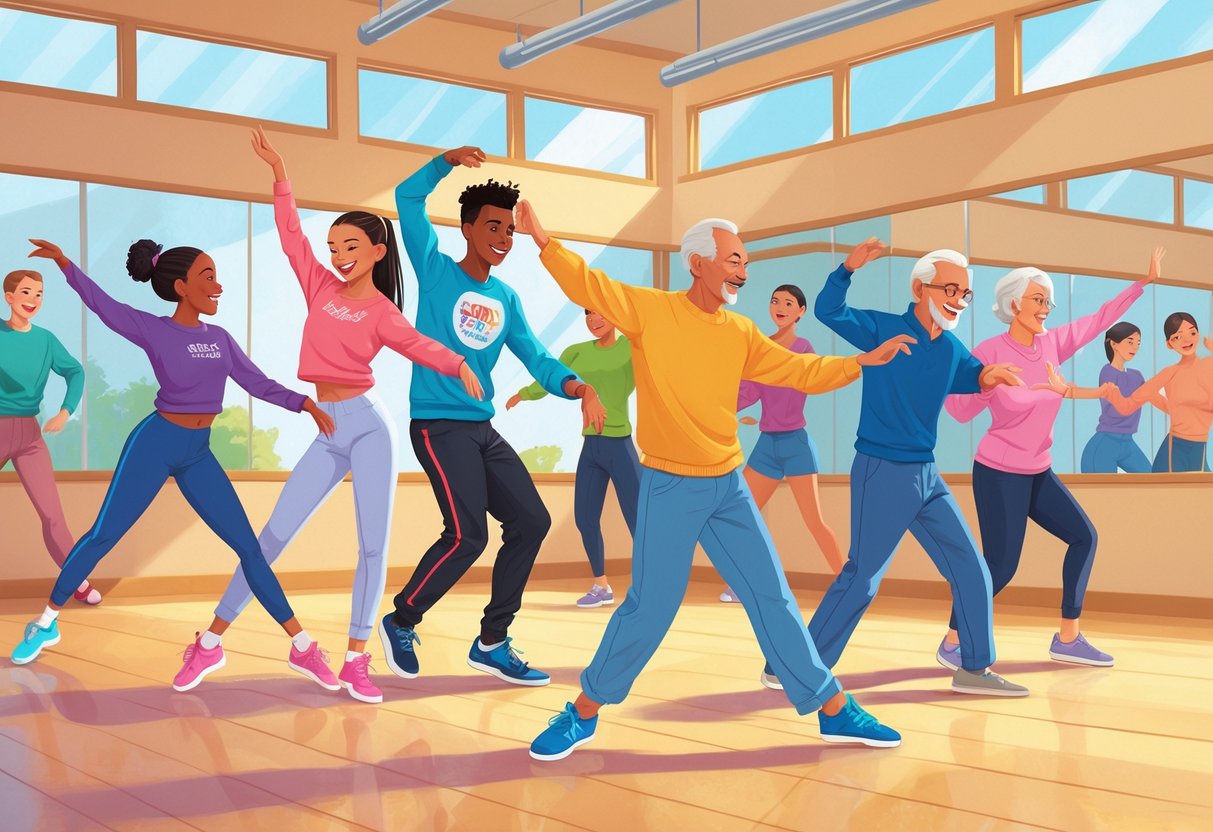
Dance offers physical activity, creativity, and social interaction for participants across all age ranges. Most beginners can start with basic movements and progress at their own pace through consistent practice and proper instruction.
What are the benefits of engaging in dance as a hobby?
Dancing as a hobby provides a unique blend of physical activity, creativity, and social interaction. You will improve your cardiovascular health, flexibility, and muscle strength through regular dance practice.
Dance enhances your coordination and balance while reducing stress levels. The rhythmic movements and music create a natural mood boost through endorphin release.
You develop better posture and body awareness as you learn proper alignment and technique. Social dance forms help you build confidence in group settings and improve communication skills.
How can beginners get started with dance, regardless of their age?
Begin by identifying a dance style that interests you and research local studios or community centers offering beginner classes. You can start with group classes designed specifically for your age group and experience level.
Choose comfortable clothing that allows free movement and appropriate footwear for your selected dance style. Start with one or two classes per week to allow your body to adapt gradually.
Focus on learning basic steps and rhythms before progressing to more complex choreography. Set realistic expectations and celebrate small improvements rather than comparing yourself to experienced dancers.
What types of dance styles are suitable for a wide range of age groups?
Ballroom dancing works well for most ages because you can adjust the intensity and complexity of movements. Waltz, foxtrot, and swing provide excellent starting points for social dancing.
Folk dancing includes simple steps and rhythms that accommodate different physical abilities. The repertoire includes dances from all over the world with movements adapted for recreational use.
Contemporary dance encourages creativity and personal expression while allowing modifications based on individual capabilities. Ballet fundamentals benefit dancers of all ages by building proper technique and posture.
Are there any dance activities that can improve fitness and health for all ages?
Low-impact dance styles like ballroom and folk dancing provide cardiovascular benefits without excessive joint stress. These forms improve heart health while building endurance gradually.
Jazz dance and contemporary styles offer moderate-intensity workouts that enhance flexibility and core strength. You can modify movements to match your current fitness level and physical limitations.
Chair dancing accommodates individuals with mobility restrictions while still providing upper body movement and coordination benefits. Water-based dance activities reduce impact while maintaining resistance training elements.
How frequently should one practice dance to see progress?
You should practice dance two to three times per week to maintain steady improvement without overwhelming your body. How often you take dance lessons will determine how much you need to budget for them.
Consistent weekly practice produces better results than sporadic intensive sessions. Your muscle memory develops more effectively through regular repetition of movements and patterns.
Beginners often see noticeable progress within 4-6 weeks of regular practice. Advanced skills require months or years to develop, depending on the complexity of your chosen dance style.
Can dance hobbies be pursued at home, and if so, what resources are needed?
You need adequate floor space free from obstacles and furniture that could cause injury during movement. A smooth, non-slip surface provides the safest environment for practicing dance steps.
Online video tutorials and streaming dance classes offer structured instruction for home practice. You should invest in a good sound system or headphones to hear music clearly and maintain proper rhythm.
A full-length mirror helps you monitor your posture and technique while practicing alone. Basic props like resistance bands or light weights can enhance certain dance fitness routines when used appropriately.