
10 Best Hobbies for People with Limited Mobility to Enjoy at Home
Finding enjoyable and rewarding hobbies is important for everyone, including people with limited mobility. Activities that fit your abilities can help you stay active, feel happier, and keep your mind sharp.
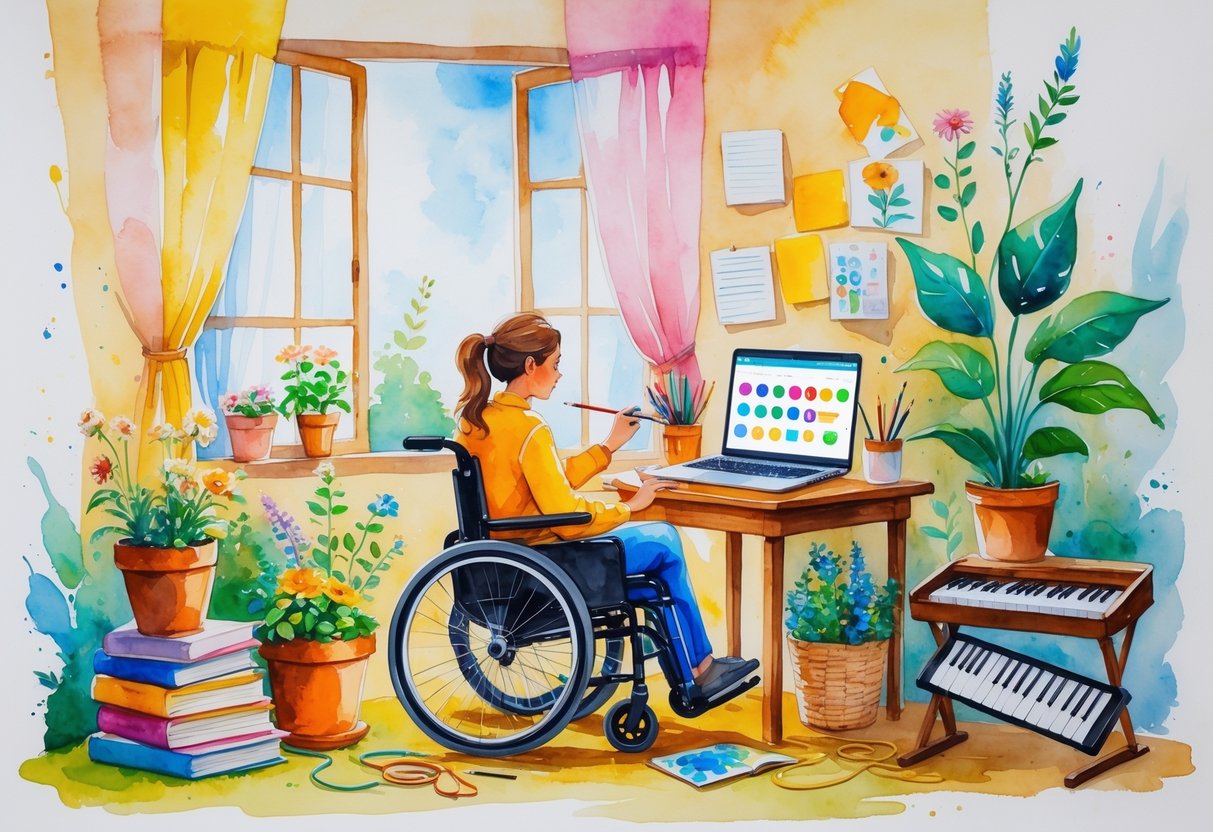
You can still discover hobbies that bring joy, connection, and purpose into your daily life even if your movement is limited. There are many options that can be adapted to your needs, allowing you to pursue your interests and learn new skills.
1) Container Gardening

Container gardening is a great way to grow plants if you have limited mobility. You can use pots, window boxes, or other containers to hold soil and plants.
This makes gardening possible even if you cannot move around your yard. You can keep containers on tables, shelves, or window sills.
This means you don’t have to bend down or kneel, which can be difficult or uncomfortable. Short trips to care for the plants are all that’s needed.
Herbs like basil, mint, and parsley do well in small pots. Some flowers and even vegetables, like cherry tomatoes or lettuce, can also grow in containers.
You can also try indoor gardening by keeping your containers inside your home. Container gardening lets you choose where to place your plants.
You can keep them close to your living space or anywhere it is easy to reach. You can even try indoor countertop gardens if you do not want to go outside.
Containers come in different sizes and shapes, so you have options. If you want to start small, pick a container at least 6 inches deep.
For bigger herbs or vegetables, 12 inches is better, as noted by some guides. Caring for container plants can be simple.
Watering and checking your plants can be a relaxing daily routine. You might enjoy watching your plants grow and change over time.
This hobby does not require a lot of tools or experience. Over time, you can add more containers and try growing new types of plants.
2) Indoor Herb Gardens

Indoor herb gardening is a great hobby if you have limited mobility. You can grow herbs right in your kitchen, living room, or any spot with a little sunlight.
This lets you enjoy gardening without having to spend time outside or bend down a lot. You can start with small pots or use windowsill planters.
Common herbs to try first are basil, mint, parsley, and chives. These herbs are easy to grow indoors and do not need a lot of space.
Caring for indoor herbs is simple. Water them when the soil feels dry and give them a bit of sunlight every day.
You don’t need any heavy tools or equipment. Just keep watering cans or spray bottles within easy reach.
Tending to your indoor herb garden can be relaxing. You can watch your plants grow and even use the herbs in your meals.
This makes your food taste better and gives you a sense of accomplishment. You can also get creative with how you display your herb garden.
Try hanging planters or use colorful pots to brighten up your living space. If you want more ideas, you can look at indoor herb garden displays for extra inspiration.
If you want, you can even add a small gardening routine to your day. This hobby is flexible and can fit around your schedule.
Having herbs nearby means you always have fresh flavors at your fingertips. Indoor herb gardening is a practical, enjoyable way to stay active at home.
It’s a safe choice for people with limited physical movement and can be as simple or as creative as you want. For more options and tips, check out advice on indoor gardening for seniors.
3) Chair Dancing

Chair dancing is a fun way to stay active even if you have limited mobility. You can move and enjoy music while sitting in a sturdy chair.
This makes it easy to join in regardless of your skill level or mobility challenges. You do not need any special equipment for chair dancing.
Just play your favorite songs and start moving your arms, shoulders, and legs as much as you can. Many people find that having a small group or a partner makes this activity even more enjoyable.
Joining a class is another option. Some community centers and senior groups offer chair dancing or seated dance classes designed for different ability levels.
There are also many online videos that guide you through new moves step by step. If you want to add a little extra, try using scarves or small weights to increase the challenge.
These props can make movements more interesting and help work different muscle groups. Chair dancing can also lift your mood.
Listening to music, moving your body, and laughing with friends can make your day brighter. Even a few minutes can lead to better flexibility and a boost in energy.
This activity is easy to adjust for your needs. You can choose the speed, music, and motions that feel best for you.
If you get tired, it’s fine to slow down or pause. Try making chair dancing a regular part of your daily routine.
Even short sessions can have a positive effect. As you get used to it, you may find yourself looking forward to these small moments of movement and fun.
4) Reading Books

Reading books is a great hobby if you have limited mobility. You can enjoy stories, learn new ideas, or build your knowledge without having to move around much.
All you need is a comfortable place to sit and a book that interests you. You can read fiction, non-fiction, or even magazines.
Libraries offer a wide selection, and many also provide home delivery or digital books. If you prefer, there are large-print books and audiobooks that make reading more accessible.
Joining a book club gives you a chance to discuss what you read with others who share your interests. Many book clubs meet online or over the phone, so you never have to leave your home.
This can be a good way to meet new people and stay mentally active. There are even online platforms for discussing books, such as GoodReads.
Reading can help pass the time and keep your mind alert. It can give you a sense of routine and something to look forward to each day.
Even just a few minutes each day can make a difference. You might choose to read alone or with company, such as friends or family.
Some people enjoy listening to audiobooks together and then talking about them. Reading is one of the most versatile hobbies for people of all ages and abilities, including those with limited movement.
This activity requires little equipment and is easy to start. Whether you like paper books, e-readers, or audiobooks, you have many choices.
5) Playing Music Instruments

Playing a musical instrument can be a rewarding hobby if you have limited mobility. You can choose from many options that fit your abilities and interests.
Some instruments, like the piano or keyboard, can be played from a seated position and do not need a lot of physical movement. If you want something easy to hold, try the harmonica or a ukulele.
There are also adaptive versions of instruments made for people with limited use of their hands or arms. For example, one-handed keyboards and modified guitars help people of all abilities play music comfortably.
These tools make music more accessible to everyone. You do not need strong hands or arms to sing or make digital music.
Singing can improve your mood and requires no equipment at all. Digital music programs let you create songs using only a computer, tablet, or phone.
Making music can give you a sense of accomplishment and open up chances to learn new skills. Listening to music or playing an instrument may also help boost your mood and reduce stress, giving you an enjoyable way to relax.
If you want to connect with others, join music clubs or online groups. These communities can help you share your progress and encourage you to keep practicing.
For more details and ideas about trying different instruments, you can read about recommended musical instruments for people with limited mobility. You can also find advice about adaptive instruments and digital production if you want to experiment further.
No matter your skill level, there is a way for you to enjoy making music. Whether you play, sing, or just listen, music can become a favorite hobby.
6) Bird Watching

Birdwatching is a rewarding hobby that you can enjoy from your home, yard, or a local park. Even with limited mobility, you do not need to travel far or walk long distances to spot interesting birds.
A comfortable chair by a window or outside can give you a front-row seat to nature. You can attract birds by placing feeders, birdbaths, or birdhouses near your favorite viewing spot.
This makes it easy to see different species all year round. You may notice how bird habits change with the seasons and learn their calls over time.
Bird watching is a peaceful activity that gives you a reason to spend time outdoors or by a sunny window. It encourages you to pay attention to colors, sounds, and patterns in nature, which can be calming and engaging.
For many people, it is a way to relax and clear their minds. This hobby can be done alone, or you can share the experience with friends or family.
Some people enjoy keeping a journal to note which birds they have seen and when. You can use basic binoculars or a camera, but these are not required.
Bird watchers often connect online or join local groups. Sharing photos or bird lists with others can help you feel part of a community.
You may want to use bird identification guides or phone apps to learn more about the birds you see. No special equipment is necessary, which makes bird watching easy to start.
It is recommended by experts as one of the best hobbies for people with limited mobility because it offers both relaxation and gentle mental stimulation.
7) Painting and Drawing

Painting and drawing are creative hobbies you can enjoy even with limited mobility. You don’t need to stand for long or move your arms a lot.
You can choose from many tools like colored pencils, watercolors, or washable markers. These activities let you express your ideas and feelings in a way that is enjoyable and relaxing.
You can work at your own pace and take breaks whenever you need to. There’s no pressure to “finish” a picture in one sitting.
Painting and drawing are good for your mind. They help keep your brain active and can lift your mood.
There are many adaptive art supplies if you need extra help. For example, paint brushes with thick handles are easier to grip.
Some people use tools that wrap around the hand or attach to the wrist. You don’t need expert skills to start.
Stick to simple shapes, patterns, or even coloring pre-made designs. Art therapy experts often suggest starting with painting, coloring, or drawing because these hobbies are easy to adapt and low in physical stress.
Group art activities can be social and fun. You can also enjoy painting and drawing by yourself at home.
Try sitting near a window or outside if you want extra inspiration from the world around you. If you ever feel unsure about what to create, look for online art tutorials, coloring books, or community classes.
With so many options, you can always find a painting or drawing project that fits your comfort level.
8) Board Games like Monopoly
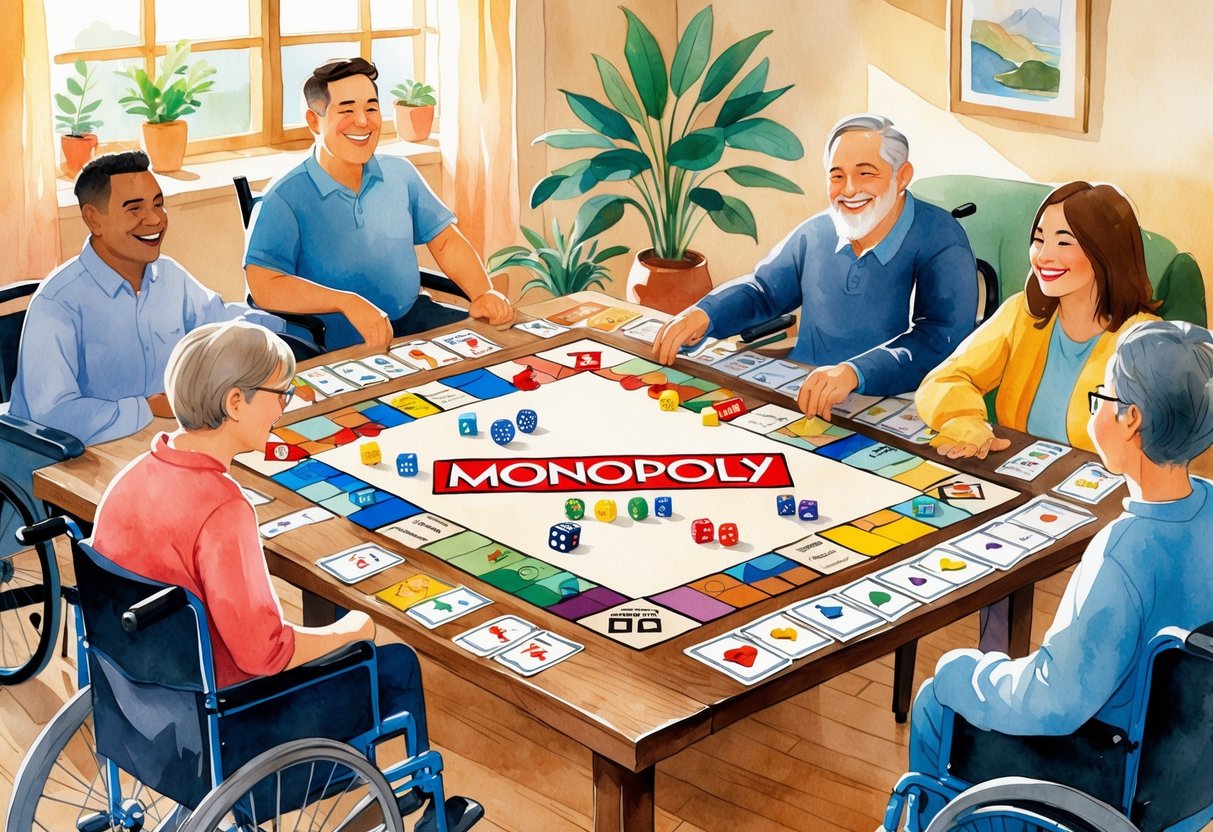
Board games like Monopoly are a great hobby if you have limited mobility. You can play with family or friends while staying comfortable in your favorite chair.
These games do not require physical strength or fast reflexes. Playing Monopoly exercises your mind.
You will make decisions about buying, trading, and building properties. Every move gives you a new way to think and solve problems.
Monopoly is easy to set up and does not take up much space. You only need a table or flat surface for the board and pieces.
There are no small parts that need fine motor control. Game nights with board games can be fun for everyone.
You do not have to worry about keeping up with others physically. People of all ages can join in, making it an inclusive way to bond.
Other board games similar to Monopoly, like Pay Day and Machi Koro, offer variety if you want something different. These games focus on strategy, planning, and friendly competition.
For more options, you can read about board games like Monopoly. You can find classic Monopoly in many stores, and there are also themed versions based on movies, cities, and more.
This makes choosing a favorite style easy. If you like learning as you play, other board games such as Scrabble and Clue may also be enjoyable.
Board games help keep your mind sharp. They make you think ahead and consider your choices.
Many board games let you take your time between turns. You do not have to rush.
Everything happens at a pace that suits you.
9) Watching Classic Movies

Watching classic movies is an enjoyable hobby that you can do from the comfort of your home. You only need a television, computer, or tablet.
Many streaming services offer a wide collection of well-known films from past decades. Classic movies give you a chance to revisit memorable moments in film history.
They connect you to old Hollywood stars, famous directors, and timeless stories. You may also notice how film styles have changed over time.
You can enjoy these films alone, but watching with friends or family is also a great option. Try scheduling a weekly movie night.
If you live far from loved ones, you can watch together by using video calls or shared streaming sessions. This hobby works well for people who want to relax without needing much physical movement.
You can make it more fun by pairing movies with themed snacks or simple decorations. Some seniors enjoy talking about what they watched after the movie ends.
This can help keep your mind engaged and even start new friendships. If you prefer watching with others, consider joining a local club or discussion group.
There are lists online with helpful suggestions for classic movie titles. For more tips and for ideas on how to watch with others, you can look at this list of activities for those with limited mobility.
Watching classic movies is simple to start and has very few requirements. All you need is a way to play the films and a little time set aside to unwind.
10) Genealogy Research
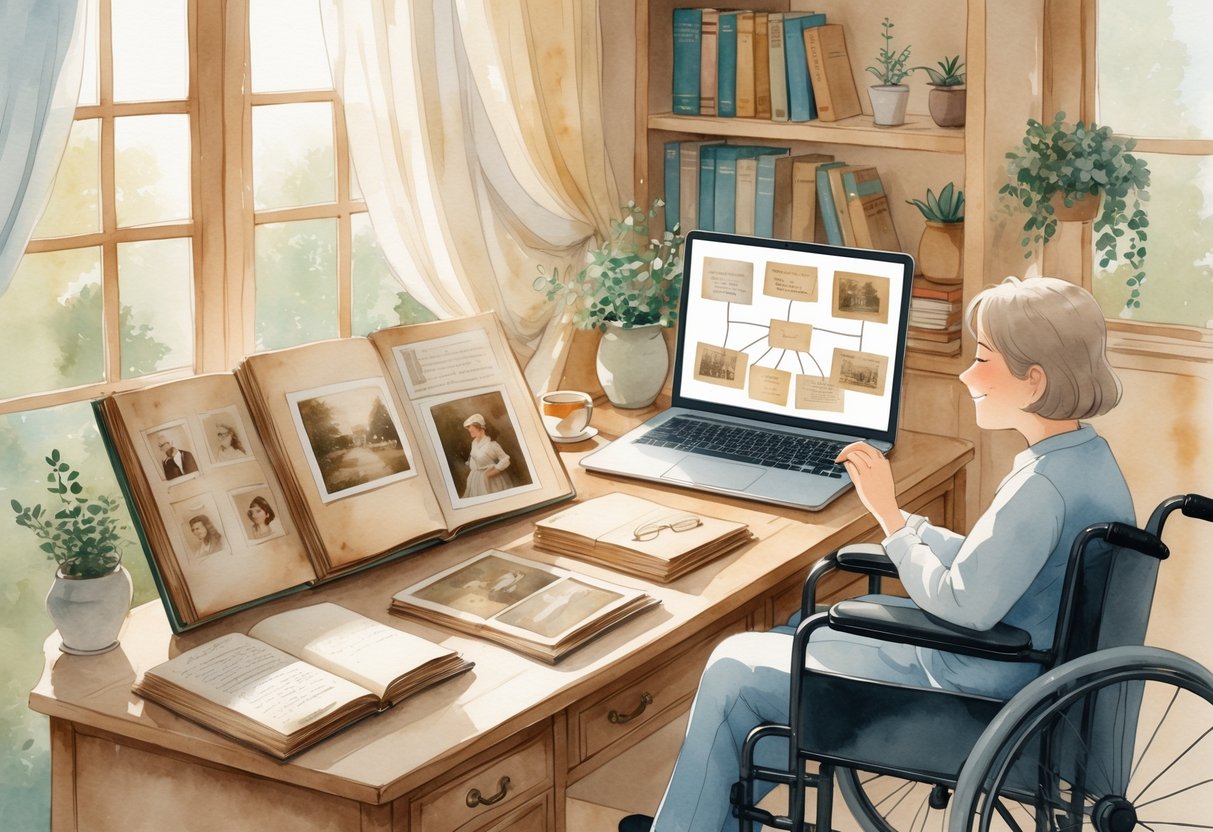
If you have limited mobility, genealogy research can be an interesting way to spend your time. This hobby lets you explore your family history and learn about your ancestors.
You can do most genealogy work while sitting at a computer or using paper records. Genealogy research usually starts by gathering information from your family.
This could include talking to older relatives, looking through photo albums, or reviewing family documents. Small details like birthplaces, occupations, or old addresses can help you piece together your family tree.
The internet has made tracing your family roots much easier. There are many online resources and databases where you can search for records, information, and even connect with distant relatives.
Websites focused on genealogy let you organize this information and create digital family trees at your own pace. You may discover stories about where your ancestors came from and what their lives were like.
This can also help you feel more connected to your family’s past and share what you find with others. People often enjoy looking at old photos or documents and sharing stories with younger family members.
Genealogy research can keep your mind active as you look for answers to family questions. It brings a sense of purpose and curiosity to your day.
You can take breaks whenever you need and go back to the research without losing your progress. There are many ways to get started.
You can use simple forms to record names and relationships, or use online platforms with step-by-step guides. Even if you are new to technology, you will find basic tools and community support to help you along the way.
To learn more about how genealogy can be a great hobby for people with limited mobility, visit this detailed guide on genealogy research for seniors.
Adapting Hobbies for Accessibility

Accessible hobbies become more enjoyable and rewarding when you use the right tools and make your space welcoming. A few simple changes can open up many activities—even those that seem challenging at first.
Essential Tools and Equipment
Having the correct tools makes a big difference, especially when dealing with mobility limits. For arts and crafts, you might use adapted scissors, weighted pencils, or easy-grip paintbrushes.
These items improve comfort and help you work for longer without fatigue. Sports gear also comes in many adaptive forms.
Hand cycles are designed for those who use wheelchairs or have limited leg movement. If you like gardening, raised garden beds or long-handled tools can help you reach plants from a seated position.
You’ll find many hobbies can be tailored with small changes or specialized devices. For a full overview, check out examples of adaptive activities like hand cycling and accessible hiking gear.
Some people benefit from assistive technology such as voice-controlled devices, large print books, or special computer mice. Take time to research what works best for your preferred activities.
Adapting your tools lets you focus on the fun instead of the barriers.
Creating a Supportive Environment
Your environment can affect how much you enjoy any hobby. Wide hallways, uncluttered rooms, and supportive seating are often most helpful.
Work surfaces at the right height—such as adjustable tables or lap desks—make it easier to reach supplies while seated. Good lighting is important for reading, crafting, or working with small items.
Keeping materials within arm’s reach can reduce stress and make hobbies more comfortable. Storage solutions like labeled bins or shelves placed at your level let you stay organized and independent.
Support from family, friends, or caregivers can add motivation and fun. Invite others to join you or help set up your hobby space.
If you’re looking for ideas on how to adapt your favorite activities, check out advice on finding accessible hobbies that match your needs and interests.
Health and Wellness Benefits
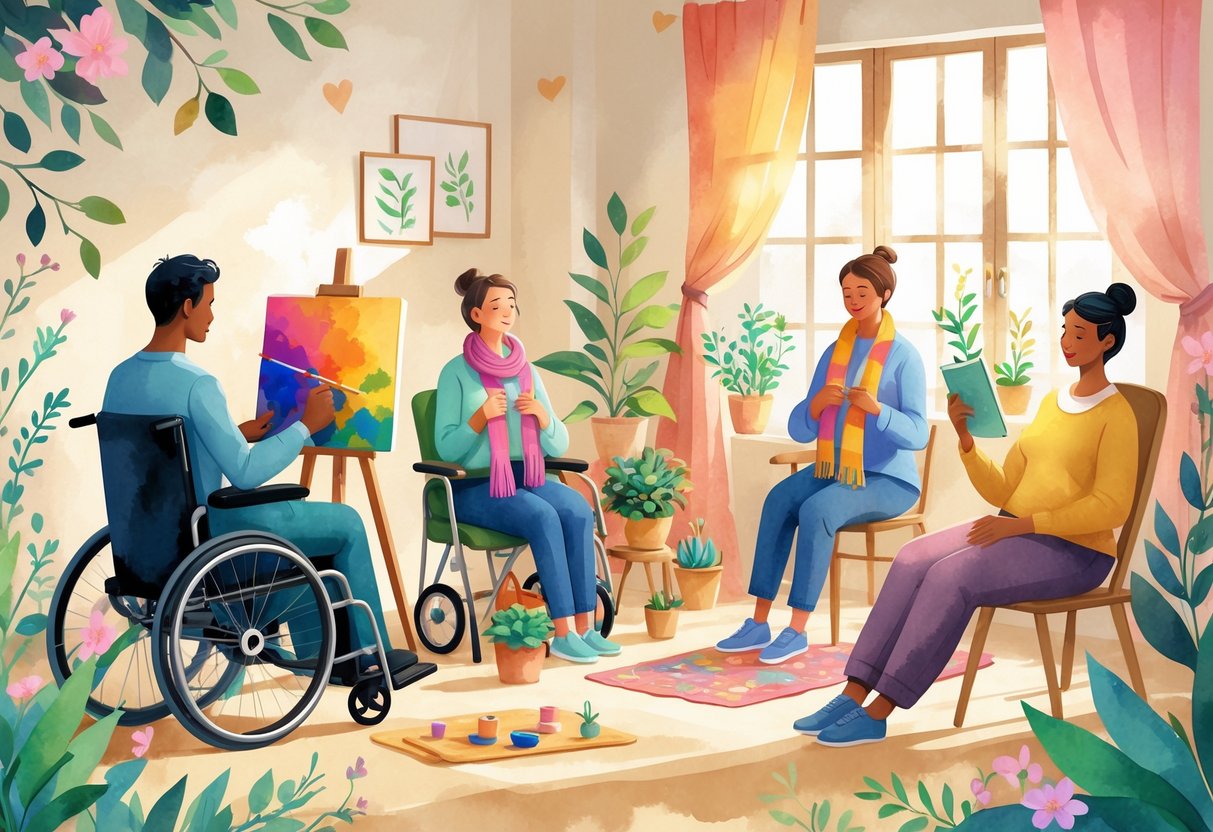
Hobbies can bring important benefits to your daily life, especially if you have limited mobility. Taking part in enjoyable activities can improve your mood and help you stay connected with others.
Emotional Wellbeing
Regular hobbies may boost your emotional health by giving structure and purpose to your day. Creative activities such as knitting, painting, or creative writing encourage you to focus on positive tasks and distract from worry or stress.
Even simple activities, like coloring or gentle gardening, can help you feel calm and relaxed. Spending time on hobbies may also help reduce feelings of sadness or loneliness.
When you reach small goals, such as finishing a painting or a puzzle, you may notice a sense of accomplishment. This feeling helps build your self-confidence and may improve your outlook.
Mindfulness activities, like meditation, are also useful for stability and peace of mind. These routines do not require physical movement and can help you manage stress and feel more at ease.
As shared in a recent guide, mindfulness meditation is often appealing and simple to practice for people with limited mobility.
Social Connections
Many hobbies can help you connect with others and make friends. Group activities, such as book clubs, crafting circles, or virtual game nights, are good ways to stay active in your community.
Conversations about shared interests can lead to lasting friendships. Social time is important for maintaining positive mental health.
You might join an online group or attend classes through your local community center. Even if you can’t leave your home, video calls or chat groups keep you part of social circles.
Activities like group guided meditation, creative writing, and gardening can be enjoyed with friends or family. This interaction lessens feelings of isolation and can provide needed support.
Connecting with others makes hobbies even more rewarding.
Frequently Asked Questions
Many hobbies and activities can be adjusted to fit different mobility levels. You can stay mentally engaged, be creative, and even exercise from a seated position or with minimal movement.
What indoor hobbies are suitable for individuals with limited mobility?
You can try indoor herb gardens or container gardening on your windowsill or table. Reading books, listening to audiobooks, and playing board games are also relaxing indoor pastimes.
Making music with small, easy-to-handle instruments is another option for staying busy indoors.
How can people with mobility restrictions engage in creative activities?
Creative activities like painting, drawing, knitting, or making simple crafts are possible even from a chair or bed. Writing stories or poems using speech-to-text technology or typing can help you express yourself.
Photography with a smartphone or tablet also offers a creative outlet.
What are some accessible games for people who have difficulty with mobility?
Many classic board games such as Monopoly or Clue have large-print versions for easier handling. Puzzle books, card games, and digital games with simplified controls provide fun without needing to move much.
Voice-activated or text-to-speech accessible games are available and help make gaming more inclusive.
Which outdoor activities are best suited for someone with limited mobility?
Container gardening on patios, porches, or balconies lets you connect with nature without needing to move much. Birdwatching from a seated spot or using binoculars can also be enjoyable.
Some parks have paved paths and accessible benches for easy outdoor relaxation.
Are there any productive day program activities designed for adults with disabilities?
Many community centers and care facilities offer day programs with adjusted activities. Art projects, gardening, music sessions, and group storytelling are popular.
Games designed to boost memory and social time with others often fill these supportive programs.
What types of exercises are recommended for individuals with severely limited mobility?
Chair dancing offers movement while seated and can be done safely in a small space.
Gentle stretches, light hand weights, or resistance bands allow you to build strength without standing.
Guided mindfulness meditation or breathing exercises help relax muscles and manage stress.