10 Best Hobbies for Kids and Parents to do Together: Fun Activities to Strengthen Family Bonds
Spending time with your child is important, but finding activities you both enjoy can be challenging. Shared hobbies make it easier to connect while learning new skills together.
These activities can fit into busy schedules and bring joy to your everyday life. No matter your interests, there are plenty of ways for you and your child to have fun and grow together.
1) Gardening and planting a vegetable or flower garden
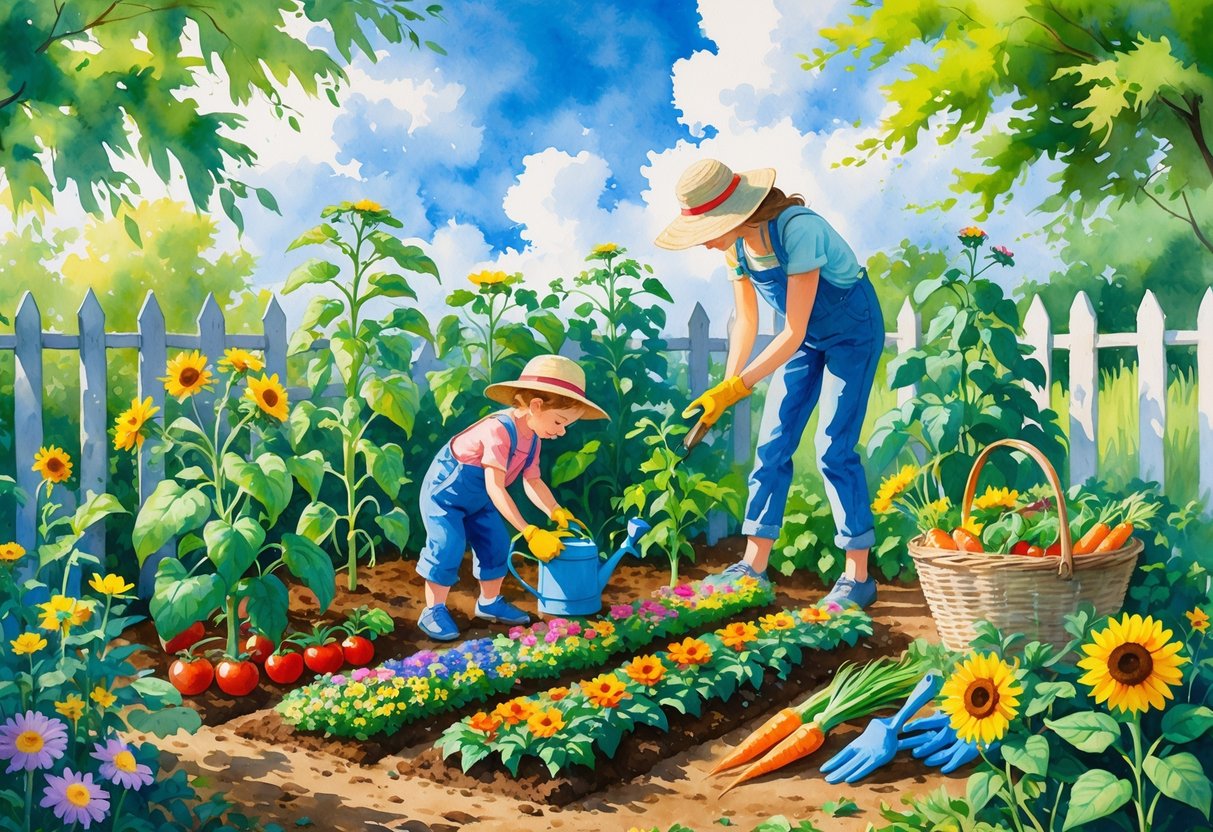
Gardening is a hands-on hobby that lets you and your child spend time outdoors while learning together. You can start with a small plot in your yard or use basic containers on a patio or windowsill.
Kids often enjoy choosing what to plant. Let your child help pick out seeds for vegetables, herbs, or flowers.
Giving them ownership over their own section of the garden can make them more interested and willing to help throughout the growing season. Tending a garden teaches patience and responsibility.
Every day, you and your child can look for changes, water the plants, and watch for bugs. This daily care can lead to simple discussions on how plants grow and why they need sunlight and water.
Even basic projects like growing vegetables from kitchen scraps or planting seeds in soil are easy ways to get started. You do not need special skills or supplies.
Just some soil, sunlight, water, and a little time each day can be enough for your first try. You can find many fun gardening activities for kids that use simple materials and easy steps.
For a creative twist, build small fairy homes or themed gardens together. Some families enjoy making a flower area with all one color or growing herbs to use in home-cooked meals.
These ideas help keep gardening interesting for kids of all ages. For more inspiration, visit lists of engaging gardening ideas for families.
Gardening is easy to match to your family’s schedule. Spend a few minutes each day after school, or set aside weekend time for bigger projects like planting new seeds or creating garden decorations.
2) Cooking simple recipes like homemade pizza or cookies
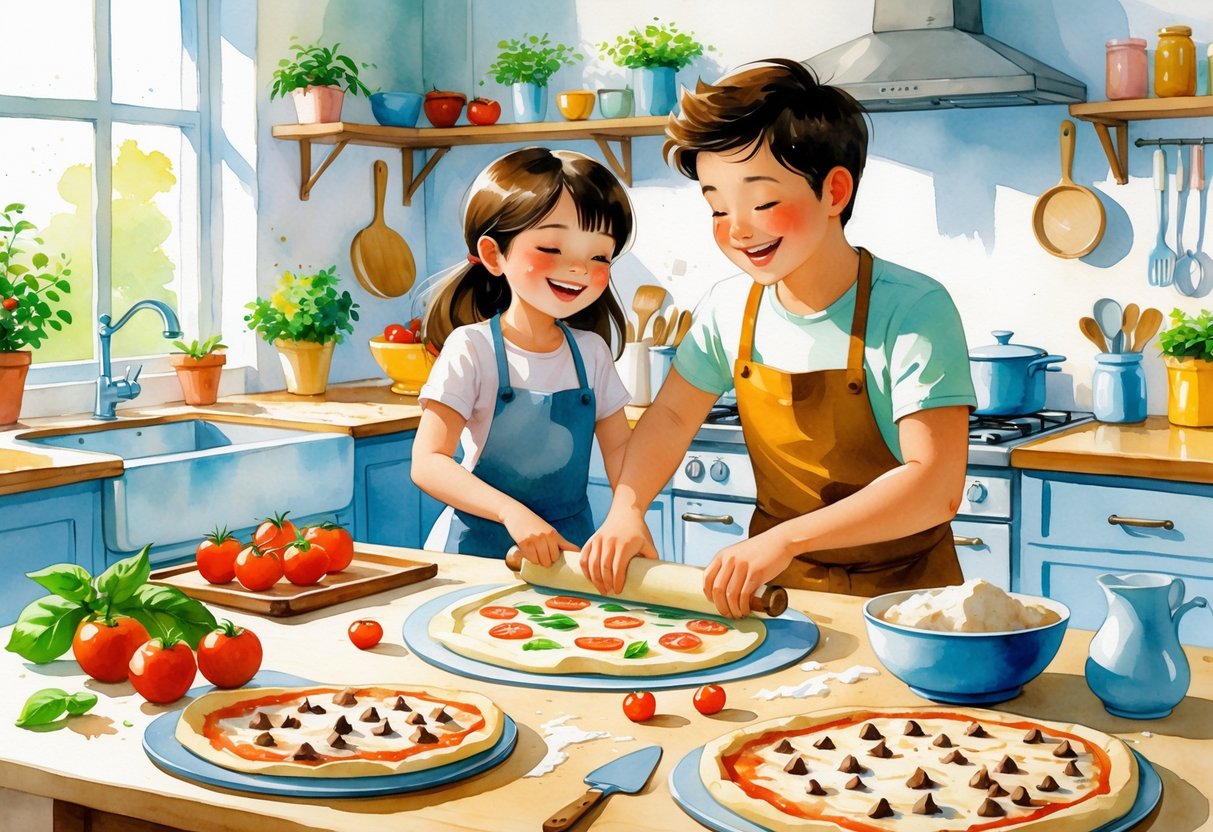
Cooking together is a great way for you and your child to share quality time. Simple recipes, like homemade pizza or cookies, are easy to follow and enjoyable for kids at almost any age.
Start with recipes that have just a few ingredients. For pizza, you can use store-bought dough and let your child spread the sauce and add their favorite toppings.
For cookies, let kids help with mixing, scooping dough, or adding chocolate chips. Allowing kids to make choices, like which toppings to use, helps them feel involved.
Measuring and pouring ingredients can also help children practice basic math and motor skills. These activities do not have to be perfect.
If the cookies come out in funny shapes or the pizza toppings are uneven, that’s okay. This is about spending time together, not making a perfect dish.
Let your child do as much of the preparation as possible with your supervision. Tasks like stirring, kneading dough, or pressing out cookie shapes are usually safe with a little guidance.
There are many simple cooking projects for kids that you can try. Young children often enjoy making pizza, sandwiches, fruit salad, or basic cookies.
Cooking together can help your child learn new words, follow directions, and build confidence. If you need more ideas, you can check out lists of easy recipes your kids can make themselves for more inspiration.
Cleaning up can be part of the activity too. Teach your child about kitchen safety and the importance of washing hands and cleaning up as you go.
3) Building and racing wooden boxcars
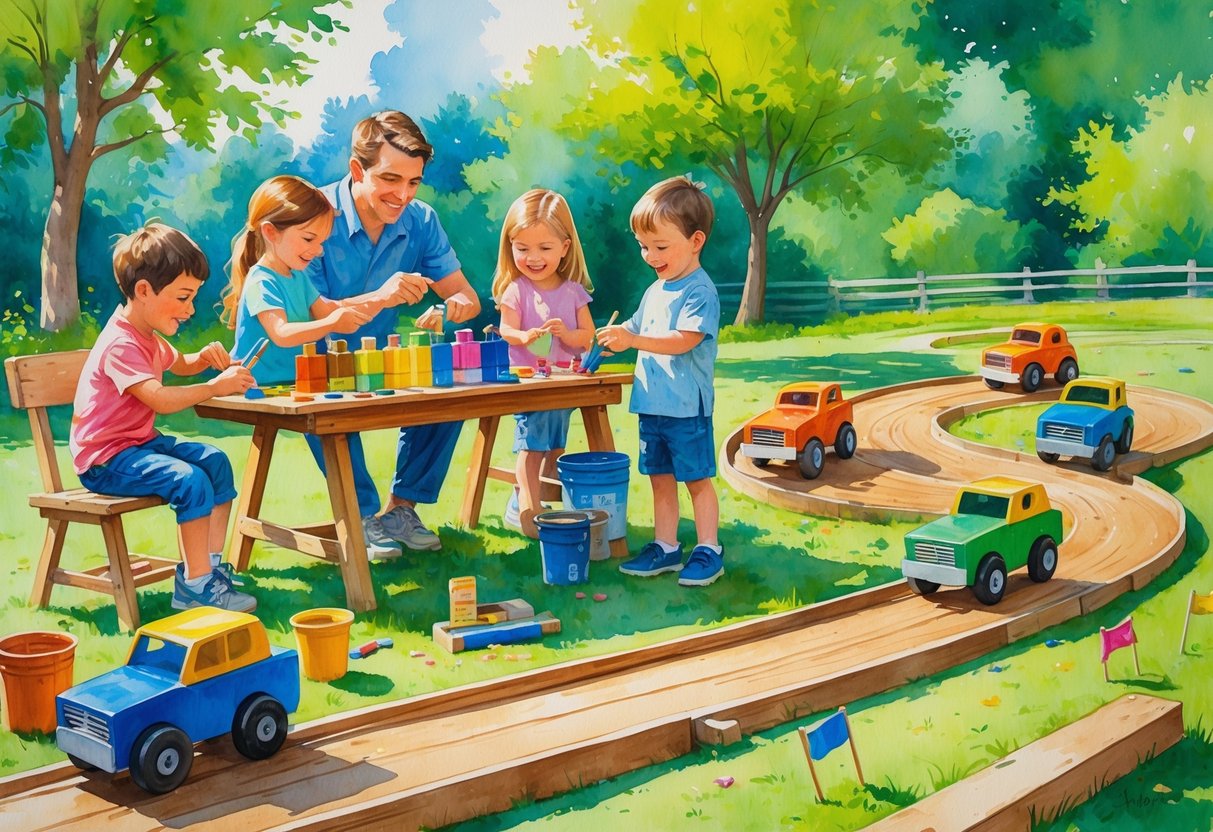
Building wooden boxcars is a hands-on activity both kids and parents can enjoy. You get to work together and use basic tools to assemble the car.
This hobby helps kids practice fine motor skills and learn how to follow directions. Choosing the right wood is important.
Using wood with a straight grain can make your car stronger and more stable. It also makes building easier for beginners, so kids are less likely to get frustrated.
Always check that you are handling materials and tools safely while building your car. You can find kits that come with pre-cut pieces, paint, and stickers.
These kits let you build and customize your own cars, which adds a fun, creative touch to the project. Some options even include enough parts to make a set of cars, so each member of your family can design their own vehicle.
For examples of kits, you can see these DIY wooden race car kits. Painting and decorating your boxcar is a big part of the fun.
You can use paint, markers, or stickers to make each car unique. Kids love seeing their designs come to life as the project comes together.
Racing the finished cars is exciting and brings out a sense of friendly competition. You can race them by pushing across the floor or setting up a small ramp at home.
Racing adds movement to the project and gives everyone a chance to cheer for their creations. This hobby is simple to start and offers plenty of opportunities to be creative and have fun.
4) Doing family-friendly mindfulness meditation sessions

Mindfulness meditation is a simple way for families to relax and connect. You sit together and focus on your breath or listen quietly to sounds around you.
Even young children can join in for a few minutes at a time. You don’t have to sit still the whole time.
Try guided sessions where you move your bodies or stretch. Family yoga is another option because it mixes gentle movement and breathing exercises, making it easier for kids who find it hard to sit still.
Read about ways to practice family yoga sessions at home. Short meditation activities help kids notice their feelings and thoughts.
As you practice together, your child learns to stay calm when feeling upset or stressed. With regular practice, you may find that everyone handles tough moments a little better.
You can use simple prompts or videos for guided meditation. Another idea is to close your eyes together and focus on breathing slowly in and out.
Many families add time for relaxed listening, like focusing on quiet sounds in the room or outside. There are many ways to practice mindfulness as a family.
The key is making it a routine and finding what works for your group. More playful ideas for mindfulness activities for kids include deep breathing games and gratitude exercises.
It helps to keep sessions short, especially if your kids are young. Just a few minutes a day can be enough.
5) Completing STEM kits and science experiments together
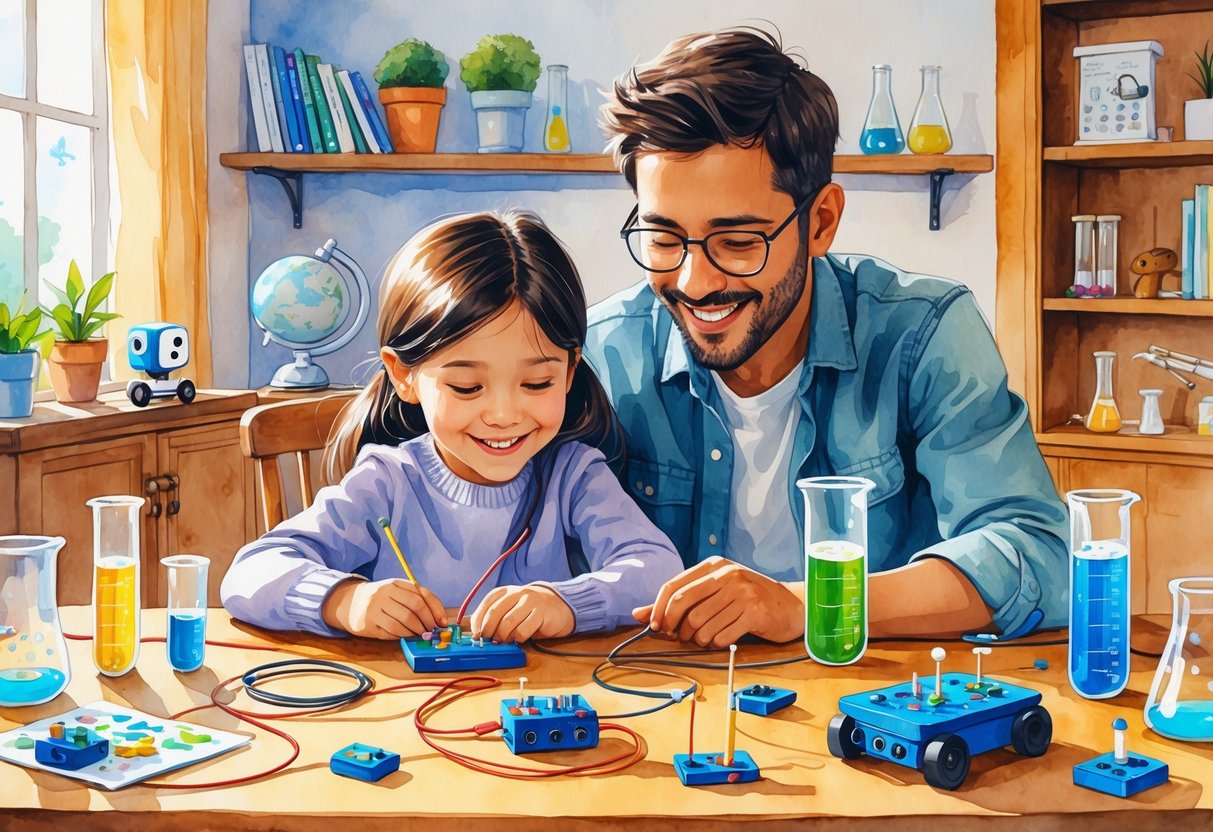
Working on STEM kits and science experiments with your child is a great way for both of you to learn while having fun. These activities cover science, technology, engineering, and math, letting you explore new ideas side by side.
You can find kits that focus on building simple machines, planting a small garden, or even trying out basic chemistry experiments. Many of these projects use everyday items, so you do not need expensive equipment to get started.
Let your child choose a project that interests them. That way, they are more likely to stay engaged and curious.
As you follow instructions together, you can talk about how things work and why certain results happen. STEM kits and experiments are hands-on, making concepts easier to understand.
Even a short project can teach new skills and encourage teamwork between you and your child. If you want ideas, there are plenty of fun STEM activities for kids that are easy to try at home.
You do not have to be a science expert to help. Many STEM kits and homemade projects include clear steps to guide you both.
By experimenting together, you show your child that learning is a lifelong process and that it can happen outside school too. With each experiment, try asking questions like, “What do you think will happen?” or “Why did that happen?”
This gets your child thinking more deeply and helps develop problem-solving skills. Completing kits and experiments can even become a regular hobby you look forward to together.
6) Taking nature hikes with a focus on birdwatching

Taking a nature hike gives you time to explore new trails, enjoy fresh air, and see beautiful scenery with your child. Adding birdwatching makes the walk more interactive and fun.
Bring a pair of binoculars and a field guide to help you identify the birds you see. You do not need to be an expert.
Start by looking and listening. Noticing different colors, shapes, and bird calls can lead to interesting conversations with your child.
Many parks have easy walking trails that are perfect for beginners. Look for places with trees, ponds, or open fields since these spots often attract a variety of birds.
Even a short walk near your neighborhood might reveal surprising wildlife. As you hike, encourage your child to stay quiet sometimes.
This will make it easier to spot shy birds. You can keep a simple journal together, writing down the birds you find or drawing quick sketches.
Birdwatching can help your child practice patience and improve their observation skills. Spotting a bright red cardinal or a woodpecker becomes a memorable moment.
These small discoveries can make each hike exciting for both of you. Some families enjoy taking photos of the birds they see.
There is no need for fancy equipment at first—a phone camera works fine. If you want more tips, guides like this list of the best hobbies that include observing nature and nature exploration advice can help you get started.
Hiking and birdwatching together makes time outdoors feel like a shared adventure. It is a simple way to connect with nature and each other.
7) Creating arts and crafts projects like painting or origami
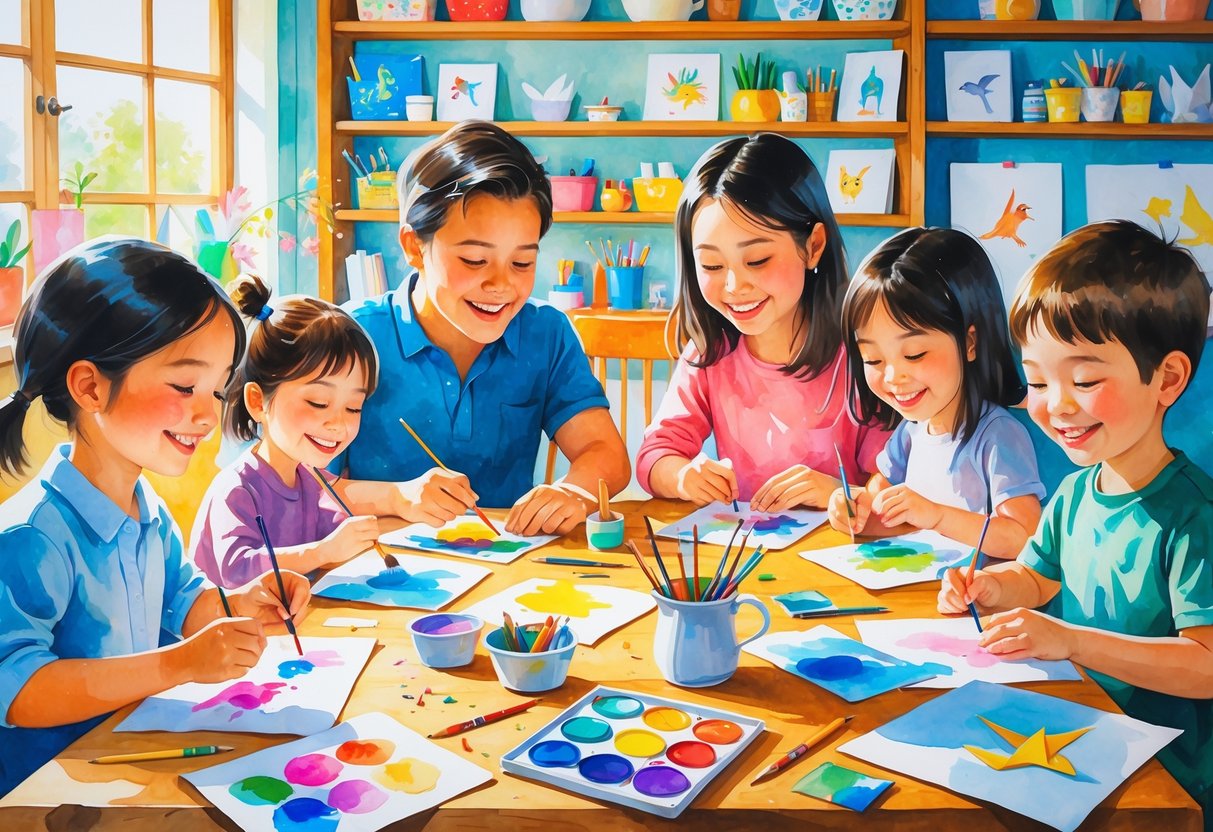
If you and your child want a hobby that is both relaxing and creative, arts and crafts is a great choice. You can try simple activities like finger painting, drawing, or making cards with colored paper.
Painting helps your child express ideas and feelings through colors and shapes. There are many ways to paint, including using brushes, sponges, or even your hands.
Your child can create pictures just for fun or make art to hang on the wall. Origami is another fun craft to do together.
It is the Japanese art of folding paper to make different shapes and objects. You only need a square piece of paper to get started, making it an easy activity that does not require many supplies.
Origami can help improve hand-eye coordination and teach patience. Both kids and adults enjoy watching a piece of paper change into animals, flowers, or other objects.
It is also a relaxing activity that encourages problem-solving. Working on arts and crafts teaches your child to follow steps in order.
It also lets you use your imagination to come up with unique ideas. Crafting is enjoyable for all ages because there are so many options.
If painting or origami isn’t your favorite, you can try activities like building models or making jewelry. This gives you the chance to explore new hobbies side by side.
Many parents and kids like that crafting is easy to start at any skill level. You can find simple instructions online to create your own projects at home.
For more ideas, you can explore lists of crafting hobbies and creative activities for kids.
8) Playing board games that encourage teamwork and strategy
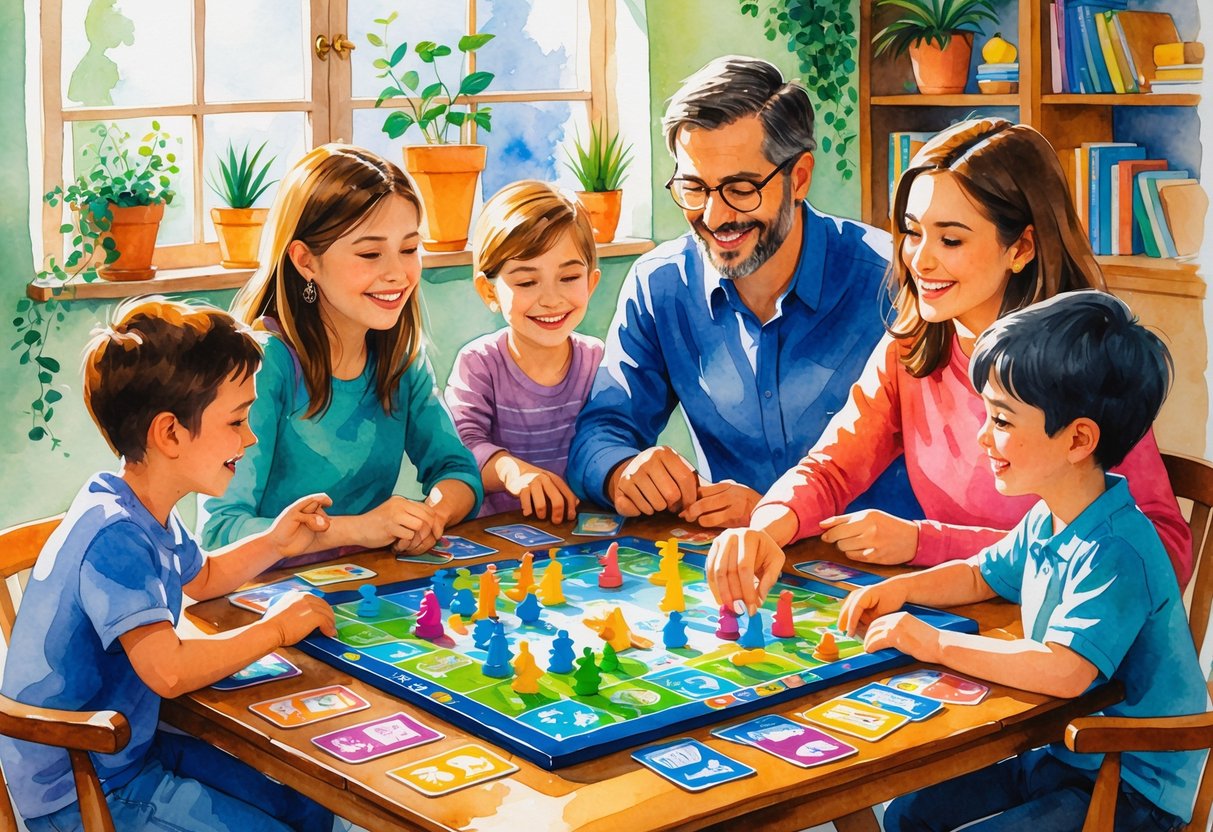
Playing board games as a family is a classic way to spend quality time together. When you choose games that focus on teamwork and strategy, everyone gets involved and has a chance to contribute.
These types of games encourage kids and parents to cooperate instead of compete. Cooperative board games have everyone work toward a shared goal.
This helps teach important skills like communication, problem-solving, and planning. It also allows kids to practice listening and taking turns while feeling included.
Some of the best options for families include games like Pandemic, Forbidden Island, and Outfoxed. Each player has a special role or job, which means everyone has an important part in the game.
This can help build confidence in younger children. Many cooperative games let you pick the level of difficulty, so you can adjust the challenge to fit your family.
This keeps everyone interested, whether you are playing with young kids or teens. These games are also a good way to break up screen time and spark conversation.
You’ll find that games focusing on teamwork are perfect for family game nights. They help create lasting memories and often lead to plenty of laughter and fun.
Kids are often excited to try a rematch and improve their strategy the next time you play. If you need ideas, you can find lists of the best cooperative board games for families and top cooperative board games for kids.
These games combine fun with valuable life skills, making them a smart choice for families looking to spend more time together.
9) Exploring DIY model building or assembling puzzles
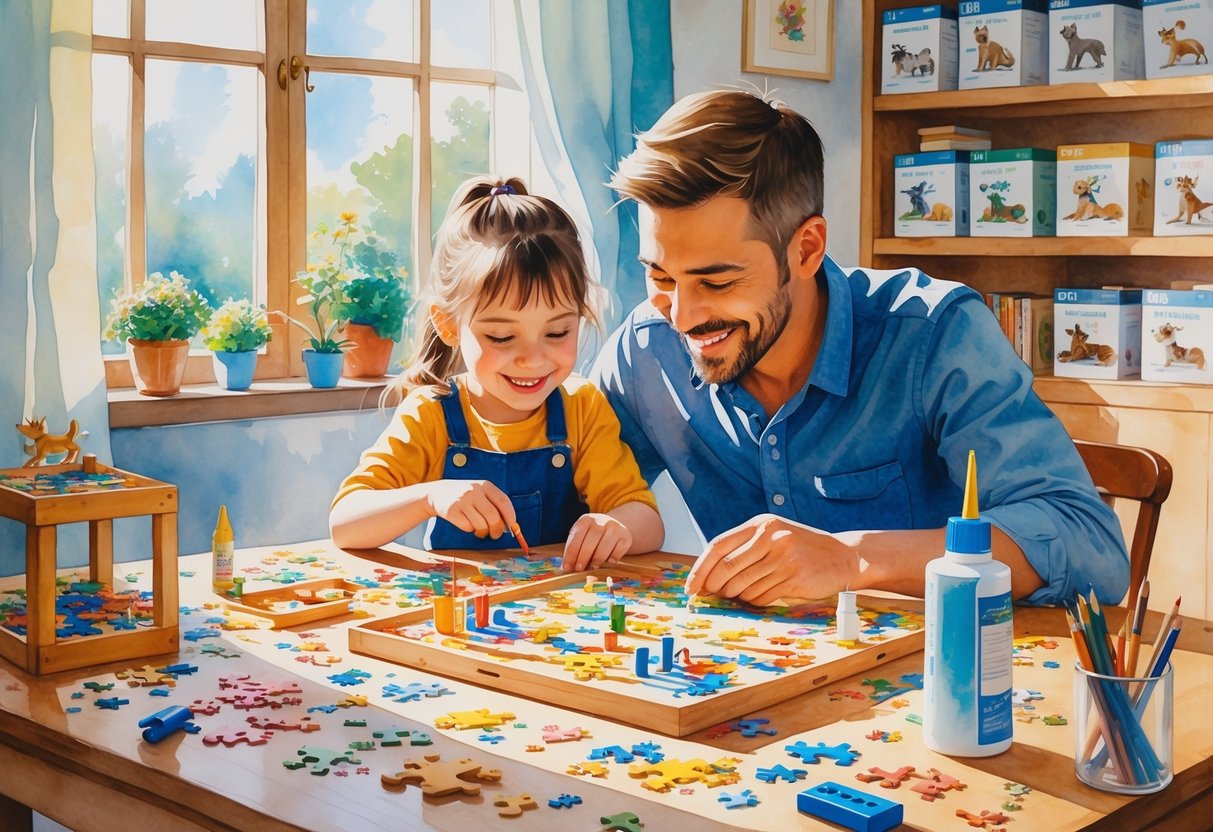
Working on DIY model building or putting together puzzles is a great way for you and your child to spend quality time. These activities help you both use your hands and your minds at the same time.
You can start with simple kits or puzzles and move on to harder ones as your skills grow. Model building teaches patience and attention to detail.
Step-by-step assembly makes the process easy to follow. As you work together, your child can learn to follow instructions and develop problem-solving skills.
Assembling puzzles can be calming and rewarding. Watching a picture come together piece by piece gives a real sense of accomplishment.
Puzzles are available in many themes and difficulty levels, making it easy to find one that matches your child’s interests and age. With model kits, you have many options, from cars and airplanes to buildings and animals.
Some model building can also encourage creativity if you decide to paint or decorate the finished piece. It is a hands-on hobby that lets you and your child see the results of your teamwork.
Both model building and puzzles help with focus and fine motor skills for all ages. These activities can also reduce stress and provide a quiet way to relax and connect, as noted by some experts.
Working on a shared project in a calm setting can lead to good conversations. You do not need special tools to get started.
Many kits come with everything required. As you gain experience, you can try more challenging kits or larger puzzles to keep things interesting.
This hobby fits well into family routines, and you can spend as little or as much time as you want on each project.
10) Trying mail-order detective or spy mystery kits
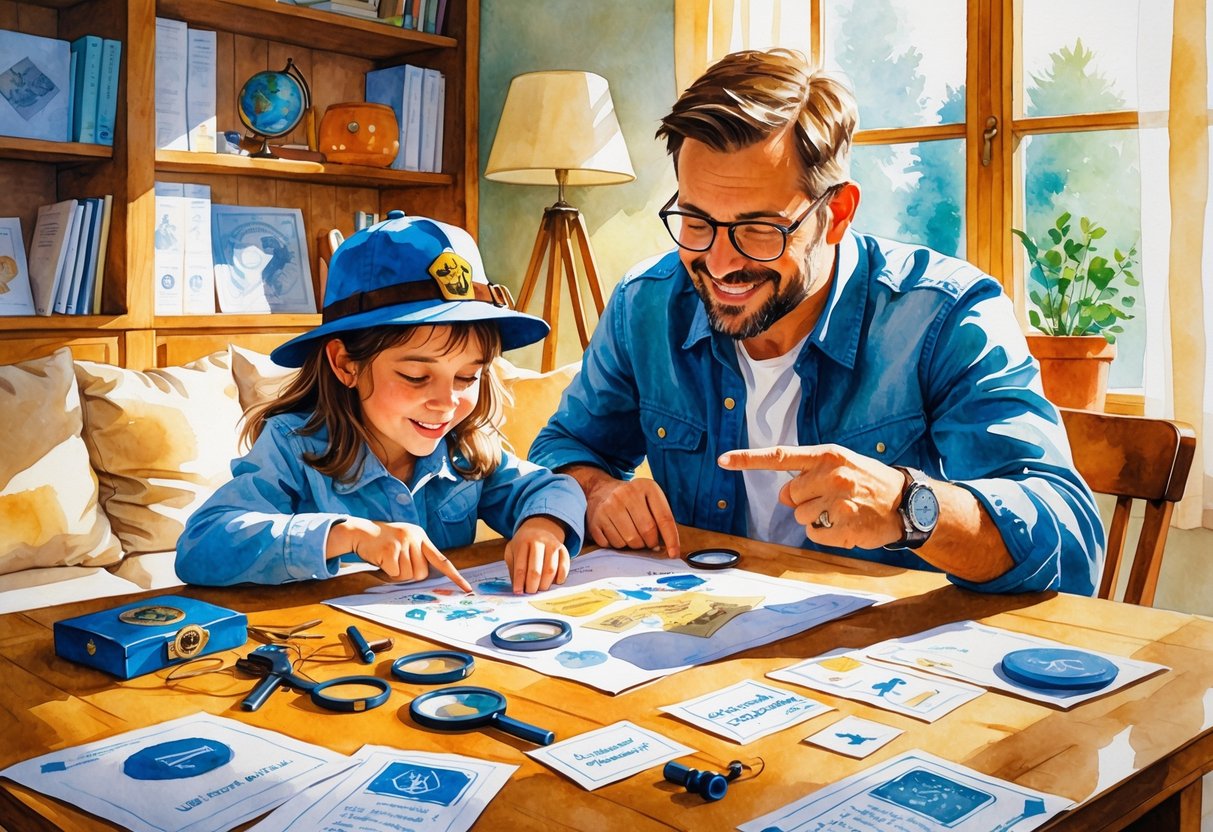
Mail-order detective or spy kits are a fun way for you and your child to work together and solve mysteries. These kits usually arrive in the mail with clues, puzzles, and secret codes that you have to crack.
You don’t need any special skills to get started. Most kits come with easy-to-follow instructions, so you can jump right in no matter your experience level.
Some kits are designed for kids as young as five, while others offer more advanced puzzles for older children and adults. Solving mysteries together encourages teamwork and problem-solving.
You and your child will use logic and observation to piece together clues. This kind of play supports critical thinking without feeling like homework.
The Mail Order Mystery service offers an interactive story by mailing you clues and documents over several weeks. Each delivery builds on the last, making the experience feel like an unfolding adventure.
Parents and kids can look forward to the mail together, adding excitement to the process. You can learn more about this activity by visiting Mail Order Mystery at their website.
Mission Unboxable is another option. Its missions and detective kits are best for children between 5 and 10.
These kits work well not just for family fun but also for parties or group activities. You can find details and kits from Mission Unboxable at their official site.
Trying mail-order mystery kits is an activity that fits busy schedules. You can enjoy each package as soon as it arrives and pick up where you left off.
This makes it easy to enjoy a shared hobby without needing to set aside an entire afternoon.
Benefits of Shared Hobbies
Doing hobbies together can bring your family closer, help everyone learn useful skills, and make it easier for you to talk with your kids. When you spend time on shared activities, you also support your child’s growth and create moments that matter.
Strengthening Family Bonds
Shared hobbies give you chances to connect with your kids away from work, screens, and other distractions. Simple routines, such as playing board games or gardening, build routines that bring family members together and create shared memories.
These activities can make children feel secure and important. Kids are more likely to open up when they are relaxed, and fun projects help everyone feel included.
Regular hobbies also help families build trust and teamwork. You create traditions and special moments by spending quality time together.
Over time, these shared experiences foster unity and a sense of belonging. Doing crafts, cooking, or exploring outdoors together helps everyone feel like part of the team.
For even more ideas, check out this list of family-friendly hobby options.
Developing Life Skills
Hobbies teach children and parents skills they might not learn at school or work. Working together on projects like building models, cooking, or learning to garden can help your child develop patience, problem-solving, and planning.
Kids practice responsibility when taking care of plants, finishing a puzzle, or following a recipe with you. These tasks introduce basic concepts about following steps, managing time, and sticking with goals even when things get hard.
Many hobbies also include creative thinking and learning new techniques. Children learn to be resourceful and try different ways to solve problems.
Parents can encourage curiosity and a willingness to learn, while kids get confidence from doing something new. Activities like model building, cooking, and crafting are popular for these reasons.
Encouraging Healthy Communication
Doing hobbies together helps you start conversations and learn more about each other in a calm, natural setting. You can discuss steps in a recipe, share opinions on music or art projects, and talk about daily events as you work on shared tasks.
This time makes it easier for children to express feelings and ask questions. It also gives you a chance to listen carefully and respond without interruptions.
Clear communication is a habit that grows with regular practice. Family projects encourage you to give feedback, solve disagreements, and celebrate each other’s ideas.
These moments teach children how to talk openly and with respect—skills they will use everywhere. Activities such as group storytelling or outdoor projects naturally support these important habits.
Tips for Choosing the Right Hobby

Finding the right hobby helps your family spend quality time together and encourages children’s growth. The best choices fit your schedule, spark everyone’s curiosity, and allow both fun and learning.
Considering Age and Interests
Start by thinking about each child’s age, personality, and favorite activities. Younger kids often prefer hands-on options like painting, building sets, or riding bikes.
Older children might enjoy activities with more complex skills, like coding or photography. Make a list of everyone’s interests.
This could include sports, music, crafts, or spending time outdoors. Talk as a family about what excites each person.
It is easier to build a habit when everyone is interested. Let your child help pick the hobby.
Giving them a choice makes them more eager to participate. You can also try new hobbies together for a week or two to see what sticks.
If something does not work, it is okay to move on and keep exploring.
Balancing Educational and Fun Activities
Look for hobbies that can teach valuable skills while still being enjoyable. Activities like cooking, gardening, or board games help children practice math, science, and teamwork in a fun setting.
Here are some examples of balanced hobbies:
| Educational Skill | Fun Element |
|---|---|
| Cooking | Making favorite snacks |
| Gardening | Growing colorful flowers |
| Board games | Competing as a team |
| Science experiments | Hands-on discoveries |
Combine active hobbies, such as dance or martial arts, with calmer pursuits like puzzles or drawing. For more ideas, see these engaging hobbies for children and fun and creative hobbies for kids.
Remember to watch your child’s responses and adjust if something feels too challenging or too easy.
Frequently Asked Questions
What creative hobbies can both children and parents enjoy doing together?
You and your child can try arts and crafts, like painting, making scrapbooks, or building models. Gardening together lets you plant flowers or vegetables and see your progress grow.
Baking cookies or making homemade pizza together also encourages creativity and teamwork. Check out more creative ideas at this list of hobbies for families to try.
How can parents incorporate hobbies into bonding activities at home?
Set aside time each week for a special activity, like family cooking night or a backyard gardening project. Involve everyone in choosing recipes, planting seeds, or planning a simple science experiment.
Taking on projects as a team, such as building and racing wooden boxcars, helps you make lasting memories.
Which outdoor hobbies are suitable for family members of all ages?
Gardening is an outdoor hobby that everyone in the family can enjoy, no matter the age. Even young kids can help water plants or pick vegetables.
Nature walks, biking, and bird watching are also fun options. These activities help each family member stay active together.
Explore more choices for outdoor fun at these family hobby ideas.
What are some educational yet fun hobbies that parents can engage in with their children?
STEM kits allow you to build robots, conduct science experiments, or explore engineering in a hands-on way. Completing these projects together makes learning exciting.
Cooking also teaches children about math, measurements, and chemistry. Gardening can spark curiosity about nature and the environment.
Can you recommend family-friendly hobbies that also serve as bonding activities?
Family-friendly hobbies like cooking simple recipes, crafting, or doing mindfulness meditation sessions together are great for bonding. You can also enjoy building things, such as wooden boxcars or model airplanes.
Spending time in the garden or going for a family hike gives everyone a chance to relax and talk. Try these hobbies for more family bonding activities.
What activities can help improve the parent-child relationship while also being enjoyable?
Team activities like gardening, cooking, and completing science experiments build teamwork and trust. These hobbies let you problem-solve together and share in the fun and outcomes.
Trying mindfulness meditation sessions as a family can also improve communication. Family game nights or creative craft projects are enjoyable ways to strengthen your relationship with your child.