

10 Best Hobbies You Can Do On Your Lunch Break for Relaxation and Productivity
It is easy to let your lunch break slip by without doing anything enjoyable. Many people just eat quickly at their desk or scroll through their phones, but there are better ways to use this time.
Exploring a new hobby during your lunch break can help you recharge and feel more motivated for the rest of your day.

Taking up a relaxing or fun activity, even for a short time, gives your mind a break from work and helps you feel less stressed. You do not need a lot of time, money, or experience to get started—just a willingness to try something new.
1) Sketching or drawing

Sketching or drawing is a great way to relax during your lunch break. You only need a pencil, a pen, and a notebook or some paper.
It does not take up much space and is easy to carry. You can start by drawing simple things you see around you, like your lunch, your coffee cup, or the view from your window.
Everyday objects make great practice subjects, and you do not have to be an expert to enjoy it. Even a quick doodle can help you clear your mind.
Lunch breaks are a good time to sketch because your session only needs to last a few minutes. You can try quick sketches of things that catch your eye.
Drawing your food before you eat is one playful idea that many people enjoy. It is also a way to notice more details in daily life.
For some inspiration, you can see other ideas for sketching as a beginner, like turning shapes into objects, on this list of easy and fun sketch ideas for beginners. Sketching builds your creativity over time.
It is a low-pressure hobby, and there is no need for perfect results. Just sitting quietly and drawing lets you focus and take a peaceful break from work.
If you like to paint or create digital art, quick pencil sketches can help you sharpen your skills. You may want to challenge yourself to draw something different each day.
If you want to explore more about drawing as a hobby, you might find advice and ideas from hobby artists who make time for simple drawings during lunch.
2) Writing short stories or poetry

Writing short stories or poetry is a hobby you can fit into any lunch break. Even if you only have a few minutes, you can jot down a poem or begin a short story.
This makes writing a flexible hobby that works for busy days. Short stories let you use your creativity and imagination.
You can make up new worlds, interesting characters, or explore an idea that’s been on your mind. Poetry gives you a way to express feelings or moments in a few words.
You don’t need any special tools—just a notebook or a notes app on your phone. You can also try prompts or free writing if you’re not sure where to start.
Many writers find that these exercises spark new ideas. Practicing writing during lunch is a good way to improve your language skills and get better at storytelling.
If you keep a habit of it, you may notice your writing becoming clearer and more focused. You’ll also build confidence in expressing your thoughts.
Writing can be a private hobby, but you can choose to share your work too. Many people post their poetry or stories online in writing groups.
This is a great way to get feedback and find support among fellow writers. You can explore different forms, such as haikus, short stories under 500 words, or even microfiction.
Trying different types of writing can keep the hobby interesting. If you ever feel stuck, switching forms might help.
For more ideas on writing hobbies, you might find this list of creative outlets helpful. You can also check out suggestions for writing-based hobbies if you want to try new styles or forms.
3) Mindfulness meditation

Mindfulness meditation is a simple way to pause and reset your mind during a busy day. You can practice it at your desk, in a quiet area, or even outside if the weather is nice.
Start by sitting comfortably with your back straight. Close your eyes if you feel comfortable.
Focus your attention on your breathing. Notice the air moving in and out of your nose or chest.
As thoughts come into your mind, let them pass without holding onto them. If your mind wanders, gently bring your focus back to your breathing.
Even a few minutes can help you feel calmer and more focused. This practice works well for short breaks.
You do not need any special equipment or a long time. You can meditate as little as five minutes, which makes it fit easily into a lunch break at work.
Many people find that mindfulness meditation helps reduce stress and tension. You may feel more relaxed and able to handle tasks after taking this short mental break.
Studies show that regular mindfulness practice can improve concentration and boost your mood. Practicing mindfulness during lunch can also help you refocus for the rest of the day.
If you want more tips, you can read suggestions for how to meditate during lunch breaks. You can also try guided meditations through apps or online videos if you are new to the practice.
All you need is a few quiet moments, an open mind, and a willingness to notice your thoughts and feelings.
4) Origami folding

Origami is the art of folding paper to make shapes, figures, and models. You only need a piece of paper to get started, which makes it easy to do at your desk or in a lunchroom.
Many people like origami because it is simple to learn but can become more challenging as you try new patterns. You can follow simple step-by-step guides to make cranes, flowers, boats, and other items.
Even as a beginner, you will find many options to try. Folding paper can be a calming way to spend a break.
It helps you focus and gives your mind a rest from screens or work tasks. The act of folding and creating can also help relieve stress.
You don’t need any special supplies or tools except for paper. You can use printer paper, sticky notes, or colored paper if you want your creations to stand out.
Keeping a small stack of paper in your bag or desk makes it easy to do origami any time. If you are new to origami, there are many easy projects for beginners, like simple animals or shapes.
As you get better, you can try more complex designs, such as stars or boxes. Origami is not just for kids; adults enjoy it too, especially when they want a quick creative break.
You can even find useful origami designs like bookmarks or small holders for your desk. Spending a lunchtime folding paper figures can help spark creativity and bring a sense of achievement.
When you finish, you have something small and tangible to keep or give away.
5) Learning a new language with apps
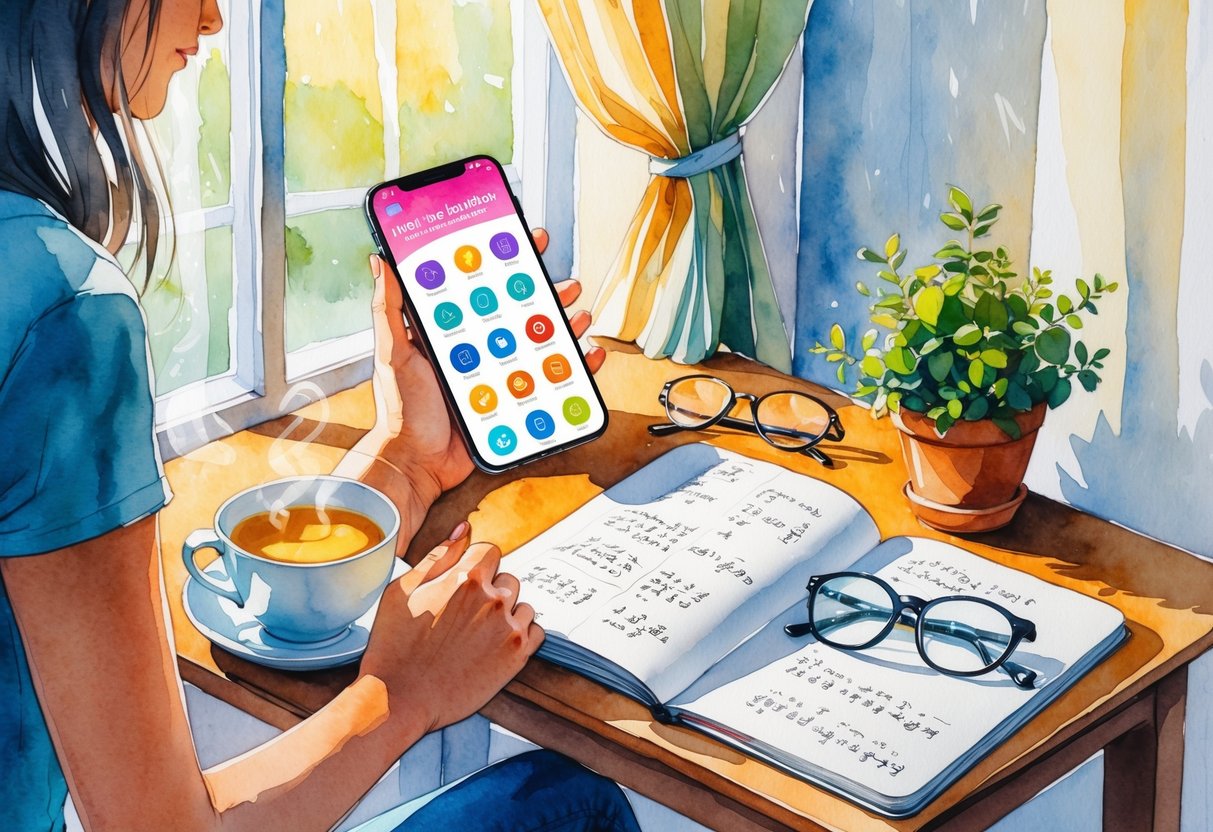
Learning a new language on your lunch break is possible with the right app. Most language learning apps offer short lessons that fit well into a 10-20 minute break.
You can make steady progress by using this time every day. Many apps use activities like matching words, listening to short dialogues, or speaking aloud.
These exercises help you remember new words and phrases without feeling overwhelmed. Even five minutes can be enough for a short practice session.
Popular options include Duolingo, Babbel, and Rosetta Stone. Each one has beginner and advanced lessons, so you can choose the level that fits your needs.
These platforms let you learn at your own pace and track your progress along the way. Many apps focus on practical vocabulary and real-life conversations.
This makes it easier to use what you learn right away, even if you are just starting. Frequent repetition in the lessons also helps you remember more.
Free versions are available for most major language apps, but some features may require a subscription. If you want more options, you can check out lists of the best language learning apps for extra ideas.
Learning for a few minutes a day is often more effective than spending hours at once. These frequent, short sessions will help you build confidence over time.
This habit can keep you engaged without cutting into your other daily activities. You can also study different languages by switching between courses, which keeps things interesting.
Many apps let you learn on your phone or tablet, so you don’t need to carry anything extra with you during your workday. You just need your device and a quiet spot to get started.
6) Playing Sudoku or crossword puzzles

Sudoku and crossword puzzles are classic brain games you can enjoy during your lunch break. You only need a pencil and a printed puzzle, or you can use a phone or tablet.
Either way, you can get started in seconds. These puzzles are excellent for keeping your mind active.
Solving clues or placing numbers in the right spot helps boost attention and focus. You do not need any special skills—just curiosity and patience.
Sudoku gives you a grid that you fill with numbers, making sure each row, column, and box holds every digit only once. It is a logic game, not a math one, so you don’t need to be a math expert to enjoy it.
Crossword puzzles challenge your vocabulary and memory. You read each clue and try to fit the right word into the puzzle’s grid.
Some crosswords are quick and simple, while others can be more challenging. There are plenty designed for short breaks.
Both of these hobbies are easy to fit into a limited timeframe. You can often finish a small puzzle before your lunch break ends.
If not, you can pause and return later without losing your place. Playing Sudoku or crosswords can be relaxing and rewarding.
They offer a nice way to gently exercise your brain without needing any special equipment. For more ideas, see this list of engaging hobbies for puzzle lovers.
7) Listening to educational podcasts

Listening to educational podcasts is a simple hobby you can enjoy during your lunch break. You only need your phone and headphones, so it’s easy to fit into your routine.
Podcasts cover many subjects. You can learn about history, science, technology, or even how things work.
There are also episodes on self-improvement, health, or current events. You do not have to give your full attention to a screen.
This lets you eat lunch, take a walk, or relax at your desk while learning something new. Podcasts are flexible and can easily fit into busy schedules.
Many people like listening on breaks because it makes the time feel more productive. You can pick short podcast episodes to fit the length of your break.
Studies show that listening to podcasts can help improve listening skills and focus. It can also expose you to new ideas in a way that is easy to understand.
If you do not know where to start, try searching for popular educational podcasts. Many lists and guides can help you find topics that interest you.
One helpful guide talks about how podcast listening can be a fun and engaging hobby for daily life—learn more at this guide to podcast listening as a hobby.
Whether you want something light or more in-depth, there is a podcast for you. Give it a try during your next lunch break.
8) Practicing guitar or ukulele

You can use your lunch break to pick up your guitar or ukulele, even if it’s just for fifteen minutes. Short practice sessions can still help you build finger strength and improve your playing over time.
You don’t need to play entire songs—focusing on a few chords, scales, or strumming patterns is enough. If you’re new to guitar or ukulele, start simple.
Try practicing basic chords, switching between them until you feel comfortable. For those with more experience, use this time to work on a challenging section of a song or improve your speed and accuracy.
A small instrument is easy to keep in your office or car. Travel guitars and ukuleles are lightweight and portable, making it practical to use them during short breaks.
Even if space is limited, you can practice finger exercises without making much noise. Playing music is a great way to unwind and reset your mind.
It encourages creativity and helps your brain switch gears from work tasks. Practicing regularly, even in short bursts, is key to making progress as a musician.
You don’t need a special setting to get benefits from this hobby. Some people find using a quiet room, break area, or even their car works well.
Over time, these small practice sessions can make a real difference in your skills. Challenging your abilities, rather than just playing what you already know, is important for growth.
Try spending a few minutes each day pushing your limits a little further. If you’d like tips, these small changes in your practice time can help boost your progress.
9) Doing quick yoga stretches

You can use your lunch break to do some quick yoga stretches to help relax your body and clear your mind. Even just five to ten minutes of stretching during the day can make a difference.
Yoga does not require fancy gear; you only need some space and a mat or towel. Simple poses like the cat-cow stretch, downward dog, or child’s pose are easy to do and help release tension.
These stretches focus on your back, shoulders, and hips, which often get tight when you sit for long periods. Breathing deeply while doing these poses can also help reduce stress.
If you are new to yoga, you can follow easy routines online. Some routines are made specifically for breaks and can fit into your workday.
For example, you might try a short lunch break yoga routine that loosens muscles and improves focus. Yoga offers physical benefits like better flexibility and posture.
It can also support mental well-being by giving you a break from screens and daily stress. Even basic stretches like reaching up, twisting, or touching your toes can be helpful.
You do not need to be an expert to enjoy the benefits of yoga. Small movements and stretches can refresh your body.
If you experience back tightness from desk work, targeted stretches can help release tension and make you feel more comfortable. Some quick yoga poses even focus just on back and hips, areas that often get sore.
Choosing yoga for your lunch break is a simple way to take care of yourself. You can start small and explore new poses as you get comfortable.
Remember to listen to your body and breathe deeply to enjoy the most benefits from your routine.
10) Bird watching nearby

Birdwatching can fit easily into a lunch break. Even if you only have 30 minutes, you can spot a few birds from a window, a bench outside, or a nearby park.
No expensive gear is needed—just bring a notebook or use your phone to list what you see. If there are trees, shrubs, or open spaces around your workplace, spend a few minutes watching quietly.
Small birds like sparrows, finches, or robins are common in many towns and cities. You might also see pigeons, crows, or starlings.
Many people find bird watching relaxing because it helps you focus on the present moment. Listening for bird calls adds another layer to the experience.
If you keep track of the birds you spot each day, you’ll start to notice patterns in their behavior. You don’t need to know all the bird names to enjoy this hobby.
Over time, you’ll learn to tell them apart based on color, size, and sound. Apps can help you identify new birds quickly.
If you want to explore new places, check out these bird watching hotspots near you. Some parks or quiet streets can reveal surprising wildlife, especially during migration seasons.
Bird watching is also a great way to take a break from screens. Watching birds outdoors gives your eyes and mind a rest.
This makes it a healthy and simple choice for your lunch break.
How To Make The Most Of Your Lunch Break Hobbies

Using your lunch break wisely helps you stay refreshed and productive for the rest of your workday. Simple steps can let you enjoy a hobby even if you only have a short window of free time.
Time Management Strategies
Planning matters when your break is limited. Start by knowing exactly how much time you have.
Subtract the minutes you need for lunch and any work tasks, then set boundaries to stick to your hobby window. Making a weekly or daily hobby schedule can help you fit in the activities you care about most.
You could use a checklist or set a reminder on your phone. Batch tasks related to your hobby—like gathering supplies ahead of time—so you don’t waste minutes searching or preparing.
If you want guidance, you can review top tips for using your lunch break productively. Try using a timer.
Even fifteen minutes with a clear stopping point can help you focus, reduce stress, and avoid running overtime.
Creating A Productive Environment
The right setting can make your hobby break much more enjoyable. Find a quiet space away from distractions like ringing phones or chatty coworkers.
If possible, get outside or by a window to enjoy natural light and fresh air. Prepare your area in advance.
Keep supplies handy in a drawer or bag. Having water or a snack nearby means less interrupting your flow.
Use headphones or calming music to block out noise if you need to concentrate. If you want ideas for activities that don’t need special equipment, check out these simple hobbies to recharge during lunch.
A comfortable chair or small cushion makes a big difference, especially if you’ll be drawing, reading, or meditating.
Benefits Of Practicing Hobbies During Lunch Breaks

Stepping away from work tasks for a hobby helps you feel refreshed and improves how you manage stress. When you use your lunch break for activities you enjoy, it can support both your mental health and job performance in real ways.
Boosting Mental Wellbeing
Taking time during lunch to practice a hobby gives your mind a needed break from work-related pressures. Activities like sketching, reading, or mindful breathing can lower stress and help prevent burnout.
Studies show that stepping away for even a short period can improve mood and lower anxiety. If you use this time for creative expression or mindful practices, you may notice greater daily happiness.
Some of the most effective lunch break hobbies for mental wellness include:
- Drawing or doodling
- Writing in a journal
- Meditation or breathing exercises
- Listening to music or podcasts
- Taking a short walk outside
You can find more ideas for hobbies that support mental health in articles like 12 simple hobbies to recharge during your lunch break.
Enhancing Workplace Productivity
Practicing a hobby during lunch helps your brain reset, so you return to work with more focus. This midday break allows you to switch gears, preventing fatigue and boosting your ability to solve problems.
Engaging in activities like puzzles, brief exercise routines, or professional learning contributes to sharper thinking. These hobbies are shown to increase motivation and help you stay engaged during the rest of the workday.
According to U.S. News, even a quick development class or learning session can help you maintain a productive mindset. With regular practice, these approaches support stronger memory, clearer thinking, and better organization at work.
Frequently Asked Questions
During your lunch break, you can use your time for everything from learning new skills to relaxing. Many hobbies can fit into a short lunch and help you feel refreshed, more focused, or even more productive.
What are some quick hobby ideas suitable for a workplace lunch break?
You can sketch or draw in a small notebook, write a short story or poem, or fold origami with just a few pieces of paper. Reading a chapter from a book, listening to a podcast, or using a language learning app are other options that do not take much time.
If you want more ideas, check out this list of fun things to do on your lunch break.
How can I maximize my lunch break for personal development through hobbies?
Use language apps to learn a new language or watch short educational videos. Keep a journal or try mindfulness meditation to improve your focus and mental clarity.
You can also read non-fiction books for skill building or professional growth.
For tips about being productive during your break, review ways to refresh your mind during lunch.
What are creative activities that can be done with coworkers during a lunch break?
Invite coworkers to join you for a sketching session, group origami, or quick brainstorming games. You can also form a book club or take turns sharing short stories and poems.
For more group ideas, this guide to fun lunch break activities offers practical suggestions.
Can hobbies during a lunch break contribute to increased productivity?
Using your break for a relaxing or creative hobby can help reduce stress and prevent burnout. Activities that engage your mind or help you relax, like drawing or meditation, can help you return to work feeling refreshed and ready to focus.
What are some relaxing hobbies to engage in during a short lunch break at school?
Try mindfulness meditation in a quiet corner, sketching in your notebook, or folding origami. Listening to calming music or reading a few pages of your favorite book can help you unwind.
How can I integrate physical activity into my lunch break through hobbies?
Take a brisk walk outside. Follow a short office-friendly workout, or try light stretching.
If you have more space, yoga or simple dance routines are good choices.