10 Best Hobbies to do with Your Dog for Fun and Bonding
Spending time with your dog can make both of you happier and healthier. Finding hobbies you can enjoy together is a great way to strengthen your bond and keep your dog active.
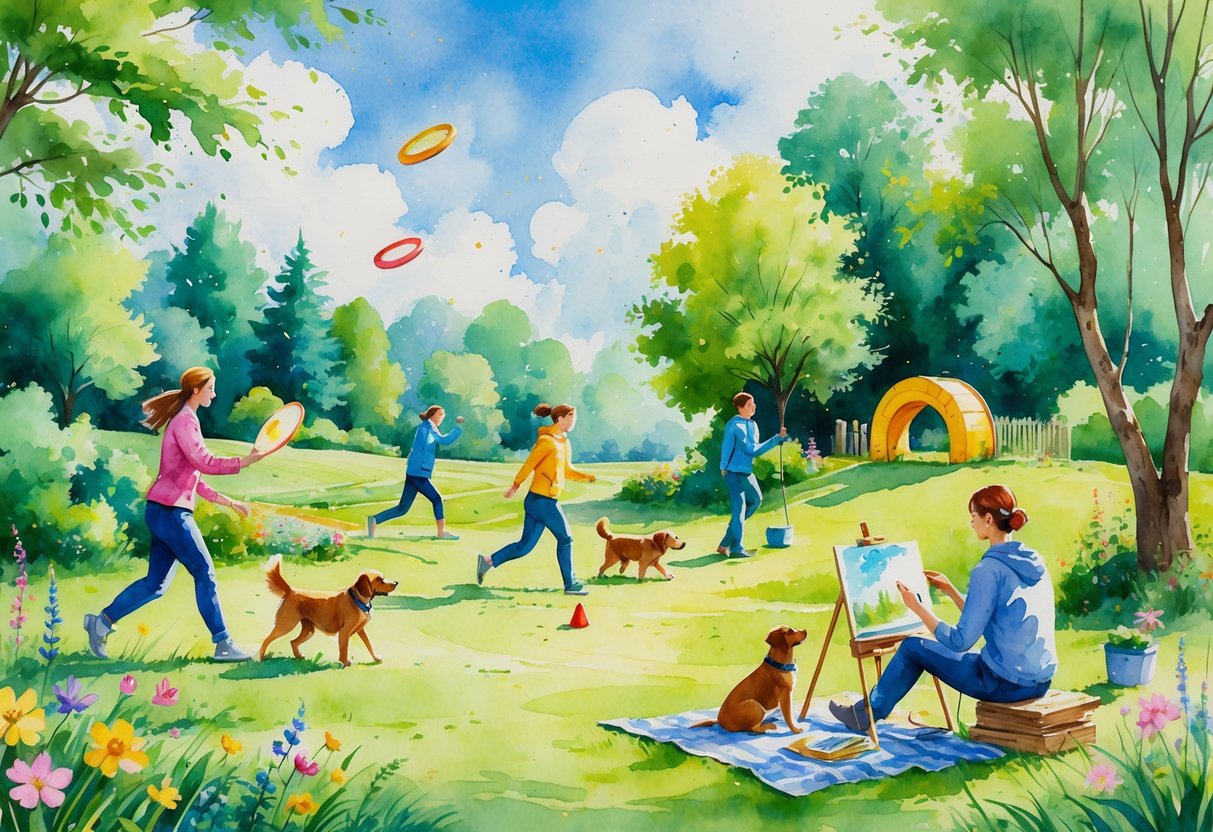
Sharing fun activities with your dog also helps reduce stress and brings more joy to your daily routine. There are many hobbies you can try, no matter your dog’s age or skill level.
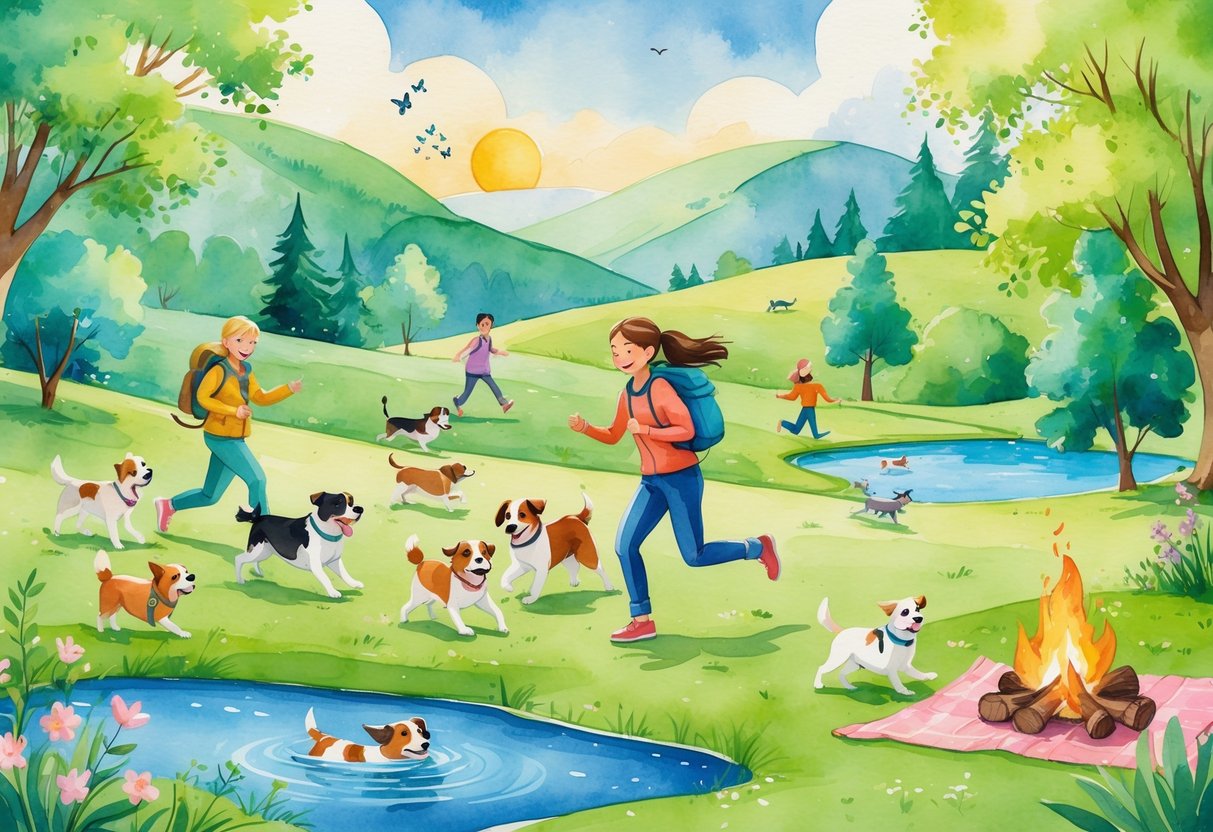
1) Doggy Play Dates
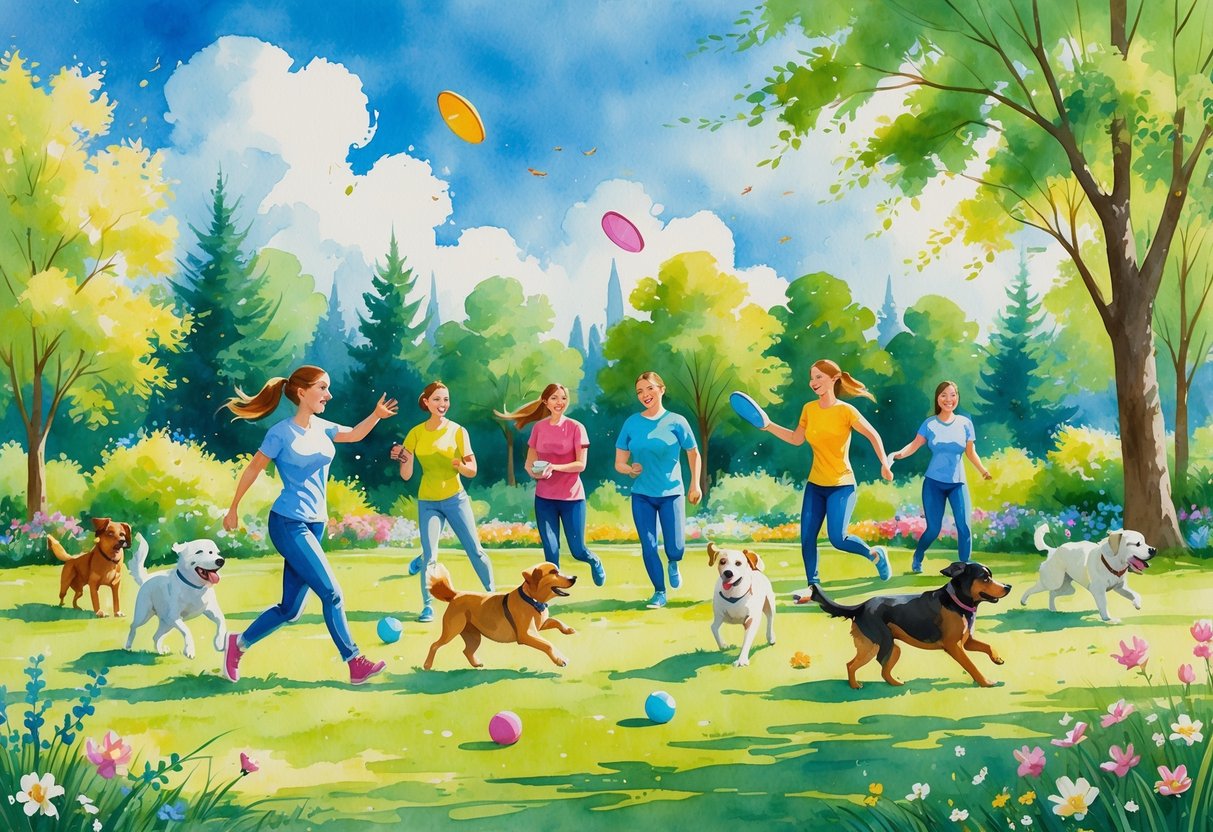
Doggy play dates are a simple way to help your dog stay happy and social. Meeting other dogs can build your pet’s confidence and improve their social skills.
You also get a chance to meet other dog owners and swap advice. Start by finding friends, neighbors, or family members who have dogs that get along with yours.
Choose a safe and secure location, like a fenced backyard or a local dog park. Make sure both dogs are healthy and up to date on their vaccines before the play date.
Watch how your dog interacts with others. Some dogs may be shy at first, while others are outgoing.
Give your dog time to adjust and step in if things get too rowdy. Bring along treats and toys to keep the dogs interested.
Use games like fetch or tug of war to help them bond. Keep sessions short at first, so the play stays fun and stress-free.
Pay attention to your dog’s body language. Look for signs of happiness, like a wagging tail and relaxed posture.
If your dog seems nervous or scared, let them take a break. Setting up regular play dates can help your dog burn off energy and feel calm at home.
For more ideas on how you can enjoy fun activities with your dog, check out lists of fun dog hobbies or see even more play date activities to try.
2) Agility Training
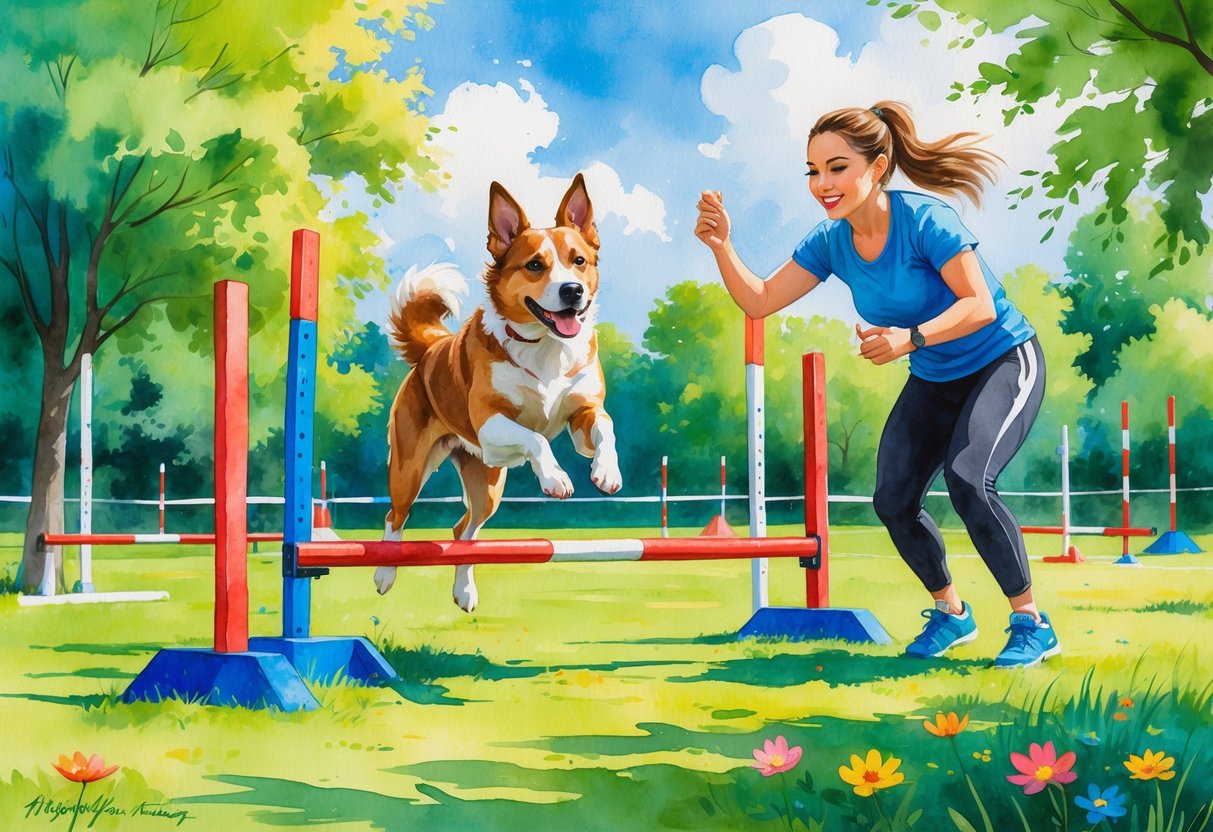
Agility training is a fun way to keep your dog active and mentally engaged. You guide your dog through an obstacle course that might include jumps, tunnels, and weave poles.
This activity is good for dogs of all sizes and ages, as long as they are healthy. Building a simple agility course at home is possible with items like cones, broomsticks, and boxes.
You do not need expensive gear to get started. Practicing at home helps your dog get comfortable with new obstacles and improves your communication.
Many dogs enjoy the challenge and get excited as they learn new moves. As you work together, your dog will develop better focus and stronger muscles.
You can start with basic exercises, such as weaving through poles or jumping over small hurdles. Try to keep training sessions short and upbeat.
This keeps your dog interested and prevents them from getting tired or bored. Agility is not only about speed.
It teaches patience and listening skills, since your dog needs to wait for your cues. Positive reinforcement, like treats and praise, encourages your dog to join in and try their best.
If you want more ideas, there are many easy agility activities you can find online. Some websites offer simple agility tricks to try with your dog that do not require much space or equipment.
You might also check out tips from the American Kennel Club about practicing agility at home.
3) Hiking Adventures
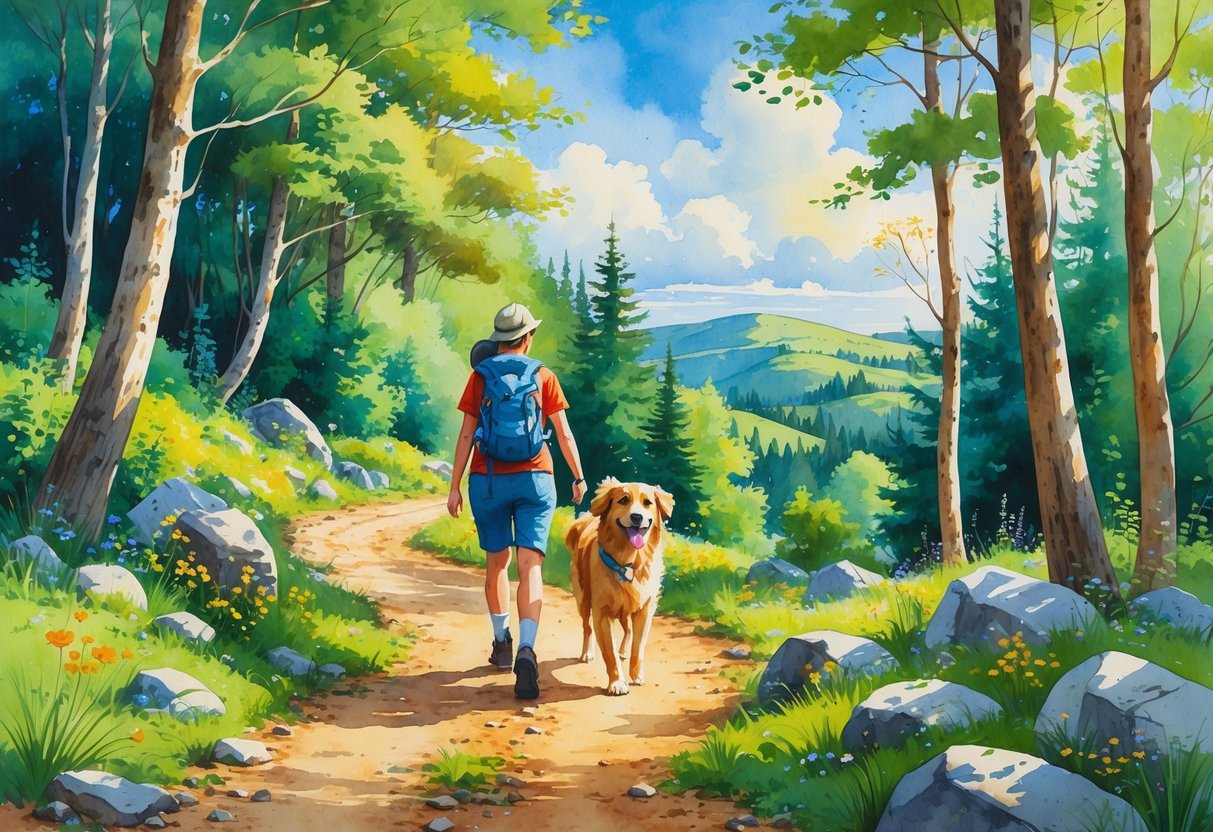
Hiking with your dog is a great way to explore nature and get exercise together. You can pick easy trails or more challenging paths based on your fitness and your dog’s energy level.
Many dogs love to sniff around and discover new smells on the trail. This keeps them mentally engaged and makes the hike more interesting for both of you.
Make sure to bring plenty of water and snacks for you and your dog. Look for pet-friendly hiking spots so you and your dog feel welcome.
Some trails even offer off-leash sections where your dog can safely roam. It’s important to follow all trail rules and leash laws to keep your dog and wildlife safe.
Spend time teaching your dog basic trail manners before you go. Commands like “come,” “stay,” and “leave it” can prevent trouble with other hikers or animals.
These skills also help create a stress-free trip for everyone. Try new locations when you can.
Every trail is different and brings a new adventure. Some places, like the Chain and Doelle Lakes in Washington, are known for their beautiful views and dog-friendly trails.
Remember to pack out what you pack in, including your dog’s waste. This helps keep the trails clean and safe for everyone.
Always watch your dog for signs of tiredness and give them time to rest if needed.
4) Canine Swimming
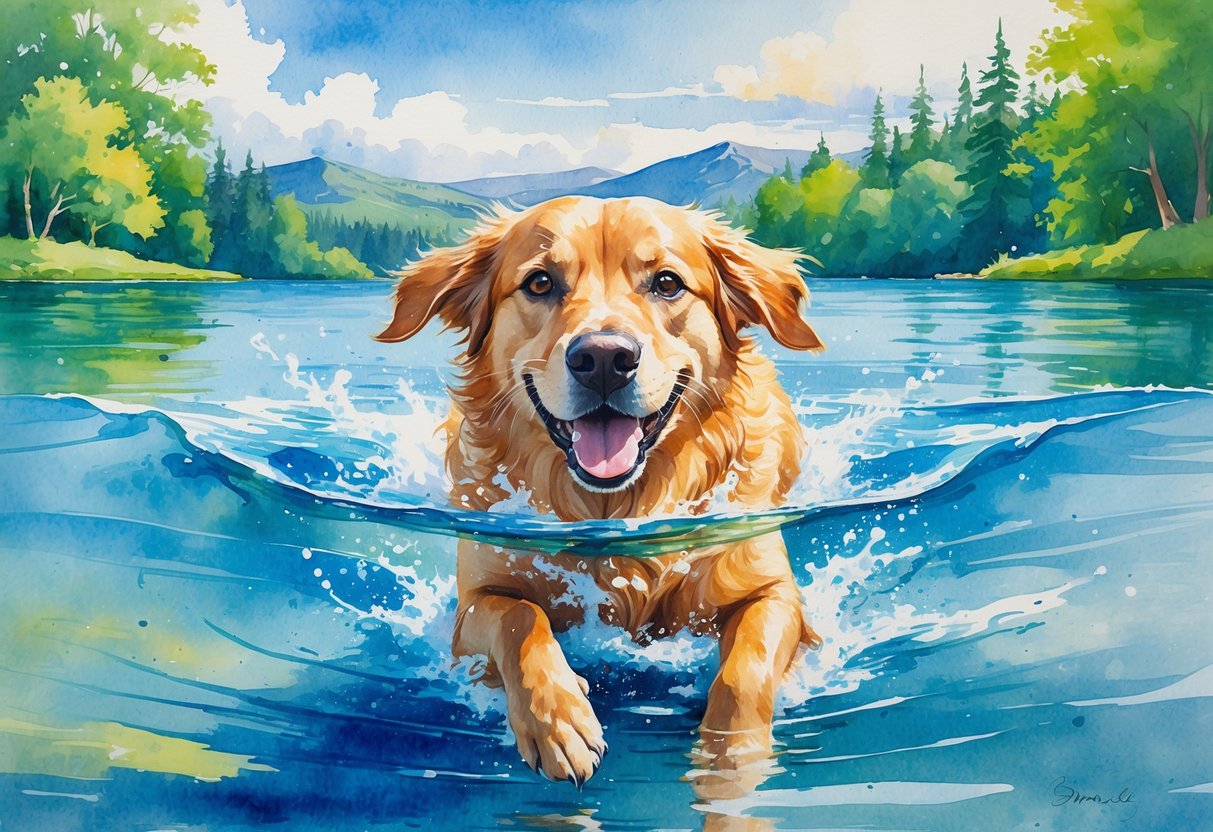
Swimming is a great hobby to share with your dog. It’s good exercise and helps dogs stay cool when it’s hot outside.
Most dogs can learn to swim, but some breeds take to water more naturally than others. You should always introduce your dog to water slowly and gently.
Some dogs need time to feel comfortable around pools, lakes, or calm rivers before they really enjoy swimming. Never force your dog into the water.
Bring floating toys to make swimming more fun for your dog. Many dogs love to fetch balls or sticks from the water.
Just make sure the toys are safe and easy for your dog to grab. Swimming can also help dogs who need low-impact exercise.
It puts less stress on their joints compared to running or jumping. Seniors or dogs with arthritis often benefit from swimming sessions.
There are also water sports you can try as your dog gains confidence. Some dogs enjoy activities like dog diving, where they jump into a pool to fetch a favorite toy.
If your dog likes company, look for dog-friendly pools or beaches. These places sometimes offer special swim times or events for dogs to play together.
It’s a good way to meet other dog owners and make new friends. Always keep safety in mind.
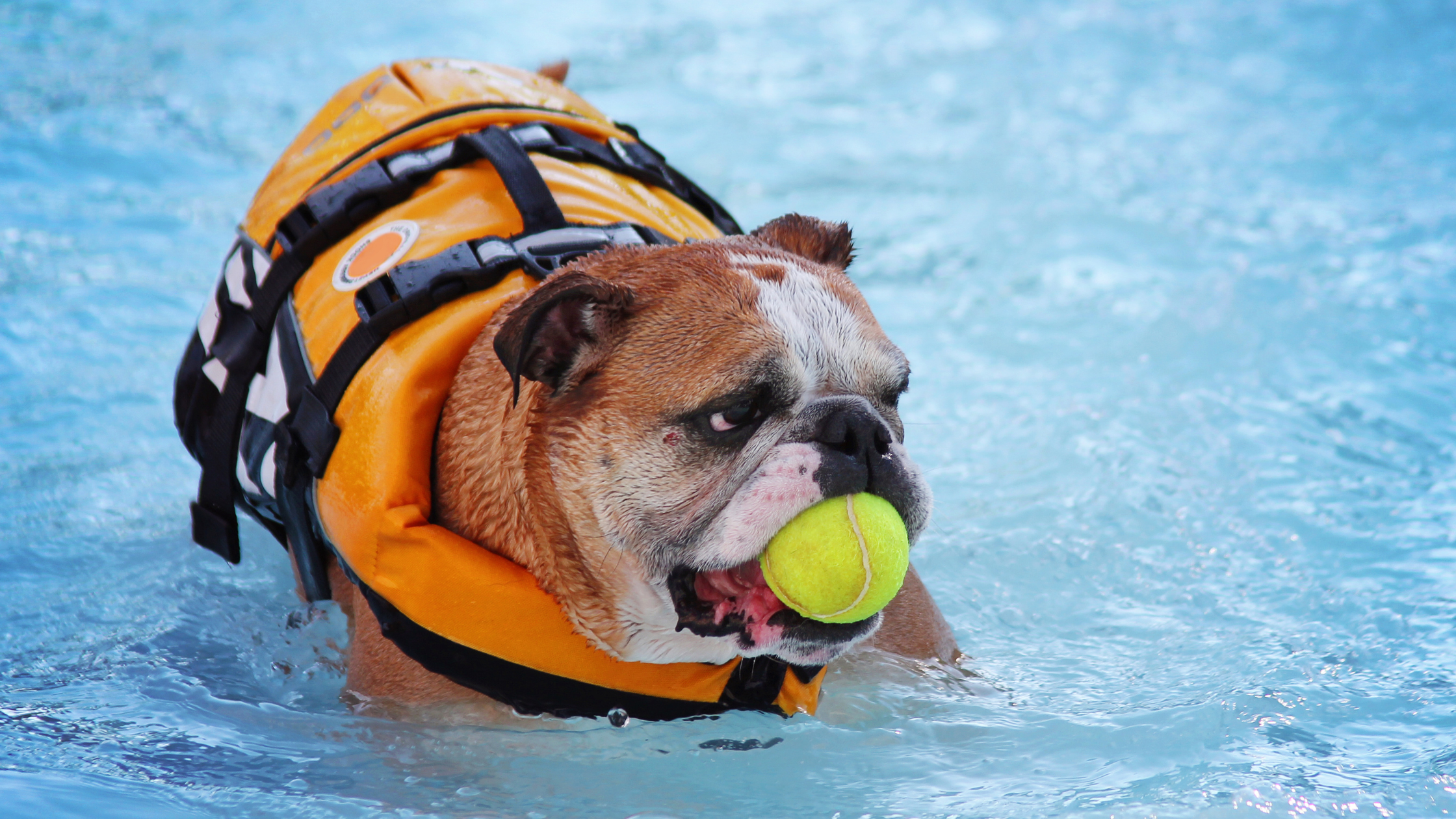
Stay close to your dog in the water and watch for signs of tiredness. Not all dogs are strong swimmers, so consider using a dog life jacket, especially in deep water.
When you’re finished swimming, rinse your dog off to remove chlorine or dirt. Dry their ears and fur to prevent infections.
With a little care and planning, swimming can become a favorite hobby for you and your dog.
5) Fetch Variations
Playing fetch is a classic hobby you and your dog can enjoy together. But you do not have to use only a tennis ball or stick.
Try switching up the objects you throw to keep your dog interested. Some dogs love chasing frisbees or soft rubber toys that bounce in different ways.
Take fetch to new locations like a park, open field, or even the beach. Changing the scenery gives your dog new sights and smells, making the game more exciting each time.
You can also make fetch more challenging by adding small obstacles or using hills. If your dog is ready for something different, try using a baseball bat or a launcher to throw the ball farther.
This helps burn more energy and gives your dog a little more challenge. Many dogs enjoy running after a toy that flies faster or lands in unexpected spots.
Some people also play fetch with floating toys in the water. If your dog likes to swim, this is a great way to beat the heat on warm days.
Make sure your dog is comfortable in the water before trying this variation. For more ideas, check out these creative fetch variations your dog will love or explore even more fun games to play with your dog.
6) Bikejoring
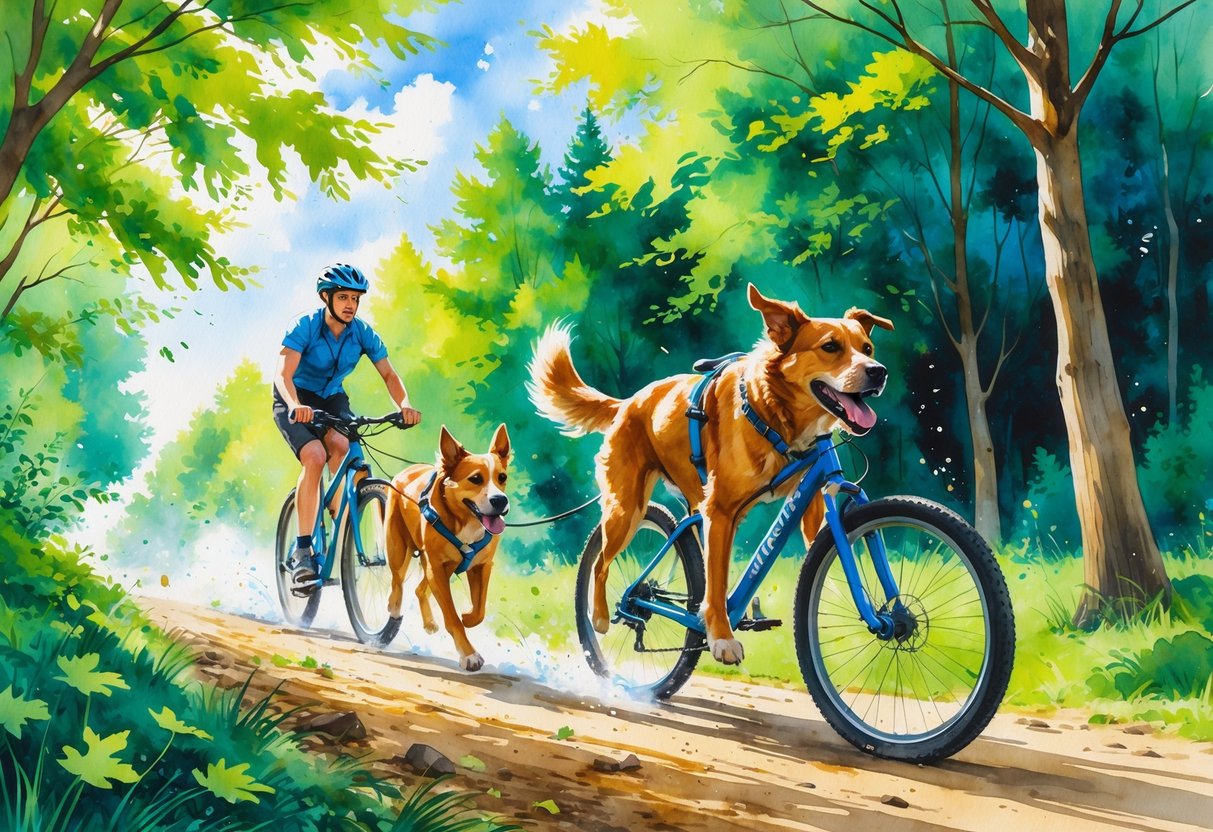
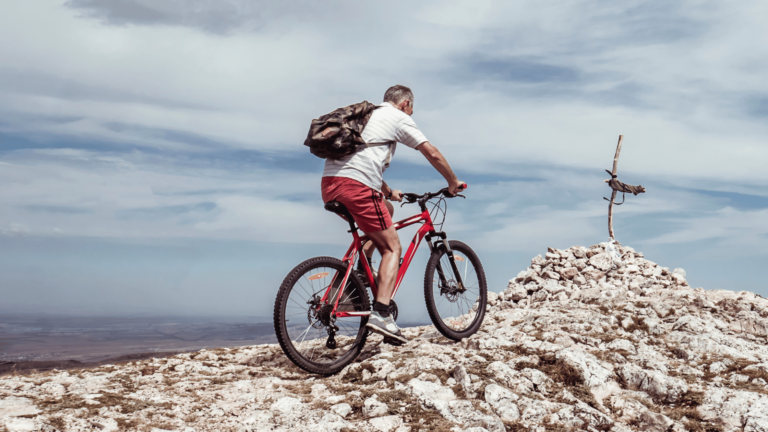
Bikejoring is a sport where your dog runs ahead while you ride behind on a bike. Your dog is attached to your bike with a special harness and a long bungee line.
This activity lets you and your dog enjoy exercise outdoors, especially if your dog loves to run. Bikejoring is best for dogs that are strong, healthy, and have lots of energy.
Most dogs need to be at least 18 months old to join in. Large and active breeds often do well, but many types of dogs can learn to enjoy it.
To start, you need a proper harness for your dog and a secure attachment for your bike. The harness should fit comfortably, so your dog can move freely.
Always use a bungee-style line to soften sudden pulls and help keep you both safe. Choose safe trails or smooth paths away from busy roads.
Your dog should be able to follow basic commands like “stop,” “turn,” and “slow.” Practice listening and control before biking at faster speeds.
Bring water for both you and your dog, especially on long rides. Dogs can get thirsty quickly while running, so plan for breaks.
Treats for short rests can help keep your dog happy and motivated, as suggested by Neewa Dogs. Bikejoring in cooler weather is best, since dogs can overheat in hot months.
Fall is a great season to start, but you can enjoy it year-round when temperatures are safe. Fellow.dog explains that bikejoring is a fun way to strengthen your bond and keep your dog active.
With the right gear and some practice, you and your dog can have a great time together biking on the trails.
7) Scent Work Challenges
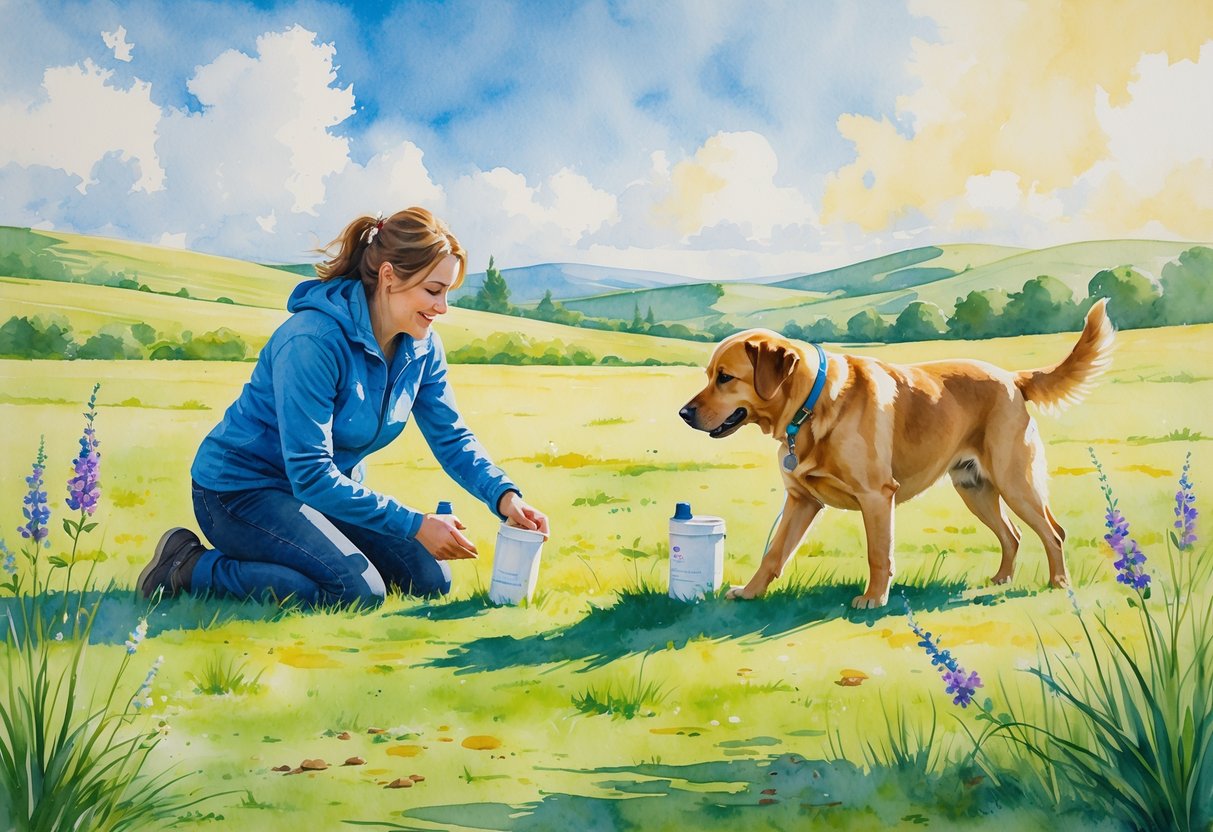
Scent work challenges are a great way to use your dog’s natural sense of smell. You can play simple games at home using items you already have.
Start by hiding treats or a scented item somewhere in your house. Let your dog sniff around to find it.
This game is easy for beginners and keeps your dog’s brain active. As your dog gets better, make the game harder.
Try hiding multiple scents or put treats in trickier spots. Introduce different types of smells, like a piece of cloth with a drop of essential oil or a tea bag.
Teaching your dog to tell apart different scents gives them even more of a challenge. Many dogs enjoy the mental stimulation from these games.
Their strong noses make scent work both fun and rewarding, no matter your dog’s age or breed. It also helps build their confidence and keeps them busy indoors, especially on days when you can’t go outside.
You can find more ideas and tips for scent games from sites that specialize in indoor scent activities and at-home nosework games. Adding different variations, like a box search or hiding treats in different rooms, keeps things fresh.
Scent work does not require any special gear, and dogs of all skill levels can take part. All you need is time, some treats, and a little creativity to get started.
8) Dog-Friendly Camping
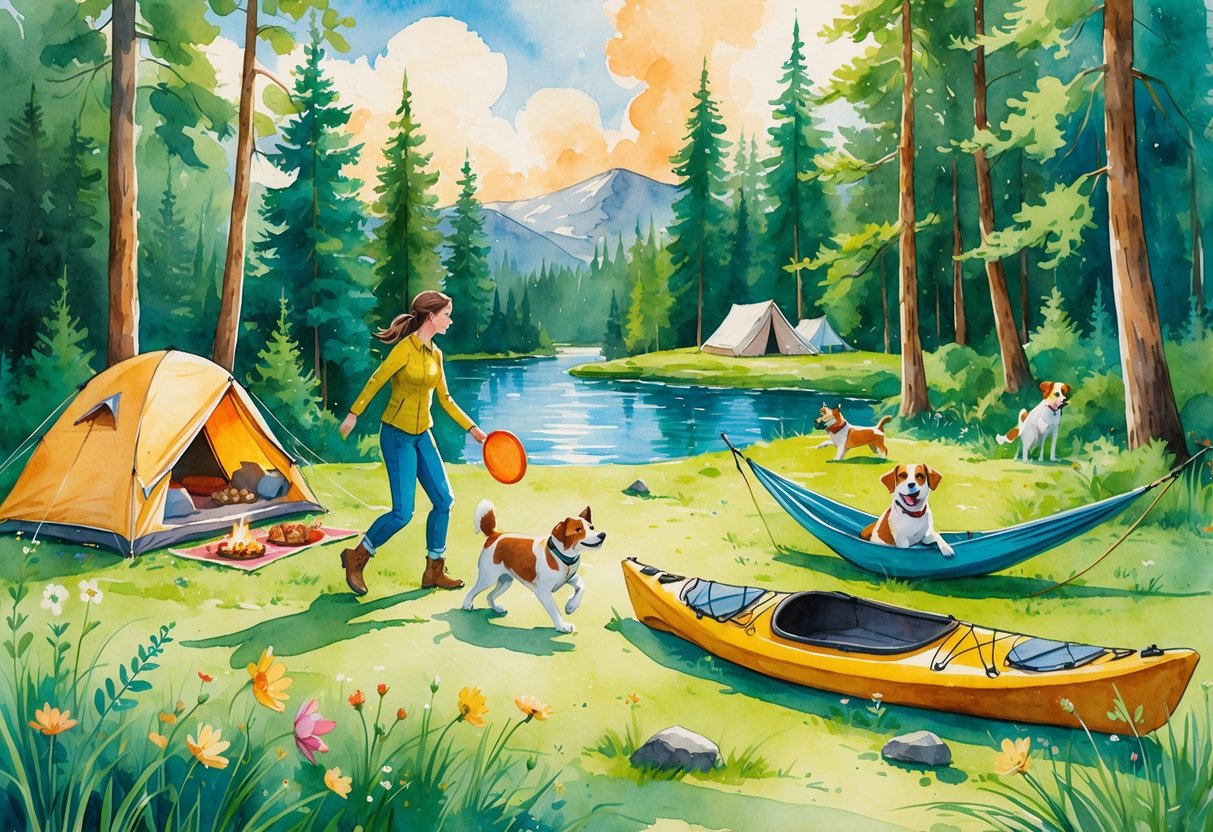
Camping with your dog is a great way to spend time together outdoors. It lets you both enjoy fresh air, new smells, and the sights and sounds of nature.
Many dogs love the adventure of sleeping outside and exploring new places with their favorite person. Before you go, make sure your campsite allows dogs and check any rules about leashes or where your dog can roam.
Choose a tent or sleeping arrangement that gives you both enough space to be comfortable. Some tents have areas just for pets, which can make your dog feel secure.
Pack your dog’s essentials, such as food, fresh water, bowls, bedding, and any medicine they need. A tie-out stake or leash can help keep your dog safe when you need them to stay close.
Remember to bring waste bags and clean up after your dog. Plan your days with activities your dog will enjoy.
Many dogs love hiking, swimming, or just relaxing at the campfire with you. Make sure there is shade and water available at all times, especially on hot days.
If you visit a beach or lake, check if dogs are welcome before you let your dog swim. Always watch your dog around the water to keep them safe.
Some dogs enjoy splashing in shallow water or playing fetch along the shore. You can find more dog-friendly activity ideas at this list of outdoor activities you can enjoy with your dog.
With some planning and the right gear, you can both have a fun and safe trip. For extra tips on camping with your pet, take a look at this helpful camping guide for dog owners.
9) Backyard Obedience Games
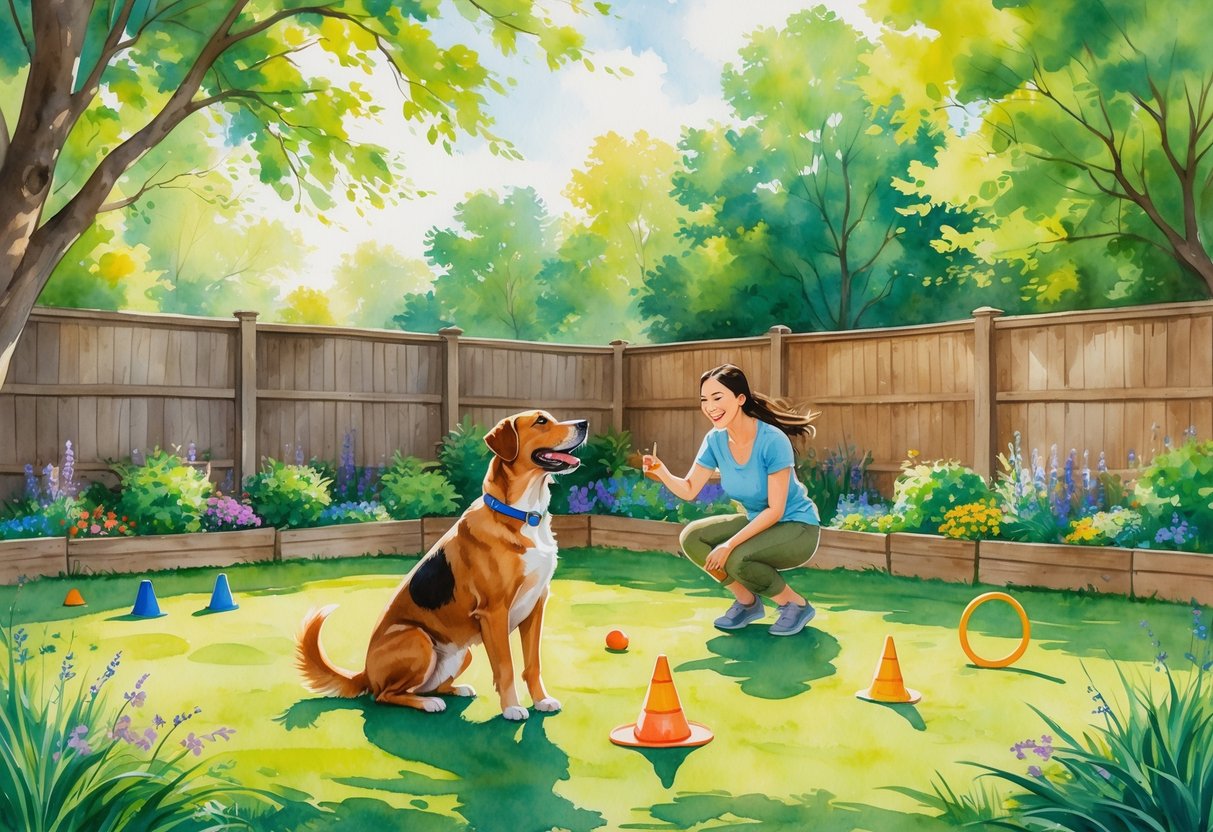
Backyard obedience games are a great way to help your dog learn and practice commands while having fun outside. You don’t need a lot of space or fancy tools to start.
Your backyard is enough. Try basic commands like sit, stay, and come.
Mix them into simple games, such as calling your dog back and forth between family members. This not only tests their recall but also boosts their confidence in listening to you.
Add some more challenging activities. For example, practice “leave it” by placing a treat on the ground and asking your dog not to touch it until you say.
Or teach “wait” at the door before letting your dog outside. Make use of obstacles you already have.
Use chairs, buckets, or small cones for your dog to weave around. This adds excitement and helps your dog focus on you instead of just running around.
Obedience games help your dog burn off energy in a useful way. They also give you both a chance to bond.
Your dog learns to watch you for cues, which can make walks and trips easier later on. If you want more ideas for playful ways to combine training and fun, you can find inspiration in this guide to obedience games for dogs.
These activities keep your dog’s mind active and help improve their behavior in a relaxed, home setting. Keep your sessions short and upbeat.
Offer treats and praise when your dog gets things right. If your dog starts losing interest, it’s okay to take a break and try again later.
Switch up the games to keep things fresh. As your dog improves, add new commands or make the games slightly tougher.
10) Puppy Yoga
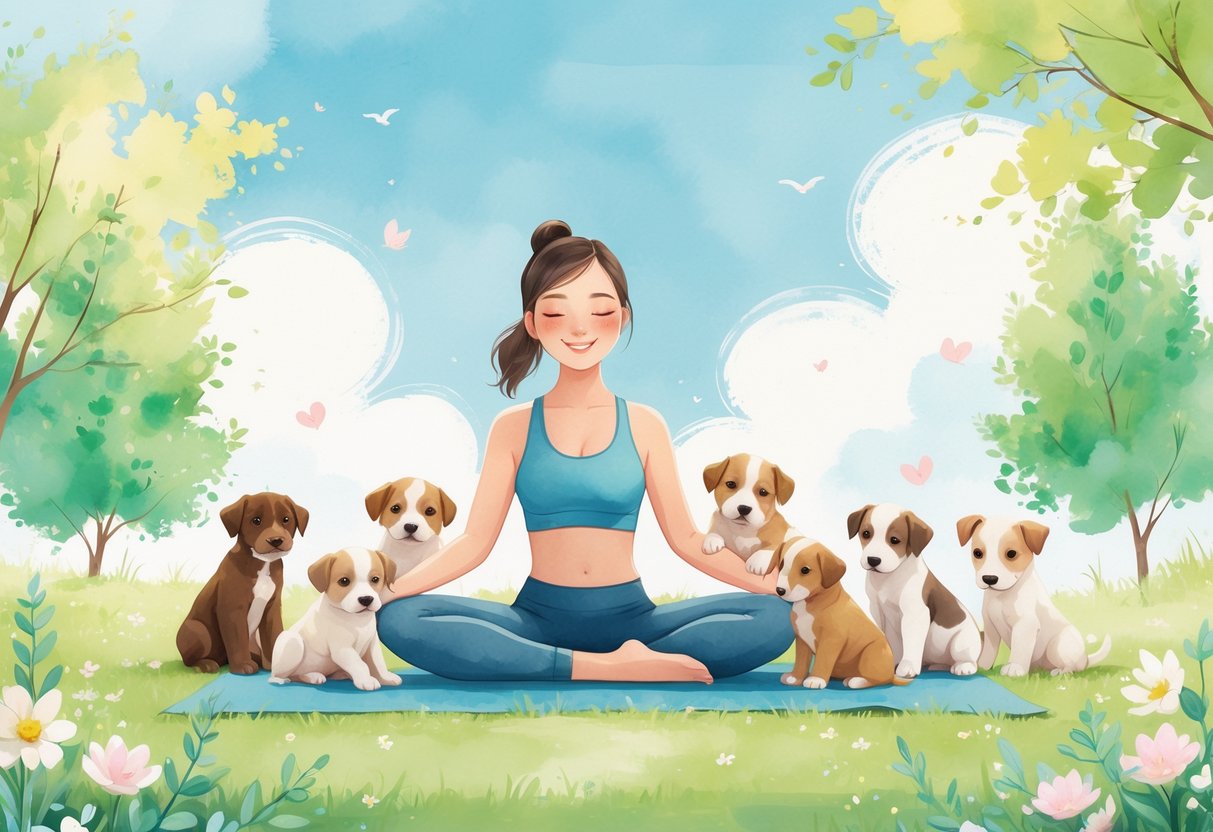
Puppy yoga lets you enjoy gentle yoga stretches while spending quality time with your dog. This hobby, often called “doga,” is a way to relax and bond with your pup.
You do basic yoga poses. Your dog stays nearby or even gets involved in some of the movements.
You don’t have to be super flexible or experienced to try it. Use a yoga mat or a soft surface so both of you feel comfortable.
Some people like to put out toys or treats to help their dogs stay relaxed and interested during the session. If your dog is new to yoga, take your time.
Try short sessions at first so your pet can get used to this new activity. Doga classes may be available in your area, or you can follow along with online videos at home.
These classes often show safe ways to help your dog stretch and relax too. Many people find this helps their dog with socialization and calm behavior around others.
The movements are usually gentle, so it is safe for most healthy dogs. If your dog is older or has joint problems, ask your vet before starting new exercises.
If you want to learn more about doga and how to get started, check out puppy yoga tips and beginner poses for you and your dog. You can also read more about useful items to have, such as mats, resistance bands, and treats, in this guide on dog yoga essentials.
Benefits of Engaging in Hobbies with Your Dog
Doing hobbies with your dog helps your body and mind, while building a stronger relationship. You can stay healthier, understand your dog better, and give your dog new and fun challenges.
Physical Health Advantages
Many activities you can do with your dog, like walking, hiking, or swimming, help you stay active and fit. These hobbies make it easier for you to reach exercise goals without feeling bored, as your dog keeps you company and motivated.
Daily movement together lowers the risk of becoming overweight and can support a healthy heart for both you and your pet. Dogs need exercise, too, to prevent issues such as muscle loss and joint stiffness.
When you make active hobbies a part of your routine, you help your dog burn off extra energy and lower the risk of health problems, like diabetes and obesity. Agility training, running, or even gentle games of fetch can boost endurance and coordination.
These shared activities not only help your physical health; they often make workouts more fun for both of you.
Strengthening the Human-Animal Bond
Spending time together through hobbies encourages trust and communication between you and your dog. Training, games, and new adventures help you both learn what makes each other happy or worried.
Simple moments like brushing your dog, teaching tricks, or visiting the park create lasting memories. Dogs are social animals—they feel more secure and relaxed when they connect with their owners.
Fun activities—such as setting up play dates, relaxing together, or taking part in new games or sports—also give your dog confidence and make them feel like a valued part of your family.
Promoting Mental Stimulation
Dogs need mental exercise just like people do. Introducing puzzles, hide-and-seek, or obedience training keeps your dog’s mind sharp and helps fight boredom.
Challenging activities, like interactive games and puzzles, teach dogs to solve problems and follow instructions. You can also try agility courses or teach them new tricks for extra mental stimulation.
Giving your dog new things to learn can help lower stress and lessen bad behaviors, like chewing or barking too much. Keeping your dog’s mind busy leads to a calmer, more focused pet at home.
Safety Tips for Shared Activities
Making time for hobbies with your dog is fun, but keeping both of you safe is just as important. Paying attention to equipment and watching your dog’s health helps every activity stay enjoyable.
Essential Equipment Recommendations
The right gear can keep you and your dog safer while trying new activities. Start with a secure leash and harness that fits your dog well.
A harness prevents choking and offers better control than a collar, especially during walks or hikes. Choose a sturdy leash that isn’t too long or short so you can react quickly to any danger.
If you are trying activities like swimming, some dogs benefit from a canine life jacket, especially if they aren’t strong swimmers. For biking or running, use hands-free leashes that attach to your waist, which helps you keep balance and reduces the risk of dropping the leash.
Bring portable water bowls and fresh water for any trip outside. When playing fetch, pick toys made for dogs, as sticks or rocks can cause injuries.
For outdoor adventures, consider reflective gear or LED collars if you’ll be out in low light. For car rides, use a dog seatbelt or crate to keep your pet safe while driving.
Always check gear for wear and replace it if it’s damaged.
Recognizing Signs of Fatigue or Stress
Knowing when your dog is tired or stressed can prevent injuries and keep your dog happier. Signs of fatigue include slowing down, heavy panting, drooling, or lying down during activity.
If your dog starts lagging behind, stops playing, or looks for shade, take a break and offer water.
Stress can show as pacing, whining, tucked tail, ears back, or hiding. Your dog may refuse to follow commands or avoid eye contact.
Sometimes, dogs lick their lips or yawn when uncomfortable.
Pay attention to the weather, as hot pavement can burn paws and high heat can cause heat stroke. If you see vomiting, confusion, or wobbly walking, get your dog to a cool spot, offer water, and contact a vet if symptoms don’t improve.
Frequently Asked Questions
You can engage in physical activities, play games, or spend quiet time together at home.
What are some engaging indoor activities I can enjoy with my dog?
Puzzle toys challenge your dog’s mind and keep them focused. Hide and seek, tug-of-war, and teach-and-trick sessions are simple but fun.
You can also set up a small DIY obstacle course using chairs, cushions, or blankets.
How can I incorporate my dog into my hobbies while at home?
Involve your dog during gardening by letting them dig or fetch soft toys. You can practice new tricks or work on obedience training.
Including your pup in your favorite at-home hobbies helps strengthen your bond.
What are the best outdoor hobbies to share with my dog?
Popular outdoor options include hiking, swimming, and agility training. You can take your dog on a hike through local trails or visit a dog-friendly beach for a swim.
Try organized agility training to help your dog burn off energy.
What fun games can I play with my dog to strengthen our bond?
Fetch is always a favorite, but try using different toys or playing in different spaces. Tug-of-war builds trust and allows your dog to playfully challenge you.
You can also create fetch variations with frisbees or softer balls.
Are there hobbies suitable for active dogs that can be done indoors?
Active dogs need both mental and physical exercise. Playing with interactive toys, learning complex tricks, or navigating a homemade indoor obstacle course helps your active dog stay engaged.
Indoor agility exercises like weaving through cones work well.
What activities can keep my dog entertained all day?
Give your dog several short activities to avoid boredom, like puzzle feeders, sniff-and-search games, and scent trails.
Doggy play dates with friends’ pets, rotating toys, and mixing up training sessions will keep your dog entertained throughout the day.
Or you can read about more ways to keep your dog busy.