

10 Best Hobbies for Improving Memory: Activities Backed by Science
Many people look for ways to keep their minds sharp and their memories strong. Staying mentally active can support your focus, attention, and mental well-being as you age or face new challenges.
Choosing the right hobbies can help improve your memory and keep your mind engaged. Activities that challenge your brain are enjoyable and also provide real benefits over time.
1) Learning a new language

Learning a new language gives your brain a good workout. It helps your memory by making you remember words, sentences, and rules.
Practicing another language can also help you focus and pay attention for longer periods. When you learn new words and phrases, your brain forms new connections.
This can make it easier for you to remember other information, too. Studies suggest that people who practice a second language often have better attention skills and sharper memories.
Trying to speak, listen, read, and write in a different language keeps your mind active. It can also improve your ability to solve problems.
Even simple daily practice like using an app or talking to a language partner helps. You do not have to be perfect.
The act of trying and learning is what matters most. Using language apps or taking online courses are easy ways to start.
There are also language exchange groups in many towns and cities. Learning a new language is linked with slower memory loss as you get older.
It trains your brain to think in new ways and hold more information at once. Picking up a second language is also linked to better multitasking skills according to some studies.
For more about the benefits of learning languages for your brain, see 10 Hobbies That Can Improve Memory and Concentration and Hobbies for Strengthening Memory.
Whether it is Spanish, French, Japanese, or any other language, your efforts will build better memory skills. Every new word you learn is a step towards a stronger, more active mind.
2) Playing a musical instrument

Learning to play a musical instrument is one of the best hobbies for keeping your mind active. When you practice an instrument, you use your memory, attention, and coordination all at once.
These mental skills help strengthen your brain over time. Playing music is not just about memorizing notes.
You also need to listen carefully, keep rhythm, and use both hands for different tasks. This challenges your brain and encourages it to form new connections.
If you choose to play an instrument, you also practice planning and problem-solving. You break songs down into smaller parts, work through tricky sections, and try again when you make mistakes.
This helps improve your focus and memory. You can start with any instrument you like, such as piano, guitar, or violin.
Even if you have never played before, learning a new instrument at any age can still bring good results for your brain. Research suggests that playing a musical instrument boosts cognitive function and can help improve your memory capacity.
It also helps your brain recall patterns and adapt quickly, which keeps your mind sharp as you get older. If you enjoy music, practicing an instrument for just a short time each week will benefit your memory.
You don’t need to become a professional. The most important part is to stay engaged and keep challenging yourself.
Besides, musical activities can be social when you play in a group or learn together with friends or family. This can add another layer of support for your brain health as social activities also contribute to better memory.
So, pick up an instrument that you find interesting and have fun with it. The benefits to your memory and thinking skills can make a positive difference over time.
3) Solving jigsaw puzzles

Solving jigsaw puzzles gives your brain an active workout. Each puzzle piece challenges you to remember where similar colors and shapes might fit.
When you try to find the right spot for each piece, you use both short-term memory and attention skills. You also practice seeing the big picture and the small details at the same time.
Looking for certain patterns or parts of an image helps you improve your visual-spatial skills. These are useful for daily activities, such as reading maps or organizing objects.
Jigsaw puzzles encourage you to focus and plan ahead. You might sort pieces by color or edge, then build the puzzle in sections.
This process strengthens your planning skills and your ability to break down complex tasks. Studies show that doing jigsaw puzzles regularly can help boost memory and other mental skills.
Some research suggests that puzzles can lead to better recall, sharper thinking, and even a lower risk of memory loss later in life. You can read more about how puzzles can help your brain on Science of Mind’s article about the best hobbies for brain health.
Finishing a jigsaw puzzle also gives you a sense of achievement. Each completed puzzle can make you feel more confident in your problem-solving abilities.
It also gives your brain a healthy challenge, which is important for keeping your mind sharp as you age. You can do jigsaw puzzles alone or with friends.
Working on puzzles with others adds social time, which is also helpful for memory. Plus, it makes the experience more fun and rewarding.
4) Knitting or crocheting

Knitting and crocheting involve repeating patterns and fine hand movements. These activities require you to stay focused on the task so you can follow a pattern and keep track of each stitch.
As you work with needles or a hook and yarn, your brain practices planning and problem solving. This helps boost your memory by making you think ahead and pay attention to small details.
Following a pattern can feel like solving a puzzle each time. Using both hands in these crafts helps with your hand-eye coordination.
Your brain is active as you check each row and manage the yarn. Research shows that working with your hands like this can stimulate the parts of your brain that control movement and attention.
Knitting and crocheting can also help you relax. Regular practice may lower stress and make it easier to focus on other things in your life.
Lower stress is linked to better memory because anxiety can make you forget things more easily. Some studies have found that crafts like knitting may even be helpful in slowing memory decline in older adults.
These effects may come from the combination of attention, planning, and hand movement involved. You can do these activities almost anywhere.
All you need is some yarn and the right tools. Many people enjoy knitting or crocheting in groups, which can give you social time as well as mental exercise.
Even beginners can benefit from these hobbies. Simple projects still make you use your memory and concentration to complete each step.
Regular practice helps your brain stay sharp, no matter your skill level.
5) Gardening tasks

Gardening can help you improve your memory and focus. When you take care of plants, you use planning and problem-solving skills.
This includes choosing what to plant, remembering watering schedules, and working out how much sunlight each plant needs. Spending time outdoors while gardening has been linked to lower stress.
Lower stress can make it easier to focus and remember information. Taking care of plants can also give you a sense of responsibility and routine, which helps build your memory.
Simple gardening tasks like weeding, pruning, or planting seeds require you to pay attention to details. These activities keep your brain active and engaged.
Some research points out that gardening may help with improving memory and attention especially in older adults. You may also notice that gardening involves using your senses.
Touching soil, smelling flowers, and noticing the colors of leaves can all sharpen your sensory awareness. This kind of hands-on experience helps reinforce memories and improves observation skills.
Working in your garden, you often need to remember which plants need special care. Tracking progress or noting changes in growth can also help practice your recall and observation.
Over time, these tasks may lead to better overall brain function. Gardening is flexible.
Even small tasks, such as watering or checking on your plants each day, can provide cognitive benefits. You can start with a few pots indoors or join a community garden.
This hobby offers the chance for your memory to improve while you enjoy time in nature.
6) Drawing or painting
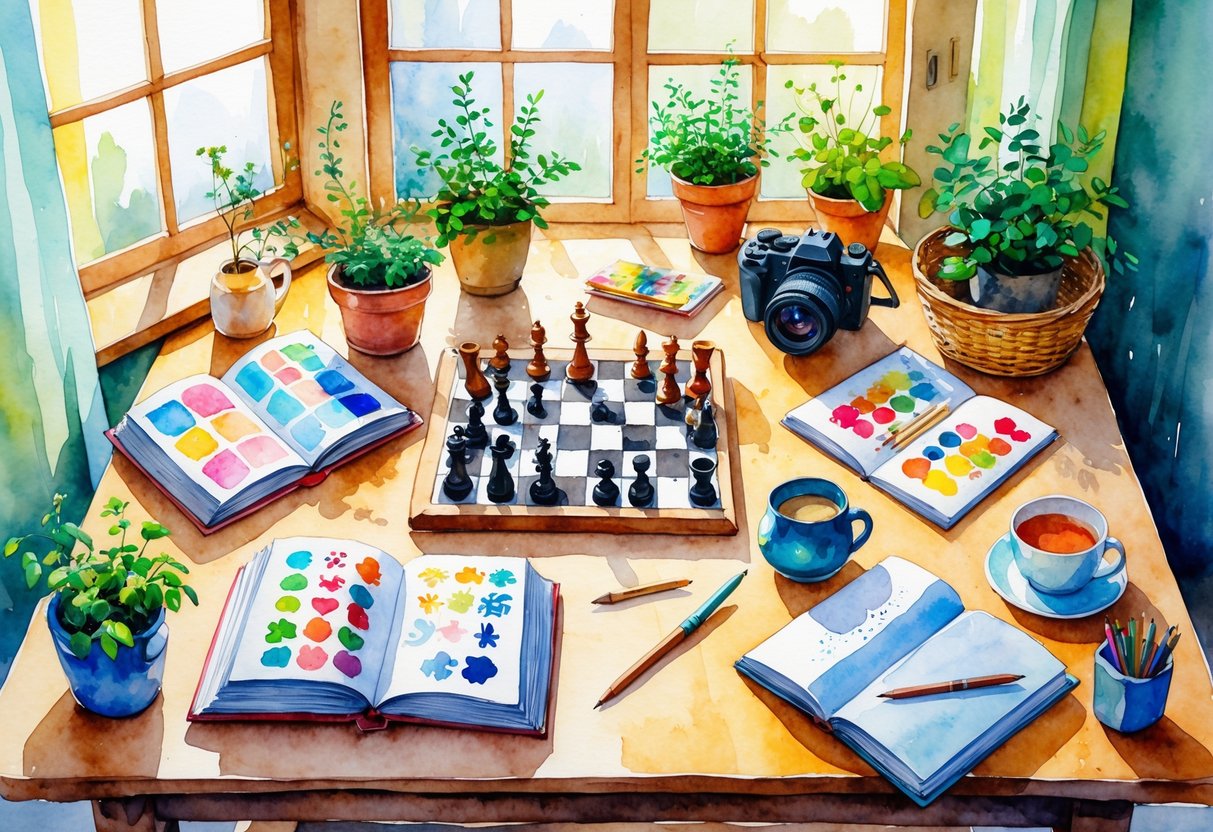
Drawing and painting help you use different parts of your brain. When you focus on your artwork, you have to notice details, remember shapes, and think about colors.
This mental activity can support both memory and concentration. These creative hobbies also need you to plan steps ahead.
For example, you might decide what to draw, choose the right colors, and figure out where to place the elements on your paper. This kind of decision-making exercises your memory and problem-solving skills.
Painting and drawing can also lower stress. When you are more relaxed, your mind can focus better.
This relaxed state helps your brain store and recall new information. Art activities don’t have to be complicated.
Even simple doodling is helpful. You just need to pay attention to your artwork and practice regularly.
Small projects can have a positive impact if you stay consistent. Research supports the benefits of creative arts.
Studies have shown that painting and drawing help improve focus and memory. Many experts also recommend creative hobbies for brain health because they help you stay engaged and use your mind in new ways.
You can try different styles and tools to see what you enjoy most. Use pencils, markers, watercolors, or anything else you like.
The goal is to challenge your mind and have fun in the process. You don’t need to be a professional artist to benefit from drawing or painting.
Anyone can start, and improvement comes with practice. These hobbies give your brain a workout while allowing you to express yourself creatively.
7) Playing chess or strategy games

Playing chess or other strategy games is a good way to challenge your mind. These games require you to think ahead, notice patterns, and remember past moves.
Regularly playing strategy games can help make your memory sharper. When you play chess, you use both your memory and your problem-solving skills.
You have to keep track of the board, remember the rules, and plan your moves. This helps your brain build new connections, which is important for keeping your mind active.
Other strategy games like checkers, go, or even certain card games also encourage you to use logical thinking. They require you to pay attention and adapt your strategies as the game changes.
This kind of mental workout helps exercise your brain in different ways. Strategy games are also social activities.
Playing with others gives you a chance to talk, share ideas, and react to different playing styles. This mix of mental challenge and social interaction is good for your memory and can help protect your brain as you age.
Some studies suggest playing chess and similar games can lead to better focus and improved concentration. Playing these games is both fun and helpful for your mind.
If you want to learn more about how chess and strategy games benefit your brain, you can check out guides that explain the brain health benefits of strategy games and how games like chess can improve your memory.
Even beginners can see benefits by playing regularly and staying engaged.
8) Doing brain teasers and logic puzzles
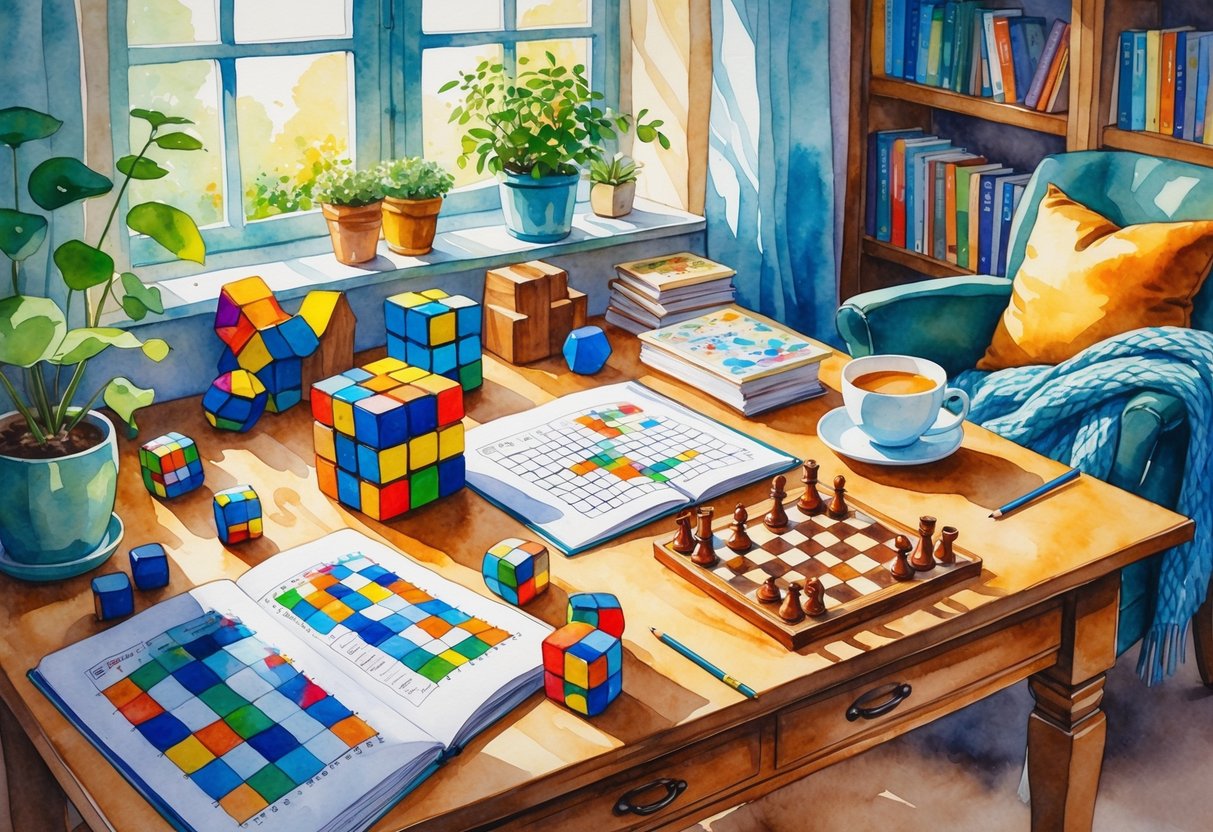
When you do brain teasers and logic puzzles, you give your mind a workout. These activities challenge you to think, remember, and make connections.
They can include crosswords, riddles, Sudoku, and word searches. Solving puzzles like these helps your brain practice recalling information and using it in new ways.
For example, crosswords can improve your memory by making you search for facts or words you already know. Logic puzzles need you to look at clues and fit pieces together, which sharpens reasoning skills.
Doing brain teasers is helpful for people of all ages. If you make puzzles a regular habit, it can keep your brain active and engaged—especially as you get older.
Research shows that solving puzzles and brain teasers and logic puzzles can help your memory and reasoning. These activities may also slow down memory decline with age.
For example, regular crossword practice has been linked to slower cognitive decline and can help keep your mind sharp. You do not need any special equipment to get started.
Many of these brain games can be found in newspapers, books, or online. Even a few minutes a day can make a difference.
You can try a variety of puzzles to keep things interesting and challenge your brain in new ways. Choose ones that you enjoy and try to solve them often.
This way, you can train your brain and help improve its memory skills.
9) Writing daily journal entries

Writing in a journal every day keeps your mind active. When you write about your day, feelings, or ideas, you give your brain a workout.
This can help you remember details better because you practice recalling events and facts regularly. Daily journaling trains your focus.
As you write, you pay attention to how you felt, what you did, and what you want to remember. This process supports better concentration over time.
Journaling is also a way to organize your thoughts. Writing things down helps you make sense of your experiences.
It can also show patterns you might not notice otherwise. You do not need anything fancy to start.
A simple notebook and a pen are enough. Set aside a few minutes each day, maybe in the morning or before bed.
The key is to make it a habit. Some people use journals to set goals or plan their day.
Others write about things they are grateful for or make lists. These small routines keep your brain thinking and engaged.
Research shows that activities using language, like journaling, can stimulate the brain and may improve memory and concentration. When you describe your experiences with words, you strengthen the connections in your mind.
If you are new to journaling, start simple. Write about one thing that happened today or how you felt.
With practice, you may notice remembering things gets easier. The regular act of writing helps focus your attention and boosts recall over time.
10) Practicing meditation with focus

Practicing meditation with focus is a simple way to help your memory. When you meditate, you teach your mind to pay attention to the present moment.
This reduces distractions and can help you remember things more clearly. Focused meditation can mean sitting quietly and noticing your breathing.
You might also pay attention to sounds or the feeling of your body. This builds your ability to stay focused for longer periods of time.
Studies have found that mindfulness practices like meditation can improve attention and memory. Even just a few minutes a day may help you pay better attention and stay on task during other activities.
The best part is that you do not need any special equipment. You can try meditation almost anywhere—at home or outside.
It’s free, and there are many helpful online guides or apps if you’re new to meditation. Regular practice is important.
It is okay if it feels hard at first. With time, you’ll likely find it becomes easier to focus and notice your mind wandering less.
Research suggests that mindfulness can boost both memory and concentration. By practicing meditation regularly, you may train your brain to focus better and remember more in everyday life.
If you are looking for a hobby that does not require much setup but can help your memory, meditation is a good choice. Even short, daily sessions can support your brain health and focus.
How Hobbies Stimulate Memory
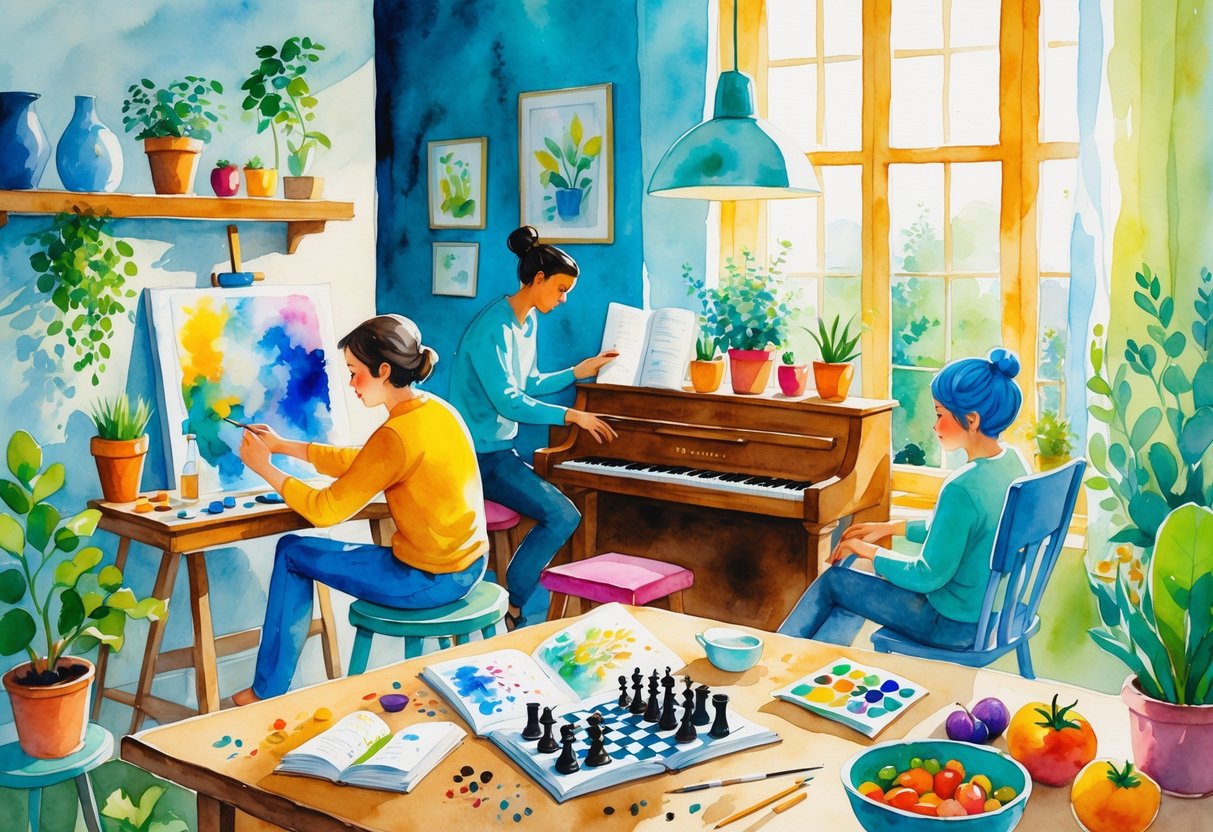
Certain hobbies do more than fill your time—they can keep your brain active and help you remember things better. By challenging your mind and body, you increase attention, build mental skills, and strengthen your memory in daily life.
The Science Behind Memory Enhancement
Your brain is always changing and adapting, which is known as neuroplasticity. When you learn a new hobby, different parts of your brain are activated.
For example, learning a new language or a musical instrument stimulates regions linked to memory, attention, and problem-solving. These activities increase blood flow to the brain, bringing more oxygen and nutrients.
This helps nerve cells create new connections, making it easier for you to remember and process information. Practicing challenging hobbies often can “exercise” your mind, much like physical activity helps your muscles get stronger.
If you learn something difficult, your brain works even harder. Activities like drawing, painting, or crafting require focus and creativity, which can increase your brain’s ability to remember details.
You can find more information about creative hobbies that boost your memory at Hobby Knowhow’s guide on art and memory.
Cognitive Benefits of Engaging Activities
Hobbies that require thinking, planning, or using your hands can support memory in several ways. For example, activities such as playing chess or assembling puzzles improve attention, visual memory, and problem-solving skills.
Cooking or baking, where you follow recipes and measurements, trains you to remember steps and details. These hobbies not only sharpen your mind, but also make it easier for you to stay organized in daily life.
Even activities like gardening, which involve learning about plants and timing, can help you remember information and make decisions. Involvement in regular hobbies can delay memory decline as you age.
For more details on hobbies that benefit brain health and memory, visit the article on brain-stimulating hobbies.
Tips for Maximizing Memory Gains

To get the most out of memory-boosting hobbies, it helps to use smart strategies. Setting up a steady routine and mixing different activities will help challenge your mind in new ways.
Creating a Consistent Practice Routine
Sticking to a schedule is key for making progress with any memory-boosting hobby. By practicing at regular times, you help your brain learn more deeply and remember better.
Daily or weekly practice can work as long as you stay committed. You can use reminders on your phone or a simple planner to build a habit.
If you skip days, don’t give up. Just restart and keep going.
The brain likes patterns, so activities like puzzles, reading, or playing instruments are most helpful when you repeat them consistently. Try keeping a simple chart to track your progress each week.
Choosing the same time and place for your hobby can also make it easier for you to stick with your routine.
Combining Multiple Hobbies for Greater Results
Doing more than one memory-friendly activity can give your brain a balanced workout. For example, pairing activities that involve movement, like dancing, with those that engage logic, such as chess or puzzles, can improve focus and mental flexibility.
Some research shows that combining social hobbies, like group games or book clubs, with solo activities, like journaling, brings even better brain benefits. Mixing hobbies keeps your mind challenged and fights boredom, which is important for long-term improvement.
You can learn more about memory-boosting hobbies at resources like 10 Best Hobbies for Brain Health and activities that improve memory and brain.
Try switching up your routine every few weeks to keep your brain active and challenged.
Frequently Asked Questions
Certain hobbies and brain exercises can help boost your memory, keep your mind sharp, and may even lower your risk of memory loss. Activities that challenge your thinking, use your hands, or make you learn new things give your brain a real workout.
What activities are most effective for enhancing memory in adults?
Learning a new language helps your brain make strong connections.
Playing a musical instrument requires focus, memory, and coordination.
Jigsaw puzzles challenge your ability to remember shapes and sort pieces, keeping your mind active.
You can find more ideas on hobbies for brain health.
Which hobbies can help in boosting brain power and memory for students?
Students benefit from memory games, music practice, and activities that involve problem-solving.
Joining a club to learn a new skill or language also boosts memory.
Physical hobbies like sports that require strategy are helpful.
Some research-backed memory-boosting hobbies are especially popular with younger people.
Are there any specific brain exercises recommended for memory improvement?
Simple exercises include sudoku, crossword puzzles, and jigsaw puzzles.
Using memory apps or practicing flashcards can help too.
Joining trivia games or learning to play chess strengthens both memory and focus.
For further reading, check out hobbies that improve your memory.
How can I incorporate hobbies into my routine to prevent memory decline?
Try to set aside 15–30 minutes a day for a brain-challenging activity.
Add variety by switching between knitting, gardening, puzzles, or learning music.
Join a class or hobby group to stay motivated and consistent with your routine.
What creative activities can sharpen memory and improve concentration?
Knitting and crocheting use counting and patterns, which sharpen memory.
Writing, painting, or crafting can improve your focus.
Gardening is creative and also requires planning and remembering steps.
Explore more fun hobbies that boost cognitive function.
Can engaging in certain hobbies reduce the risk of dementia?
Mentally challenging hobbies may help delay memory loss or dementia.
Staying social and learning new skills, such as a language or playing music, is linked to better brain health.
Hands-on activities like puzzles and crafts keep your brain active as you age.
You can read about hobbies to boost cognitive function for more details.